
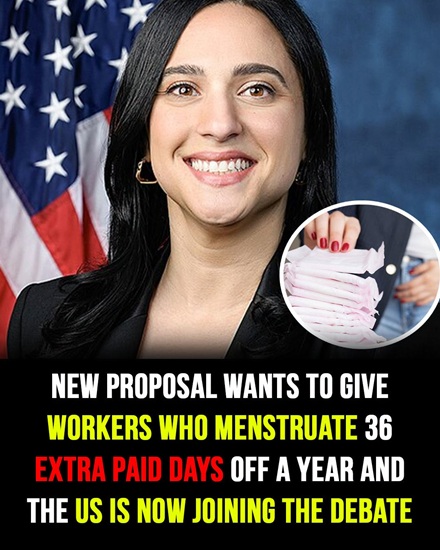
The conversation around menstrual leave policies has gained increasing attention worldwide, with more governments, lawmakers, and advocacy groups discussing how workplace systems can better support women’s health needs. In recent developments, the topic has also reached the United States Congress, marking a new stage in an ongoing global policy debate. Supporters of menstrual leave argue that workplace policies have historically overlooked certain health conditions that affect productivity and wellbeing.
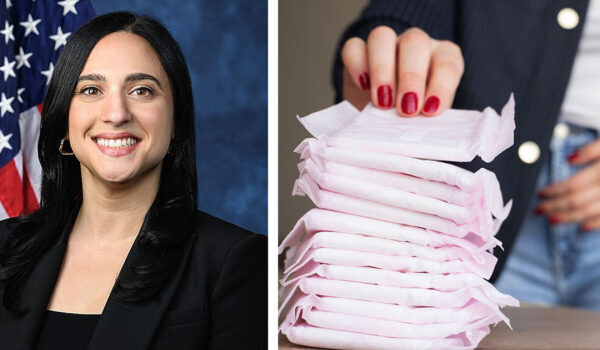
At the same time, critics raise questions about implementation, fairness, and potential workplace disruption. This ongoing discussion reflects broader debates about healthcare access, gender equity, and labor rights. The H.E.R. Agenda Bill Introduced in the United States. Earlier this month, according to public legislative updates, Democratic Representative Yassamin Ansari introduced a proposal known as the H.E.R. Agenda bill. The legislative package has been described as an effort to address gaps in women’s healthcare and workplace protections.
The bill reportedly includes provisions related to paid leave for conditions such as period pain and menopause. These proposals are part of a wider discussion in the United States about how employers accommodate health-related absences that may not always be classified under traditional sick leave policies.
In addition to women’s health provisions, the proposal is also described as including fertility-related coverage for men, such as support for vasectomies and fertility treatments. According to descriptions shared in public discussions, the bill aims to take a broader approach to reproductive and family health rather than focusing solely on one demographic group.
Advocates of the proposal describe it as a legislative effort focused on autonomy, pain management, and workplace fairness. However, as with all proposed legislation, it must still go through the formal legislative process before any provisions could become law.
Growing Global Debate on Menstrual Leave Policies
The idea of menstrual leave is not limited to the United States. Over the past several years, multiple countries have implemented or debated policies allowing workers to take time off due to menstrual-related health symptoms.
Supporters of these policies argue that menstrual health can significantly impact daily functioning for some individuals, particularly those experiencing severe pain or medical conditions such as endometriosis or polycystic ovary syndrome. They claim that recognizing these health needs through formal workplace policies can improve equality and reduce stigma.
Opponents, however, express concerns about potential discrimination, workplace complexity, and the risk of reinforcing gender stereotypes. As a result, the topic remains widely debated in both political and academic circles.
Proposed Expansion in the United Kingdom
In the United Kingdom, discussions around menstrual leave have also gained attention through proposals within political parties. According to leaked or reported documents referenced by media outlets such as The Spectator, the UK Green Party has considered a motion related to menstrual leave rights.
The reported proposal suggests that workers who menstruate could be entitled to up to three days of paid leave per month. If implemented, this could amount to a significant number of additional leave days per year.
According to the proposal details, employees would not be required to provide a doctor’s note for each instance of leave, and the time off would not be deducted from standard sick leave or annual leave allowances. Instead, it would be treated as a separate category of workplace leave.
The motion was reportedly submitted by Allan McLeod, a Green Party member and trade union representative. Supporters of the idea argue that it could help address workplace inequality and improve health outcomes for individuals affected by severe menstrual symptoms.
The proposal also reportedly includes provisions for individuals suffering from medical conditions such as endometriosis, adenomyosis, and polycystic ovary syndrome. In these cases, medical documentation may only be required periodically rather than for each absence.
However, it is important to note that such proposals represent internal policy discussions and do not automatically become law unless formally adopted through legislative processes.
Countries Already Implementing Menstrual Leave Policies
Several countries around the world have already introduced variations of menstrual leave policies, although the structure and benefits differ significantly depending on local labor laws and cultural contexts.
In Spain, paid menstrual leave was introduced in 2023 for workers experiencing severe period pain. This policy is often cited as one of the more recent examples of formal recognition of menstrual health in workplace law.
Indonesia has had menstrual leave provisions in place since 2003, allowing up to two days per month under certain conditions. However, implementation and enforcement can vary depending on employers and workplace practices.
Taiwan offers up to three days of menstrual leave annually, although this leave is typically compensated at a reduced rate, often around 50% pay. This structure reflects an attempt to balance workplace flexibility with economic considerations.
Zambia also provides menstrual-related leave policies, offering women one paid day off per month, sometimes referred to locally as “Mother’s Day.” This approach is often highlighted in global discussions about workplace health rights.
These examples show that menstrual leave policies already exist in different forms around the world, but there is no single universal model.
Arguments in Favor of Menstrual Leave
Supporters of menstrual leave policies argue that they address a real and often under-discussed workplace health issue. For some individuals, menstrual symptoms can be mild, but for others, they may be severe enough to interfere with daily work performance.
Advocates say that formal leave policies can help reduce stigma and allow workers to manage their health more effectively without fear of workplace penalties. They also argue that such policies can contribute to improved productivity in the long term by allowing employees to recover when needed.
In addition, supporters often connect menstrual leave to broader conversations about workplace equality and reproductive health rights. They view it as part of a larger effort to modernize labor policies in line with medical understanding and social awareness.
Concerns and Criticism
Despite growing support in some regions, menstrual leave policies are not universally accepted. Critics raise concerns about how such policies would be implemented in practice and whether they could lead to unintended consequences.
Some argue that creating gender-specific leave categories could complicate workplace administration or lead to perceived inequality among employees. Others worry about potential misuse of such policies or inconsistencies in enforcement.
There are also concerns that menstrual leave could unintentionally reinforce stereotypes about women’s health and workplace capability, potentially affecting hiring practices or career advancement.
Because of these concerns, many countries continue to debate the best approach rather than adopting uniform policies.
The Broader Policy Conversation
The increasing attention to menstrual leave reflects a broader global conversation about health-related workplace rights. As more governments consider expanding employee protections, policymakers are balancing medical needs, economic impact, and social equality.
In many cases, menstrual leave is being discussed alongside other workplace health initiatives, including mental health days, fertility treatments, and chronic illness accommodations. This broader approach reflects changing attitudes toward employee wellbeing in modern labor markets.
The introduction of proposals such as the H.E.R. Agenda in the United States and similar discussions in Europe indicates that the topic is becoming more prominent in mainstream political debate.
The global discussion around menstrual leave policies continues to evolve, with different countries adopting different approaches based on cultural, economic, and political factors. Recent proposals in the United States and ongoing debates in the United Kingdom highlight that the topic is increasingly entering mainstream legislative discussions.
While some countries have already implemented forms of menstrual leave, others are still exploring how such policies might work in practice. As the debate continues, it remains a complex issue involving healthcare, workplace equality, and labor rights.
Ultimately, whether through full legislative adoption or gradual policy adjustments, menstrual leave is likely to remain an active topic in global policy discussions in the years ahead.

