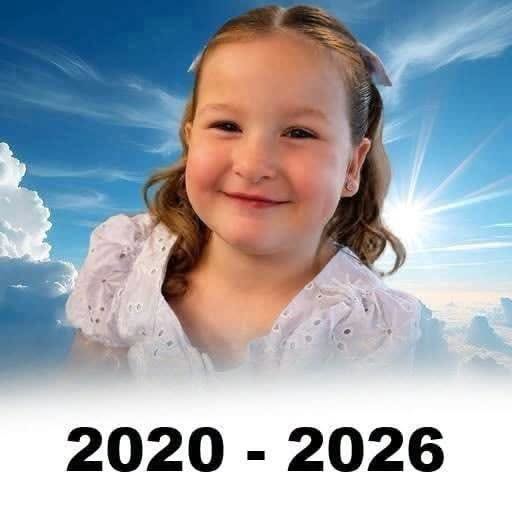
Emersyn Paisleigh Bridgers, lovingly known as Emmy, was only six years old when her life came to an unexpected end. She had recently completed kindergarten at Euharlee Elementary School in Georgia and was preparing for the next important step in her young life: first grade. Like many children her age, she had been thinking about the upcoming school year, familiar classmates and the excitement of returning to class. She had already chosen a rose-themed outfit for Open House, a small detail that later became especially meaningful to the people who knew her.
Her death suddenly transformed ordinary school plans into memories. Emmy had been scheduled for a tonsillectomy, a commonly performed procedure involving removal of the tonsils. However, authorities later stated that the planned surgery itself was not carried out. That fact is important because early discussions naturally connected her death with the procedure she had been expected to undergo. Saying that she died from the surgery would therefore go beyond the information officially confirmed.
The circumstances required a closer review of her medical records and the events that occurred before her death. The Bartow County Coroner’s Office sought additional medical documentation to understand what treatment Emmy had received. The Georgia Bureau of Investigation was also involved through the autopsy process. At the time of the early public reports, authorities had not announced a definitive cause of death. That meant important questions remained unanswered. Determining exactly what happened required medical evidence rather than assumptions based only on the fact that a procedure had been planned.
For Emmy’s family, the absence of immediate answers added another layer of pain to an already devastating loss. When a child enters a medical setting for what relatives believe will be a routine procedure and the day ends unexpectedly, questions are inevitable. Family members naturally want to know what changed, what treatment occurred and why the planned surgery did not proceed. Those questions do not themselves prove wrongdoing. They reflect the understandable need for a clear and complete explanation.
The investigation therefore needed to remain focused on verified evidence. Medical records, autopsy findings and the timeline surrounding Emmy’s care would all be important pieces of information. Until those details were reviewed, assigning responsibility to a hospital, doctor or other medical professional would have been premature. The existence of an investigation is not proof of negligence or misconduct. It is part of the process used to determine what actually happened.
The same caution applies to the cause of death. Because a tonsillectomy had been scheduled, it would be easy for readers to assume that a surgical complication was responsible. But if the operation did not take place, that conclusion would be inaccurate. The appropriate question becomes what happened before the planned procedure and what medical event ultimately led to Emmy’s death. Only official findings can provide that answer with confidence.
While the medical circumstances attracted public attention, Emmy’s family and school remembered a much fuller picture of her life. She was not defined by the unanswered questions surrounding her final day. She was a young student who had already developed a reputation for kindness, warmth and an unusual willingness to care for the people around her. Those qualities were repeatedly mentioned by the adults who knew her at school.
At Euharlee Elementary, Emmy was affectionately known as “Little Momma.” The nickname reflected the way she looked after classmates and tried to make other children feel included. Teachers remembered her as someone who would step forward when another student needed help. Even at six years old, she had developed a personality that stood out to the adults around her. Her kindness had become part of how the school community knew her.
That reputation had also been recognized during her time as a student. Emmy had been acknowledged for demonstrating kindness toward others, showing that descriptions of her caring nature were not simply added after her death. They reflected behavior teachers had already noticed during ordinary school life. For a kindergarten student, simple acts of helping and including others can leave a strong impression. In Emmy’s case, those acts became part of the way she was remembered.
Her transition from kindergarten to first grade should have been another happy milestone. She had already completed one important school year and was preparing to return to a familiar environment. The new year would have brought different lessons, routines and opportunities to grow. Emmy was reportedly excited to continue with a teacher she knew and classmates who had already become part of her daily life. That anticipation makes the timing of her death especially difficult for those around her.
The rose-themed outfit she selected for Open House became one of the most poignant details in the school’s remembrance. Before the tragedy, it was simply clothing chosen by a child who was excited to return to school. Afterward, it symbolized a future that never had the chance to arrive. Small details like this often carry enormous emotional weight after a sudden loss because they show how ordinary life appeared only moments before everything changed.
For teachers, the beginning of the school year continued despite Emmy’s absence. Classrooms still had to be prepared. Other students still arrived with backpacks, supplies and excitement about the months ahead. Yet one expected student was missing. For adults who had watched Emmy grow during kindergarten, that absence was impossible to ignore.
Her classmates faced a different kind of difficulty. Children at that age may understand that someone is gone without fully understanding the complexity surrounding death. Teachers and parents often have to explain such losses carefully and in language appropriate for young children. Memories of Emmy’s kindness and friendliness may therefore become more meaningful than complicated medical explanations. Those memories are the part of the story her classmates are most likely to carry with them.
Emmy’s older sister, Jordan Thompson, also remembered her through the closeness they shared as siblings. To Jordan, Emmy was not the subject of a medical investigation or a headline. She was a younger sister and a central part of family life. Reports describing Jordan’s memories emphasized affection, laughter and the bond that existed between them. Those personal reflections provide a perspective that no official report could capture.
Family relationships are built through countless ordinary experiences that outsiders never witness. Sisters share routines, conversations, jokes and moments that may seem small at the time but become deeply important after a loss. For Emmy’s family, those memories remain more significant than the public attention surrounding the circumstances of her death. No medical finding can replace them.
The investigation still matters because families deserve accurate answers. Understanding the final hours of a loved one’s life can provide clarity about what occurred. An autopsy may identify biological findings, while medical records can help establish the sequence of treatment. Those forms of evidence can answer questions that family memory cannot. But they address only the final part of a much larger life.
It is important to separate those two parts of Emmy’s story. One is the investigation into how she died. The other is the story of who she was before that day. Responsible reporting should include both without allowing one to erase the other. The medical questions deserve careful attention, but Emmy’s personality, relationships and school life deserve equal respect.
The public details already provide a clear picture of a child with strong social qualities. Teachers described her as warm, caring and eager to help others. She appears to have been the kind of student who noticed when someone needed support. In a classroom full of young children still learning how to share and cooperate, that behavior stood out enough to earn her an affectionate nickname.
Her school also remembered her as someone who made friends easily. Children who approach others openly can have a significant influence on classroom atmosphere. A simple greeting, invitation to play or willingness to help can make another child feel accepted. Emmy seems to have had that ability naturally. These are the kinds of traits people often remember most clearly after someone is gone.
The school’s remembrance also showed that Emmy had been excited about the future. She was not simply finishing one stage of school; she was looking ahead to the next. First grade represented new experiences and a greater sense of independence. She had every reason to expect the ordinary rhythm of school life to continue. That expectation makes her sudden absence all the more painful.
The timing also meant that many of the usual preparations for school were already underway. Families were organizing schedules, buying supplies and preparing children for Open House. Emmy had joined in those preparations before her death. The fact that her plans were so ordinary is part of what makes the story emotionally powerful. Nothing about those plans suggested that her life was about to change so dramatically.
The same sense of normality surrounded the planned medical visit. A tonsillectomy is familiar to many families, and relatives may reasonably have expected a straightforward process. But an individual medical case can never be understood solely from general expectations about a procedure. Specific circumstances matter. That is why investigators needed Emmy’s actual records rather than relying on assumptions about what usually happens.
A routine label does not explain an individual outcome. Medical events can change quickly for reasons that are not visible to the public. Without access to the relevant records, outsiders cannot know what happened before the planned surgery was canceled or did not proceed. Any attempt to identify a specific medication, reaction or mistake without evidence would therefore be speculation.
This is especially important because early reports can sometimes shape public understanding before all facts are available. If an event happens around the time of a planned procedure, people may instinctively connect the two. That connection can then be repeated until it sounds like confirmed causation. In Emmy’s case, authorities later clarified that the surgery itself was not performed. That correction significantly changes how the event should be described.
Accurate language therefore matters. Saying that Emmy died after arriving for a planned procedure is different from saying that she died because of the procedure. The first describes sequence. The second assigns cause. Unless official findings establish causation, the second type of wording should be avoided.
The same principle applies to questions of responsibility. A family may understandably seek answers from a hospital or medical team. That does not mean wrongdoing has already been demonstrated. An investigation exists to determine whether the care provided was appropriate and what events occurred. Fair reporting should allow that process to reach conclusions before assigning blame.
This restraint protects everyone involved, including Emmy’s family. Unsupported theories can create confusion at a time when relatives are already dealing with grief. Different versions of events can spread quickly online and make it harder to distinguish verified facts from assumptions. Clear attribution and careful language are therefore especially important in stories involving sudden deaths.
For the wider public, Emmy’s case should not be used to make broad claims about tonsillectomies or pediatric medical care in general. One unresolved case cannot establish the safety or danger of a procedure for all patients. Those questions require much broader medical evidence. Emmy’s story concerns a specific child and a specific set of circumstances that authorities were still working to understand.
Community support became another important part of the story. When a family loses a child unexpectedly, practical needs can arrive alongside emotional grief. Funeral arrangements, travel, meals and other responsibilities continue even when relatives are struggling to process what happened. Assistance from friends, neighbors and organizations can reduce some of that burden.
Expressions of support also show how deeply a child can affect people beyond the immediate family. Teachers, classmates and parents may all feel the loss differently. Some knew Emmy personally, while others may have known her through school events or shared connections. The response around the family reflected the fact that her life had touched many people during a short period.
Support does not replace answers, however. Family members can be grateful for kindness while still wanting a complete explanation of the medical circumstances. These needs are not contradictory. Grief can include appreciation for support, anger, confusion and the desire for facts at the same time. Each emotion may appear at different moments.
Official findings, when available, can help clarify the unanswered parts of the timeline. They may explain what happened before the planned procedure, what treatment was provided and what medical condition caused Emmy’s death. Until those findings are publicly established, the responsible approach is to leave those questions open. Uncertainty should not be disguised as certainty for the sake of a more dramatic story.
This approach is especially important on social media, where emotionally powerful stories can spread rapidly. Headlines that suggest a definite cause before investigators have confirmed one can unintentionally mislead thousands of readers. A more careful account can still be compelling without overstating the evidence. The facts of a six-year-old child dying unexpectedly are already significant enough.
Emmy’s story does not need additional drama. The verified details are heartbreaking on their own. She had finished kindergarten. She expected to enter first grade. She had picked out an outfit for school. She was remembered for kindness and for watching over other children.
Those details show a life interrupted rather than simply a medical case. They also explain why her school community responded with such strong emotion. A classroom is made up not only of lessons and assignments but also of relationships. When one child is suddenly absent, the entire social environment can feel different.
For Mrs. Rose and other adults at the school, Emmy’s nickname likely represented hundreds of small interactions. A child earns a name like “Little Momma” through repeated behavior. She likely helped classmates often enough for that characteristic to become familiar. That is the kind of memory that can remain with a teacher long after a student leaves the classroom.
For family members, different memories will carry the same importance. Some may remember Emmy’s laughter. Others may remember the way she dressed, spoke or followed older relatives around. These personal details cannot be fully documented in public reporting, but they form the real foundation of remembrance.
Jordan’s relationship with Emmy is part of that private world. Older and younger siblings often develop bonds that change as they grow. Emmy never had the chance to reach later stages of that relationship. Jordan therefore carries both the memories they made and the absence of experiences they expected to share in the future.
The loss of future experiences is one of the hardest aspects of a child’s death. Families grieve not only what has already happened but also what will never happen. First days of school, birthdays, graduations and countless ordinary events become imagined rather than experienced. The rose-themed outfit is powerful because it represents one of those future moments that was already taking shape.
At school, similar thoughts may arise around empty milestones. Teachers may wonder how Emmy would have developed academically. Classmates may notice her absence during activities she once enjoyed. These reflections can continue long after public attention has moved on. For the people closest to the child, grief does not follow a news cycle.
That is why respectful reporting matters long after the immediate event. A child’s name should not be reduced to a sensational headline designed only to attract attention. The investigation can be reported clearly while the person at the center of it remains visible. In Emmy’s case, her identity as a daughter, sister, student and friend deserves to remain central.
There is also value in acknowledging the limits of available information. Journalism and social-media reporting sometimes create pressure to answer every question immediately. Real investigations do not always allow that. Medical records must be reviewed carefully. Autopsy findings may require additional testing. Officials may need time before they can responsibly announce conclusions.
Waiting for those findings can be frustrating for families and the public, but premature certainty can cause even more harm. A wrong explanation can spread far more quickly than a later correction. By clearly distinguishing confirmed facts from unresolved questions, reporters can reduce that risk.
In Emmy’s case, one of the clearest confirmed facts is that the planned surgery did not take place. That point should remain central whenever her final day is described. It prevents the story from incorrectly becoming one about a surgical complication without evidence. The actual medical cause should come from the completed investigation.
Another confirmed part of the story is the school’s remembrance of Emmy. Unlike the unresolved medical questions, her personality was not uncertain to the people who knew her. Teachers had firsthand experience of her kindness. Classmates had experienced her friendship. Her family knew the child behind every public description.
That contrast is important. The cause of death required investigation. The impact of her life did not. Those who knew Emmy were already clear about what she meant to them.
This is perhaps the most balanced way to understand the story. There are questions that deserve answers, and there are memories that deserve protection. The investigation should continue according to evidence, while remembrance can focus on the person who was lost. Neither needs to diminish the other.
As official reviews continue or conclusions become available, future reporting should update the story accordingly. If a cause of death is officially established, it can be described with proper attribution. If investigators determine that no wrongdoing occurred, that finding should also be reported clearly. If additional questions arise, they should be presented as questions rather than assumptions.
Until then, there is no responsible basis for accusing specific individuals or institutions. There is also no basis for describing the planned tonsillectomy itself as the confirmed cause. The public record supports a more cautious description: Emmy had been scheduled for a procedure, the procedure was not performed, and authorities reviewed the circumstances surrounding her sudden death.
That wording may sound less dramatic than some early headlines, but it is more accurate. Accuracy is especially important when a tragedy involves a child and grieving relatives. Sensational language can increase pain while offering little real understanding.
The most meaningful parts of Emmy’s life are found elsewhere. They are in the classroom where she helped others. They are in the nickname given by a teacher who saw her caring personality. They are in the first-grade plans she had already begun making. They are in the family relationships that existed long before anyone outside her community knew her name.
Her kindergarten year had given her a place within the school. She had classmates who recognized her personality and teachers who expected to see her again. She was at the beginning of a long educational journey that should have included many more classrooms and milestones. That future was suddenly interrupted.
Still, the time she had already spent with others was enough to leave a clear impression. Children do not need decades to influence the people around them. Kindness can be remembered after only a few interactions. A welcoming smile can become part of how someone is remembered for years.
This is what makes the school’s description of Emmy so important. It gives readers something more lasting than the circumstances of her death. It tells them what kind of child she was when life was normal. That perspective keeps the story centered on a person rather than an investigation.
The questions surrounding her final day should still be answered. Families deserve transparency when an expected medical visit ends unexpectedly. Authorities have a responsibility to examine evidence carefully. Medical professionals involved in the review must be able to explain findings accurately.
But the process should not be rushed simply to satisfy public curiosity. A careful answer is more valuable than a quick one. If an autopsy or medical review takes time, that does not make speculation more reliable. It simply means the evidence is still being evaluated.
For social-media audiences, this case also offers a broader lesson about how to read breaking stories. Early information can change. Family descriptions, fundraiser language and official statements may not always use the same terminology. Readers should pay attention to who is making each claim and whether the information has been independently confirmed.
The same standard should apply before sharing a headline. If a cause of death is still under investigation, a post should not present a theory as established fact. If an operation did not occur, the caption should not say the child died during that operation. Small wording differences can completely change the meaning of a story.
Respect for the family also means avoiding graphic or unnecessary details. Emmy was a child, and there is no need to turn her death into shocking entertainment. The known circumstances can be described clearly without exploiting them. A compassionate tone is compatible with accurate journalism.
Her family and school community will ultimately carry the memories long after public interest fades. Teachers will remember the student who looked after others. Relatives will remember the girl they called Emmy. Classmates may one day remember her as the friend who made kindergarten feel more welcoming.
The rose-themed outfit may remain one of those memories. It was chosen for an ordinary school event that Emmy expected to attend. That makes it a symbol not of tragedy alone but of anticipation. It represents the life she was actively planning before everything changed.
Her death therefore contains two very different realities. One is an unresolved medical event that requires evidence and careful investigation. The other is the very clear reality of a six-year-old life filled with family, school, relationships and plans. A responsible account must hold both at once.
Reducing the story only to medical questions would erase much of who Emmy was. Ignoring those questions entirely would also be unfair to the family’s need for answers. The balanced approach is to report the investigation accurately while keeping her life at the center.
That means acknowledging what is known. Emmy was six. She had recently finished kindergarten. She was preparing for first grade. A tonsillectomy had been scheduled but was not ultimately performed. Authorities reviewed the circumstances of her death.
It also means acknowledging what was not yet known. The exact medical cause had not initially been publicly established. The available information did not justify blaming a particular professional or institution. The specific event that led to her death required further evidence.
Those limits should remain visible rather than being hidden. Responsible reporting does not lose credibility by admitting uncertainty. It gains credibility by refusing to invent an answer.
For the people who loved Emmy, however, one thing required no investigation. They knew exactly who she was. She was the child whose smile filled familiar rooms. She was the younger sister whose presence shaped family life. She was the student who looked after classmates and earned the affectionate name “Little Momma.”
She was also a child ready to begin another ordinary school year. First grade should have been the next chapter in a much longer story. Her family should have been taking photographs and watching her walk into school wearing the outfit she had selected. Instead, those plans became part of the grief surrounding her loss.
No official document can measure what that absence means. Medical records can describe treatment. An autopsy can describe physical findings. An investigation can establish a timeline. None of them can describe the experience of missing a child.
That task belongs to the people who remember her. Their stories provide the human context that official records cannot. A laugh, a nickname or an outfit may seem insignificant compared with medical evidence, but those are the details that describe a life rather than a case.
Emmy’s story should therefore continue to be told with care. The investigation deserves accuracy. Her family deserves respect. Medical professionals deserve fairness until evidence establishes conclusions. And Emmy herself deserves to be remembered for more than the circumstances of her death.
The safest and most truthful conclusion remains straightforward. Emersyn “Emmy” Bridgers died unexpectedly at the age of six after having been scheduled for a medical procedure that authorities said was not performed. Officials reviewed medical records and autopsy findings to understand the circumstances. Until verified findings provide a more complete explanation, the exact cause should not be guessed.
Beyond those unanswered questions stands a much clearer legacy. Emmy was remembered as a kind and affectionate young student who cared about other children. She had recently finished kindergarten, was preparing for first grade and had already begun imagining the school year ahead.
That is why her life cannot be measured only by its final day. The investigation may explain how she died, but it cannot define who she was. For those closest to her, that definition already existed in the years, classrooms and relationships that came before.
Emmy was a daughter, a sister, a friend and a student. She was a child whose teachers noticed her kindness and whose family knew the full personality behind the public name. Her life was painfully short, but it was long enough to leave memories that cannot be replaced by any official report.
Whatever final answers emerge from the medical review, they should be reported carefully and without exaggeration. Until then, speculation should remain separate from fact. The story is already powerful enough when told truthfully.
And at the center of that story should remain the six-year-old girl who was excited to begin first grade, who cared for classmates and who had already chosen the rose-themed outfit she expected to wear when she returned to school.
