
For decades, Bruce Willis was recognized internationally as one of Hollywood’s most familiar actors, known particularly for action films that often portrayed him as resilient under extraordinary pressure. Away from his screen career, however, Willis and the people closest to him have faced a much more personal challenge. In March 2022, his family announced that he would step away from acting after being diagnosed with aphasia, a condition affecting his ability to communicate. The announcement marked a major change for Willis after a career that had stretched across several decades.
Almost a year later, his relatives provided a significant update. In February 2023, the family announced that Willis had received a more specific diagnosis of frontotemporal dementia, commonly abbreviated as FTD. They explained that while receiving the diagnosis was painful, finally having a clearer understanding of what Bruce was experiencing also provided some relief. His communication difficulties were described as one symptom of a much broader neurological condition.
Frontotemporal dementia refers to a group of disorders involving degeneration of the frontal and temporal regions of the brain. These areas are associated with functions including language, behavior, personality and decision-making. FTD can therefore appear differently from the memory difficulties that many people immediately associate with dementia. Symptoms vary considerably among individuals, making professional diagnosis particularly important and making assumptions about someone’s condition inappropriate without reliable medical information.
The Willis family decided to speak publicly about Bruce’s diagnosis while continuing to protect many details of his private life. In their 2023 statement, they explained that Bruce had long used his public profile to bring attention to important causes and that they believed he would want his circumstances to help increase awareness of FTD. Their announcement consequently became an important moment for organizations and families seeking greater public understanding of the condition.
The diagnosis has naturally affected Bruce’s entire family. He is the father of five daughters. He shares Rumer, Scout and Tallulah Willis with former wife Demi Moore, while he and his wife Emma Heming Willis are parents to Mabel and Evelyn. Despite the changes created by his condition, members of the blended family have repeatedly demonstrated their support for Bruce and one another through public statements and carefully shared family moments.
Emma Heming Willis has become particularly outspoken about the realities faced by caregivers and families dealing with dementia. Rather than suggesting that caregiving is always inspirational or manageable, she has acknowledged that it can involve grief, exhaustion and difficult adjustments. She has also encouraged caregivers to recognize that taking care of their own physical and emotional well-being matters. Her advocacy has increasingly focused on education, support and improving awareness of FTD.
Among Bruce’s daughters, Tallulah Willis has offered one of the most detailed personal accounts of what it was like to recognize changes in her father before she fully understood their cause. In an essay published by Vogue in 2023, Tallulah reflected on moments that made more sense only after Bruce’s health problems became clear. She admitted that before understanding what was happening medically, she sometimes interpreted changes in his behavior through the lens of their personal relationship.
That realization was understandably painful. When a neurological illness changes communication or behavior, relatives may initially search for explanations based on ordinary relationship dynamics. Tallulah’s account demonstrated how incomplete information can lead family members to misunderstand changes they are witnessing. Once Bruce’s condition became better understood, experiences she had previously interpreted in one way acquired a very different meaning.
At the same time that Bruce was experiencing his own health difficulties, Tallulah was dealing with serious personal challenges. She has publicly discussed an eating disorder, depression and periods of treatment. These are experiences Tallulah herself chose to disclose, and they should be discussed without adding speculation about conditions or circumstances she has not publicly confirmed.
Tallulah has explained that her own struggles affected how she processed her father’s declining health. There were periods when she was deeply focused on surviving and addressing her own problems, leaving her with limited emotional capacity to fully understand what was happening to Bruce. Looking back, she has written openly about the complicated feelings associated with that period. Her reflections illustrate that families can experience multiple difficult situations simultaneously rather than facing one neatly separated problem at a time.
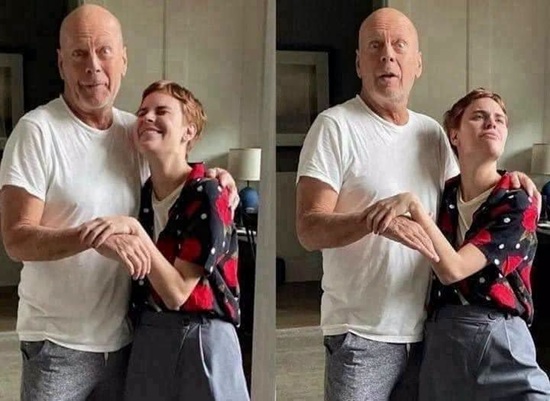
Another important development came when Tallulah publicly revealed in 2024 that she had been diagnosed with autism as an adult. She initially disclosed the diagnosis while sharing an older video of herself with Bruce and responding to comments about her behavior in the clip. Tallulah subsequently explained that receiving the diagnosis as an adult helped her better understand aspects of herself that had previously been misunderstood.
An adult autism diagnosis should not be presented as evidence that Tallulah’s life is deteriorating. Autism is a neurodevelopmental condition, and Tallulah has spoken about the diagnosis in the context of gaining greater understanding of herself. Combining her autism diagnosis with Bruce’s dementia to suggest that both are experiencing the same type of health decline would therefore be misleading. They are different conditions affecting different people in very different ways.
This distinction is particularly important when stories about celebrities circulate through dramatic online headlines. A headline suggesting that another member of the Willis family is secretly “unraveling” may attract attention, but such language can imply medical conclusions that available evidence does not support. The family’s documented experiences are emotional enough without adding unsupported claims.
Tallulah has not hidden the fact that some aspects of her family’s circumstances are painful. She has spoken about grief and the difficulty of witnessing changes in her father. At the same time, she has repeatedly emphasized love and connection. Her public comments suggest an effort to remain present with Bruce rather than allowing fear about the future to dominate every interaction they still share.
This approach is especially meaningful in the context of a progressive illness. Family members can experience what is sometimes described as anticipatory grief as they adjust to changes while their loved one is still present. Tallulah has described paying attention to memories and moments with her father, recognizing their importance without pretending that the situation is easy.
Demi Moore has also continued to publicly express support for Bruce and their family. Although their marriage ended many years ago, Bruce and Demi maintained a family relationship while raising their daughters. During his illness, that connection has remained visible. The family’s public appearances and statements have often shown a blended family attempting to work together around someone they collectively love.
The arrival of another generation has added a different dimension to the family’s story. Bruce’s eldest daughter, Rumer, became a mother in 2023, making Bruce a grandfather. Family members have shared selected moments involving multiple generations while maintaining boundaries around Bruce’s condition. These glimpses reinforce that serious illness can exist alongside milestones, celebrations and ordinary family experiences.
For Emma Heming Willis, learning to live with Bruce’s diagnosis has also involved finding reliable information about FTD. She has spoken about how difficult the early period was and about the importance of having resources for caregivers. Her advocacy highlights a challenge shared by many families dealing with neurological diseases: receiving a diagnosis does not automatically provide all the knowledge or emotional support needed to navigate what comes afterward.
When Bruce’s family publicly announced his FTD diagnosis, they also drew attention to the limited treatment options available. They expressed hope that greater awareness could contribute to research and future progress. Their decision transformed an intensely private family challenge into an opportunity to direct public attention toward a condition that does not always receive the same recognition as more widely known forms of dementia.
Still, public awareness does not mean the family has surrendered its right to privacy. Not every detail about Bruce’s current abilities, daily routines or medical progression has been publicly documented. When relatives provide updates, those statements can be reported accurately. In the absence of such information, however, predictions about exactly how quickly his condition is changing should not be presented as established fact.
The same standard should apply to Tallulah. Her willingness to discuss eating-disorder recovery, mental health and autism does not make every aspect of her well-being public information. It is possible to acknowledge the experiences she has described without attempting to diagnose her from photographs, social-media posts or anonymous claims. Responsible reporting distinguishes what someone has actually disclosed from what outsiders merely suspect.
Viewed in that context, the Willis family’s experience becomes more complex than a story about tragedy. There is undeniable grief surrounding Bruce’s progressive illness, but family members have also spoken about affection, acceptance and the importance of remaining connected. Tallulah’s personal story likewise includes difficult periods, yet it also includes treatment, self-discovery and a clearer understanding of herself.
One of the strongest themes running through Tallulah’s public reflections is the difference between what she initially believed and what she later understood. Before Bruce’s diagnosis became clear, she sometimes interpreted his changing behavior personally. After learning more about his medical condition, she was able to reconsider those moments through a different lens. That change in understanding did not erase the pain, but it gave the experiences context.
Her own diagnoses created a similar process of reinterpretation. Learning more about herself allowed Tallulah to reconsider experiences that previously seemed confusing. In both cases, additional information changed the meaning attached to earlier events. This is one reason accurate health information matters: labels should not be used casually, but an appropriate professional diagnosis can sometimes provide clarity where uncertainty once existed.
For the Willis family, adapting to Bruce’s condition remains an ongoing process rather than a story with a simple ending. FTD is progressive, and the family has been clear about the seriousness of the diagnosis. At the same time, they continue to emphasize that Bruce is surrounded by people who care deeply about him.
His career may have ended because of his health, but his identity within the family extends far beyond his work as an actor. He remains a husband, father, grandfather and loved one. The films that made him famous represent only one part of his life, while the relationships surrounding him have become increasingly central to the public updates his family chooses to share.
Tallulah’s role in that story should likewise not be reduced to being the daughter of a famous father facing dementia. She has openly described her own path through difficult periods and the process of learning more about herself. Her autism diagnosis, mental-health history and recovery experiences belong to her individual story and should not be sensationalized as evidence of another mysterious family crisis.
The Willis family’s public journey illustrates how health challenges can affect several people differently while drawing them closer around a shared reality. Bruce’s diagnosis requires adaptation from everyone who loves him, while individual family members continue navigating their own responsibilities and personal experiences. There is no need to exaggerate those circumstances to recognize their emotional significance.
Their experience also demonstrates why context is particularly important in health-related reporting. Dramatic phrases can create the impression that a situation is more medically certain or more catastrophic than the available evidence shows. Using the family’s own statements and reliable information about FTD provides a more accurate picture than relying on speculation about what might be happening privately.
What is publicly known is already deeply moving. Bruce Willis stepped away from acting after experiencing communication difficulties and was subsequently diagnosed with frontotemporal dementia. His family has rallied around him while helping raise awareness of the disease. Tallulah has simultaneously spoken openly about her own health history, recovery and adult autism diagnosis.
Those facts tell a story of significant challenges without requiring unsupported additions. They show a family confronting circumstances that changed expectations and required everyone involved to adapt. They also show that difficult medical realities do not eliminate affection, humor or meaningful family relationships.
Ultimately, the most responsible way to understand the Willis family’s situation is not as evidence that another life is secretly falling apart, but as an ongoing story of adjustment. Bruce is living with a serious progressive neurological condition, and his relatives are learning how to accompany him through it. Tallulah has faced challenges of her own while publicly describing a journey toward greater self-understanding.
Behind the celebrity names is a reality recognizable to many families dealing with serious illness: circumstances can change unexpectedly, relationships must adapt, and uncertainty can exist alongside love. Bruce Willis’ diagnosis has undeniably transformed life for those closest to him, but the family’s public message has repeatedly included something beyond grief. Through difficult changes, they continue emphasizing connection, support and the value of appreciating the moments they are still able to share.

