
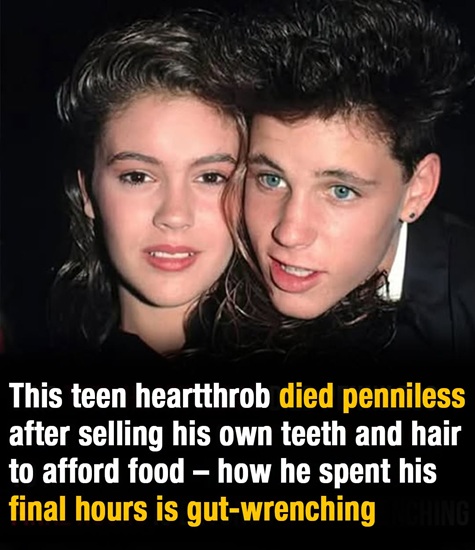
The entertainment industry has produced countless young stars whose talent captured the hearts of audiences around the world. While many child actors successfully transitioned into adult careers, others struggled with the intense pressures that often accompany early fame. Among the most memorable young performers of the 1980s was Canadian actor Corey Haim, whose natural charisma, emotional performances, and boyish charm made him one of Hollywood’s biggest teenage stars.
His remarkable rise to fame was accompanied by enormous success, but it also marked the beginning of personal challenges that would follow him throughout much of his life. Corey Ian Haim was born on December 23, 1971, in Toronto, Ontario, Canada. He grew up in a middle-class family with parents Judy and Bernie Haim and several siblings. As a child, Corey was known for being quiet and somewhat shy. Hoping to help him develop greater confidence, his parents encouraged him to take acting classes.
What initially began as a way to improve his self-esteem quickly developed into a genuine passion. Corey soon discovered that performing in front of a camera felt completely natural, and casting directors immediately recognized his remarkable talent. By the age of ten, Corey had already begun appearing in television commercials, gaining valuable experience in front of cameras and production crews.

His early work opened the door to television acting, eventually leading to a role in the Canadian children’s television series The Edison Twins. Although the series primarily targeted younger audiences, it provided Corey with an important opportunity to build his acting skills while becoming comfortable working on professional film sets. Producers and directors who worked with him often praised his dedication, maturity, and ability to memorize scenes despite his young age.
While Corey’s acting career was beginning to flourish, his personal life also experienced significant changes. During his childhood, his parents divorced, an event that reportedly had a deep emotional impact on him. Like many children whose families go through separation, Corey faced challenges adjusting to new circumstances while simultaneously balancing the growing demands of an increasingly busy acting schedule. Despite these personal difficulties, he remained committed to his career and continued auditioning for increasingly prominent film roles.
A major turning point arrived in 1984 when Corey was cast as Brian Livingston in the drama Firstborn. The film featured established actors, giving the young performer an opportunity to demonstrate his abilities alongside experienced professionals. His performance received widespread praise from critics and audiences alike. Corey earned a Young Artist Award nomination, signaling that Hollywood had discovered an exceptional new talent. The role significantly expanded his reputation within the film industry and opened the door to larger opportunities in the years that followed.
One of the film’s strongest supporters was renowned movie critic Roger Ebert. Reviewing Firstborn, Ebert praised Corey’s performance, describing him as one of the film’s greatest strengths and expressing confidence that he possessed the potential to enjoy a long and successful acting career. Ebert believed Corey displayed an emotional depth rarely seen in performers of his age, writing that if he continued developing his talent, he would avoid becoming another forgotten child star. At the time, many industry observers shared that optimistic view, believing Corey was destined for an extraordinary future in Hollywood.
Throughout the mid-1980s, Corey continued accepting increasingly significant film roles that showcased his versatility. He appeared in movies including Silver Bullet, Murphy’s Romance, and Lucas, each performance helping him gain recognition among producers seeking talented young actors. Whether portraying dramatic, humorous, or emotional characters, Corey demonstrated a natural screen presence that resonated with audiences. His growing popularity transformed him into one of Hollywood’s busiest teenage performers before he had even reached adulthood.
Everything changed in 1987 with the release of The Lost Boys, a supernatural horror-comedy that would become one of the defining films of the decade. Starring alongside Jason Patric, Kiefer Sutherland, Jami Gertz, Corey Feldman, and several other rising actors, Corey Haim portrayed Sam Emerson, a teenager who moves with his family to the fictional California town of Santa Carla. The film combined horror, comedy, and coming-of-age storytelling, quickly earning both commercial success and lasting popularity among movie fans.
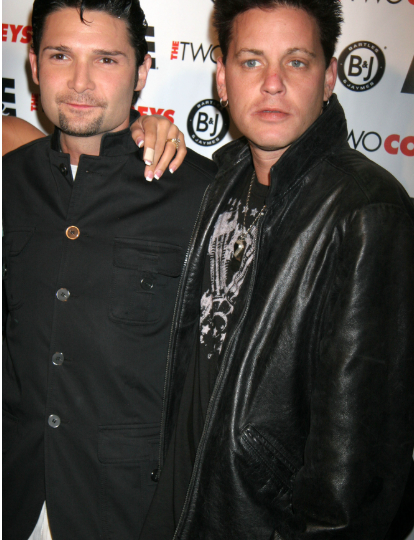
Perhaps one of the film’s most memorable aspects was the chemistry between Corey Haim and fellow young actor Corey Feldman. Their friendship both on and off screen quickly became one of Hollywood’s most recognizable partnerships. Fans affectionately referred to them as “The Two Coreys,” and the pair would go on to star together in several additional films, including License to Drive, Dream a Little Dream, and later the reality television series The Two Coreys. Their collaboration helped define late-1980s youth entertainment and made them household names across North America and beyond.
As Corey’s popularity continued to grow, so did the attention surrounding every aspect of his life. Thousands of fan letters arrived from around the world each week, and teen magazines regularly featured him on their covers. His photographs decorated bedroom walls across countless households, while interviews and television appearances made him one of the most recognizable young celebrities of his generation. For many teenagers growing up during the 1980s, Corey Haim represented the classic Hollywood teen idol—charismatic, talented, and seemingly destined for an even brighter future.
Despite becoming one of the most recognizable young actors of the 1980s, Corey Haim found it increasingly difficult to cope with the pressures that accompanied fame. As his popularity continued to rise, so did the demands of Hollywood. Long filming schedules, constant public attention, and the expectations placed on a teenage star created an environment that proved extremely challenging. Like many young performers who achieve success at an early age, Corey suddenly found himself living a lifestyle that few teenagers could fully understand. Although millions of fans admired him, the transition from ordinary childhood to international celebrity came with emotional and personal challenges that would shape much of his later life.
According to Corey Haim’s own interviews over the years, his struggle with substance abuse began while he was still a teenager. During the filming of Lucas in 1986, he later said he started drinking alcohol, and as his career expanded, his drug use gradually became more serious. After relocating to Los Angeles full-time, he became exposed to a fast-paced Hollywood lifestyle where drugs were unfortunately common in some circles. Over time, he acknowledged using marijuana, cocaine, and eventually becoming dependent on prescription medications. His addiction developed gradually rather than overnight, eventually affecting nearly every aspect of his personal and professional life.
As his health declined, Corey repeatedly sought treatment in an effort to overcome addiction. He entered rehabilitation programs on multiple occasions throughout the late 1980s and 1990s. In interviews, he openly described himself as a “chronic relapser,” explaining that although he sincerely wanted to recover, maintaining long-term sobriety proved extremely difficult. His honesty about these struggles helped many people better understand addiction as a complex medical condition rather than simply a lack of willpower. Unfortunately, repeated relapses also made it increasingly difficult for him to rebuild momentum in his acting career.
The effects of addiction gradually became visible to producers, directors, and colleagues throughout the entertainment industry. While Corey remained a talented performer, his reliability became a growing concern for film studios and television productions. Acting opportunities that had once come regularly became far less frequent. During periods when his health deteriorated, he stepped away from Hollywood almost entirely, resulting in an extended absence from major film projects. As work became increasingly difficult to secure, financial problems also began affecting his daily life.
In 1997, Corey Haim filed for bankruptcy after experiencing years of declining income and mounting financial obligations. Court records showed that many of his assets had been sold or lost during this difficult period. Various media reports documented how dramatically his financial circumstances had changed compared with the extraordinary success he enjoyed only a decade earlier. The contrast between being one of Hollywood’s highest-profile teenage actors and later facing serious financial hardship became one of the most heartbreaking aspects of his story.
Throughout the early 2000s, Corey made several attempts to revive his acting career. He accepted independent film roles, attended fan conventions, and participated in television interviews while continuing to express his desire to return to mainstream Hollywood productions. In 2007, he reunited professionally with longtime friend Corey Feldman for the A&E reality series The Two Coreys. The program followed both actors as they attempted to rebuild their careers while confronting personal challenges. Although many viewers appreciated the show’s honesty, it also revealed the ongoing difficulties Corey continued to face in his battle with addiction.
When The Two Coreys ended in 2008, Corey remained hopeful about rebuilding his career. Determined to demonstrate his commitment to working again, he placed a public advertisement in Variety magazine declaring that he was ready to return to acting and make amends for past professional difficulties. Friends and colleagues noted that he genuinely wanted another opportunity to succeed in Hollywood. Although he continued auditioning and pursuing projects, the combination of health issues and previous career interruptions made a full comeback increasingly difficult.
On March 10, 2010, Corey Haim died at the age of 38. His sudden death shocked fans, fellow actors, and members of the entertainment industry who had followed his career since childhood. Initial reports led to widespread speculation because prescription medications were discovered in his home. However, following a full investigation and autopsy, the Los Angeles County Department of Medical Examiner-Coroner determined that Corey died from pneumonia, with underlying medical conditions contributing to his death. The official findings concluded that his death resulted from natural causes rather than an accidental drug overdose, correcting many of the early assumptions reported immediately after his passing.
Following his death, renewed attention focused not only on his career but also on broader discussions surrounding child actors, addiction, mental health, and the responsibilities of the entertainment industry. In subsequent years, Corey Feldman publicly alleged that both he and Corey Haim had experienced sexual abuse while working in Hollywood as children. Those allegations became the subject of documentaries, interviews, and media coverage. Some individuals named in connection with those claims publicly denied the accusations, and certain allegations have remained disputed. Corey Haim’s mother, Judy Haim, confirmed that her son had disclosed being sexually abused by one individual during his youth, while disagreeing with some of Feldman’s broader claims regarding an organized network. As with any disputed allegations, it remains important to distinguish between verified facts, personal testimony, and claims that have been denied or were never legally established.
More than a decade after his passing, Corey Haim continues to be remembered primarily for the remarkable talent he displayed during his brief but influential career. Films such as The Lost Boys, Lucas, License to Drive, Silver Bullet, and Dream a Little Dream remain popular with audiences and continue introducing new generations to his work through streaming platforms and home media releases. His story serves as a powerful reminder of both the extraordinary opportunities and the immense pressures that can accompany childhood fame. While his life was marked by personal struggles, Corey Haim’s performances continue to be celebrated by fans around the world, ensuring that his legacy as one of the most memorable young actors of the 1980s endures long after his untimely passing.

