

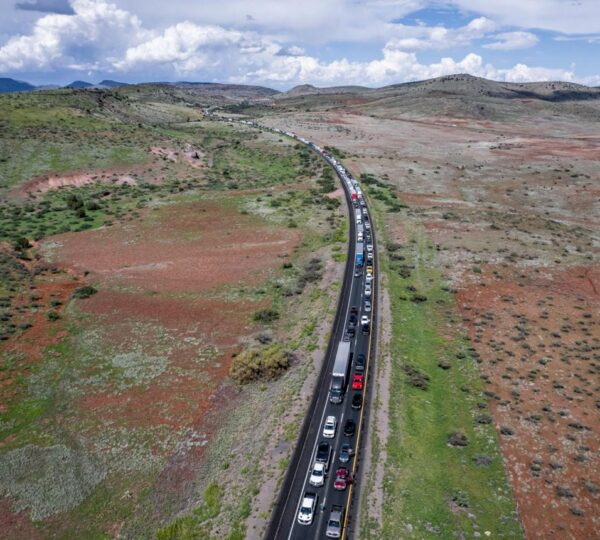
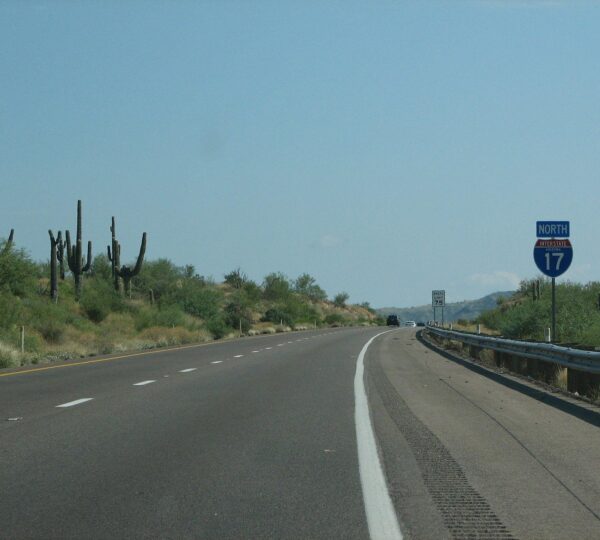
On a hot afternoon in Arizona, traffic along Interstate 17 slowed unexpectedly near Black Canyon City, creating a moment of confusion among drivers who were unprepared for what they were about to witness.
The time was shortly after 3:40 p.m., and the desert heat was intense. The sun reflected sharply off the asphalt, making the air shimmer and adding pressure to an already uncomfortable environment for motorists.
As vehicles gradually reduced speed, several drivers noticed something unusual unfolding on the shoulder of the highway, prompting concern and curiosity almost immediately among those passing by.
A man stood near the roadside, holding a newborn baby carefully against his chest. The unexpected sight drew attention, as people tried to understand the situation while keeping their distance.
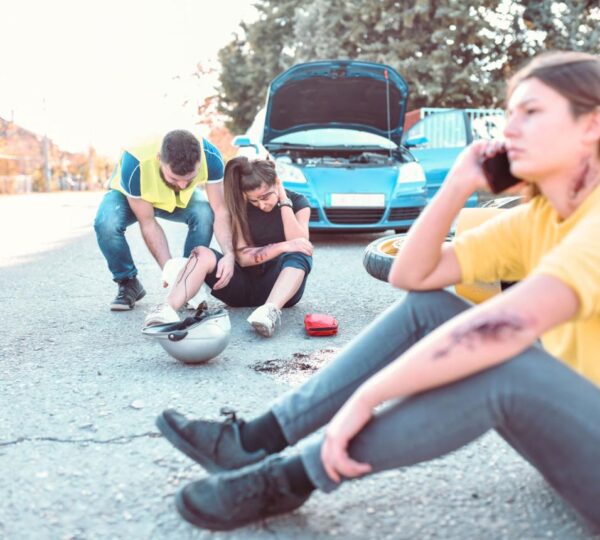
Nearby, a young woman sat on the ground beside a silver sedan. Her posture and expression suggested exhaustion and distress, and she appeared unable to fully respond to the situation around her.
The infant’s soft cries could be heard despite the noise of passing vehicles. The sound added urgency to the scene, increasing concern among those who had already stopped to observe what was happening.
Although several people gathered, uncertainty slowed their response. Many were unsure how to intervene appropriately, especially given the extreme heat and the sensitive nature of the situation.
Moments earlier, the man holding the baby had arrived on a motorcycle. He had pulled over safely and approached the scene without hesitation, focusing immediately on the child’s condition.
His calm demeanor stood out in contrast to the confusion around him. Without drawing attention to himself, he carefully lifted the baby and positioned the infant securely in his arms.
Understanding the risk posed by the intense heat, he acted quickly to shield the newborn from direct sunlight, ensuring the baby was protected from further exposure.
From a small pouch, he retrieved a bottle and began to care for the infant in a composed and deliberate manner. His actions suggested experience and awareness of the situation.
While some bystanders questioned what was happening, others began contacting emergency services, providing details about the scene and requesting immediate assistance.
The crowd gradually grew larger, and with it came a mixture of concern, speculation, and tension. People exchanged glances, unsure whether to intervene or wait for professional help.
Despite the uncertainty, the man remained focused on the infant. He avoided distractions and maintained a steady presence, prioritizing the baby’s safety above everything else.
As minutes passed, the situation became more organized. A few individuals attempted to offer assistance, while others helped create space around the mother and child.
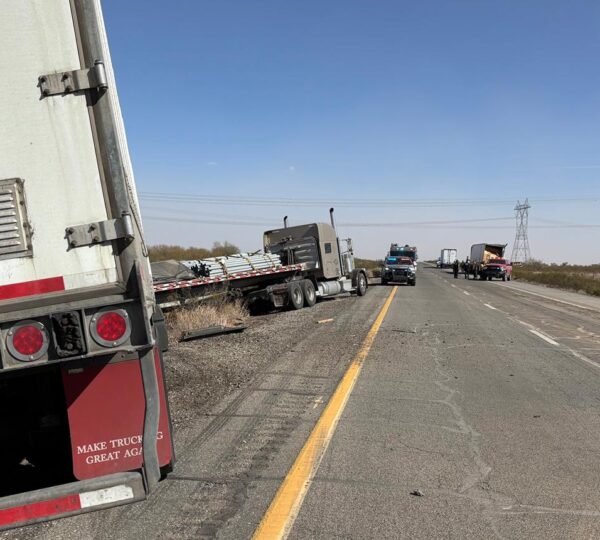
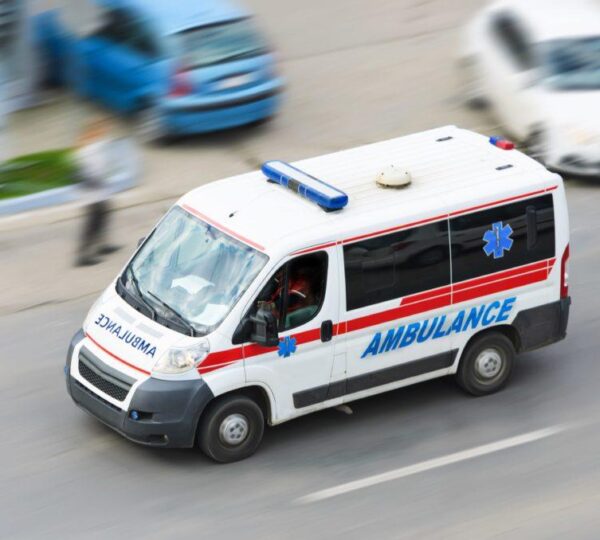
Emergency responders arrived shortly after receiving the calls. Police officers and medical personnel approached the scene carefully, assessing the condition of everyone involved.
Their presence brought a sense of structure and authority, helping to calm the growing tension among the crowd. Attention quickly shifted toward ensuring proper care for both mother and child.
The man who had first intervened continued to assist until professionals were ready to take over. He communicated briefly when necessary but remained primarily focused on the baby’s needs.
As responders attended to the young woman, it became clear she was experiencing significant stress and physical exhaustion. The extreme weather conditions had likely intensified her situation.
Medical personnel provided immediate care, offering hydration and support while evaluating her condition. Their actions helped stabilize the situation and reduce the immediate risks.
The infant was carefully examined to ensure there were no signs of heat-related distress. Early intervention had played an important role in preventing further complications.
Shortly afterward, additional motorcyclists arrived at the scene. Their coordinated movements suggested familiarity with emergency or roadside assistance situations.
They supported the initial responder quietly and efficiently, helping manage the environment while ensuring emergency teams had the space needed to do their work.
Observers began to understand that what initially appeared chaotic was actually a situation being handled with increasing coordination and care.
The calm actions of those who stepped in early contributed significantly to the outcome. Their willingness to act made a noticeable difference during a critical moment.
Once emergency personnel had full control of the situation, the man who had first helped stepped back without seeking recognition or attention.
The focus remained on the well-being of the mother and child, who were now receiving professional care in a safer and more controlled environment.
Gradually, traffic resumed its normal flow. Drivers who had witnessed the event continued on their way, many reflecting on the unexpected scene they had just experienced.
The moment left a lasting impression on those present. It highlighted how quickly ordinary situations can change and how important timely action can be.
In high-temperature environments like Arizona, even short periods of exposure can create serious health risks, particularly for vulnerable individuals such as infants.
The event also demonstrated how awareness and preparedness can help reduce those risks when individuals respond quickly and appropriately.
While most people may hesitate in uncertain situations, this incident showed how decisive action can provide immediate relief and prevent escalation.
The presence of emergency services ensured that both the mother and child received the care they needed, reinforcing the importance of coordinated response systems.
Events like this remind us that unexpected challenges can arise at any moment, often requiring individuals to make quick decisions under pressure.
They also highlight the role of community awareness, where bystanders, responders, and individuals all contribute in different ways to managing a situation.
The actions taken during those critical minutes created a bridge between uncertainty and safety, allowing professionals to step in at the right time.
In the end, the situation resolved without further escalation, leaving behind a sense of relief and a deeper appreciation for quick thinking and calm responses.
Such moments often go unnoticed in the broader scope of daily life, yet they demonstrate the importance of attentiveness, empathy, and readiness.
The difference between hesitation and action can be significant, especially when time-sensitive circumstances affect health and safety.
This event serves as a reminder that even in challenging conditions, small, thoughtful actions can have meaningful outcomes.
It also reflects how individuals, even without formal recognition, can contribute positively in critical moments through awareness and care.
In conclusion, what began as a moment of confusion on a hot Arizona highway became an example of how calm decision-making and timely intervention can change the course of a situation.
The experience left a lasting impression on those who witnessed it, reinforcing the value of compassion, responsibility, and the willingness to help when it matters most.

