
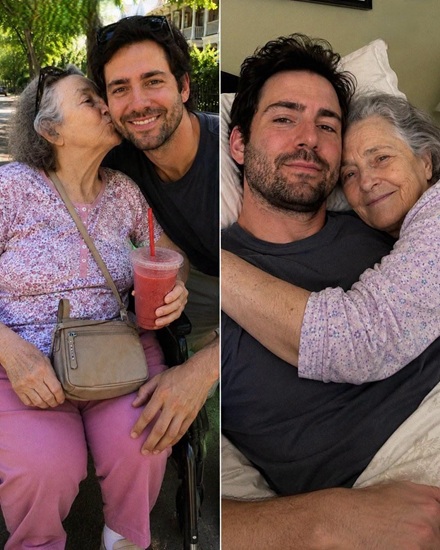
At thirty-one, Sam had grown comfortable with a quiet life. He was single, worked mostly from home, and lived alone in a modest house where his days followed a predictable routine. Across the street lived Susan, a seventy-six-year-old woman who had been part of the neighborhood for many years. Their friendship was simple at first. They exchanged greetings near their mailboxes, talked about the weather, and occasionally helped one another with ordinary household tasks.
Neither expected those casual conversations to become the beginning of a relationship that would eventually affect both of their families. Susan had always been fiercely independent. She prepared her own meals, managed her house, and rarely accepted assistance unless she absolutely needed it. Whenever Sam offered to carry groceries or repair something small around her home, she usually joked that she had survived perfectly well before he arrived. Sam respected that attitude.
He understood that offering help was different from deciding that another adult needed it. As long as Susan seemed safe and capable of managing her own affairs, he had no reason to interfere. Over time, however, he noticed subtle changes. Susan stopped spending as much time outside. Her garden, once carefully maintained, became increasingly neglected. Some mornings her curtains remained closed much later than usual, and groceries seemed to last longer because she was eating less.
None of those details proved that something serious was wrong. Aging naturally changes routines. Still, taken together, they made Sam pay closer attention. One particularly cold morning, Susan’s newspaper remained outside her door until lunchtime. By late afternoon it still had not moved. Sam stood at his window for several minutes debating whether he was overreacting. Eventually, concern outweighed his fear of intruding. He crossed the street and knocked.
No one answered.
He waited and knocked again.
“Susan? It’s Sam.”
After another long pause, he heard slow movement inside.
The door eventually opened only a few inches. Susan stood behind it wearing a robe and leaning heavily against the frame. She attempted to smile, but Sam immediately noticed how exhausted she looked. Her face was pale, her movements were unusually slow, and remaining upright seemed difficult.
Susan insisted that she was simply tired.
Sam did not argue with her.
He asked whether he could come inside and sit with her for a few minutes.
Once they reached the living room, the seriousness of the situation became harder to ignore. Susan admitted that she had been struggling for some time but had not wanted anyone worrying about her. She disliked the idea of losing her independence and feared that once people learned she needed assistance, they would begin making decisions for her.
Sam understood that fear.
He also understood that respecting someone’s independence did not require pretending obvious difficulties were not happening.
In this fictional narrative, appropriate medical care was arranged, and Susan learned that her health had deteriorated enough that living completely alone had become increasingly difficult. She required more assistance with daily activities and mobility than she had previously acknowledged.
The news frightened her.
She tried to hide that fear behind humor, but Sam could see it.
Over the following days, he began checking on her regularly. He brought groceries, prepared simple meals, and helped with practical tasks when Susan wanted assistance. Professional medical guidance remained important, and Sam never pretended that being a concerned neighbor made him a healthcare professional.
Still, there were many ordinary things he could do.
He could make sure she had something to eat.
He could carry heavy bags.
He could sit with her.
And sometimes sitting with her seemed to matter most.
Susan’s relatives lived elsewhere, and their contact had become inconsistent over the years. She had family members who cared about her, but careers, children, distance, and ordinary life had gradually reduced visits. Susan had also contributed to the distance by repeatedly assuring everyone that she was perfectly fine.
When Sam suggested calling them, she resisted.
“I don’t want everyone rearranging their lives because I’m getting old,” she told him.
Sam recognized those words immediately.
His own mother had said almost exactly the same thing.
Years earlier, Sam’s mother had experienced serious health problems while her adult children were building independent lives. She had minimized her difficulties because she did not want them worrying about her.
Sam believed her.
By the time he realized how much she had been hiding, their remaining time together was shorter than he expected.
After his mother’s death, Sam replayed those months repeatedly.
He remembered calls he could have made.
Visits he had postponed.
Questions he should have asked.
He knew intellectually that he could not have predicted everything, but grief rarely follows perfectly rational rules.
Some part of him continued believing he should have noticed sooner.
Seeing Susan struggle alone reopened that old wound.
One afternoon, Sam made an unexpected suggestion.
His house had a spare bedroom.
Because he worked from home, he was usually there during the day.
If Susan wanted, she could temporarily stay with him rather than spending long stretches alone.
Her response was immediate.
“No.”
She worried about becoming dependent on him.
She worried about what other people might think.
Most importantly, she worried about becoming a burden.
Sam did not pressure her.
Instead, he explained why he had made the offer.
He told Susan about his mother and about the guilt he had carried since her death. He explained that watching Susan insist everything was fine reminded him painfully of conversations he wished he had understood differently years earlier.
Susan listened without interrupting.
When he finished, she asked one important question.
“Are you offering because you want to help me, or because you’re trying to fix what happened with your mother?”
Sam did not immediately know how to answer.
Eventually, he admitted that perhaps both were true.
Susan appreciated the honesty.
After further discussion and appropriate arrangements within this fictional story, she agreed to stay in Sam’s spare bedroom for a while.
The transition was anything but glamorous.
Sam’s quiet house quickly filled with practical reminders that another person now depended on a degree of assistance. Extra blankets appeared near Susan’s room. Groceries changed. Daily routines had to be coordinated.
Some nights Susan slept comfortably.
Other nights were difficult.
She occasionally woke frightened or uncomfortable and called Sam.
He would walk down the hallway, sit in the wooden chair beside her bed, and stay until she felt calm again.
Those late-night conversations gradually became a ritual.
At first, they talked about ordinary things.
Susan told stories about jobs she had worked decades earlier.
She remembered relatives Sam had never met.
She talked about mistakes she had made when she was younger and decisions she would handle differently if given another chance.
Eventually, Sam began talking about his mother.
Night after night, the same thought returned.
“I should have been there more,” he would quietly say.
Susan never dismissed his feelings.
She also never agreed that he deserved to spend the rest of his life punishing himself.
She listened.
Sometimes that was enough.
Weeks passed, and Susan’s relatives eventually learned that she had moved temporarily into the home of a much younger neighbor.
Their reaction was understandable but intense.
A family member named Greg arrived with several relatives and immediately demanded an explanation.
They barely knew Sam.
From their perspective, discovering that an elderly relative with significant health problems was living in a younger man’s house raised legitimate questions.
They worried about her safety.
They worried about her finances.
They wondered whether she had been pressured into the arrangement.
Concern quickly turned into accusation.
Someone suggested Sam might be interested in Susan’s property.
Another person asked whether he had access to her bank accounts.
A rumor began circulating that Susan had changed her will.
Within this fictional story, there was no evidence supporting those claims.
But once fear entered the conversation, assumptions spread faster than facts.
Sam initially became defensive.
After everything he had done, being treated as though he were exploiting Susan felt deeply insulting.
Yet after his anger settled, he recognized something important.
If he were in their position, he would probably have questions too.
Vulnerable older adults can experience financial exploitation and other forms of abuse.
Families should not automatically ignore unusual situations.
The mistake was not asking questions.
The mistake was reaching conclusions before listening to Susan.
So Sam refused to turn the disagreement into a shouting match.
He told the relatives that Susan could speak for herself.
Then he asked them to listen.
Susan was furious that everyone had been discussing her life as though she were absent.
She explained clearly that Sam had not forced her to leave her home.
He had not asked for her property.
He had not demanded control of her finances.
She had accepted his offer because she had become frightened of spending long nights alone while her health was declining.
The room became quieter.
Susan then asked her relatives a difficult question.
“If you’re this worried about me now, where was everyone when I was eating dinner alone?”
Nobody answered immediately.
Her question was not entirely fair.
Her relatives had complicated lives, and Susan herself had repeatedly told them she needed nothing.
Still, the words forced everyone to recognize that distance had developed gradually.
There was enough responsibility to share without turning the conversation into a contest over who deserved the most blame.
Greg eventually admitted that he should have called more often.
Susan admitted that she had hidden how much she was struggling.
Sam acknowledged that his own unresolved grief had influenced his determination to help.
Those admissions did not instantly solve everything.
But they changed the tone.
Instead of defending themselves, people began listening.
The family also noticed the nightly ritual between Sam and Susan.
Every evening, shortly before bedtime, Sam pulled a wooden chair beside her bed.
Sometimes they talked for only a few minutes.
Other nights, he remained there much longer.
Her relatives initially wondered what they were discussing so privately.
Eventually, they learned the truth.
Sam was not whispering about Susan’s house.
He was not discussing money.
He was not asking her to sign documents.
Most nights, he was talking about his mother.
“I should have been there,” he would tell Susan.
That sentence had followed him for years.
Susan understood that Sam’s care for her had become connected to something he could not change in his own past.
One evening, she decided it was time to show him something.
She asked him to retrieve a small box containing old papers.
Inside were photographs, cards, and several letters.
Sam expected them to belong entirely to Susan.
Then he recognized a name.
His mother’s.
For several seconds, he simply stared at the handwriting.
He could not understand why Susan possessed letters written by his mother.
Susan finally explained.
The two women had known one another years earlier.
Their friendship had never been central to Sam’s childhood, so he knew little about it.
They had remained in occasional contact and exchanged letters about family, aging, loneliness, and the complicated experience of watching children grow into adults.
Sam carefully opened one.
His mother’s words immediately brought back memories.
She wrote proudly about her children.
She described how difficult it was to ask them for help because she did not want them abandoning their own lives for her.
She mentioned Sam specifically.
She knew he worried.
She knew he loved her.
And she did not blame him for living his own life.
Sam had spent years believing something very different.
He had convinced himself that his mother must have felt forgotten.
The letter did not erase every regret.
It could not restore missed visits.
It could not give him another conversation with her.
But it challenged the harshest version of the story he had been telling himself.
His mother had known he loved her.
Sam began crying.
Susan reached for his hand.
For once, she was the person offering comfort.
That moment revealed something neither of them had fully understood when their arrangement began.
Sam believed he had brought Susan into his home because she needed him.
In reality, both of them needed something.
Susan needed companionship and practical assistance.
Sam needed permission to stop treating grief as a lifelong sentence.
Their friendship worked because care moved in both directions.
Susan eventually told him something he never forgot.
“You cannot change what you wish you’d done yesterday by punishing yourself today.”
Sam sat quietly with those words.
He realized that helping Susan could be meaningful without becoming repayment for his mother’s death.
He did not need to exhaust himself to prove he had loved his mother.
He could simply care about the person in front of him.
That realization changed their nightly conversations.
Sam stopped beginning every evening with an apology.
Sometimes he simply asked Susan how she was feeling.
Other nights they discussed old movies, food, family stories, or memories from Susan’s younger years.
The wooden chair stopped feeling like a place of confession.
It became a place of friendship.
Susan’s family changed too.
Greg started visiting regularly.
Another relative began bringing meals.
Others called more often.
They did not suddenly become a perfect family.
Old disagreements remained.
Busy schedules did not disappear.
But Susan no longer felt forgotten.
One afternoon, Greg tried to give Susan a long apology for the years of inconsistent contact.
She stopped him.
“I don’t need you to spend the time we have left apologizing for the time we already lost,” she said.
She pointed toward a chair.
“Sit down.”
So he sat.
They talked for nearly two hours.
That became another important lesson for everyone involved.
Guilt can sometimes motivate people to repair relationships.
But endless guilt can also consume the very time that remains available for connection.
Susan preferred presence over dramatic apologies.
She wanted conversation.
She wanted ordinary company.
She wanted someone nearby when the evenings became frightening.
There were also practical lessons in the fictional story.
Helping an elderly or seriously ill person requires more than good intentions.
Medical needs should involve qualified professionals.
Financial boundaries should remain clear.
A vulnerable person’s autonomy should be respected whenever they retain the ability to make their own decisions.
Families should ask reasonable questions rather than assuming every unusual caregiving arrangement is automatically safe.
At the same time, suspicion should not become accusation without evidence.
Those principles allowed Susan’s situation to become healthier.
Her relatives could remain involved.
Sam could continue providing companionship without pretending to replace professional care.
And Susan could continue expressing her own wishes rather than having everyone speak over her.
The entire conflict had initially been fueled by incomplete information.
Susan’s relatives saw a younger single man caring for an elderly woman and feared exploitation.
Sam saw distant relatives suddenly appearing and assumed they cared only about property.
Susan believed needing help automatically made her a burden.
None of those assumptions captured the complete truth.
Once people began speaking honestly, the situation became less dramatic but far more understandable.
Susan’s family loved her despite having allowed distance to develop.
Sam genuinely cared about her despite carrying personal motivations connected to his grief.
Susan valued independence despite desperately needing companionship.
Human beings could hold several truths at once.
That complexity was not a problem.
Pretending everything had one simple explanation had been the problem.
Months after Susan first moved into Sam’s home, one quiet evening brought the story full circle.
Sam entered her room and sat in the familiar wooden chair.
Susan looked toward him.
“What are you going to apologize for tonight?” she asked playfully.
Sam smiled.
“Nothing.”
She raised an eyebrow.
“Nothing?”
“Nothing.”
For years, he had repeated the same sentence.
I should have been there.
That night, he finally replaced it.
“My mother knew I loved her.”
Susan smiled.
“Yes, she did.”
Then Sam added something else.
“And you know you’re not alone.”
Susan looked toward the hallway.
Members of her family were talking quietly in the kitchen.
Someone was washing dishes.
Greg was laughing about an old photograph Susan had shown him earlier.
The house was no longer silent.
“I know,” she answered.
Those were the words that ultimately mattered.
Not accusations.
Not rumors.
Not arguments over who had failed whom.
Simply the understanding that two people who had both experienced loneliness had found companionship at a difficult moment.
The story does not suggest that every person should bring an elderly neighbor into their home.
Real caregiving situations can involve complicated medical, legal, financial, and safety considerations.
Nor does it suggest that concerned relatives should ignore unusual circumstances involving vulnerable family members.
Questions can be responsible.
Verification can be necessary.
The lesson is about what happens after those questions are asked.
Listen before reaching conclusions.
Distinguish suspicion from evidence.
Respect the voice of the person whose life is being discussed.
And remember that people’s motivations can be more complicated than they initially appear.
Sam was not a flawless rescuer.
Susan was not a helpless woman waiting to be saved.
Her family members were not simply uncaring relatives.
They were imperfect people carrying different fears, regrets, responsibilities, and assumptions.
Once they stopped reducing one another to simple roles, they finally began understanding what was actually happening.
For Sam, the greatest change occurred quietly.
He stopped believing that caring for Susan could somehow rewrite his history with his mother.
Nothing could do that.
Instead, he learned to value what existed in the present.
A conversation.
A chair beside a bed.
A letter preserved for years.
A family slowly finding its way back into the same room.
Those things could not change yesterday.
But they could change tomorrow.
Susan learned something too.
Accepting help did not automatically mean surrendering her dignity.
She could remain herself while admitting that she was frightened.
She could ask people to stay.
She could tell her family what she needed instead of protecting everyone through silence.
Independence and connection did not have to be opposites.
Sometimes strength meant allowing someone else to help carry what had become too heavy to manage alone.
And that is why the nightly words mattered so much within this fictional story.
At first, Sam whispered:
“I should have been there.”
Eventually, Susan helped him replace guilt with something closer to acceptance.
“My mother knew I loved her.”
And when Susan’s own fear surfaced, Sam offered the reassurance she needed in return:
“You are not alone.”
No dramatic secret was required.
No extraordinary revelation transformed everything overnight.
What changed these people was much simpler.
They listened.
They admitted what frightened them.
They corrected assumptions.
They stopped allowing guilt to speak louder than love.
And they learned that caring for another person can sometimes heal something inside the caregiver as well.
In the end, the thirty-one-year-old man who opened his home to his seventy-six-year-old neighbor discovered that he had not simply given someone a place to stay.
He had created space for two people—and eventually an entire family—to speak honestly about grief, loneliness, regret, and forgiveness.
Sometimes the most meaningful words spoken at night are not dramatic at all.
Sometimes they are simply:
“You were loved.”
“You are forgiven.”
“And tonight, you don’t have to be alone.”

