
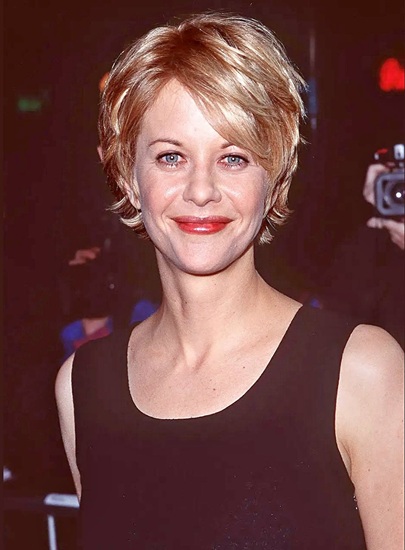
For millions of movie fans, hearing the name Meg Ryan immediately brings back a particular kind of Hollywood.
A crowded New York restaurant. Two strangers writing anonymous emails.
A radio call that changes several lives.
A woman waiting at the top of the Empire State Building.
For much of the late 1980s and 1990s, Ryan became one of the faces most closely associated with romantic comedy.
Her performances were funny without feeling forced.
Emotional without becoming overly sentimental.
And perhaps most importantly, her characters often felt imperfect enough to be believable.
Then, after years near the center of Hollywood, something changed.
Ryan became far less visible.
But her career did not simply disappear.
It evolved.
And decades after the films that made her famous, she eventually returned in a way that gave her much more control over the story.
Before the romantic comedies
Meg Ryan was born Margaret Mary Emily Anne Hyra on November 19, 1961, in Fairfield, Connecticut.
Her acting career began long before audiences associated her with romantic comedy.
She appeared in the 1981 film “Rich and Famous” and later joined the daytime soap opera “As the World Turns.”
Those early jobs provided experience, but the role that introduced her to a much larger audience came several years later.
In 1986, Ryan appeared in “Top Gun.”
She played Carole Bradshaw, the wife of Anthony Edwards’ character, Goose.
It was not the starring role that would later define her career.
But millions of people saw her.
Then came the movie that changed everything.
Harry met Sally — and audiences met Meg Ryan
In 1989, Ryan starred opposite Billy Crystal in Rob Reiner’s “When Harry Met Sally…”
She played Sally Albright.
The film followed Harry and Sally across years of friendship, disagreements and changing relationships while asking whether men and women could remain simply friends.
The chemistry between Ryan and Crystal became central to the movie’s success.
And one scene became particularly famous.
Inside Katz’s Delicatessen in New York, Sally demonstrates to Harry that men may not always recognize when a woman is pretending to experience sexual pleasure.
The comic sequence became one of the most recognizable scenes in romantic-comedy history.
But Ryan’s performance involved much more than one famous moment.
She made Sally smart, particular, vulnerable and funny.
The film earned Ryan a Golden Globe nomination.
More importantly for her career, Hollywood had found a new romantic-comedy leading lady.
And the next decade would prove just how successful that combination could be.
Then came Tom Hanks
Ryan and Tom Hanks first appeared together in “Joe Versus the Volcano” in 1990.
The movie was not their biggest collaboration.
That came three years later.
In 1993, Ryan starred as journalist Annie Reed in “Sleepless in Seattle.”
Hanks played Sam Baldwin, a widowed father whose young son calls a radio program hoping to find him a new partner.
For most of the movie, the two leading characters are not actually together.
That was part of the unusual charm.
Audiences watched two lives gradually moving toward the same place.
The eventual meeting at the Empire State Building became one of the defining romantic-film moments of the decade.
Ryan received another Golden Globe nomination.
And the Ryan-Hanks pairing became one audiences wanted to see again.
Hollywood eventually obliged.
But first, Ryan continued proving she was not limited to one kind of character.
Her 1990s career expanded quickly
Ryan appeared in “When a Man Loves a Woman” in 1994, playing a woman struggling with alcoholism.
It was a far more dramatic performance than audiences accustomed to her romantic comedies might have expected.
Then came “French Kiss” in 1995 with Kevin Kline.
In 1996, she appeared in the military drama “Courage Under Fire,” starring alongside Denzel Washington.
She also provided the voice of the title character in the animated film “Anastasia” in 1997.
The roles varied.
But romantic comedy remained the genre most strongly connected to her public image.
And in 1998, two movies reinforced that connection.
1998 became another major year
Ryan starred opposite Nicolas Cage in “City of Angels.”
The romantic fantasy-drama told the story of an angel who becomes fascinated by a human surgeon.
The film had a much more melancholy tone than many of Ryan’s best-known comedies.
Later that same year, however, she returned to familiar territory.
And Tom Hanks returned with her.
“You’ve Got Mail” reunited Ryan, Hanks and director Nora Ephron.
Ryan played Kathleen Kelly, the owner of a small independent bookstore.
Hanks played Joe Fox, whose family’s large bookstore chain threatens her business.
Offline, the characters become rivals.
Online, without knowing each other’s identities, they develop a connection.
The story captured a moment when email was still new enough to feel mysterious and romantic.
More than two decades later, the technology in the film looks very different.
The emotional idea remains recognizable.
Two people can know each other intimately while misunderstanding each other completely.
She became identified with an entire genre
By the end of the 1990s, Ryan had achieved something relatively rare.
Her name alone could communicate the tone of a movie.
Warm.
Funny.
Romantic.
Sometimes bittersweet.
That association helped make her a major star.
But it could also become limiting.
Actors who succeed repeatedly in one genre often face pressure to keep delivering variations on the same performance.
Ryan experimented.
She appeared with Hugh Jackman in “Kate & Leopold” in 2001.
Then she made a much darker choice.
“In the Cut” challenged her familiar image
In 2003, Ryan starred in Jane Campion’s psychological thriller “In the Cut.”
The film was deliberately far removed from “Sleepless in Seattle” or “You’ve Got Mail.”
Ryan played a New York teacher drawn into a disturbing murder investigation.
The role was darker, more sexually explicit and more unsettling than the characters audiences commonly associated with her.
It demonstrated that Ryan was willing to challenge expectations.
But by this period, her relationship with Hollywood was changing.
Her movie appearances became less frequent.
Eventually, audiences who had once seen her in a major film almost every year began seeing much less of her.
And questions followed.
Where had Meg Ryan gone?
She did not completely disappear
Ryan continued acting during the 2000s.
She appeared in movies including “In the Land of Women,” “The Women” and “Serious Moonlight.”
But the relentless rhythm of her 1990s career had slowed considerably.
Then she began exploring another side of filmmaking.
Directing.
In 2015, Ryan made her feature directorial debut with “Ithaca.”
She also appeared in the film.
The project marked an important shift.
The woman audiences had spent decades watching in front of the camera was now making decisions behind it.
And that experience would matter later.
Because her eventual return to romantic comedy would not simply involve accepting another starring role.
The comeback came with more control
In 2023, Ryan returned to the genre most closely associated with her through “What Happens Later.”
She starred opposite David Duchovny.
But this time, Ryan was not simply the leading actress.
She directed the movie.
She helped write it.
She served as an executive producer.
The story follows two former lovers who unexpectedly encounter each other at an airport and become stranded together during a snowstorm.
The setup sounds like classic romantic-comedy territory.
But the characters are older.
They have history.
Regrets.
Questions about decisions made decades earlier.
That gave Ryan an opportunity to revisit the genre from a very different stage of life.
She was no longer playing Sally Albright in her twenties.
She was telling a romantic story about people who had already lived through much more.
Her relationship with Hollywood had changed
Ryan has spoken about directing and creating projects rather than simply waiting for acting roles.
At the Sarajevo Film Festival in 2024, where she received a lifetime achievement honor, she reflected on her career and her work on “What Happens Later.”
Her tone was notably different from the familiar narrative of a forgotten star trying to reclaim old fame.
She described herself as fortunate.
She also discussed upcoming creative projects.
That distinction matters.
Ryan did not simply attempt to recreate her 1990s career.
The industry had changed.
She had changed.
And the kind of work she wanted to do changed with her.
Then nostalgia brought Sally back
In 2025, Ryan reunited with Billy Crystal in a short commercial that deliberately returned to the world of “When Harry Met Sally…”
The appearance showed just how enduring that film remained.
More than three decades had passed since the original.
Yet audiences immediately understood the reference.
That kind of recognition cannot easily be manufactured.
It comes from a movie becoming part of popular memory.
For Ryan, several films reached that level.
“When Harry Met Sally…”
“Sleepless in Seattle.”
“You’ve Got Mail.”
They were not simply successful movies released during the 1990s.
They became films people repeatedly revisited.
Why her movies endured
Part of the appeal comes from the stories.
Part comes from strong writing and directors such as Nora Ephron and Rob Reiner.
Part comes from her co-stars.
But Ryan brought something specific to those films.
Her characters frequently appeared confident and uncertain at the same time.
They could be neurotic.
Funny.
Opinionated.
Romantic without admitting it.
They made mistakes.
And audiences could recognize pieces of themselves in those imperfections.
That quality helped distinguish Ryan from the polished idea of a conventional movie star.
She could look glamorous on a poster.
Then spend a scene making an awkward expression or talking too quickly.
The contradiction became part of her appeal.
Time changed her — as it changes everyone
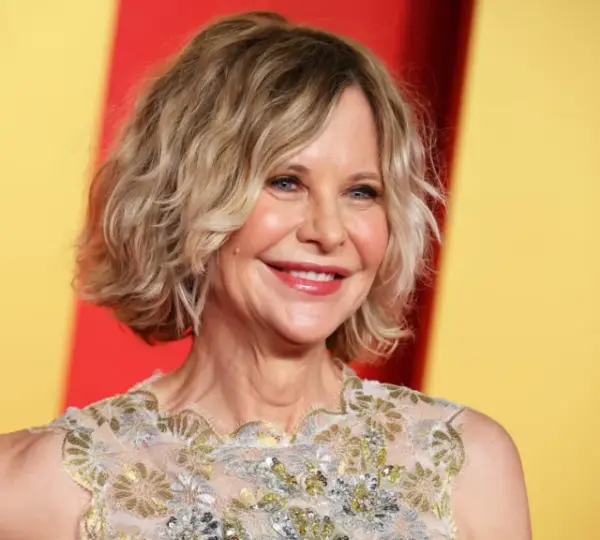
Meg Ryan is 64 in 2026.
Naturally, she does not look exactly like the actress who played Sally Albright in 1989.
Nearly four decades have passed.
Online conversations about celebrities often reduce aging to photographs.
Then versus now.
Young versus older.
But that comparison leaves out most of what actually happened.
Ryan’s life did not freeze after “You’ve Got Mail.”
She kept working.
She stepped away from the relentless pace of mainstream Hollywood.
She became a director.
She produced.
She returned to acting when she found a project she wanted to make.
Those changes are far more meaningful than whether someone looks identical to a photograph taken decades ago.
The movies never really left
Today, someone can discover “When Harry Met Sally…” without having been alive when it was released.
The same is true of “Sleepless in Seattle” and “You’ve Got Mail.”
Streaming and home media allow old movies to exist alongside new releases.
That gives actors an unusual kind of longevity.
Their younger selves remain permanently available on screen.
A new viewer can meet Sally Albright today exactly as audiences did in 1989.
Meg Ryan herself continued aging.
The performance did not.
And perhaps that explains why seeing her today can feel unexpectedly nostalgic for longtime fans.
It is not simply about recognizing an actress.
It is about remembering where they were when they first watched those films.
Her story did not end when the spotlight moved
Hollywood careers rarely follow straight lines.
Ryan’s certainly did not.
She began with small roles.
Became one of the defining romantic-comedy stars of her generation.
Tried darker and more dramatic material.
Reduced her acting workload.
Moved behind the camera.
Then returned to romantic comedy as an actress, director, writer and producer.
The career looks very different from the outside than it did during the 1990s.
But different does not mean disappeared.
It means evolved.
And that may be her real legacy
Meg Ryan will probably always be linked with romantic comedy.
There are worse legacies.
Her performances helped define some of the genre’s most enduring films.
But she became something more than the young woman permanently preserved in those movies.
She became a filmmaker capable of returning to the genre on her own terms.
That may be the most interesting part of her story.
The spotlight changed.
Hollywood changed.
Ryan changed.
Yet Sally still orders exactly what she wants.
Annie Reed is still listening to the radio.
Kathleen Kelly is still opening an email.
Those characters remain where audiences left them.
And every time someone presses play again, Meg Ryan returns with them.
Not because she never changed.
But because the movies became part of people’s memories long after the decade that created them was gone.

