
Changes in the appearance of the fingers and fingernails can sometimes provide clues about a person’s health, although they should never be used alone to diagnose a disease. One change that doctors have recognized for many years is known as finger clubbing, or digital clubbing. It causes characteristic changes around the fingertips and nails and can occur in association with several underlying medical conditions. Lung diseases, cardiovascular conditions, gastrointestinal disorders, and some cancers are among the possibilities doctors may consider when unexplained clubbing is present.
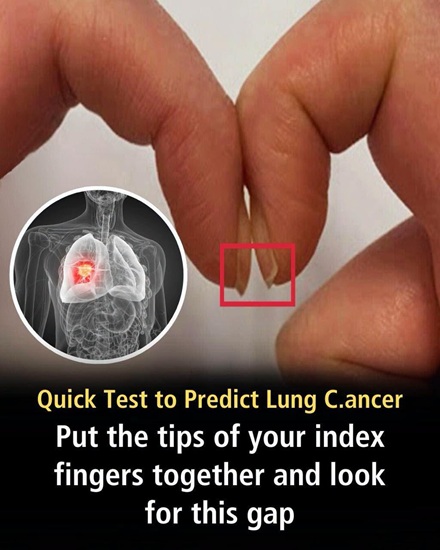
However, having clubbed fingers does not automatically mean someone has lung cancer. Likewise, having normal-looking fingers cannot rule lung cancer or another serious condition out. One simple way people may notice possible clubbing is through something called the Schamroth window test. The test involves placing corresponding fingers together so that the nails face each other. Normally, a small diamond-shaped opening can usually be seen between the bases of the two nails.
In established clubbing, that small opening may disappear because changes in the tissue around the fingertips alter the angle between the nail and nail bed. This can provide a useful clue that further examination may be appropriate. It is important to understand, however, that this is a screening sign for clubbing rather than a diagnostic test for any specific disease. The distinction is particularly important because online posts sometimes describe the technique as a “finger test for lung cancer.” That description can easily be misunderstood.
Doctors do not diagnose lung cancer by asking patients to put their fingernails together, and the presence or absence of the diamond-shaped space cannot determine whether a tumor is present. Instead, finger clubbing is a physical sign that can sometimes accompany lung cancer and a variety of other illnesses. When clubbing appears without an obvious explanation, a healthcare professional may investigate the underlying cause. The appropriate investigation depends on the person’s symptoms, history, physical examination, and other clinical information.
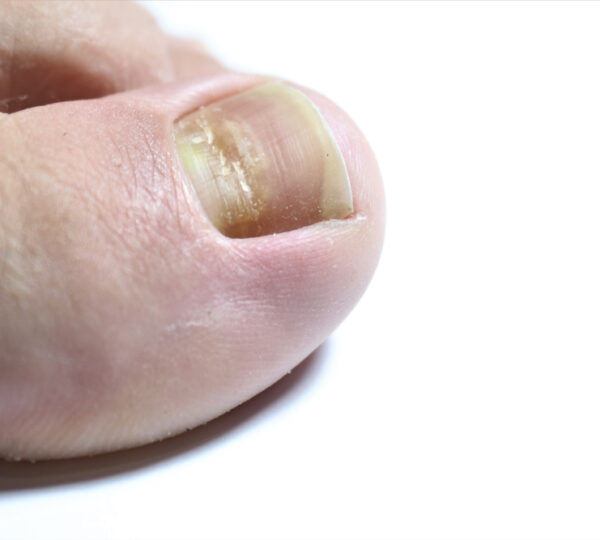
Finger clubbing generally develops gradually rather than appearing suddenly overnight. Early changes can involve the tissue at the base of the nail becoming softer. The normal angle between the nail plate and surrounding tissue can begin to change, and the nail may develop a more pronounced downward curvature. As clubbing progresses, the end of the finger can become enlarged or bulbous. From the side, the altered nail profile can sometimes be easier to recognize than when looking directly down at the hand. These physical changes explain why the Schamroth window may eventually disappear.
Clubbing commonly affects fingers on both hands, although patterns can vary depending on the underlying cause. It may also involve the toes. A clinician assessing suspected clubbing does not necessarily rely on one visual observation alone. The appearance of the nail, the angle at the nail bed, the shape of the fingertip, and other physical findings can all be considered. Medical history is equally important because clubbing is a sign rather than a disease itself. Finding it raises a question about the cause rather than providing the final answer.
The Schamroth maneuver is simple to understand. Corresponding fingers, often the index fingers, are placed together with the dorsal surfaces facing one another and the nails touching. In people without clubbing, the space between the nail beds generally creates a small diamond-shaped window. If the distal fingers are clubbed, that normal window may be absent. Someone who notices this change can mention it to a healthcare professional, particularly if the change is new. Self-examination alone should not be used to decide that a serious disease is present.
This is especially important when discussing lung cancer. Lung cancer can produce many different symptoms, and some people have relatively few noticeable symptoms during earlier stages. Possible symptoms can include a persistent or changing cough, coughing up blood, unexplained weight loss, chest discomfort, breathlessness, recurrent respiratory infections, fatigue, or other changes depending on the individual. Finger clubbing may occur in association with some lung cancers, but many people with lung cancer will not necessarily have it. Therefore, a normal Schamroth window should never be treated as reassurance that lung cancer is impossible.
The reverse is equally important. Losing the diamond-shaped window does not mean a person has lung cancer. Digital clubbing has associations with multiple conditions affecting different parts of the body. Doctors therefore consider the sign within a broader clinical picture. The person’s age, medical history, respiratory symptoms, cardiovascular symptoms, gastrointestinal problems, medications, family history, and other findings can influence what evaluation is appropriate. Diagnostic tests are selected based on that complete assessment rather than on the fingernails alone.
Several pulmonary conditions other than cancer have been associated with clubbing. Bronchiectasis is one example. This condition involves abnormal widening and damage of the airways and can be associated with recurrent infections and difficulty clearing mucus. Chronic lung infections and lung abscesses are other potential causes doctors may consider. Certain interstitial lung diseases can also be associated with digital clubbing. These examples demonstrate why the sign should not immediately be interpreted as evidence of one particular diagnosis.
Cardiovascular conditions can also be relevant. Some congenital heart diseases, particularly those associated with chronically reduced oxygen levels in the blood, may produce clubbing. Infective endocarditis, a serious infection involving the inner lining of the heart and usually the heart valves, is another recognized association. These conditions have very different causes and treatments from lung cancer. The same physical sign can therefore appear in people with substantially different medical problems.
Digestive and liver diseases can sometimes be associated with clubbing as well. Inflammatory bowel diseases such as Crohn’s disease and ulcerative colitis are among the conditions clinicians may consider. Certain chronic liver disorders and other gastrointestinal illnesses have also been linked with digital clubbing. Again, the presence of clubbing does not identify which condition, if any, is responsible. Determining the cause requires medical evaluation.
In some individuals, clubbing can also be familial or idiopathic. Familial means that the characteristic occurs in multiple members of a family without necessarily indicating the serious underlying diseases commonly associated with acquired clubbing. Idiopathic means that a specific cause cannot be identified. These possibilities provide another reason not to assume that every person with rounded fingertips has cancer. New or unexplained changes still deserve attention, but interpretation should remain evidence-based.
The exact biological processes responsible for clubbing are complex and have been investigated for many years. The visible changes involve increased tissue around the ends of the fingers and alterations around the nail beds. Researchers have proposed mechanisms involving circulating cells and growth factors that reach the distal extremities and contribute to vascular and connective-tissue changes. The process is more complicated than simply describing the fingertips as “filled with fluid.” Simplified online explanations may therefore fail to capture the actual biology.
For people examining their hands, comparison with older photographs can sometimes help determine whether the appearance has changed over time. Some people naturally have curved nails or relatively large fingertips, and those features may have been present for years. A new progressive change is different from a stable lifelong appearance. Even then, photographs cannot establish a diagnosis. They can simply provide additional information to discuss during a medical appointment.
Nails can show many changes unrelated to clubbing, and not every unusual appearance indicates serious illness. Trauma, frequent exposure to water, aging, nail products, infections, skin disorders, nutrition, medications, and ordinary variation can all affect fingernails. For this reason, interpreting nail changes without context can easily cause unnecessary alarm. Some findings are medically meaningful, while others are relatively minor. A clinician can help distinguish between them.
One nail abnormality commonly discussed is koilonychia, often called spoon nails. In this condition, the nail plate develops a concave shape rather than its normal gentle outward curve. Iron deficiency is a well-known association, although spoon-shaped nails can have other causes. In children, temporary spooning can sometimes occur without representing the same problem seen in adults. Because multiple explanations are possible, the appearance should be interpreted alongside medical history and, when necessary, laboratory testing.
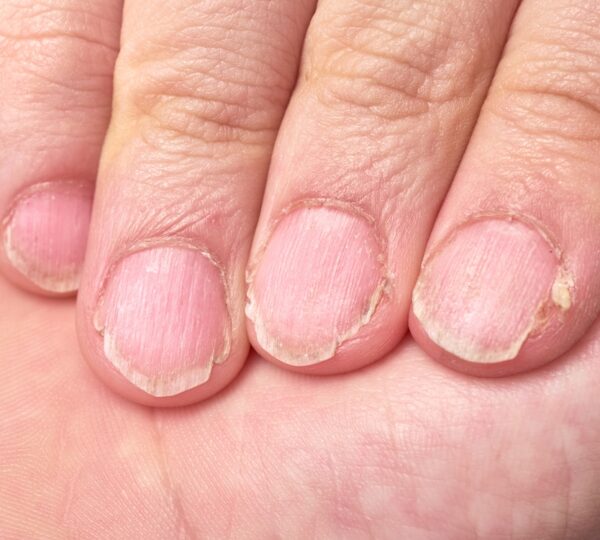
Thin or brittle nails are another common concern. Nails may split, peel, crack, or break for reasons ranging from repeated wetting and drying to chemical exposure. Certain nutritional deficiencies, thyroid conditions, skin diseases, and other medical issues can sometimes contribute. However, brittle nails are common and are not specific to one disease. Someone should therefore avoid attempting to diagnose osteoporosis, thyroid disease, or malnutrition solely because a nail breaks easily.
Beau’s lines are another recognizable nail change. These are transverse depressions that run across the nail plate and can appear when nail growth is temporarily disrupted. Significant illness, severe infection, trauma, certain medications, and other forms of physiological stress can interrupt nail formation and leave a visible groove as growth resumes. Because fingernails grow gradually, the line moves outward over time. Clinicians can sometimes use its location as part of understanding when the disruption may have occurred, although calculating an exact date from a nail alone has limitations.
Beau’s lines can appear after major systemic illness and have been reported in association with events such as severe infections, significant physiological stress, and some medical treatments. Their presence does not automatically reveal what caused the interruption. A person may remember being seriously ill months earlier, providing a plausible explanation. Multiple lines can sometimes reflect repeated periods of disrupted growth. As with other nail findings, medical context determines their significance.
Surface texture can also change. Nails may develop ridges, roughness, pits, discoloration, or changes in thickness for numerous reasons. Psoriasis, for example, can affect nails as well as skin and may produce pitting or other abnormalities. Certain inflammatory and dermatological conditions can alter nail appearance in recognizable ways. Fungal infections can cause thickening, discoloration, or crumbling. None of these appearances should automatically be interpreted as evidence of an internal disease without proper evaluation.
This wide range of possibilities explains why social-media posts about fingernails need careful wording. A headline saying that one finger trick can reveal lung cancer may attract attention, but it creates a false impression of diagnostic certainty. The Schamroth window test can help reveal possible clubbing. Clubbing can be associated with lung cancer. Those two accurate statements do not mean that the maneuver itself detects cancer.
A person who has a normal diamond-shaped gap can still have a medical condition that does not produce clubbing. Likewise, someone without the gap may have a condition entirely unrelated to cancer or may require professional assessment to determine whether true clubbing is actually present. Screening signs are useful because they can prompt appropriate evaluation. They become misleading when they are presented as substitutes for diagnostic testing.
Actual evaluation for suspected lung cancer can involve medical history, physical examination, imaging, and other diagnostic procedures depending on the circumstances. Chest imaging such as CT may be used when clinically appropriate, and suspicious abnormalities may require additional testing to establish exactly what they are. Tissue sampling may sometimes be necessary to confirm a cancer diagnosis. A fingernail test cannot replace those procedures.
People should also avoid delaying medical care because their fingers appear normal. Anyone experiencing concerning or persistent symptoms should seek professional advice based on those symptoms rather than waiting for clubbing to appear. Lung cancer and other serious illnesses do not need to produce visible changes in the fingertips. Early medical assessment is more useful than relying on a home test to provide reassurance.
Similarly, noticing possible clubbing does not mean someone should panic. The sign warrants context, not an immediate conclusion. A clinician can determine whether the fingers are actually clubbed and then decide whether additional investigation is necessary. Many diagnostic pathways begin with a simple observation but require additional evidence before any disease can be confirmed.
Smoking remains the leading preventable risk factor for lung cancer, although people who have never smoked can also develop the disease. Avoiding tobacco exposure is therefore an important way to reduce risk, but it cannot reduce risk to zero. Exposure to substances such as radon and certain occupational carcinogens can also contribute. Personal risk depends on multiple factors, which is another reason a finger check cannot meaningfully estimate someone’s overall likelihood of lung cancer.
General health measures such as avoiding smoking, following occupational safety guidance, staying physically active, and maintaining appropriate medical care can contribute to overall health. However, these behaviors should not be described as guaranteed ways to prevent finger clubbing. Clubbing is a sign produced by underlying processes, and some associated conditions cannot be prevented through lifestyle changes alone. Prevention claims need the same caution as diagnostic claims.
It is also important not to treat nail appearance as a substitute for routine healthcare. Nails can sometimes offer clues, but they provide only one small piece of information about the body. Blood tests, imaging, physical examination, medical history, and other investigations provide information that cannot be obtained by looking at fingernails. The value of noticing a physical sign is that it may encourage someone to ask an appropriate medical question.
The Schamroth window test fits perfectly into that limited but potentially useful role. It takes only a few seconds and may help someone notice a characteristic they had previously overlooked. If the expected diamond-shaped window is absent and the fingertips appear enlarged or the nails have become increasingly curved, discussing the change with a healthcare professional is reasonable. The next step is evaluation, not self-diagnosis.
A clinician may also ask how long the change has been present. Sudden recognition does not necessarily mean the clubbing itself developed suddenly. People can overlook gradual changes to their own appearance because they see their hands every day. Older photographs or observations from family members may sometimes provide useful context. The medical history can then help determine whether further testing is appropriate.
Other symptoms can influence the urgency and direction of evaluation. Respiratory symptoms may point clinicians toward lung conditions, while fever or other systemic signs can suggest different possibilities. Gastrointestinal symptoms, cardiovascular history, or known chronic illnesses may provide additional clues. This is why a physical sign cannot be interpreted properly in isolation.
The broader lesson is that the human body sometimes displays visible changes associated with internal disease, but those signs rarely function like simple yes-or-no tests. Medicine depends on combining evidence. Finger clubbing is a good example because it is recognizable and clinically meaningful while remaining nonspecific. It tells a clinician that something may deserve investigation, not exactly what the diagnosis will be.
That nuance can easily disappear in viral health content. “Check your fingers for this sign” sounds simple and memorable, while explaining the many possible causes requires more space. Yet the longer explanation is important because health information can affect real decisions. People should neither become convinced they have cancer from one nail finding nor ignore persistent symptoms because their nails appear normal.
For readers who want to remember the essential point, the distinction is straightforward. When corresponding fingernails are placed together, a small diamond-shaped opening is normally visible in people without clubbing. Loss of that window can be one sign of digital clubbing. Digital clubbing is associated with several medical conditions, including some lung cancers, but it is not specific enough to diagnose any of them.
The fingernails may provide other clues as well, including changes in shape, texture, thickness, color, or growth. Some are associated with underlying illness, while others result from local nail problems, aging, trauma, or environmental exposure. Interpretation depends on the complete pattern and the person’s medical circumstances. A photograph or home test can raise a question, but professional assessment is needed to answer it reliably.
Ultimately, the Schamroth window test is best understood as a simple observation rather than a cancer test. It may help identify possible finger clubbing, and unexplained clubbing can sometimes be associated with important underlying conditions that deserve investigation. But neither the presence nor absence of the small diamond-shaped gap can determine whether someone has lung cancer.
Anyone who notices new clubbing, significant changes in the fingertips, or other persistent unexplained nail changes can discuss them with a qualified healthcare professional. Likewise, persistent respiratory or other concerning symptoms deserve attention regardless of how the fingernails look. The useful message is not that fingers can secretly diagnose cancer at home. It is that visible changes can sometimes provide clues worth discussing with a clinician, while an accurate diagnosis requires considerably more information.

