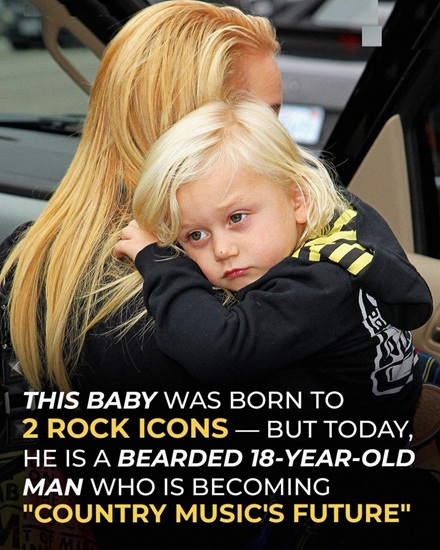
Gwen Stefani marked an important family milestone on August 21, 2026, when her son Zuma Nesta Rock Rossdale turned 18. To celebrate the occasion, the singer shared a heartfelt collection of memories showing how much her middle son has changed since childhood. The images and clips followed Zuma from his earliest years through adolescence and into young adulthood, offering a glimpse at a boy who grew up surrounded by music. Now legally an adult, Zuma is beginning to attract attention for interests and ambitions that are increasingly his own.
His enthusiasm for guitar and country music has become particularly noticeable in recent years. At the same time, his close relationship with stepfather Blake Shelton continues to generate affectionate discussion among fans. In her birthday message, Gwen expressed disbelief that 18 years had already passed. She described watching Zuma grow into a kind and talented young man as one of the greatest gifts of her life and made clear how proud she was of him.
Rather than focusing on a single photograph, her tribute presented different moments from his life together, emphasizing just how dramatic the passage of time can feel for a parent. The small child visible in older family photographs has become a young musician comfortable holding a guitar and performing publicly. For longtime followers of Gwen and her family, the transformation was particularly striking. Zuma is no longer simply the child occasionally appearing beside famous parents; he is gradually developing a public identity of his own.
Zuma was born in Los Angeles on August 21, 2008, to Gwen Stefani and Gavin Rossdale. Contemporary reports announced that both mother and baby were healthy following his birth at Cedars-Sinai Medical Center. He became the second of three sons shared by Gwen and Gavin. Their eldest son, Kingston James McGregor Rossdale, had arrived in May 2006, while their youngest, Apollo Bowie Flynn Rossdale, was born in February 2014. Zuma therefore grew up as the middle brother in a household where creativity and music were never far away. With internationally successful musicians on both sides of his family, his eventual interest in performing hardly came from an unfamiliar environment.
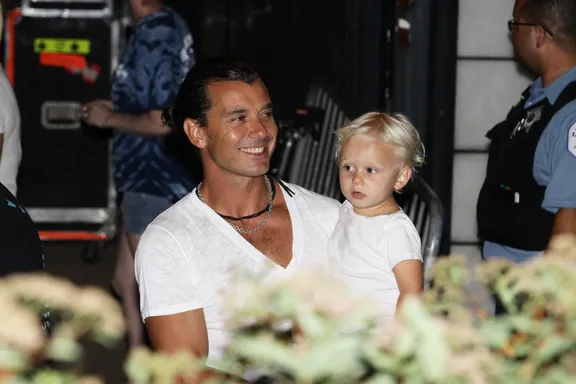
His mother became famous as the lead singer of No Doubt before establishing a successful solo career, while his father built his reputation as the frontman of the British rock band Bush. Their musical styles were not identical, but both parents understood the demands of recording, performing, touring, and maintaining careers in the entertainment industry. Zuma consequently had access to instruments and professional musicians from a very young age. That exposure did not guarantee he would become interested in music himself, but signs of his curiosity appeared early. Long before he was old enough to consider a professional path, he was already experimenting with instruments. Music became something he could participate in rather than simply hear through his parents.
When Zuma was only four years old, Gwen discussed his interest in guitar during a 2012 appearance on The Ellen DeGeneres Show. She revealed that he would play guitar with members of No Doubt, including Tony Kanal, Adrian Young, and Tom Dumont. For a preschool-aged child, being surrounded by experienced musicians offered an unusually rich introduction to instruments and performance. Those childhood moments did not establish what Zuma would eventually do as an adult, but they demonstrated that his current enthusiasm did not suddenly appear during his teenage years. Guitar had already become part of his world when he was very young. More than a decade later, that early curiosity appears to have remained.
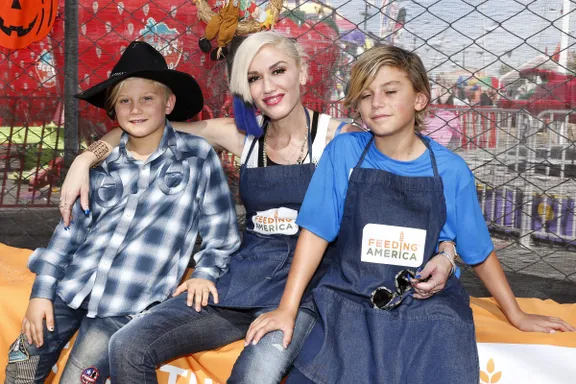
Growing up also brought experiences that had nothing to do with music. In 2020, Gavin Rossdale publicly discussed a difficult period during which Zuma suffered significant injuries in separate accidents. Zuma, then 11, experienced a bicycle crash that resulted in a broken arm and a leg injury requiring stitches. The accident came after he had already suffered another broken arm in an earlier fall. Gavin initially described the incidents as occurring only weeks apart and later clarified the timeline. Regardless of the exact interval, having serious injuries affecting both arms during a relatively short period was understandably difficult for a young child. His father was impressed by how calmly Zuma handled the experience.
Gavin described his son as remarkably brave and tough while discussing the injuries with People. He explained that he had been helping with Zuma’s dressings and praised the way the youngster dealt with everything he had experienced. Gavin even found room for humor during the stressful situation, joking about which of his son’s limbs had managed to escape injury. Fortunately, those accidents became part of Zuma’s childhood rather than something that prevented him from continuing his activities. In later years, photographs and performances showed him once again comfortably playing guitar. The story became one of several glimpses Gavin has offered into his relationship with his children.
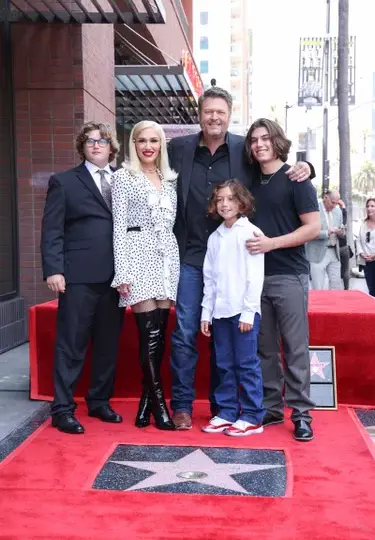
The family structure changed significantly years earlier when Gwen and Gavin separated in 2015 after approximately 13 years of marriage. They continued sharing three sons, while both parents moved forward with their respective lives. Gwen’s relationship with country singer Blake Shelton eventually became another important part of the children’s family environment. Gwen and Blake met while working together on The Voice, and their friendship developed into a romantic relationship. After several years together, they married in July 2021. Blake consequently became stepfather to Kingston, Zuma, and Apollo.
Shelton has repeatedly emphasized that he takes the role seriously. Although he does not share a biological connection with Gwen’s sons, he has spoken about the emotional responsibility of becoming an important adult in their lives. In interviews, Blake has explained that being a stepfather changed how he thought about himself and his priorities. The boys depended on him in ways he had never previously experienced, giving him responsibilities extending far beyond entertainment. He has said that the experience helped him understand that his identity was not limited to being a country singer or television personality. Family increasingly became an important factor in decisions about his time and career.
Blake has also acknowledged that years spent with children cannot simply be recovered later. His comments about family have focused on wanting to be present rather than allowing professional obligations to consume every available moment. He has described his role as stepfather as something he takes very seriously because of the importance the boys place on him. Those statements provide context for the relationship viewers occasionally see in photographs and videos. While outsiders cannot know every detail of a family’s private relationships, Blake has publicly made his commitment to Gwen’s sons clear. Zuma’s growing interest in country music has created an especially visible point of connection between the two.
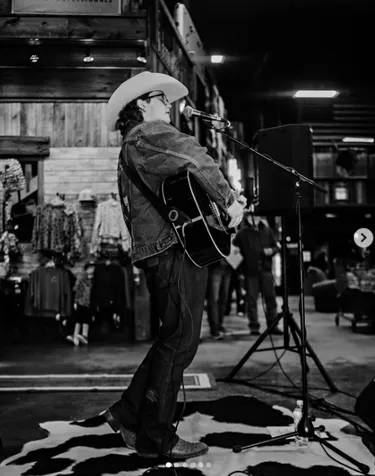
That connection is interesting because Zuma comes from a family strongly associated with rock and alternative music. Gwen’s history with No Doubt and Gavin’s career with Bush could easily have pushed expectations toward rock music. Instead, Zuma has increasingly shown an interest in country influences as well. Growing up around Blake introduced another major musical tradition into his everyday environment. The result does not mean Zuma has rejected his biological parents’ musical backgrounds. Rather, his interests appear to reflect exposure to several different styles.
Life in Oklahoma became another part of the family’s story. Blake has longstanding ties to the state, and Gwen and her sons have spent considerable time there with him. The rural environment offered experiences very different from Los Angeles and other entertainment-industry settings. For the children, that included opportunities to spend time outdoors and become familiar with vehicles and activities around the property. One particular vehicle eventually became especially meaningful to Zuma.
Gwen has told the story of an old truck that once belonged to Blake’s late father, Dick Shelton. The vehicle had remained at the property and was reportedly in rough condition, but Zuma developed a fascination with it. He repeatedly expressed interest in having the truck rather than simply focusing on something new. Eventually, Blake decided to give it to him and helped make it usable, including installing a dashboard. Because the vehicle had belonged to Blake’s father, the gift carried family history that went beyond its practical value.
Zuma added another family connection when he reportedly named the truck Dorothy, after Blake’s mother. The choice made the story especially meaningful because it linked different generations of Shelton’s family. It also offered a public example of how blended families can develop their own traditions and sentimental objects over time. The truck was not simply presented as an expensive celebrity gift. Its significance came primarily from who had owned it and the fact that Zuma had wanted it for years. That personal history made it different from an ordinary vehicle.
Music provided another public example of the bond between Zuma and Blake. In July 2024, Zuma performed at Ole Red in Tishomingo, Oklahoma, a venue associated with Shelton. Video shared from the appearance showed the teenager performing with a guitar while Blake watched nearby. Shelton’s visible reaction attracted attention because he appeared delighted as his stepson performed. Rather than taking over the moment himself, the established country star remained off to the side while Zuma occupied the stage.
For Zuma, appearing publicly with a guitar represented another step beyond the childhood stories about playing with members of No Doubt. He was now old enough to perform before an audience and begin exploring what kind of musician he might want to become. His family connections inevitably attract attention, but developing an individual musical identity requires more than having famous relatives. Performance experience, practice, musical choices, and personal taste will ultimately determine what direction he chooses. At 18, there is still plenty of time for those interests to evolve.
Another element of the public conversation surrounding Zuma has been much more lighthearted. Over the years, some social-media users have remarked that they believe he looks surprisingly similar to Blake Shelton. The comments became particularly noticeable when family photographs showed Zuma standing alongside his mother, brothers, and stepfather. Some viewers jokingly suggested that Zuma could pass for Blake’s biological son. These observations are entirely subjective and obviously do not imply a genetic relationship. Zuma’s biological parents are Gwen Stefani and Gavin Rossdale.
The comparison nevertheless became a recurring joke among some followers. Human beings often perceive similarities in facial expressions, hairstyles, clothing, posture, or mannerisms, even between unrelated people. Spending years around someone can also lead family members to share habits or stylistic influences without changing anything about their genetics. In Zuma’s case, his growing interest in country music and the way he sometimes dresses may strengthen the association with Shelton in the minds of viewers. That is very different from establishing an actual physical resemblance scientifically. It remains simply something certain fans say they notice.
The discussion appeared again around Zuma’s 18th birthday as new photographs showed how much his appearance had matured. Some commenters believed they could see features associated with Gavin Rossdale while simultaneously detecting something that reminded them of Blake. Even the people making these comments generally acknowledged the obvious contradiction and treated it humorously. There is no mystery about Zuma’s parentage. What the comments reveal instead is how strongly the public associates him with both his biological family and the stepfather who has been part of his life for years.
Turning 18 also brought a meaningful musical gift. Zuma publicly thanked his girlfriend, Theran Rose, after receiving a Fender Telecaster around his birthday. The Telecaster is one of the most recognizable electric guitar designs and has been used extensively across country, rock, blues, and many other musical genres. For a young musician who has increasingly demonstrated an interest in guitar, the instrument was an especially appropriate present. Zuma expressed his appreciation publicly and suggested that the guitar would accompany him through future experiences and memories.
The gift also reflected an interest that appears to be shared within the relationship. Theran has posted musical performances of her own online, including material associated with country music. That common interest offers additional context for why a guitar would be such a personal birthday present. Rather than being an unrelated luxury item, it connected directly with something Zuma has been pursuing for years. As with any young relationship, only the people involved know its private details, but their publicly shared posts indicate a mutual enthusiasm for music.
A Fender Telecaster also fits naturally into the mixture of musical influences surrounding Zuma. Although strongly associated with country guitar, the instrument has an extensive history in rock and other genres as well. That makes it particularly appropriate for someone whose family background includes No Doubt, Bush, and Blake Shelton’s country career. Zuma does not necessarily need to choose between those traditions. He can incorporate whichever influences fit the music he ultimately wants to make.
This may be one of the most interesting aspects of watching his musical interests develop. Children of famous performers are often compared with their parents before they have had enough time to establish themselves independently. Zuma faces an additional layer because his stepfather is also an internationally successful musician. Comparisons with Gwen, Gavin, and Blake are therefore almost unavoidable whenever he performs publicly. At the same time, being surrounded by accomplished musicians gives him access to an extraordinary range of perspectives and experiences.
His mother appears enthusiastic about seeing him develop on his own terms. Gwen’s 18th-birthday tribute emphasized her love and pride rather than attempting to define exactly what career her son should pursue. The collection of childhood memories reinforced how quickly his life has progressed from early family photographs to performances with a guitar. For a parent, an 18th birthday naturally represents a major transition. It marks the end of one stage while opening the door to considerably more independence.
Gavin’s public comments over the years have likewise shown pride in his son. Whether discussing Zuma’s resilience after his childhood injuries or joking about his musical preferences, Rossdale has offered glimpses of a close father-son relationship. The fact that Zuma has developed an interest in country music creates an amusing contrast with Gavin’s long career in rock. That difference does not have to represent conflict. Musical taste often develops through exposure to multiple influences, especially in a family containing several professional musicians.
Blake’s involvement adds another dimension without replacing Zuma’s relationship with his biological father. A stepfather and biological father occupy different relationships within a blended family, and public discussion does not need to turn those relationships into a competition. Blake himself has generally discussed his role in terms of responsibility and support. The available public information suggests that music and family experiences have provided opportunities for him and Zuma to connect.
Gwen and Blake’s Oklahoma life appears to have played an important role in that connection. Country music is closely connected with Blake’s professional identity, while rural activities offer experiences that differ substantially from those associated with Los Angeles. Zuma has had the opportunity to encounter both environments during his upbringing. His developing style may consequently reflect influences from several places and people rather than a single source.
The old truck from Blake’s father provides perhaps the clearest illustration of that blended-family connection. Its importance had little to do with celebrity or commercial value. Zuma wanted something carrying personal history, and Blake eventually trusted him with an object connected to his late father. Naming it after Blake’s mother added another sentimental layer. Stories like this help explain why observers may perceive a particularly close bond between the two.
Still, it is important not to exaggerate what public photographs and social-media posts can establish. A smiling picture, performance video, or birthday tribute offers only a limited glimpse into private family life. Statements about how Zuma feels should therefore be based on what he or his family members have actually shared rather than assumptions made by outsiders. The documented public moments are meaningful enough without inventing additional details.
The same standard applies to comments about Zuma’s appearance. Saying that some social-media users believe he resembles Blake accurately describes an online reaction. Declaring that he actually inherited Blake’s physical characteristics would obviously be inaccurate because they are not biologically related. Clothing, hairstyles, expressions, shared interests, and familiarity can all affect how people perceive resemblance. Keeping that distinction clear allows the amusing comparison to remain exactly what it is: a subjective observation.
At 18, Zuma is also entering a stage when his own choices will increasingly define how the public knows him. Until now, most people encountered his name because he was Gwen Stefani and Gavin Rossdale’s son or Blake Shelton’s stepson. Music offers him an opportunity to create something associated directly with his own interests and abilities. Whether he ultimately pursues it professionally remains his decision and cannot be predicted simply from a handful of performances.
What is clear is that the interest has existed for many years. From playing guitar around members of No Doubt as a very young child to performing publicly as a teenager, instruments have repeatedly appeared throughout his story. Receiving a new guitar for his 18th birthday fits naturally into that history. His musical direction may change as he grows older, but the foundation is not something that suddenly appeared because of one birthday photograph.
The milestone also highlights how dramatically Gwen’s family has changed since Zuma was born in 2008. At that time, she and Gavin were raising two young sons, with Apollo still years away from being born. Their marriage later ended, new relationships developed, and Blake eventually became part of the boys’ family life. Through those changes, both biological parents remained connected to their children while a step-parent relationship developed alongside them.
Blended families can take many forms, and there is no single model that describes every household. In this particular family, Blake has publicly said that he views being a stepfather as a genuine responsibility. His statements emphasize showing up for the children rather than merely carrying the title because he married their mother. That perspective helps put his interactions with Zuma into context without diminishing Gavin’s role as Zuma’s father.
The young musician therefore enters adulthood surrounded by several different sources of musical influence. From Gwen comes a career spanning ska, rock, pop, songwriting, and performance. From Gavin comes decades of experience fronting a successful rock band. From Blake comes country music, live performance, and another perspective on navigating a long career in entertainment.
What Zuma chooses to do with those influences remains entirely up to him. He could pursue country music, explore rock, combine genres, or eventually decide that music will remain a personal passion rather than a full-time career. Turning 18 represents the beginning of that decision-making process rather than its conclusion. Public enthusiasm should not be mistaken for certainty about his future.
For now, his birthday provides a natural moment to look back at how far he has come. The small boy experimenting with guitars became the teenager willing to perform before an audience. The child who endured a painful series of injuries grew into a young adult exploring his interests. Family relationships changed around him, but music remained a recurring part of his life.
Gwen’s tribute captured that transition in a particularly personal way. Instead of presenting only a polished portrait of her now-adult son, she included memories spanning different stages of his childhood. The result emphasized the relationship between a mother and a child reaching an important milestone. Her words communicated pride in who Zuma has become while recognizing how difficult it was to believe that 18 years had passed.
The public may continue joking about whether Zuma resembles Blake Shelton, especially as his country-inspired style develops. But the more meaningful connection appears to be based on shared experiences rather than physical appearance. Blake has watched him grow, welcomed him into aspects of Oklahoma life, supported his musical interests, and publicly described how seriously he takes his role as stepfather.
Meanwhile, Zuma remains unmistakably connected to Gwen Stefani and Gavin Rossdale, the parents whose musical careers surrounded him from birth. His emerging identity does not need to belong exclusively to any one of those influences. Growing up can involve absorbing pieces of many environments before eventually developing something individual.
