
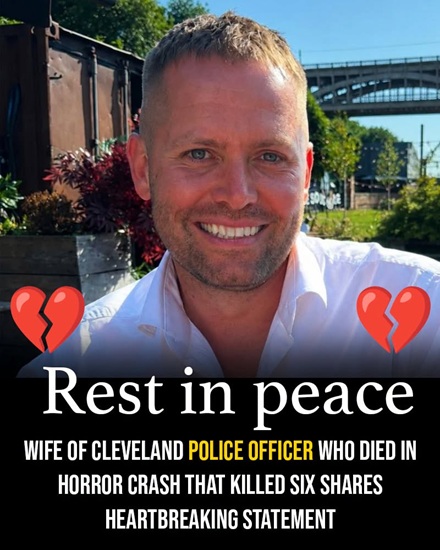
Cleveland Police officer Matthew Blades, 37, was one of seven people who died in a serious collision on the A66 in the early hours of August 22, 2026. Blades was travelling in a marked police vehicle with fellow officer Tom Clough, 38, when a Volkswagen Passat travelling in the wrong direction collided with them. Police said the crash happened at around 3:39 a.m. in the South Bank area. Both officers died at the scene, along with the five occupants of the Volkswagen.
The incident immediately became the subject of major investigations because it had followed a police pursuit involving the same car only moments earlier. Authorities urged people to avoid speculation while investigators worked to establish the full sequence of events. The five occupants of the Volkswagen were later formally identified by Cleveland Police as Cole Robert Worthy, 17, Theo Rae, 17, Makai Saddington, 18, Jakub Matusiak, 23, and Michael Robert Cahill, 23.
Specialist family liaison officers were assigned to support the relatives of everyone who died. The ages of the victims made the incident especially difficult for the families involved, with several of those killed still in their teens or early twenties. Police confirmed the identities only after the necessary formal procedures had been completed. Investigators continued gathering evidence while also trying to ensure that the bereaved families were given appropriate support and privacy.
In the days after the collision, Matthew Blades’ wife released an emotional tribute through Cleveland Police. She described him first and foremost as a husband, best friend and devoted father to their two young sons. She also remembered him as a loved son, brother, son-in-law and uncle. Her statement emphasized the personal life that existed beyond the police uniform and the enormous absence his death had created within the family. She said there were no words that could fully explain what he meant to the people who loved him. The tribute made clear that his death was not simply the loss of a serving police officer but the sudden loss of a central figure in a young family.
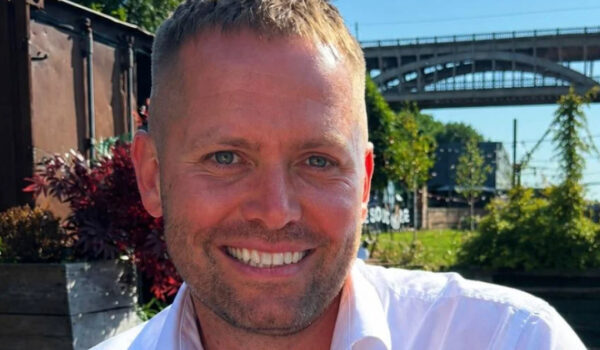
His wife said Matthew had been loved beyond words by relatives and friends. She described him as patient, kind and deeply committed to the people around him. She also spoke about the role he had played in the lives of their children and the importance of keeping his memory alive as they grow older. According to her statement, the boys would be raised knowing what kind of father he had been. She said the love he gave them would remain part of their lives even though he was no longer physically present. The tribute focused on continuity, memory and the responsibility of preserving the person Matthew had been for his children.
The statement also recognized the circumstances in which Blades died. His wife said he had given his life while carrying out his duties as a police officer and serving others. She described his work in terms of courage, dedication and selflessness, while still making clear that his family remembered much more than his profession. For them, his identity was not limited to the final shift he worked. He was the person who shared ordinary family routines, helped raise two boys and formed friendships and relationships outside policing. That distinction gave the tribute its strongest emotional weight.
Tom Clough’s family also released a statement after his death. They thanked people for the condolences and support they had received and described Tom as someone with a strong sense of humor and a willingness to help others. His relatives said he often stepped forward when someone needed assistance and remembered him as a person who had spent much of his life serving others. Clough’s death meant Cleveland Police lost two serving officers in the same collision. Their colleagues were therefore grieving at the same time that investigators were trying to understand exactly what had happened.
Cleveland Police Chief Constable Victoria Fuller described the incident as a devastating moment for the force and the families involved. She said both officers had been carrying out their duties when they died. Support was arranged for police officers and staff affected by the loss of their colleagues. The force also emphasized that its thoughts were with all seven families, not only those of the officers. Officials repeatedly stressed the importance of respecting the investigation and avoiding assumptions while evidence was still being collected.
The Independent Office for Police Conduct, known as the IOPC, began examining the events surrounding the pursuit soon after the collision. The organization became involved because the crash followed police contact and therefore required an independent review. Investigators collected in-car footage, incident logs and initial accounts from officers. Those materials allowed them to construct a preliminary timeline of the minutes before the crash. The IOPC said its investigation would continue as further evidence became available.
According to the IOPC, Cleveland Police had received information about a Volkswagen Passat linked with a number of incidents during the early hours of August 22. Officers located the vehicle, and an armed response vehicle began pursuing it. The chase lasted for just under seven minutes. During that pursuit, the Volkswagen entered the A66 at South Bank and began travelling against the normal direction of traffic. At that point, the officers pursuing it abandoned the chase rather than continuing behind the car onto the wrong side of the carriageway.
That decision is an important part of the official timeline. The police vehicle involved in the pursuit was not the vehicle later struck in the fatal collision. The armed response vehicle remained on the correct side of the road after ending the chase. The Volkswagen continued travelling against traffic. Approximately 10 seconds later, it collided with another marked Cleveland Police vehicle occupied by Matthew Blades and Tom Clough. The IOPC confirmed this sequence after reviewing available police footage.
Blades and Clough had been operating in the same area but were not inside the armed response vehicle that had conducted the pursuit. Their marked police car was reportedly assisting with efforts to locate the Volkswagen. The collision therefore happened after the original pursuit had already ended. This distinction is important because early reports could easily lead people to believe that the officers killed were part of the pursuing vehicle. Official information shows that they were in a separate police car travelling correctly when the Volkswagen struck them.
All seven people involved in the two vehicles were pronounced dead at the scene. Emergency services attended, and the road remained closed while investigators worked. The severity of the collision required a major response involving police, emergency personnel and specialist collision investigators. Cleveland Police later asked the public for information and appealed to anyone with relevant footage or knowledge to come forward. Investigators were not looking only at the moment of the crash but also at the wider sequence of events that had taken place beforehand.
Cleveland Police said officers had received several reports involving dangerous driving earlier that morning. One vehicle mentioned in the investigation was a Volvo XC60, while the second was the Volkswagen Passat later involved in the fatal collision. Police believed both vehicles were connected with wider activity being investigated. The force also said the vehicles were believed to have been using cloned registration plates. Automatic number plate recognition technology reportedly helped police identify and locate the Volkswagen.
The Volvo was later recovered as part of the wider investigation. Police from neighboring forces provided additional support as Cleveland Police examined the events leading up to the collision. The investigation involved more than a simple traffic reconstruction because detectives were also trying to determine what had happened before officers began following the Volkswagen. This broader inquiry included reports of dangerous driving and other incidents. Authorities continued to emphasize that individual criminal responsibility should not be assumed before the evidence was fully examined.
By August 24, Cleveland Police said 12 people had been arrested in connection with the wider investigation. Those arrests did not mean that the individuals had been convicted or legally proven responsible for any offense. An arrest allows police to investigate suspected involvement, gather evidence and question people where appropriate. Any criminal responsibility would have to be established through the normal legal process. This distinction remains particularly important in cases receiving intense public attention.
The IOPC’s investigation is separate from the criminal investigation being carried out by Cleveland Police. Its role is to examine police actions and decision-making surrounding the pursuit. This includes reviewing whether appropriate procedures were followed and understanding why certain decisions were made. The existence of an IOPC investigation does not automatically mean police misconduct occurred. Independent reviews are an important part of accountability when serious injury or death follows police contact.
Video footage is expected to play an important role in reconstructing the events. Police vehicles often contain recording equipment that can provide a more precise timeline than eyewitness memory alone. In this case, investigators were able to determine how long the pursuit lasted and approximately how much time passed between the decision to abandon it and the fatal collision. The roughly 10-second interval is especially significant because it demonstrates how quickly the situation changed once the Volkswagen entered the wrong side of the A66.
The road environment itself also played a major role in the danger. Travelling against traffic on a dual carriageway can create an immediate risk because drivers approaching normally may have little time to respond. Cleveland Police confirmed that the Volkswagen was moving in the wrong direction at the time of the collision. Blades and Clough’s vehicle was travelling correctly. The impact occurred before the officers had any meaningful opportunity to avoid the approaching vehicle, according to the timeline released so far.
Authorities have avoided giving a final account of responsibility while investigations continue. That restraint is important because major incidents often generate rumors within hours. Social-media posts can spread claims faster than investigators can verify them. Cleveland Police therefore asked the public not to speculate about the actions or motives of individuals involved. A careful account should remain limited to what official sources have confirmed.
This principle applies particularly to the five people travelling in the Volkswagen. Police have confirmed their identities and ages, as well as the fact that the vehicle was travelling the wrong way when the collision occurred. However, investigators have not publicly assigned every action before the collision to each individual occupant. It would therefore be inaccurate to describe specific criminal responsibility without established evidence. The same caution applies to people arrested during the wider investigation.
For the families of the Volkswagen occupants, the crash created sudden and devastating loss. Two of those who died were only 17, while another was 18. The remaining two were 23. Whatever questions remain about the events leading up to the collision, their relatives are still dealing with deaths that occurred without warning. Cleveland Police confirmed that specialist officers were supporting those families as well. The force’s public statements have repeatedly recognized the suffering of everyone affected.
The family of Matthew Blades has also had to deal with public attention surrounding the investigation. His wife’s tribute deliberately shifted focus away from the crash itself and toward the man he had been at home. She described a husband she loved deeply and a father whose children would carry his memory throughout their lives. Her words highlighted the gap between how the public may know someone after a major event and how relatives remember that person privately.
The same distinction applies to Tom Clough. The public knows him primarily because of the collision, but his family remembered humor, service and willingness to help others. Families often try to preserve these broader memories after sudden deaths because a final incident can easily overwhelm everything that came before it. Cleveland Police gave both families space to release tributes in their own words. These statements provide an important human dimension alongside the official investigation.
The deaths of two officers also had a significant effect on the policing community. Colleagues had worked alongside Blades and Clough and expected them to return from duty like any other shift. Losing two officers simultaneously can affect not only close friends but also emergency personnel who attended the crash and others involved in the investigation. Cleveland Police said support was being made available to officers and staff. That response recognized that professional roles do not remove the emotional impact of encountering the sudden deaths of colleagues.
The wider investigation is likely to take time. Serious collisions involving multiple deaths require detailed examination of vehicle evidence, video, communications, road conditions and witness information. Investigators may also review automatic number plate recognition records and other data connected with the Volkswagen and Volvo. This process is necessary because the final account must be based on evidence rather than assumptions formed immediately after the incident. Major investigations often develop significantly as new material becomes available.
The IOPC may also need to examine communication between police officers during the pursuit. Radio transmissions can help establish what officers knew at different moments and why they made particular decisions. The decision to abandon the pursuit once the vehicle entered the wrong side of the A66 will likely remain an important point in the timeline. Official information currently indicates that officers did not continue pursuing against traffic. The fatal collision happened seconds later with a separate police vehicle.
That difference helps explain why accurate reporting matters. A simplified version might wrongly suggest that Blades and Clough died while chasing the Volkswagen themselves. The official timeline does not support that description. They were in another marked vehicle assisting with the wider operation. Their car was struck after the pursuit had ended. Preserving that distinction helps prevent misinformation from becoming part of the public understanding of the incident.
Cleveland Police has also continued appealing for witnesses and information. People who saw the vehicles earlier in the morning or captured relevant footage may be able to assist investigators. Dashcam recordings, security cameras and other material can sometimes clarify movements before a collision. Public appeals are therefore a common part of serious investigations. Anyone with information is generally encouraged to provide it directly to investigators rather than posting unverified claims online.
The crash also highlights why police pursuits involve complex decisions. Officers must balance the need to apprehend or locate a vehicle with the risks created by continued pursuit. Conditions can change extremely quickly, particularly if a vehicle enters opposing traffic. The IOPC investigation will examine the actions taken in this specific case rather than making broad assumptions about pursuit policy. The available evidence already shows that the pursuit was stopped when the situation became significantly more dangerous.
For Blades’ wife, however, those technical questions cannot change the final outcome. Her husband left for work and did not come home. Their children lost their father. The family must now preserve memories that would otherwise have been created naturally over many more years. Her tribute communicates that reality more directly than any investigation report could.
She said their lives would never be the same.
At the same time, she emphasized that Matthew’s love would not disappear.
That message is especially significant for their children. They are young enough that some memories may eventually depend on stories, photographs and the people who knew their father best. His wife said she would make sure they understood what kind of man he had been. Preserving that history has now become part of the family’s future.
The community response also included messages of support for both officers’ families. Cleveland Police acknowledged the condolences received and thanked people who expressed sympathy respectfully. Public support can never replace someone who has died, but it can remind grieving relatives that others recognize their loss. The families themselves also thanked those who had reached out. Their statements focused on gratitude even while describing overwhelming grief.
There is no need to exaggerate the facts of the collision to understand its seriousness. Seven people died in seconds. Two were serving police officers. Five were young men travelling in another vehicle. The crash followed a pursuit that had ended moments earlier. A car travelling against traffic struck a marked police vehicle. Those confirmed facts already describe an event of enormous consequence.
Responsible reporting should also avoid treating the incident as entertainment. Real families are involved, and several investigations remain active. Details should be included because they help explain what happened, not because they make the story more sensational. Words such as “horror,” “shocking” or “unbelievable” add little when the underlying facts are already so serious. A clear timeline and verified family statements communicate the scale of the loss more effectively.
The same approach applies to allegations involving people who died. If a detail has not been confirmed by police, the IOPC or another reliable official source, it should not be presented as established fact. This is particularly important when a deceased person cannot respond to claims made afterward. Investigations and court proceedings exist precisely because allegations must be examined through evidence. Responsible journalism should preserve that distinction.
The arrest of other individuals connected with the wider investigation should also be handled carefully. Police may have reasonable grounds to arrest someone while still gathering evidence. That does not mean guilt has been established. If charges are later filed, those developments can be reported accurately at that time. Until then, the proper wording is that individuals were arrested as part of an ongoing investigation.
The next major updates are likely to come from Cleveland Police or the IOPC. Those organizations may release additional information as evidence is analyzed. Investigators could clarify events before the pursuit, the relationships between the vehicles or the conduct of those involved. Future findings may add detail to the account currently available. Until then, readers should rely on confirmed information rather than attempting to fill gaps themselves.
The timeline already established is relatively clear. Police received reports about incidents involving vehicles. Officers located the Volkswagen and pursued it for just under seven minutes. The Volkswagen entered the wrong side of the A66. The pursuit was abandoned. Approximately 10 seconds later, the Volkswagen struck a separate marked police vehicle carrying Matthew Blades and Tom Clough.
All seven people died.
That sequence is central to understanding the tragedy.
It also explains why several investigations are occurring simultaneously.
Cleveland Police must examine the wider alleged criminal activity.
Collision investigators must reconstruct the crash.
The IOPC must independently examine police actions.
Family liaison officers must support the bereaved.
Each responsibility requires time and care.
The public may understandably want immediate answers, but serious investigations cannot always provide them within hours or days. Evidence has to be checked against other evidence. Footage must be reviewed. Witnesses must be interviewed. Vehicles must be examined. Investigators must distinguish between assumptions and facts that can be demonstrated.
For Matthew Blades’ wife, none of those procedures will change how she remembers him.
She described him as her closest friend.
She remembered his patience.
She remembered his kindness.
She remembered the way he loved their children.
Those qualities are not visible in photographs of the crash scene or investigative timelines.
They belong to the life he lived before that morning.
The same is true for Tom Clough and the five young men who died in the Volkswagen.
A fatal collision can reduce seven lives to names and ages in headlines.
Families remember something much larger.
They remember birthdays.
Conversations.
Private jokes.
Plans that will never happen.
Ordinary days that seemed unimportant until they became memories.
Respecting that reality is part of reporting responsibly.
As investigations continue, confirmed facts should remain clearly separated from speculation. The public knows what happened in the final minutes because official footage and reports have provided a preliminary timeline. Some earlier circumstances remain under investigation. The responsible approach is to allow investigators to complete that work before assigning conclusions.
Cleveland Police and the IOPC have both emphasized this need for evidence.
Their statements provide the strongest available foundation for understanding the incident.
They confirm the pursuit.
They confirm the decision to stop it.
They confirm the wrong-way travel.
They confirm the separate police vehicle.
They confirm the seven deaths.
Those facts should remain the center of any accurate account.
The crash of August 22 will likely remain one of the most significant events Cleveland Police has faced in recent years. Losing two officers during the same incident has created a lasting impact within the force. At the same time, five other families are grieving young people who also died. The tragedy therefore cannot be understood from only one perspective.
Matthew Blades’ wife captured that personal dimension when she spoke about the future of their children. Their father will not be physically present as they grow, but she intends to make sure his memory remains part of their lives. She will carry the experiences they shared and pass those memories forward. That responsibility is now part of a future the family never expected to face.
Her words also show why official tributes matter. They allow the families themselves to decide what should be publicly remembered about the person they lost. Instead of outsiders inventing stories about Matthew Blades, his wife described him in her own terms. She chose to focus on love, family, devotion and service. Those qualities became part of the public record alongside the details of the collision.
Tom Clough’s family did something similar. They emphasized humor, helpfulness and his willingness to step forward for others. The combination of the two statements reminds readers that both officers were individuals rather than simply colleagues who happened to die together. Their families will mourn them in different ways and remember different parts of their lives.
For investigators, the work is far more technical.
They need to establish movement, timing and decisions.
They need to analyze vehicles and footage.
They need to determine what occurred before the pursuit began.
They need to consider the cloned plates and earlier reports.
They also need to establish the roles of people connected with the wider investigation.
That work cannot be replaced by online speculation.
The collision happened in seconds, but explaining everything that led to it may take much longer.
This is common in complex fatal incidents.
Evidence can reveal information that was not immediately visible.
Timelines can become more precise.
Initial assumptions can change.
That is why official updates remain more reliable than rumors circulating shortly after a tragedy.
Until the investigations are complete, the clearest account remains one based on what authorities have already confirmed.
Matthew Blades and Tom Clough were serving police officers.
They were travelling in a marked police vehicle.
The Volkswagen was travelling in the wrong direction.
The pursuit involving that vehicle had already been abandoned.
The crash followed only seconds later.
All seven people died at the scene.
Beyond those facts, further conclusions should depend on evidence.
For Blades’ family, however, the central story will always be about the man rather than the investigation.
His wife described him as someone whose place in their family could never truly be filled.
She said their children would grow up knowing how deeply he loved them.
She also said she would continue carrying his memory and everything they had shared.
Those words may ultimately become more lasting than the immediate headlines surrounding his death.
Investigations will eventually end.
Reports will be published.
Legal questions may be resolved.
Public attention will move elsewhere.
The family will continue living with the loss.
That is why the final focus belongs with the people affected.
Seven lives ended on the A66 on August 22.
Two officers were among them.
Five young men were in the other vehicle.
Multiple families were changed permanently.
And while authorities continue working to explain exactly how the tragedy unfolded, Matthew Blades’ wife has already explained what the loss means inside her home.
A husband is gone.
A father is gone.
A colleague is gone.
But the love, memories and relationships built during his life remain.
That is the part of Matthew Blades’ story his family wants carried forward.

