
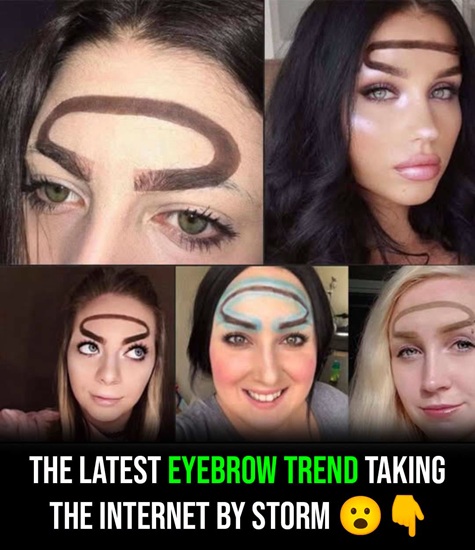
Eyebrows have become one of the most creative areas of modern makeup, especially since social media made it possible for artists to share experimental looks with audiences around the world. Over the years, online creators have introduced everything from feather-shaped and wavy eyebrows to colorful and highly exaggerated designs. Some of these looks were intended for everyday wear, while others existed mainly as artistic experiments.
One particularly unusual example appeared in 2018, when a young British makeup creator named Hannah Lyne shared a design that connected both eyebrows across the forehead. The unusual creation quickly became known online as “halo brows.” The concept was surprisingly simple but visually dramatic. Instead of allowing each eyebrow to end naturally near the outer edge of the face, Lyne extended both brow tails upward. She then continued the lines across the forehead until they connected, creating a large curved shape surrounding the upper part of her face.
Because the completed design resembled the outline of a halo, the name was an obvious fit. Some beauty writers also jokingly compared the style with a reverse unibrow, although the finished look was far more elaborate than simply joining two eyebrows together. Lyne was only 16 years old when the design attracted widespread attention
. According to contemporary beauty coverage, she developed the idea while discussing another unusual eyebrow style with a friend. That earlier style was known as the “fishtail brow,” which typically involved adding an upward branch near the outer portion of each eyebrow. Lyne wondered what would happen if those extensions continued farther across the forehead. By joining them together, she transformed an existing internet makeup idea into something that looked completely different.
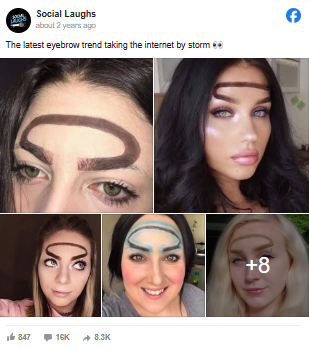
The resulting photographs were immediately difficult to ignore. The dark eyebrow makeup created a continuous arc around Lyne’s forehead, while the rest of her makeup remained carefully applied and polished. The contrast between conventional beauty techniques and the unconventional brow shape made the photographs particularly striking. Instead of trying to make the eyebrows appear natural, Lyne treated them as graphic elements that could become part of a larger facial design. The effect was closer to editorial or artistic makeup than an ordinary eyebrow routine.
Reports published at the time noted that Lyne used makeup products rather than permanently altering her eyebrows. This is an important distinction because the photographs could otherwise give viewers the impression that the unusual shape involved permanent cosmetic work. The extensions were simply drawn onto the skin, allowing the entire design to be removed like other makeup. That temporary nature gave Lyne the freedom to experiment with shapes that would have been impractical as permanent eyebrow styles.
Halo brows emerged during a period when Instagram had become particularly influential within beauty culture. Makeup artists no longer needed to depend entirely on traditional magazines, fashion shows, or professional portfolios to have their work noticed. A creative photograph posted from home could potentially reach an enormous audience if enough people shared it. This gave young and independent artists an opportunity to experiment publicly and receive immediate reactions from viewers around the world.
By 2018, unusual eyebrow designs were already becoming familiar features of online beauty communities. Feather brows had attracted attention by separating eyebrow hairs into patterns resembling feathers. Wavy brows replaced the traditional smooth arch with deliberately curved lines. Fishtail brows created split ends that resembled a fish’s tail. These styles demonstrated that eyebrows could function as a creative canvas rather than simply a facial feature to be groomed into a conventional shape.
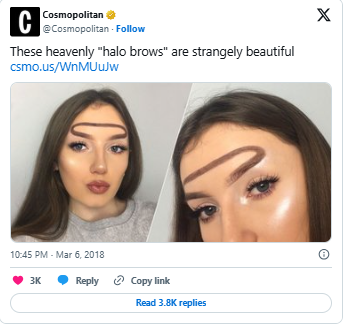
Halo brows pushed that experimentation even further. Instead of modifying each eyebrow individually, the design effectively transformed both brows into one continuous piece of makeup art. This made the look immediately recognizable even among the many unusual styles circulating online. People did not need detailed knowledge of cosmetics to understand why the image was different. One glance at the large curved line across the forehead was enough.
Beauty publications soon noticed the photographs and began writing about the new look. Some described it as one of the latest unusual eyebrow ideas emerging from Instagram, while others questioned whether something so unconventional could realistically become an everyday beauty trend. This distinction is worth remembering. Although halo brows received significant media attention, there is little evidence that they became a mainstream style worn regularly by large numbers of people.
The word “trend” is often used broadly when discussing social media. Sometimes it describes something millions of people are actively doing, while in other situations it simply refers to an idea receiving considerable online attention. Halo brows fit more comfortably into the second category. They became a viral beauty curiosity and inspired discussion, but they did not replace conventional eyebrow styles or become a normal part of everyday makeup.
Lyne herself did not appear to be presenting the design as something everyone needed to adopt. In interviews reported by beauty and lifestyle publications at the time, she emphasized experimentation and creativity. She explained that she wanted people to feel comfortable being playful and trying strange or imaginative looks. That perspective makes the halo brow easier to understand. It was essentially an artistic experiment created for enjoyment rather than a proposed new beauty standard.
Reactions from social media users varied considerably. Some viewers praised Lyne’s creativity and admired her willingness to develop something original. Supporters commented on her makeup skills and the unusual nature of her ideas. They saw the halo brow as an example of what could happen when an artist ignored conventional expectations and treated makeup as a form of visual expression.
Other viewers had almost the opposite reaction. Some described the style as ridiculous, while others responded with jokes or exaggerated expressions of disbelief. A few comments quoted in contemporary media coverage suggested that people could not even tell whether Lyne was being serious. The dramatic response demonstrated just how far the design departed from what most people expected eyebrows to look like.
Those divided reactions probably contributed to the amount of attention the photographs received. Online content often spreads rapidly when people strongly disagree about it. Someone who loves an unusual image may share it because they find it inspiring, while someone who dislikes it may share exactly the same photograph because they find it amusing or strange. Both reactions increase visibility.
This dynamic is particularly common in beauty culture because judgments about appearance are highly subjective. A style that looks imaginative to one person can appear excessive to another. Neither reaction necessarily determines whether the artist accomplished their goal. If the objective was to create an original design capable of attracting attention and encouraging discussion, halo brows clearly succeeded.
Several beauty publications approached the look with humor while still recognizing the creativity involved. Writers used playful descriptions because the design itself was intentionally unconventional. Rather than treating the eyebrows as a serious replacement for ordinary makeup, much of the coverage presented them as another imaginative example of social media beauty experimentation.
The ability to provoke that kind of reaction is partly why experimental makeup works so well online. A traditional eyebrow tutorial can be useful, but its finished result may look familiar. An enormous loop connecting both eyebrows produces immediate curiosity because viewers have rarely encountered anything similar. The image creates a question before anyone even reads the accompanying description: why did someone decide to do this?
For Lyne, the answer appears to have been straightforward. She was experimenting with an existing idea and wanted to create something new. The inspiration from fishtail brows demonstrates how online creativity often develops. One person creates a design, another modifies it, and someone else takes the concept in a completely different direction. Social platforms make this process visible because creators can respond to one another’s work almost immediately.
The technical execution also deserves attention. Drawing a smooth line that extends from each natural eyebrow and then creating reasonably balanced curves across the forehead requires more control than the humorous appearance might suggest. The two sides need to relate visually to each other for the halo effect to work. A poorly positioned line would simply appear accidental rather than intentional.
The rest of the makeup helped reinforce that intention. Lyne paired the experimental eyebrows with a polished overall appearance, making it clear that the unusual brow shape was deliberate. This contrast between conventional makeup and an unexpected graphic feature is a technique frequently used in editorial beauty photography. Keeping most elements familiar allows one exaggerated feature to become the focus.
Although social media made this type of experimentation more visible, unconventional makeup itself is nothing new. Professional artists have spent decades altering eyebrows for fashion photography, theater, film, music performances, and runway presentations. Brows have been bleached, removed visually with makeup, extended, decorated, colored, or replaced with completely artificial shapes.
What changed during the social media era was access. Experimental makeup no longer belonged primarily to professional studios and fashion publications. Anyone with cosmetics, imagination, a camera, and an internet connection could create a design and potentially show it to thousands of people. A teenager experimenting with makeup could suddenly find her work being discussed internationally.
Halo brows are a good example of that transformation. The design did not originate from a major fashion house or advertising campaign. It emerged from an individual creator experimenting with makeup and sharing the result online. Established publications became interested only after the image had already attracted attention.
This reversed an older relationship between beauty media and consumers. Traditionally, magazines and professional designers often introduced trends that audiences later adopted. Social platforms allowed individual users to introduce ideas that established publications subsequently reported on. Beauty culture became more interactive, unpredictable, and decentralized.
The trend also appeared at a time when eyebrow products had become a major part of the cosmetics market. Brow pencils, gels, powders, pomades, and specialized brushes gave people more tools for changing eyebrow shape and texture. Online tutorials taught viewers increasingly detailed techniques for creating defined brows.
Once highly sculpted eyebrows became common, experimentation was almost inevitable. Artists began asking what else could be done with the same products. Some pursued greater realism, while others moved deliberately in the opposite direction. Halo brows clearly belonged to the latter approach.
Rather than attempting to imitate natural hair, the design used eyebrow makeup almost like ink or paint. The forehead became part of the canvas, and the normal boundaries of the brow were ignored. This artistic approach explains why evaluating halo brows purely as everyday beauty misses much of the point.
Most people were never expected to wear them to work, school, or ordinary social events. Their primary purpose was visual experimentation. The photographs themselves were effectively the finished product. Once photographed and shared online, the makeup had accomplished what it was created to do.
That characteristic is shared by many social media beauty looks. Some designs are created specifically because they photograph well. They may require too much time, precision, or maintenance to be practical in everyday life, but practicality is not necessarily the objective.
Instagram encouraged this approach because striking images performed particularly well on a visually oriented platform. A viewer scrolling rapidly through hundreds of photographs might ignore a familiar makeup look but stop immediately when confronted with something unexpected. Halo brows had exactly that stopping power.
The design also benefited from having a memorable name. “Halo brows” immediately communicated the basic idea without requiring a lengthy explanation. The phrase was short enough for headlines, captions, and social media discussions, making the look easier to identify and share.
Its resemblance to a halo also gave publications plenty of opportunities for playful language. Writers described the style using references to angels, halos, arches, and other related imagery. This helped transform a single makeup photograph into a broader internet conversation.
Despite all the attention, however, halo brows should not be portrayed as a beauty revolution that permanently changed eyebrow styling. Conventional brows remained dominant, and the unusual loop largely remained within the world of experimental social media makeup. Its cultural significance comes from its visibility and creativity rather than widespread adoption.
That distinction is useful when looking back at many supposed internet “trends.” A viral photograph can generate dozens of articles without representing what most people are actually wearing. Media attention and mainstream adoption are two different things.
Halo brows were nevertheless genuinely discussed by multiple beauty publications in 2018, and Hannah Lyne was widely identified as the creator behind the look. Contemporary reporting also connected her idea directly with the earlier fishtail brow style. These documented details provide a factual foundation for understanding the phenomenon without exaggerating its popularity.
The story also demonstrates that creativity does not require universal approval. Lyne received both praise and criticism, but disagreement did not erase the originality of the experiment. If anything, the strong reactions demonstrated that she had created something capable of standing apart from countless other makeup photographs.
For young artists, that can be an important lesson. Creative work sometimes succeeds precisely because it challenges familiar expectations. Something unusual may generate confusion before appreciation, and not every experiment needs to become a permanent style to have artistic value.
Halo brows eventually faded from widespread online conversation as newer beauty experiments appeared. That rapid cycle is normal for internet culture. Platforms constantly introduce audiences to new images, challenges, styles, and techniques, making it difficult for any single novelty to remain dominant for long.
Still, the photographs remain a memorable example of the playful eyebrow experimentation that characterized parts of Instagram beauty culture during the late 2010s. They capture a moment when creators were continually searching for new ways to transform one of the face’s most familiar features.
Looking back, the most interesting part of the story may not be whether halo brows were beautiful or ridiculous. Personal taste will always determine that answer. What matters historically is how easily one imaginative idea moved from a conversation between friends to social media and then into international beauty coverage.
The phenomenon showed how dramatically the internet had changed who could participate in beauty culture. A creative idea no longer needed approval from editors, designers, or major cosmetics companies before reaching an audience. Individual creators could introduce their own experiments directly and allow viewers to decide how they felt about them.
Hannah Lyne’s halo brows did exactly that. Some people admired them, some laughed at them, and others simply wondered how anyone had thought of connecting two eyebrows across an entire forehead. Each response contributed to the discussion surrounding the photographs.
Ultimately, halo brows were a playful makeup experiment rather than a rule about how anyone should look. They did not need to become permanent or universally popular to make an impact. Their purpose was creativity, experimentation, and visual surprise.
Years after their brief period of viral attention, the design remains an entertaining reminder of just how inventive social media beauty culture can become. Two ordinary eyebrows, a little makeup, and an unexpected idea were enough to create an image discussed far beyond its creator’s original audience.
Whether someone sees halo brows as artistic, amusing, strange, impressive, or completely impractical is ultimately a matter of personal preference. What can be said with confidence is that the look genuinely appeared in 2018, was associated with teenage makeup creator Hannah Lyne, drew inspiration from fishtail brows, and attracted considerable attention from beauty media. Rather than representing a new universal beauty standard, it became a memorable example of what can happen when makeup is treated as a space for imagination rather than a collection of fixed rules.

