
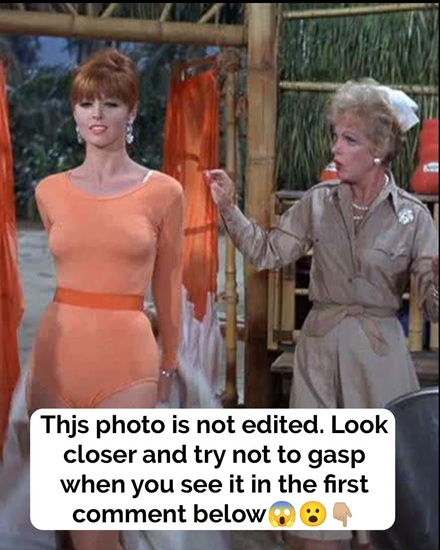
Gilligan’s Island remains one of the most recognizable American television comedies of the 1960s. Created by Sherwood Schwartz, the series originally aired on CBS from September 1964 until April 1967 and produced 98 episodes across three seasons. Its simple premise became part of television history: seven people leave Honolulu aboard the S.S. Minnow for what is supposed to be a three-hour sightseeing tour, only to become stranded after a storm.
What followed was a lighthearted mixture of slapstick comedy, improbable inventions, misunderstandings, attempted rescues, and colorful visitors. Decades after the original broadcast ended, generations of viewers have continued discovering the series through reruns and home-video releases. Part of the program’s lasting appeal comes from its memorable group of castaways. Bob Denver played the accident-prone but good-hearted Gilligan, while Alan Hale Jr. portrayed Jonas Grumby, better known simply as the Skipper.
Jim Backus and Natalie Schafer appeared as wealthy couple Thurston and Eunice Howell, Russell Johnson played the resourceful Professor Roy Hinkley, Tina Louise portrayed movie star Ginger Grant, and Dawn Wells became Mary Ann Summers. Each character brought a distinctly different personality to the island. Their differences created much of the comedy, while their willingness to cooperate whenever trouble appeared gave the show its warm and familiar atmosphere. Looking closely at a television production made more than six decades ago also reveals interesting continuity errors, visible production equipment, and other details that viewers might overlook during casual viewing.
These moments do not diminish the accomplishments of the actors and production crew. Television was produced under tight schedules, and episodes were created long before high-definition screens, digital restoration, and the ability to freeze individual frames became common. Details that might have been practically invisible on a television set in the 1960s can be considerably easier to notice today. For longtime fans, spotting these details has simply become another entertaining way to revisit the series.
One frequently discussed curiosity appears in footage associated with the show’s opening sequence. The familiar introduction presents the passengers and crew beginning their supposedly brief voyage aboard the Minnow. In certain distant shots, viewers have pointed out figures who do not perfectly correspond with the seven familiar castaways. Such discrepancies are understandable because television productions commonly relied on stand-ins, doubles, and crew members when filming distant or technically complicated shots.
When actors’ faces were not clearly visible, substitutes could be used to complete footage efficiently. Modern viewers examining restored footage frame by frame can therefore notice things that audiences watching ordinary broadcasts were never expected to see. The lagoon itself provides another fascinating glimpse into how Gilligan’s Island created its fictional world. Although the characters were supposedly isolated far from civilization, much of the series was filmed on studio facilities in Southern California.
Producers used carefully arranged vegetation, camera angles, scenery, and constructed sets to maintain the illusion of a remote tropical island. Occasionally, however, the surrounding production environment could become visible. Background structures or other elements could sometimes reveal that the castaways were much closer to Hollywood than the story suggested. These small glimpses behind the scenery are especially interesting because they demonstrate how much practical filmmaking was required to create the show’s tropical setting.
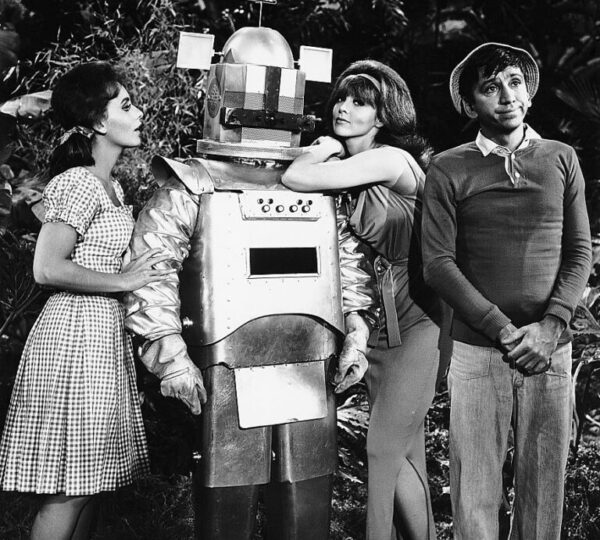
One episode often associated with unusual island adventures is “The Friendly Physician.” In the story, the castaways encounter the eccentric Dr. Boris Balinkoff, played by Vito Scotti. Rather than providing the straightforward rescue they hope for, the doctor has disturbing scientific ambitions of his own. The episode eventually moves into deliberately fantastic territory involving experiments and personality or body exchanges among the castaways. It stands out because it temporarily takes the characters away from their familiar home environment. For viewers interested in production details, scenes connected with this storyline have also attracted attention because parts of the studio surroundings can become noticeable in certain shots.
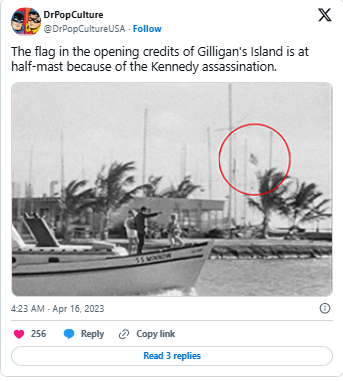
Another remarkable piece of Gilligan’s Island history is connected with a much more serious real-world event. Production of the original pilot took place during November 1963, when President John F. Kennedy was assassinated. The assassination occurred on November 22, 1963 and led to a nationwide period of mourning. Footage filmed around Honolulu during this period captured American flags flying at half-staff. Consequently, images connected with the show’s early production unintentionally preserved a visual reminder of that historic moment. The contrast is striking: footage intended for a lighthearted television comedy happened to be filmed during one of the most consequential and somber moments in modern American history.
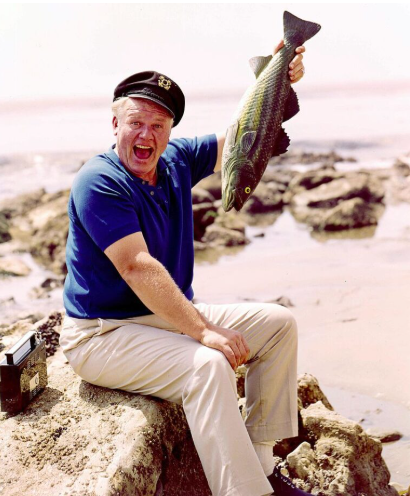
The casting of Alan Hale Jr. also produced one of the show’s best-known behind-the-scenes stories. Hale was working on the Western film Bullet for a Badman when the opportunity to audition for Gilligan’s Island emerged. Accounts of the production describe the considerable effort he made to reach Los Angeles for the audition while still involved with the film. Whatever difficulties surrounded the journey, the outcome proved important to television history. Hale secured the role of the Skipper and developed an instantly recognizable partnership with Bob Denver. His booming voice, physical comedy, exasperated reactions, and genuine affection for Gilligan became essential ingredients in the series.
The relationship between Gilligan and the Skipper was especially important because the comedy depended on more than Gilligan simply making mistakes. The Skipper would frequently become frustrated with his first mate, sometimes reacting with his famous hat-swatting gesture, but the two characters remained deeply loyal friends. Alan Hale Jr.’s performance helped prevent the Skipper from becoming merely an angry authority figure. Beneath his frustration was obvious affection for Gilligan. That combination gave their scenes an emotional warmth that complemented the slapstick humor and helped explain why their partnership remained memorable long after the series ended.
Continuity details involving the characters provide another source of amusement. Television episodes were generally created individually rather than with the tightly interconnected continuity expected from many modern serialized programs. As a result, a character might make a statement in one episode that does not perfectly match something shown elsewhere. Fans have particularly enjoyed comparing these inconsistencies across the series. They should generally be understood as products of episodic television production rather than hidden mysteries. Writers were primarily concerned with constructing an entertaining half-hour comedy each week, and viewers in the 1960s could not instantly search digital episode archives to compare every line with earlier stories.
Props and practical effects provide even more opportunities for eagle-eyed viewers. Scenes involving the ocean, rafts, sharks, submarines, storms, and other hazards often required creative filmmaking solutions rather than expensive location shoots. Tanks, miniature elements, stunt performers, mechanical effects, and carefully positioned cameras helped create situations that appeared much larger on screen. Occasionally, part of the equipment or the edge of an artificial environment could become visible. Shadows from production equipment could also enter a shot. These moments offer a useful reminder of how television crews created ambitious comedy sequences with the technology and budgets available during the mid-1960s.

One particularly playful storyline involved a Japanese sailor who had remained unaware that World War II had ended. Vito Scotti appeared as the sailor in the episode “So Sorry, My Island Now.” The character arrives with a small submarine and causes considerable trouble for the castaways. Like many Gilligan’s Island plots, the premise was intentionally exaggerated for comedy rather than presented as a realistic historical scenario. Underwater sequences and the submarine effect required practical production techniques. When viewed closely, elements associated with the people operating those effects can sometimes become noticeable, giving modern audiences another glimpse of the physical work happening just outside the intended frame.
The opening theme also changed in a way that became an important part of the show’s history. During the first season, the famous song introduced several characters individually but concluded by referring to the Professor and Mary Ann simply as “the rest.” Russell Johnson and Dawn Wells therefore did not initially receive the same recognition in the lyrics as their fellow cast members. That changed beginning with the second season, when the lyrics were revised to include “the Professor and Mary Ann.” Bob Denver has long been credited with helping push for his fellow cast members to receive equal recognition in the opening.
That change seems particularly appropriate in retrospect because both characters became essential to the series. The Professor could construct or repair astonishing devices using the limited materials available on the island, although the group somehow remained unable to achieve a permanent rescue. That contradiction became one of the show’s enduring jokes. Mary Ann, meanwhile, provided warmth, practicality, and an approachable personality that strongly connected with audiences. Dawn Wells eventually became one of the actors most closely associated with the continuing legacy of Gilligan’s Island, appearing at fan events and discussing the series for decades after production ended.
The name of the S.S. Minnow also has a story behind it. Sherwood Schwartz said that the boat was named for Newton Minow, who served as chairman of the Federal Communications Commission during the Kennedy administration. Minow became famous for his 1961 speech criticizing the quality of television programming and describing television as a “vast wasteland.” Schwartz’s choice of the name was therefore a humorous response to one of television’s most famous critics rather than a reference simply to the small fish called a minnow. It is an inside joke that millions of viewers could easily enjoy the show without ever recognizing.
Costume and wardrobe continuity can produce equally entertaining discoveries. Bob Denver was married during portions of his time playing Gilligan, while Gilligan himself was portrayed as unmarried. In some footage, viewers have noticed Denver’s wedding ring even though it does not belong to the fictional character. Small details of this kind were easy to overlook when programs were broadcast on comparatively small, low-resolution television screens. Modern restorations and larger displays make jewelry, equipment, costume inconsistencies, and background objects much easier to identify, transforming ordinary episodes into something resembling a visual treasure hunt for dedicated fans.
The contrasting personalities of Ginger Grant and Mary Ann Summers became another lasting element of the show’s cultural legacy. Ginger, portrayed by Tina Louise, was a glamorous Hollywood movie star who brought sophistication and theatrical flair to island life. Mary Ann, played by Dawn Wells, was presented as friendly, practical, and down-to-earth. Their personalities were deliberately different, allowing each character to contribute a distinct kind of humor and charm. Over the decades, playful discussions about whether viewers preferred “Ginger or Mary Ann” became part of the popular culture surrounding the series, although both characters developed substantial and loyal fan followings.
Dawn Wells herself frequently discussed why she believed Mary Ann remained relatable to audiences. She viewed the character’s accessibility and sincerity as important reasons viewers connected with her. Wells also spoke positively about many of her castmates over the years, including Russell Johnson, Bob Denver, Alan Hale Jr., Natalie Schafer, and Tina Louise. While popular culture sometimes emphasized a supposed competition between Ginger and Mary Ann, the actual performers had professional relationships that were considerably more nuanced than the fictional contrast between their characters. Their different performances ultimately complemented one another and helped make the ensemble memorable.
Russell Johnson’s Professor is another example of a character who became larger than the original premise. Professor Roy Hinkley possessed an extraordinary range of scientific knowledge and could seemingly create radios, generators, detection devices, and countless other inventions from whatever materials happened to be available. Fans have joked for generations that someone capable of such engineering miracles should have been able to repair the boat or construct a reliable method of leaving the island. That contradiction was intentional territory for a sitcom whose premise depended on keeping everyone stranded. A successful permanent rescue would, after all, have ended the basic situation driving the series.
The Howells contributed a different kind of comedy. Thurston Howell III, played by Jim Backus, somehow brought an enormous amount of clothing, money, and luxury items on what was supposed to be a three-hour tour. Natalie Schafer’s Mrs. Howell was equally comfortable maintaining the habits of wealthy society despite living in huts on an isolated island. The absurdity was part of the joke. Realism was never the primary objective. The characters behaved as though social status, expensive wardrobes, and financial investments remained relevant even while they were stranded, giving the writers countless opportunities to satirize wealth and privilege without changing the program’s generally gentle tone.
Natalie Schafer also became associated with one of the small performance slips fans enjoy spotting. During scenes in which characters are supposed to be unconscious or asleep, careful viewers sometimes watch for actors moving, breathing noticeably, or briefly opening their eyes. Schafer has been cited by fans in discussions of such moments. These tiny imperfections are hardly unusual in television production, especially when episodes were being completed rapidly. Instead of undermining the scene, they have become charming details for viewers who have watched the episodes enough times to notice what happens beyond the main action.
The show’s wildlife was not always governed by strict biological realism either. Gilligan’s Island featured whatever animals, plants, weather events, or natural hazards were useful for a particular week’s comedy. That occasionally produced ecological combinations unlikely to occur on the fictional island suggested by the series. Again, the program was not intended as a documentary about Pacific island ecosystems. Animals frequently served as setups for jokes or obstacles for Gilligan and his companions. Examining these details scientifically can be entertaining today, but doing so also highlights the intentionally cartoon-like nature of the show’s universe.
Despite the many rescue opportunities that appeared throughout the series, the castaways inevitably remained stranded by the end of the episode. Visitors somehow reached the island and then departed without successfully bringing the group home. Messages failed, radios malfunctioned, inventions went wrong, misunderstandings developed, and Gilligan frequently became involved in an accident at exactly the wrong moment. The repeated failure was essential to the show’s structure. Audiences understood that the castaways probably were not going home permanently because the island itself was the foundation of the comedy. The question was not whether they would escape that week, but what ridiculous chain of events would prevent it.
The series’ original network run was surprisingly brief compared with its enormous cultural afterlife. Gilligan’s Island lasted only three seasons on CBS, ending in 1967 after 98 episodes. Yet syndication gave the show a second life far larger than its original run might suggest. Repeated afternoon and weekend broadcasts introduced Gilligan, the Skipper, Ginger, Mary Ann, the Professor, and the Howells to children who had not even been born when the series premiered. This continual rediscovery helped transform a three-season sitcom into a permanent piece of American television nostalgia.
The story did not completely end with the cancellation of the weekly series. The characters later returned through reunion productions and animated adaptations, extending the fictional universe beyond those original episodes. These later projects demonstrated the durability of the premise and the affection audiences retained for the characters. Few sitcoms canceled after only three seasons remain instantly recognizable more than half a century later. Gilligan’s Island accomplished that largely because its premise could be understood immediately and its characters were broad enough to be memorable while still possessing enough warmth to inspire genuine affection.
The actors eventually followed very different paths after leaving the island. Jim Backus, already an established performer before the sitcom, continued acting until health problems affected his later career. Natalie Schafer also accumulated a lengthy body of work. Alan Hale Jr. remained strongly identified with the Skipper and generally embraced the affection audiences had for the character. Bob Denver similarly remained linked to Gilligan throughout his life. Russell Johnson worked steadily and eventually became an enthusiastic participant in discussions of the series. Dawn Wells also maintained a particularly close connection with fans and frequently represented the program at public appearances.
Tina Louise had a more complicated relationship with being identified as Ginger. She pursued dramatic acting and other creative work beyond Gilligan’s Island and was sometimes frustrated by the degree to which one sitcom role overshadowed the rest of her career. Nevertheless, Ginger Grant remains one of television’s most recognizable 1960s characters. As of 2026, Louise is the last surviving member of the original seven principal castaways. Her continued connection to this piece of television history gives fans a living link to a program whose original episodes were filmed more than sixty years ago.
The other six principal cast members died over the decades following the series. Jim Backus died in 1989, Alan Hale Jr. in 1990, Natalie Schafer in 1991, Bob Denver in 2005, Russell Johnson in 2014, and Dawn Wells in 2020. Wells died at age 82 after complications related to COVID-19. Their deaths marked the gradual passing of an ensemble that had remained familiar to viewers through decades of reruns. Yet the performances themselves remain widely available, allowing new audiences to encounter the cast much as viewers did when the show originally appeared on television.
What makes the bloopers particularly enjoyable is that most are not spectacular failures. They are tiny windows into television production: an unexpected object at the edge of a frame, a visible piece of equipment, a performer moving when a character should be unconscious, a wardrobe detail that does not fit the story, or a background element revealing the studio environment. These imperfections demonstrate that the tropical fantasy was constructed by real people working with cameras, sets, costumes, practical effects, and demanding production schedules. Seen from that perspective, the mistakes can actually increase appreciation for the craftsmanship involved.
It is also worth distinguishing documented production history from fan observations that have been repeated online for many years. Some supposed “mistakes” depend on interpretation, and stories about classic television can become exaggerated as they pass from one website or video to another. Claims about an episode, historical event, or cast member are therefore best compared with reliable interviews, production records, biographies, and the episodes themselves. Doing so preserves the fun of discovering unusual details without turning uncertain anecdotes into established facts. The real history of Gilligan’s Island is interesting enough without embellishment.
The show’s unrealistic elements should likewise be understood within their original purpose. Gilligan’s Island was designed primarily as escapist comedy, not as a realistic survival drama. The characters somehow maintained extensive wardrobes, created elaborate inventions, encountered an astonishing number of visitors, survived dangerous situations, and obtained resources that would have been extremely difficult to find on a genuinely deserted island. Those impossibilities were features of the format rather than errors requiring explanation. The island functioned as a comic stage where almost any story could happen before everything returned to normal for the following episode.
That formula helped make the series unusually accessible. A viewer did not need to know complicated backstory before watching an episode. Within minutes, the essential situation was clear: seven very different people were stranded together and trying to solve another strange problem. Gilligan would usually mean well, the Skipper would become frustrated, the Professor would devise a solution, the Howells would behave like wealthy socialites, Ginger might use her acting skills, and Mary Ann would contribute practical common sense. Familiarity became part of the entertainment rather than a weakness.
More than six decades after its premiere, Gilligan’s Island remains a fascinating example of how a television program can outgrow the era in which it was produced. Its original network lifespan was modest, but syndication, nostalgia, memorable characters, a famous theme song, and generations of repeat viewers gave it extraordinary longevity. Behind-the-scenes stories and visible production goofs add another dimension for fans who already know the plots. Instead of changing what the show means, these discoveries reveal the human craftsmanship hidden beneath its deceptively simple tropical comedy.

