

Ricky Nelson spent much of his life in the public eye, first as a member of one of America’s best-known television families and later as a successful recording artist. Audiences watched him grow from a child actor into one of the biggest teenage music stars of the late 1950s and early 1960s. His combination of television exposure, natural charisma, and a long list of hit records made him one of the most recognizable young performers of his generation.
Yet his life ended unexpectedly on December 31, 1985, when a fire developed aboard the private aircraft carrying him to a New Year’s Eve performance in Texas. Born Eric Hilliard Nelson on May 8, 1940, in Teaneck, New Jersey, Ricky came from a family already deeply connected with entertainment. His father, Ozzie Nelson, was a successful bandleader, while his mother, Harriet Hilliard Nelson, was a singer and actress. Ricky’s older brother, David, was born several years before him.
Together, the family eventually became one of the most familiar households in American broadcasting, giving Ricky a childhood that was anything but ordinary. The family’s success began with the radio version of The Adventures of Ozzie and Harriet, which premiered in the 1940s. David and Ricky were not originally heard as themselves, because professional child actors initially played their parts. Eventually, however, the real Nelson brothers joined the program. When the show moved to television in 1952, viewers began watching the actual family in stories loosely inspired by their domestic lives.
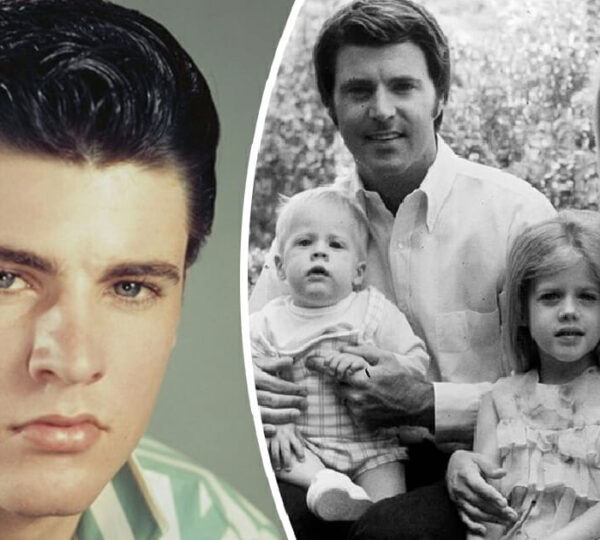
The television series remained on the air for years and became one of the longest-running family sitcoms of its era. This meant that Ricky did not suddenly become famous when he started making records. Millions of viewers already knew him as the younger Nelson son. They had watched him grow up, which gave him an extraordinary advantage when he later began pursuing music professionally.
Ricky’s transition into music came while he was still a teenager. In 1957, he performed “I’m Walkin’,” a song associated with Fats Domino, during an episode of the family television program. A recording was released, and the response was immediate. The song became a major hit, confirming that Ricky’s appeal extended far beyond his role on television.
His success grew rapidly. Nelson began releasing records that attracted large numbers of teenage fans, and his weekly television exposure gave him a promotional platform few other young singers could match. Instead of relying entirely on radio or live performances, Ricky could introduce a song directly to millions of viewers and then release it commercially. Long before music videos became central to the music business, he was already using television in a similar way.
Among his best-known recordings were “Poor Little Fool,” “Travelin’ Man,” “Hello Mary Lou,” “It’s Late,” “Never Be Anyone Else but You,” “Fools Rush In,” and “For You.” “Poor Little Fool” became especially important because it was the first song to reach No. 1 on Billboard’s newly established Hot 100 chart in 1958. Over the following years, Nelson placed many additional songs on the charts and became one of the era’s most consistent hitmakers.
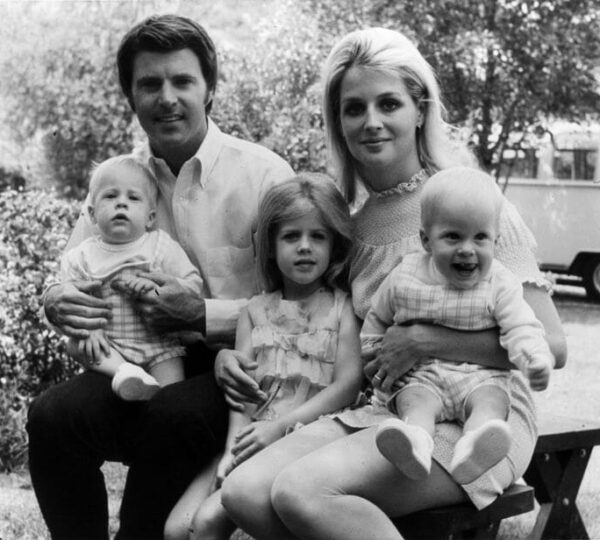
Although his clean-cut television image contributed greatly to his popularity, Nelson worked with accomplished musicians and took his music seriously. Guitarist James Burton became an important part of his sound and later developed his own reputation as one of the most influential guitarists in American popular music. Their work helped give Ricky’s recordings a musical credibility that went beyond his teen-idol appearance.
Nelson’s career developed during a period when rock and roll was transforming American culture. Elvis Presley, Buddy Holly, Chuck Berry, Little Richard, Jerry Lee Lewis, the Everly Brothers, and other performers were reshaping popular music. Ricky occupied an unusual position within that generation. He was young enough to appeal to teenage listeners but familiar enough from television that many parents already considered him part of the family entertainment landscape.
His acting career continued alongside music. In 1959, Nelson appeared in the western Rio Bravo alongside John Wayne and Dean Martin. His role as Colorado Ryan allowed him to work outside the familiar surroundings of his family television show. He also performed musically in the film, combining the two sides of his professional identity.
As Ricky became older, he increasingly wanted to move beyond the image of the teenage star audiences remembered. He gradually began using “Rick Nelson” instead of “Ricky Nelson,” a small change that reflected his desire to be viewed as an adult musician. Like many performers who become famous young, Nelson sometimes struggled with an audience that wanted him to remain the same person they had first discovered years earlier.

His personal life was also changing. Nelson married Kristin Harmon in April 1963. Kristin came from another well-known American family and had grown up in an environment connected with sports and entertainment. The couple eventually had four children: daughter Tracy and sons Matthew, Gunnar, and Sam.
Tracy Nelson later became an actress, while twins Matthew and Gunnar developed careers in music. Their professional lives would eventually create a strong connection with their father’s legacy. At the time of their childhood, however, Ricky was still balancing the responsibilities of family life with a demanding career that involved recording, television appearances, and extensive travel.
By the late 1960s, the American music industry had changed dramatically. The British Invasion, psychedelic rock, new forms of country rock, and singer-songwriters had altered what younger listeners wanted. Nelson’s original teen-idol style no longer dominated popular culture in the way it once had.
Instead of abandoning music, he changed direction. Nelson moved toward a country-rock sound and worked with the Stone Canyon Band. This later phase of his career allowed him to develop music that reflected his own interests rather than simply repeating the formula that had made him famous as a teenager.
A major turning point came after a 1971 oldies concert at Madison Square Garden. Nelson performed for an audience that largely expected to hear the songs they remembered from his early career. When he introduced newer material, the response from part of the crowd was negative. The experience stayed with him and inspired one of the most important songs he ever wrote.
That song was “Garden Party,” released in 1972. The lyrics reflected Nelson’s frustration with the idea that an artist should spend an entire career satisfying other people’s expectations. The song became a major hit and returned him to the upper levels of the charts. It also gave him one of the clearest artistic statements of his adult career.
“Garden Party” represented a musician trying to define himself beyond nostalgia. Nelson had been famous since childhood and knew better than most performers how difficult it could be to escape an established public image. Audiences remembered the young man from television, while Nelson himself had continued growing and changing.
By the 1980s, Nelson remained active as a touring performer. He continued singing his classic songs while also performing later material. Touring required frequent travel, and flying became a regular part of his working life. Accounts from family members and people around him later described him as uncomfortable with flying, even though his profession often made it unavoidable.
In late December 1985, Nelson and his band were preparing for a New Year’s Eve performance in Dallas. The aircraft being used was a Douglas DC-3, an older design that had been converted for private use. Nelson’s fiancée, Helen Blair, was traveling with him, along with several members of his band.
There was another part of the original travel plan that would later become deeply significant. Nelson’s twin sons, Matthew and Gunnar, expected to spend part of the New Year’s period with their father. Years later, they recalled that they had planned to travel with him and meet him around the Dallas performance.
Shortly before the journey, however, Ricky changed those plans. According to Matthew and Gunnar’s later recollections, their father told them not to travel aboard his private aircraft. Instead, he suggested that they fly commercially and meet him separately. The twins were disappointed because they had wanted to spend the holiday with their father.
After the crash, family members naturally wondered why Ricky had changed his mind. Matthew later said he did not know whether his father had experienced some kind of unusual feeling or premonition. There is no evidence that can prove such an explanation, so it is more accurate simply to say that Nelson made a last-minute decision to keep his sons off the aircraft.
That decision became enormously important.
On December 31, 1985, Nelson’s DC-3 departed Guntersville, Alabama, bound for Dallas. Nine people were aboard: two pilots and seven passengers. Nelson, Helen Blair, and five members of his band were in the passenger cabin.
During the flight, a serious problem developed. The crew began dealing with smoke and eventually contacted air traffic control. The situation became increasingly dangerous, and the pilots attempted to divert toward a safe landing area.
Smoke continued spreading through the aircraft. The pilots could no longer continue normally toward Dallas and prepared for an emergency landing near DeKalb, Texas. During the attempt, the plane struck obstacles and trees before coming to a stop.
Both pilots survived and escaped through the cockpit area. Tragically, all seven people in the passenger cabin died. Nelson was 45 years old.
The other victims included Helen Blair and members of Nelson’s touring band. The accident happened only hours before the beginning of 1986, turning a night normally associated with celebration into tragedy for the Nelson family and music fans around the country.
For Matthew and Gunnar, the news was especially devastating because they knew they might easily have been on the aircraft. The earlier plan had involved spending time with their father around the New Year’s performance. His decision to change their transportation arrangements meant they were somewhere else when the fire occurred.
Years later, Matthew recalled hearing several of his father’s songs playing on the radio before the station announced the crash. Gunnar learned about the accident while preparing to spend New Year’s Eve with friends. Both described the experience as deeply traumatic.
Their sister Tracy also learned of the accident through news coverage. Because Ricky had been famous for most of his life, the family had almost no opportunity to process the event privately before television and radio reports spread across the country.
The cause of the aircraft fire quickly became the subject of public speculation. Because Nelson was a famous musician, rumors developed almost immediately. One particularly damaging rumor claimed that drug use aboard the plane had somehow started the fire.
The federal investigation did not establish that explanation. The National Transportation Safety Board determined that the fire originated in the rear portion of the passenger cabin near the floor and close to the area of the aircraft’s heater. Investigators could not conclusively identify the exact ignition source or fuel source.
The aircraft had a gasoline-powered cabin heating system, and there had reportedly been difficulty operating it. Investigators examined the heater and surrounding area carefully. The evidence placed the fire near that location, but the investigation could not prove precisely how the fire began.
This means that describing the heater as the confirmed single cause would be too certain. The most accurate conclusion is that the fire began in the aft cabin near the heater area, while the exact ignition mechanism remained unresolved.
The widely repeated story that passengers were using cocaine in a way that caused the fire was not supported by the investigation. Federal investigators did not find evidence proving that drug-related activity had started the blaze.
Some toxicology information concerning Nelson later became public, but that was different from establishing the cause of the fire. The official accident investigation did not conclude that drug use aboard the aircraft caused the emergency.
For Nelson’s family, the rumors created additional pain at a time when they were already grieving. His brother David and Nelson’s children later spoke against the more sensational claims surrounding the accident.
The surviving pilots provided valuable information to investigators because they had experienced the emergency directly. Their descriptions of smoke and problems during the flight helped investigators reconstruct the final minutes. Examination of the damaged aircraft added further evidence about where the fire originated.
Although not every technical question could be answered, the overall sequence was clear. A fire developed in the rear passenger cabin. Smoke spread through the aircraft. The pilots attempted to divert and then make an emergency landing. Both crew members survived, but everyone in the passenger compartment died.
Ricky Nelson’s death immediately brought renewed attention to the music he had created during nearly three decades in entertainment. Fans who remembered him as a teenager suddenly had to confront the fact that the performer they had watched grow up was gone at only 45.
His death also emphasized how unusually public his entire life had been. Viewers had first encountered him as a child. They saw him become a teenager, start singing, become a star, marry, have children, and move toward a more mature musical identity.
Few performers of Nelson’s era had such a continuous relationship with television audiences.
Two years after his death, Nelson was inducted into the Rock & Roll Hall of Fame. The honor helped confirm his importance as a musician rather than merely as a television celebrity who had successfully released records.
His influence extended through both music and media. Nelson showed how television could help create a pop star. His performances on the family show provided something resembling a direct connection between the musician and audience long before MTV or internet video.
His recording career also demonstrated unusual longevity. He began with rock-and-roll hits aimed at teenage audiences and later moved toward country rock. “Garden Party” showed that he remained capable of connecting with listeners well after the peak of his teen-idol fame.
The Nelson family’s musical story continued through Matthew and Gunnar. The twins eventually formed the band Nelson and achieved major success themselves. Their 1990 hit “(Can’t Live Without Your) Love and Affection” reached No. 1 on the Billboard Hot 100.
That success created an extraordinary continuation of the family’s entertainment history. Ozzie and Harriet had become radio and television stars. Ricky became a major recording artist. Then Matthew and Gunnar found their own success in music.
The twins also began performing their father’s songs and participating in tribute projects celebrating his career. For them, those performances were deeply personal. They were not simply musicians covering well-known songs. They were sons preserving the work of a father they had lost unexpectedly.
Matthew has described their tribute work as an ongoing labor of love. It allowed the twins to keep a musical connection with their father while helping younger audiences discover the songs that made him famous.
The fact that they were alive to build those careers remained permanently connected with Ricky’s final travel decision.
If the earlier plan had remained unchanged, Matthew and Gunnar might have been in the passenger cabin of the DC-3 on December 31, 1985.
Instead, their father told them not to take that aircraft.
Why he changed his mind cannot be known with certainty.
He may simply have been uncomfortable with the idea of bringing his sons aboard.
He may have been concerned about the aircraft.
He may have preferred that they travel commercially.
Or he may have had a feeling he could not explain.
There is no evidence that allows one explanation to be established as fact.
What is certain is what happened afterward.
The twins stayed away.
The aircraft caught fire.
Their father and the six other passengers died.
Matthew and Gunnar survived because they were not aboard.
That fact alone gives the final conversation between Ricky and his sons enormous emotional weight.
There is no need to turn it into a supernatural prediction for the story to be remarkable.
Sometimes a simple decision becomes significant only after events reveal what could have happened.
At the time, Gunnar reportedly felt disappointed that the travel plan had changed.
After the accident, the same decision looked entirely different.
Their father had unintentionally protected them from the disaster that took his own life.
The story is therefore both tragic and fortunate.
The Nelson family lost Ricky Nelson.
But it did not lose Ricky and both of his twin sons on the same night.
The surviving children were able to grow older, build careers, raise families, and preserve their father’s memory.
That continuing family legacy matters because Ricky Nelson’s life deserves to be remembered for much more than the circumstances of his death.
He was a major figure in the early development of televised popular music.
He became one of the biggest teen idols in the United States.
He recorded songs that remain recognizable decades later.
He worked with musicians who influenced rock, country, and pop music.
He successfully reinvented himself when musical tastes changed.
And he wrote one of the most memorable songs about the tension between artistic freedom and audience expectations.
His life also reflected the difficulties of growing up famous.
Ricky had been known publicly since childhood.
Audiences developed expectations about his personality before he was old enough to define himself independently.
His father played an enormous role in building the family’s television image.
That success opened professional doors, but it also created a public identity Nelson later had to negotiate.
Moving from “Ricky” to “Rick” was one expression of that process.
Changing his musical style was another.
Writing “Garden Party” made the struggle explicit.
Nelson wanted audiences to understand that he could not spend his entire life reproducing the young performer they remembered from television.
He had changed.
Music had changed.
The world around him had changed.
Some fans accepted that evolution.
Others remained attached to nostalgia.
Nelson continued performing anyway.
By 1985, he was still touring because music remained central to his life.
The final flight was therefore not an isolated celebrity trip.
It was part of his work.
He was traveling to another performance.
His band was with him.
His fiancée was traveling alongside him.
The destination was another stage.
They never reached it.
That ending naturally became one of the most discussed parts of Nelson’s biography.
Yet focusing entirely on the crash risks reducing decades of creative work to one night.
The accident lasted minutes.
His career lasted most of his life.
The music remains the larger legacy.
“Travelin’ Man” still reflects the polished pop sound that made him a teenage star.
“Hello Mary Lou” remains one of his most recognizable recordings.
“Poor Little Fool” retains its place in Billboard history.
“Garden Party” preserves the mature voice of a performer reflecting on fame.
Those songs tell the story of artistic development more clearly than the rumors surrounding the crash.
The federal investigation also reminds readers why sensational explanations should be treated carefully.
Rumors can travel faster than technical findings.
A shocking theory attracts attention.
A cautious conclusion from investigators may sound less dramatic.
But historical accuracy depends on evidence, not whichever explanation produces the strongest reaction.
In Nelson’s case, investigators found that the fire began near the rear cabin and heater area.
They could not determine the exact ignition source.
They did not establish that drug use caused the fire.
Those are the relevant conclusions.
The same caution applies to the story involving Matthew and Gunnar.
It is reasonable to say their father’s last-minute decision saved them from being aboard the fatal flight.
It is not accurate to state that a supernatural premonition has been proven.
Matthew himself expressed uncertainty.
That uncertainty should remain part of the story.
Sometimes the truth includes unanswered questions.
Ricky Nelson may have simply made a parental decision that happened to become life-saving.
That possibility is no less meaningful.
The consequences remain the same.
His sons lived.
They eventually stood on stages of their own.
They created music.
They honored him.
They were able to talk publicly about their last memories of him.
They were able to continue the family history that began decades earlier with Ozzie and Harriet.
Their survival gave Ricky’s final choice a significance nobody could have understood when he made it.
At that moment, he was simply changing a travel arrangement.
Days later, it became one of the most important decisions in his family’s history.
Ricky Nelson died before seeing the musical success his twins would later achieve.
But his influence was clearly present in their careers.
Matthew and Gunnar grew up surrounded by music and had watched their father work.
Their later success gave the Nelson name another chapter in American popular culture.
The family’s story had moved from radio to television, from television to rock and roll, and then into another generation of music.
Ricky remained at the center of that history.
His life was shorter than anyone expected, but remarkably full.
He became famous as a child.
He became a recording star at 17.
He appeared in major films.
He built a family.
He navigated changing musical tastes.
He fought against being trapped by nostalgia.
He continued performing until the final day of his life.
And in one of his final decisions as a father, he kept two of his children away from the aircraft that would later catch fire.
There is sadness in imagining the reunion that was supposed to happen in Dallas.
The twins expected to see their father again.
Ricky expected to perform.
Another year was about to begin.
Instead, December 31, 1985, became the date permanently associated with his death.
For Matthew and Gunnar, however, it was also the day they learned that a decision they had initially disliked had protected their lives.
That combination of loss and survival is part of what makes the story continue to resonate.
Ricky Nelson should be remembered first as the musician and entertainer who helped shape a generation.
The final flight is part of his biography, but it is not the whole biography.
His recordings remain.
His television performances remain.
His influence remains.
And his children continued the creative family tradition long after his death.
The most careful version of his final story does not need a supernatural explanation.
A father told his sons not to board his plane.
They listened.
The aircraft later suffered a fatal cabin fire.
Everyone in the passenger compartment died.
His sons were safe elsewhere.
Whatever motivated Ricky Nelson to change those plans, the consequences were unmistakable.
His final decision prevented an already devastating family tragedy from becoming even greater.

