
According to the account describing the encounter, a driver noticed another traveler who was having difficulty continuing his trip because he did not have enough money for fuel. The situation was simple and did not involve a dramatic request or any promise that the money would later be repaid. The driver decided to step in and pay for the gas so the traveler could continue. He did not ask the stranger to provide collateral, make a formal agreement, or return the favor later.
The help was offered before there was any indication that the driver would receive something in return. That detail is important because it shows that the original gesture was presented as assistance rather than a financial transaction. The encounter could have ended as soon as the fuel was paid for. The traveler could have thanked the driver, continued his journey, and the two men might never have crossed paths again.
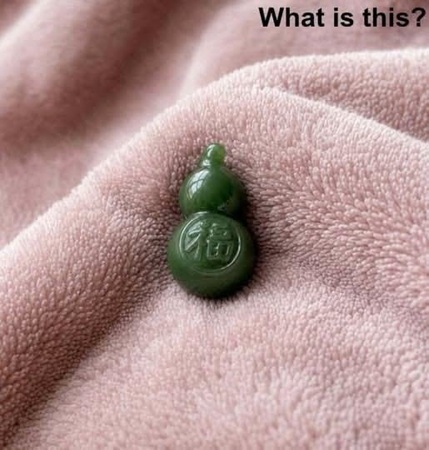
Instead, the stranger reportedly reached into his belongings and selected a small green object to give to the person who had helped him. Since he had already been unable to pay for the fuel himself, offering cash in return was apparently not an immediate option. The object therefore became a personal way of expressing gratitude. It was not something the driver had requested, and there is no indication that the two men had agreed beforehand that anything would be exchanged.
The Green Object Raised More Questions Than Answers
The small gift quickly became one of the most interesting parts of the story because its exact identity was not obvious. Based on photographs connected with the account, the object appeared to have a green surface and a rounded shape resembling a bottle gourd. That appearance led some viewers to compare it with a traditional Chinese hulu-style charm. However, photographs alone cannot establish exactly what material an object is made from. A green carving might resemble jade, but other natural or manufactured materials can look similar in pictures. Without a physical examination, there is no reliable basis for confirming that the charm was genuine jade or another particular type of stone.
For the same reason, there is no responsible way to assign the object a definite market value from the available information. Determining the value of a carved object can depend on several factors, including material, craftsmanship, condition, age, origin, and authenticity. None of those details have been conclusively established in the information surrounding this story. Some people may naturally wonder whether the driver unknowingly received something rare or expensive, but the evidence does not support such a conclusion. The safest description is that the driver received a small green gourd-shaped carving whose material and financial value remain uncertain.
The Gourd Shape Has a Long Cultural History
The comparison with a hulu is understandable because the bottle-gourd form has appeared for centuries in Chinese art and decorative traditions. The recognizable shape usually includes two rounded sections connected by a narrower middle area. Gourds have been used historically as containers, decorative motifs, artistic subjects, and symbolic objects. Over time, the hulu shape also became associated in Chinese culture with positive ideas such as good fortune, health, longevity, and protection. This cultural background helps explain why someone might keep a gourd-shaped object for reasons that have little to do with its resale value.
It is important, however, not to turn those cultural associations into claims about what this particular traveler believed. The available account does not record the stranger explaining exactly what the charm represented to him. He may have understood the symbolism traditionally associated with the hulu shape, but that cannot be confirmed from the information provided. It is equally possible that the object was simply a possession he liked or considered meaningful for personal reasons. Responsible interpretation requires separating the documented cultural background of the shape from assumptions about one individual’s intentions.
Why He Chose This Particular Object Remains Unknown
The stranger’s reason for selecting the charm is one of the parts of the story that remains unanswered. There is no confirmed history explaining where the object came from, how long he had owned it, or whether somebody else had previously given it to him. He may have purchased it, received it as a gift, or carried it for a long period of time. Those possibilities are reasonable to consider, but none can be presented as established fact. The source itself makes clear that the stranger’s specific motivation and the object’s earlier history were not documented.
That uncertainty does not make the exchange less meaningful. In some ways, the absence of a complete explanation is what made the small object memorable. The driver did not receive a certificate, an appraisal, or a written history of the carving. He simply received something from the belongings of a person whom he had just helped. Whatever the object had meant before that moment, it gained a new association after it changed hands. From then on, it could serve as a reminder of a brief encounter between two strangers who otherwise might never have met.
The Real Meaning Came From the Circumstances
The most reliable part of the story is not the mystery surrounding the charm but the sequence of events that came before it. According to the account, one person needed enough fuel to continue traveling and another person decided to help without requesting payment in return. Only afterward did the traveler choose to give the driver a personal object. The exchange therefore involved two very different kinds of giving. One was practical assistance that solved an immediate problem, while the other was a voluntary token of gratitude.
The two gestures did not need to have the same monetary value in order to matter. Acts of gratitude are not always balanced according to a price tag. Someone may receive help that is worth more money than the gift they later offer, yet the gesture can still carry significant emotional value. In this case, the driver was able to provide fuel, while the traveler apparently had a small object he was willing to part with. Each person contributed something different to the encounter, and the meaning of the exchange came from the circumstances rather than from comparing the cost of the two items.
Online Curiosity Focused on Whether the Charm Was Valuable
Once the object became part of the story, attention naturally shifted toward questions about its possible value. Green stone-like carvings often attract speculation because jade and similar materials can sometimes be associated with expensive decorative pieces. Yet visually identifying a substance through an online photograph is unreliable. Color alone does not establish composition, quality, or authenticity. Even two objects that look almost identical in photographs could be made from very different materials and have very different values.
That is why describing the charm as a valuable jade artifact would go beyond the evidence currently available. There is no documented expert appraisal confirming that conclusion, and no verified sale price has been attached to the object. The source also emphasizes that its monetary value remained unresolved. Curiosity is understandable, but speculation should not be presented as fact. The personal meaning of the gift can be discussed without claiming that the driver received a rare or expensive treasure.
A Small Object Can Become Valuable for Reasons That Have Nothing to Do With Money
Many everyday objects acquire importance because of the circumstances surrounding them rather than because of their financial value. A photograph, handwritten letter, souvenir, or inexpensive gift may have very little resale value but still become important to the person who owns it. The same idea applies to the green charm. Even if it were eventually shown to be made from an ordinary material, the story of how the driver received it would remain unchanged.
The charm effectively became a physical reminder of the day he stopped to help someone he did not know. It represented a moment in which the driver made a decision without knowing whether he would ever see the traveler again. Whatever history the object had before the encounter, it gained another layer of meaning when it was handed to him as a gesture of thanks. The source describes this idea clearly, noting that the driver received something that could serve as a lasting reminder of the brief exchange of trust.
The Encounter Was Remarkable Because It Was So Ordinary
There was no public ceremony surrounding the exchange and no indication that either man expected the moment to attract attention. The account does not describe a large donation, a public reward, or a planned act intended to gain recognition. Instead, it presents a short interaction between people who happened to meet because one of them needed help. That simplicity is part of what makes the story relatable. Many acts of assistance happen quietly and disappear from view without becoming public stories.
In this case, the unusual green carving gave the encounter something tangible that could be remembered afterward. If the traveler had simply thanked the driver and continued on his way, the original act of kindness would still have taken place. The charm simply created another layer of curiosity. It gave the driver a physical object connected to the memory and gave other people something to discuss when the story was later shared.
The Gift Should Be Seen as Gratitude Rather Than Payment
The order in which the events occurred helps clarify the nature of the exchange. The driver had already chosen to help before he knew that the stranger intended to give him anything. This means the charm was not part of a negotiated purchase or agreement. It came after the assistance had been provided. Describing it as a token of gratitude is therefore more accurate than describing it as payment for gasoline.
That difference also protects the story from becoming exaggerated. There is no need to suggest that the driver deliberately exchanged a small amount of money for a potentially valuable artifact. Nothing in the available information supports such an interpretation. The traveler appears simply to have wanted to give something back after receiving assistance. Whether the charm was financially inexpensive or unexpectedly valuable does not change that basic sequence of events.
The Charm’s Earlier History May Never Be Known
There is still no confirmed explanation for where the carving came from before the roadside encounter. The traveler may have purchased it himself, received it from another person, or carried it as a personal keepsake. Its age also remains unknown. Without documentation, none of those possibilities should be stated as fact. The exact meaning of any decorative markings on the object also cannot be confidently determined from photographs alone.
Those unanswered questions are not evidence of anything mysterious or supernatural. They simply reflect the limitations of the available information. Many privately owned objects have histories that cannot be reconstructed without records or testimony from their owners. In this case, the stranger apparently left the driver with the object but not with a detailed explanation of its background. The result was a gift whose story after the encounter became clearer than its story before it.
The Cultural Symbolism Makes the Gift Especially Interesting
Because the object resembles a hulu, viewers familiar with Chinese symbolism may naturally connect it with positive themes traditionally associated with the gourd form. Health, longevity, prosperity, protection, and good fortune have all appeared in cultural interpretations of gourds over time. In the context of this encounter, that symbolism can feel particularly fitting because a traveler had just received help during a difficult moment.
Still, it is important to describe this only as a possible cultural connection rather than the confirmed reason the stranger selected the object. There is no recorded statement showing that he deliberately intended to wish the driver good fortune or protection. The symbolic connection is interesting because of the object’s shape, but the stranger’s private intentions remain unknown. That distinction allows the cultural background to be explained without adding unsupported details to the story.
The Most Important Action Happened Before the Charm Appeared
The green object may be the most visually unusual part of the story, but it was not the event that started the exchange. The account begins with a traveler who lacked enough money for fuel and a driver who decided to help him. The driver made that decision before there was any possibility of receiving a gift. His assistance did not depend on an appraisal, a reward, or the promise of repayment.
That sequence gives the story its central meaning. The charm became interesting because it came after an unsolicited act of help. Had the driver demanded something valuable in return, the encounter would have been a transaction rather than an act of generosity. Instead, the gift appears to have been initiated by the traveler after he had already received assistance. The original gesture therefore remains separate from whatever value the green object may or may not have possessed.
The Story Does Not Require an Extraordinary Discovery to Be Meaningful
It can be tempting to turn unusual objects into stories about hidden treasure. A mysterious green carving can easily generate headlines suggesting that it might be rare, ancient, or extraordinarily valuable. Yet there is no reliable evidence supporting those claims here. There has been no confirmed expert examination establishing a rare material, no verified appraisal proving a high price, and no documented historical provenance showing that the charm is an antique.
The more accurate story is also the simpler one. A driver helped a stranger obtain fuel. The stranger then offered him a small possession in gratitude. The item resembled a culturally recognizable gourd-shaped charm, but its exact material, history, and value remained uncertain. Nothing more dramatic needs to be added for the encounter to remain interesting.
One Person Gave Practical Help and the Other Gave Something Personal
The driver’s contribution helped the traveler continue his journey. The stranger’s contribution gave the driver something to remember that interaction by. Those were different forms of generosity, and neither requires an exact financial comparison to be understood. The source describes this symmetry as one person offering practical help while the other responded with something personal.
This may also explain why the charm became more significant after it was given away. Before the encounter, it was simply an object belonging to the traveler. Afterward, it became connected with a specific story involving assistance, gratitude, and an unexpected meeting. Objects often gain personal meaning in exactly this way. Their importance grows because of what happened around them rather than because someone assigned them a high market price.
Its Final Value May Be Impossible to Measure
The driver may never learn exactly what the green object is made from. He may never discover its age, its original owner, or the circumstances under which the stranger first acquired it. An expert examination could potentially answer some technical questions about the material, but even that would not necessarily reveal the complete personal history of the item.
Its financial worth may therefore remain an open question, but its connection to the encounter is much clearer. The driver received it after helping another person continue a journey. That is the part of the object’s story that is directly connected with him. Regardless of whether the carving is made from jade, another stone, glass, resin, or some other material, that circumstance does not change.
The Smallest Gifts Can Carry the Longest Memories
The account ultimately works better as a story about gratitude than as a mystery about money. One stranger provided enough help to solve an immediate problem, and the other responded with something he had in his possession. Neither person appears to have entered the encounter expecting exactly what happened next. That spontaneity is what gave the exchange its character.
The green charm may never reveal its entire history. Its material may remain uncertain, its market value may never be established, and the stranger’s private reason for choosing it may never be known. What is known from the account is that the driver received it after stopping to help someone who needed fuel. The object therefore became a reminder of that decision rather than simply another possession.
In the end, the strongest part of the story does not depend on a surprising appraisal or a dramatic discovery. It depends on a small decision made during an ordinary journey. One person noticed that another could not move forward and decided to help. The traveler, unable to repay him in the conventional way, chose to leave him with a personal token instead. Whatever the charm was worth before that moment, it gained a new meaning after it changed hands.

