
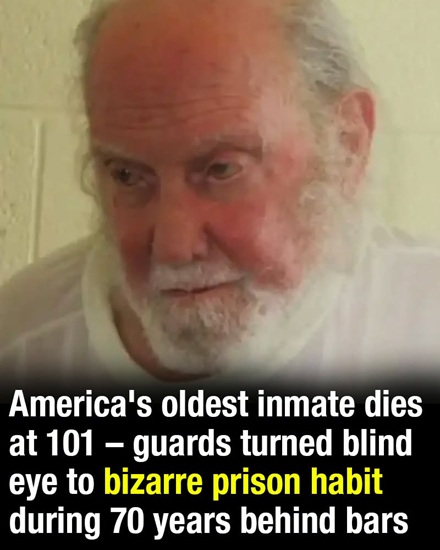
Francis Clifford Smith, a Connecticut prisoner whose case stretched across more than seven decades, died in June 2026 at the age of 101. He had spent the overwhelming majority of his adult life under state correctional supervision after being convicted of first-degree murder in connection with the 1949 killing of night watchman Grover Hart. His story later became notable because of the extraordinary length of his sentence, repeated scheduled executions, a commuted death sentence, an escape, parole violations, and eventual placement in a secure nursing facility.
By the time of his death, Smith was widely described as one of the longest-serving prisoners in modern U.S. history. His case remained controversial because he continued to maintain his innocence and because questions about the original evidence never completely disappeared. Smith was 25 years old when he was convicted in the killing of Grover Hart, who worked as a night watchman at the Indian Harbor Yacht Club in Greenwich, Connecticut.
Hart was shot during a robbery at the club in July 1949. Prosecutors connected Smith to the crime through circumstantial evidence, while another man, George Lowden, was also implicated in the case. Lowden later pleaded guilty to second-degree murder. Smith, however, was convicted of first-degree murder and received a death sentence.
The original case involved several pieces of physical and circumstantial evidence. Investigators recovered bullets and cartridge cases from the scene, and the evidence suggested that more than one firearm had been used. A vehicle and property connected to the robbery also became part of the prosecution’s case. Smith denied responsibility for Hart’s death. Over time, his lawyers challenged the strength of the evidence and argued that the case against him was not as clear as the verdict suggested.
One of the most important developments came when another man later claimed involvement in the crime. That statement became part of Smith’s effort to obtain a new trial. His attorneys argued that the new information raised serious questions about whether he had been wrongly convicted. Connecticut courts reviewed those arguments, but Smith was not granted a new trial. His conviction therefore remained legally intact even though doubts continued to surround the case.
Smith’s early years in prison were dominated by the death penalty. He was reportedly scheduled for execution eight separate times. Contemporary and later accounts describe him being prepared for death repeatedly, only for the execution to be delayed or stopped. Reports also state that he received what was intended to be a final meal on multiple occasions. Those repeated interruptions made his case highly unusual even within the history of capital punishment.
The decisive change came in 1954. Smith was again scheduled to die in Connecticut’s electric chair when the state’s Board of Pardons commuted his death sentence. His punishment was changed to a term of 25 years to life. The decision removed the immediate threat of execution, but it did not lead to his release. Instead, Smith remained inside the correctional system for decades.
The commutation meant that a case originally expected to end with execution turned into one of the longest periods of incarceration in American history. Smith entered prison as a young man and remained under state supervision into extreme old age. The world outside changed dramatically during those years. He lived through major social, political, and technological transformations while spending most of his life inside institutions.
Smith did briefly escape from custody in 1967. His freedom lasted only a short period before authorities captured him and returned him to prison. The episode did not change the overall course of his sentence. It became another part of a long correctional record that already included appeals, death-penalty proceedings, and decades of confinement.
He was later released on parole, but that period also proved temporary. Reports indicate that a parole in the 1970s lasted less than a year before Smith was returned to custody for violating the conditions of his release. Afterward, he again spent many years within the Connecticut correctional system. Those brief periods outside custody were exceptions within an adult life otherwise controlled by the state.
Over time, Smith became known inside Osborn Correctional Institution for an unusual habit. He reportedly collected bread and hid it in his clothing so he could feed birds around the prison grounds. Correctional officials said staff generally understood what he was doing and often looked the other way. The habit eventually earned him the nickname “The Birdman of Osborn.”
That small detail became one of the most frequently repeated human stories from his decades in prison. Smith’s public identity had been dominated by a murder conviction, court rulings, and imprisonment. Feeding birds offered a rare glimpse into an ordinary routine within an otherwise highly restricted life. It was a simple act, but one that apparently became familiar to both Smith and the staff around him.
As he grew older, Smith’s physical needs changed. Correctional systems are often designed for security rather than long-term geriatric care, and Smith eventually became too elderly for ordinary prison housing to be the most appropriate setting. In 2020, he was paroled to 60 West, a secure nursing facility in Rocky Hill, Connecticut. He remained under supervision rather than becoming completely independent.
The move to 60 West marked a major change after decades inside prison walls. Smith was already in his mid-nineties by then. He required care more consistent with advanced age and declining physical ability. Even so, the placement did not erase his correctional status. He continued living under conditions connected to his sentence.
In interviews during his final years, Smith spoke about imprisonment in a restrained and almost resigned way. In 2023, he told the Boston Globe that he had been locked up for most of his life and that he simply moved from one day to the next. His words reflected how little ordinary ideas about career, retirement, travel, or independent adulthood applied to him. His life had been shaped around institutional schedules and limited personal choice.
Smith continued maintaining that he had not killed Grover Hart. That claim remained part of public discussion until his death. Supporters and some legal observers pointed to the circumstantial nature of parts of the evidence and the later statement by another man. At the same time, Smith was never formally exonerated. Legally, his first-degree murder conviction remained in place.
That distinction is essential when describing the story accurately. Smith’s conviction was questioned, but it was not overturned. There were doubts and legal challenges, but there was no formal finding that he had been wrongly convicted. A careful account therefore has to acknowledge both sides: the conviction remained valid in law, while questions about the case continued for decades.
Grover Hart, the victim, also remains central to the history. Hart was working as a night watchman when he was killed during the 1949 robbery. His death was not an abstract legal event. His family experienced a real and permanent loss. Any discussion of Smith’s later prison history should not erase the person whose killing led to the case in the first place.
Members of Hart’s family strongly supported punishment for Smith during the early years of the case. Historical reporting shows the anger and grief surrounding the murder. Later doubts about Smith’s conviction do not erase that grief. At the same time, the family’s belief in his guilt does not by itself resolve the legal questions raised years later.
Smith’s case therefore became far more complicated than a simple story about a prisoner living to an old age. It involved violent crime, disputed evidence, capital punishment, parole, aging in prison, and the extraordinary effect of a sentence that lasted for most of a century. Each part adds context, and none can completely replace the others.
His repeated execution dates remain one of the most striking features. Being sentenced to death is already an extreme legal experience. Being prepared for execution multiple times and repeatedly surviving delays adds another layer of uncertainty. Reports describing eight scheduled executions help explain why Smith’s early years in custody drew so much attention.
The commutation in 1954 also reflected a major change in how the state treated his case. Instead of carrying out the death penalty, Connecticut transformed the sentence into life imprisonment with the possibility of parole. That decision ultimately meant Smith would live for more than 70 additional years. What had been intended as a short path to execution became an entire lifetime of confinement.
Connecticut later abolished the death penalty, adding another historical dimension to the case. The punishment originally imposed on Smith eventually disappeared from the state’s criminal justice system. Smith himself had already been spared execution long before that broader change, but his case became a reminder of how dramatically legal policy can evolve over a single lifetime.
His age also made him part of a broader discussion about elderly prisoners. As more incarcerated people reach their seventies, eighties, and beyond, correctional systems face increasing medical and practical challenges. Advanced age can require mobility assistance, nursing care, medication management, and specialized support. Smith’s case was an extreme example because he remained under supervision into his second century of life.
Placing him at 60 West was one way Connecticut addressed that reality. The facility could provide a level of medical and daily care that a conventional prison was not designed to offer. Smith was still serving his sentence, but in a setting better suited to his age. His situation illustrated how punishment and healthcare can intersect when a sentence lasts for several generations.
The length of Smith’s confinement also makes record claims difficult to describe precisely. Some reports called him the longest-serving prisoner in U.S. history. Others used more cautious language and described him as believed to be the longest-serving inmate. There is no single comprehensive national database that makes such a historical record simple to prove across every state and federal system.
For that reason, the safest description is that Smith was widely regarded as one of the longest-serving prisoners in American history and possibly the longest-serving under modern documentation. The factual point does not depend on claiming an uncontested record. Spending more than seven decades under correctional supervision is extraordinary regardless of whether another historical case ultimately exceeds it.
It is also more accurate to say Smith spent most of those decades under correctional supervision rather than literally behind bars every single day. He escaped briefly, experienced temporary parole, and later lived in a secure nursing facility. Those interruptions do not significantly reduce the length of his sentence, but they matter for precision. Careful wording avoids turning a dramatic headline into an oversimplification.
Smith died on June 25, 2026, at 60 West. He was 101 years old. Facility representatives said his death was essentially the result of old age rather than a sudden dramatic event. His final years had been physically quieter than the legal battles that defined his youth.
Reports said Smith had little family involvement around the time of his death. Staff at the nursing facility said they worked to make sure his final care was dignified and consistent with his wishes. He had survived far longer than most people ever expected when he first entered prison in his twenties.
There was reportedly no formal funeral after his death. His body was cremated. The quiet ending contrasted sharply with the early years of his case, when scheduled executions and legal appeals attracted intense attention. A man who had once repeatedly faced the electric chair ultimately died of old age in a nursing facility.
That contrast is one of the most remarkable aspects of Smith’s life. At 25, he was sentenced with the expectation that the state would end his life. At 101, time rather than execution finally did so. The legal system that once prepared him for death repeatedly ended up supervising him for more than seven decades.
His age also made him a living connection to a very different era. Smith was already an adult before television became a normal feature of American homes. He remained under state supervision through the civil rights era, the Vietnam War, the rise of computers, the internet, smartphones, and enormous changes in American criminal justice. Few prison sentences have stretched across such a large portion of modern history.
The length of his sentence can easily make the story sound sensational, but exaggeration is unnecessary. The verified timeline is unusual enough. He was convicted in 1950, faced repeated execution dates, received a commutation in 1954, escaped briefly in 1967, experienced unsuccessful parole, remained incarcerated for decades, and eventually moved to supervised nursing care in 2020. He died there in 2026.
His claim of innocence never disappeared. Neither did the legal reality that courts had upheld his conviction. Those two facts remained in tension for the rest of his life. Smith never received the formal exoneration that would have changed his legal status, and the case never reached a conclusion accepted by everyone.
The later confession or claim by another man contributed significantly to public doubts. Supporters saw it as evidence that Smith may have been wrongly convicted. Courts, however, did not consider it sufficient to reverse the verdict. That difference between public doubt and legal outcome is an important part of the case.
Smith’s co-defendant also had a very different fate. George Lowden pleaded guilty to second-degree murder and eventually left prison long before Smith. That contrast has often been noted because Smith, who maintained his innocence, remained confined much longer. The difference illustrates how plea decisions and trial outcomes can produce dramatically different sentences.
Still, the fact that another defendant received a different sentence does not independently prove Smith was innocent. It is simply another piece of context. The case has to be understood through the total record rather than one comparison alone. Responsible reporting avoids turning complicated legal history into a simple moral conclusion.
The nickname “Birdman of Osborn” also needs to be kept in proportion. It does not erase the seriousness of the crime for which Smith was convicted. It simply describes a habit that correctional staff remembered from his years inside. That human detail helps explain how someone builds routines even in an extremely controlled environment.
The birds could move freely beyond the prison grounds while Smith could not. That contrast is easy to interpret symbolically, but the facts themselves are enough. Smith liked feeding birds, staff knew about it, and the behavior became part of his reputation. There is no need to romanticize it beyond that.
His comments about living day to day also show how deeply incarceration had shaped his thinking. After decades in confinement, planning life in the normal sense may have become difficult to imagine. The institution controlled meals, movement, housing, and daily schedules for most of his adulthood. By old age, that structure had become the dominant framework of his life.
When he finally moved to a nursing facility, the setting changed but the supervision did not disappear. He did not suddenly begin an ordinary retirement. Instead, he entered a medically appropriate environment while continuing to live under conditions linked to his sentence. That nuance is important when describing his final years.
The case also raises broader questions without requiring a political conclusion. What is the purpose of imprisoning someone into their nineties or hundreds? How should states care for people who become severely elderly while serving life sentences? What happens when questions about guilt remain unresolved decades after a conviction? Smith’s story touched all of those issues.
Different people will answer those questions differently. Some believe long sentences remain justified because of the seriousness of the original crime. Others argue that age, health, and rehabilitation should matter more after many decades. Smith’s case provides context for those debates without requiring readers to adopt one specific position.
The uncertainty around his conviction makes those questions even harder. If the conviction was correct, his life represents an extraordinarily long punishment for murder. If serious errors were made, the consequences would be far more troubling. Because there was never a formal exoneration, the historical record leaves that issue unresolved.
Smith outlived many people connected to his original case. Witnesses, lawyers, investigators, relatives, and officials passed away while he remained alive. By his final years, the world that had convicted and sentenced him had largely disappeared. That extraordinary passage of time is one reason his death drew renewed attention.
News coverage increased after his death even though he had died weeks earlier. Reports revisited the original murder, the repeated execution dates, his prison escape, parole history, bird-feeding habit, and final years in nursing care. The delayed attention reflected how quietly his life had ended compared with how dramatic the beginning of his sentence had been.
His story also shows why careful language matters in reporting crime and punishment. Calling him simply “America’s longest-serving prisoner” may be catchy, but the record is difficult to prove absolutely. Saying he spent “76 years behind bars” ignores the supervised nursing placement and parole periods. Precision does not make the story less interesting; it makes it more trustworthy.
The clearest verified picture is that Smith spent almost all of his adult life under Connecticut correctional control. That alone is an extraordinary fact. Whether he holds an absolute national record is less important than the scale of what happened. A young man entered the system in the middle of the twentieth century and remained tied to it until 2026.
His death did not bring a dramatic final court decision. There was no last-minute exoneration or new trial. There was no return to a fully independent life. Smith died quietly in the same supervised environment where he had spent his final years.
For Grover Hart’s family, the story began with a killing that permanently changed their lives. For Smith, it became a lifetime of imprisonment and legal controversy. For Connecticut, it became one of the longest-running correctional cases in state history. Each perspective is part of the same record.
That is why Smith’s life is difficult to reduce to one label. He was a convicted murderer under the law. He was also a prisoner whose conviction attracted lasting doubt. He was once sentenced to death, later spared, and eventually became an elderly nursing-home resident still under correctional supervision.
His longevity makes the timeline almost difficult to comprehend. Smith spent more time serving his sentence than many people live in total. The years that passed after his conviction were not simply a long prison term; they represented nearly an entire adult lifespan.
By the end, his case had moved far beyond the original legal expectations. The state once planned to execute him. Instead, it supervised him until he died naturally at 101. That outcome would have been nearly impossible to imagine when his sentence was first imposed.
Francis Clifford Smith’s death closed one of the longest chapters in Connecticut’s correctional history. It did not resolve every question surrounding his conviction, and it did not erase the murder of Grover Hart. What it did end was an extraordinary period of state supervision that began when Smith was 25 and continued until his final days.
His story is ultimately one of crime, punishment, doubt, survival, and time. It can be told accurately without sensationalizing any of those elements. The confirmed facts are already striking enough: a death sentence imposed, eight reported execution dates, a commutation, decades in prison, a brief escape, failed parole, supervised nursing care, and death from old age at 101. That record stands on its own.

