
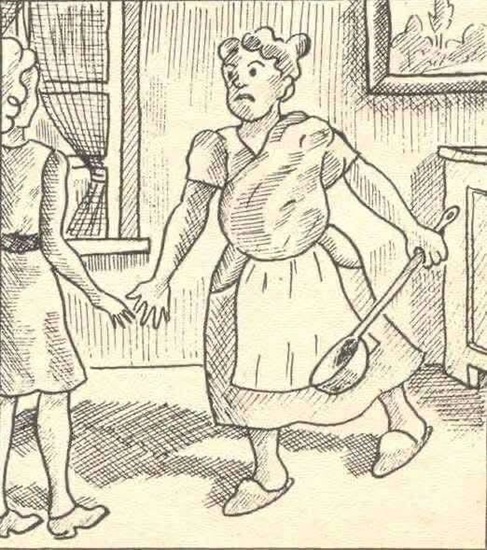
Optical illusions have remained popular for a simple reason: they can transform an ordinary picture into an entertaining challenge. A collection of lines and shapes may look completely understandable at first, only for another image to appear after closer examination. Hidden-picture puzzles use this effect particularly well because they encourage viewers to question their first interpretation. In this challenge, the goal is to locate a donkey concealed within an illustration.
Some people may recognize the animal almost immediately, while others may need a helpful clue. Neither result should be considered a serious measurement of intelligence or eyesight, because this is primarily a recreational exercise involving attention and visual interpretation. To introduce the donkey theme, imagine a lighthearted fictional story about a married couple named John and Sarah. They live busy everyday lives, and John has developed a reputation within their relationship for occasionally forgetting small things.
Sarah prefers careful planning, so his forgetfulness can sometimes frustrate her. During preparations for a fictional gathering, John realizes that he has forgotten the dessert they expected to serve. Sarah is understandably annoyed for a moment, but John decides that humor might be a better response than allowing a small mistake to spoil the occasion. What follows becomes a playful joke between the imaginary couple rather than a serious disagreement.
After Sarah jokingly compares him to a donkey, John decides to embrace the joke. He finds a pair of costume donkey ears, puts them on, and begins making an exaggerated imitation of the animal. The unexpected performance catches Sarah off guard and makes her laugh. The forgotten dessert suddenly seems far less important than it did a few moments earlier. From then on, the donkey becomes a harmless running joke between them. This story is fictional and is included only as a humorous introduction to the visual puzzle rather than being presented as a documented real-life event.
The joke becomes even more elaborate in the fictional scenario when John later attends a family gathering wearing an entire donkey costume. His relatives are initially surprised by the unusual entrance, but they quickly understand the reference and join in the laughter. Instead of becoming a source of embarrassment, the costume creates a funny shared memory. The imaginary anecdote leads naturally to the central question of the puzzle: if a donkey can unexpectedly appear where nobody expects one, can you find the donkey hidden in the illustration? This time, however, recognizing it requires more than looking for an obvious animal standing in plain sight.
When the picture is viewed normally, the donkey may be surprisingly difficult to recognize. The visible lines appear to belong to other parts of the illustration, and the brain attempts to organize them into whatever scene seems most familiar. This initial interpretation can become so convincing that viewers overlook the alternative image. The donkey has not disappeared, and nothing needs to be added to reveal it. Instead, the challenge depends on recognizing an arrangement that is difficult to interpret from the picture’s original orientation. A small change in how the image is viewed can make a major difference.
Here is the most useful clue: rotate the picture and try viewing it upside down. Do not immediately search every tiny detail after turning it. First look at the entire image and allow the newly positioned shapes to become familiar. Lines that seemed insignificant before may begin to resemble recognizable features. An elongated shape might suddenly look like an ear, while nearby curves can form part of a face or muzzle. Once a few important features connect, the hidden donkey can become considerably easier to identify.
The reason this trick can work involves visual perception rather than anything mysterious happening inside the picture. Human vision involves more than simply receiving light through the eyes. The brain continuously interprets visual information, organizing edges, colors, contrast, shapes, depth cues, and other signals into recognizable objects. This process normally happens extremely quickly. Previous experience helps because familiar patterns can be identified without consciously analyzing every individual line. Optical illusions take advantage of this efficiency by arranging information so that more than one interpretation is possible.
Orientation can influence which interpretation becomes dominant. People usually encounter familiar objects in typical positions, so unusual orientations can make recognition more difficult. Rotating an ambiguous picture changes the relationship between its visual features from the viewer’s perspective. The underlying drawing remains identical, but the brain is now trying to organize those shapes from a different angle. In the hidden-donkey puzzle, that change can make features associated with the animal easier to combine. The solution is therefore based on perception and orientation rather than an object physically appearing after the image is turned.
This is also why two people looking at the same puzzle can have completely different experiences. One viewer may immediately notice the donkey because the relevant outline happens to attract attention first. Another person may spend several minutes seeing only the dominant image. Someone familiar with hidden-picture challenges might recognize the visual trick more quickly because they already know to search for alternative orientations and unusual outlines. These differences are entirely normal. Recreational puzzles do not provide standardized conditions or enough information to rank people’s overall perceptual abilities.
For that reason, statements claiming that spotting the donkey proves someone has exceptionally sharp eyesight should be treated as playful language rather than a medical conclusion. Hidden-image puzzles are not clinical eye examinations. They cannot determine visual acuity, diagnose an eye condition, or establish whether someone’s eyesight is better than another person’s. A person with excellent eyesight can miss the donkey because the challenge depends heavily on interpretation and attention. Someone else may find it immediately because they happen to recognize the intended pattern. Solving the puzzle quickly is satisfying, but it is not a medical test.
The same caution applies to claims about intelligence or personality. A single optical illusion cannot reliably determine how intelligent someone is or reveal meaningful personality characteristics. These puzzles are created primarily for entertainment and curiosity. They can demonstrate interesting aspects of perception, but the time required to solve one image should not be turned into an unsupported psychological conclusion. Enjoying the challenge without attaching exaggerated claims to the result keeps the activity both entertaining and accurate. The most interesting question is simply why the hidden figure becomes easier to see after the perspective changes.
If you are still struggling to find the donkey, try adjusting your viewing distance. Sometimes concentrating intensely on individual lines makes it difficult to recognize the larger shape they form together. Move slightly farther away from the screen and look at the picture as a whole. This allows smaller details to visually combine into broader patterns. If that does not help, move closer again and examine areas containing strong curves or unusually prominent outlines. Alternating between a detailed view and a wider view can help prevent attention from becoming locked onto one interpretation.
Looking away briefly can also be useful. Staring continuously at an ambiguous picture may strengthen the first interpretation instead of revealing the second one. A short visual break gives attention an opportunity to reset. When you return to the illustration, try not to focus immediately on the area you were examining before. Scan the entire picture again and allow your eyes to move naturally across it. Then rotate the image if you have not already done so. The change in orientation remains the most important clue for this particular challenge.
After turning the picture upside down, consider searching for the donkey’s head before attempting to identify its entire body. Long ears are distinctive features and can provide useful reference points. Once something resembling the ears becomes visible, look immediately around them for lines that could form the forehead, face, and muzzle. From there, attempt to follow the outline toward the neck and remaining parts of the animal. Breaking the task into recognizable features is often easier than searching for a complete donkey all at once. One familiar feature can cause the rest of the image to fall into place.
The moment of recognition is often what makes an optical illusion memorable. Before the donkey is identified, its lines may appear completely unrelated. Seconds later, those exact same lines suddenly form a coherent animal. Nothing in the illustration has physically changed during that transition. The difference exists in the interpretation produced by the viewer’s visual system. Once the brain has found a meaningful pattern, it can become difficult to return to the earlier state in which the figure seemed invisible. The donkey may suddenly appear so obvious that viewers wonder how they overlooked it.
This general phenomenon is familiar from many ambiguous images. Some classic illustrations can be interpreted as two different objects depending on which features receive attention. The viewer may alternate between those interpretations even though the drawing itself remains unchanged. Hidden-image puzzles are not necessarily identical to classic ambiguous figures, but they rely on related principles of organization and recognition. They remind us that perception is an active process. The brain does not simply reproduce every visual detail equally; it organizes information into patterns that appear meaningful.
Expectations can influence this process as well. Simply being told that a donkey is hidden somewhere gives viewers valuable information. Instead of searching for any possible object, they can concentrate on characteristics associated with a donkey. Long ears become especially relevant, as do shapes resembling a muzzle, head, legs, or body. Without knowing what was hidden, some viewers might interpret the picture differently and never consider looking for an animal. Instructions therefore influence attention even before someone begins examining the details.
The fictional John and Sarah story at the beginning also reinforces this expectation. By repeatedly introducing the idea of a donkey before presenting the puzzle, it prepares readers to search for that particular animal. This does not guarantee that the hidden figure will immediately become visible, but it narrows the search. Importantly, the introductory story should remain clearly identified as fictional entertainment rather than being presented as a factual report about real people. The optical illusion itself does not require an invented story to be treated as true. Separating playful storytelling from factual explanation keeps the overall presentation clear.
Hidden-picture puzzles are especially accessible because they do not require expensive equipment or specialist knowledge. They can be attempted on a phone, computer, tablet, printed page, or other suitable display. Friends and family can compare how long it takes them to notice the figure, provided the comparison remains playful. Some people enjoy refusing all hints until they solve the challenge themselves. Others prefer receiving the rotation clue almost immediately. There is no correct way to enjoy the activity because the objective is simply to discover the visual trick.
Display conditions can also influence how difficult the puzzle appears. A very small version of the image may make important outlines difficult to distinguish. Poor image quality, compression, reflections on a screen, or low brightness can further affect visibility. A large and clear version may make the hidden figure easier to recognize. These factors provide another reason why solving speed should not be treated as an objective measure of visual ability. Different viewers may effectively be working with different versions of the challenge depending on their screens and surroundings.
First impressions remain one of the strongest obstacles. Once the brain decides that a particular group of lines belongs to the main scene, it may continue interpreting those lines in the same way. Rotating the picture disrupts that familiar arrangement. Features that previously made sense may become difficult to interpret, giving the hidden pattern a better chance to become dominant. The donkey is not necessarily hidden because its outline is extremely small or faint. It can be hidden because another interpretation initially makes more sense.
Once you finally identify the animal, try rotating the picture back to its original orientation. You may discover that you can still trace the donkey despite finding it almost impossible to recognize earlier. Now that you know where the ears, face, and other features are located, your brain has a pattern to follow. Knowledge changes the way the same visual information is interpreted. This is one of the most entertaining parts of hidden-image puzzles because it allows viewers to experience how quickly perception can change without the actual picture changing at all.
The challenge therefore offers a small demonstration of how context, attention, expectation, and orientation can interact. It should not be interpreted as proof of exceptional eyesight, superior intelligence, or any medical condition. Those conclusions would go beyond what a recreational illustration can establish. What the puzzle can do is encourage people to examine familiar-looking information from another perspective. Sometimes a simple rotation is enough to reveal something that had been present from the beginning.
If the donkey still has not appeared, use the clue one more time. Turn the image completely upside down, move back slightly, and search first for the long ears rather than trying to identify the entire animal. Once you believe you have found them, trace the nearby lines until a face begins to emerge. Give yourself time rather than treating the challenge like a race. Some viewers recognize ambiguous figures immediately, while others require several attempts before the alternative interpretation becomes clear.
When the figure finally appears, the scattered shapes should begin to look much more organized. What initially seemed like unrelated lines becomes an animal with recognizable features. That sudden shift is the central trick behind the puzzle and the reason it can be enjoyable to share with others. After someone discovers the solution, they often cannot avoid seeing the donkey again. The hidden image has not changed; only the viewer’s understanding of it has.
Ultimately, the hidden-donkey illusion is a simple reminder that first impressions do not always reveal everything contained in an image. Looking carefully helps, but sometimes looking differently is even more effective. Rotating the illustration changes the visual context and allows previously overlooked features to form a recognizable pattern. Whether you spotted the donkey immediately or needed several attempts makes little difference to the purpose of the challenge. The reward is the moment when an apparently ordinary collection of lines suddenly becomes something familiar.
So take another look before giving up. Rotate the image, scan the larger shapes, search for the ears, and allow the rest of the animal to emerge gradually. There is no scientific score attached to how quickly you succeed and no reason to worry if another person finds it first. Optical illusions are enjoyable precisely because perception can be surprisingly flexible. In this puzzle, one small change of perspective can transform what you see—and once the hidden donkey becomes visible, it may seem surprising that it was ever difficult to find.

