
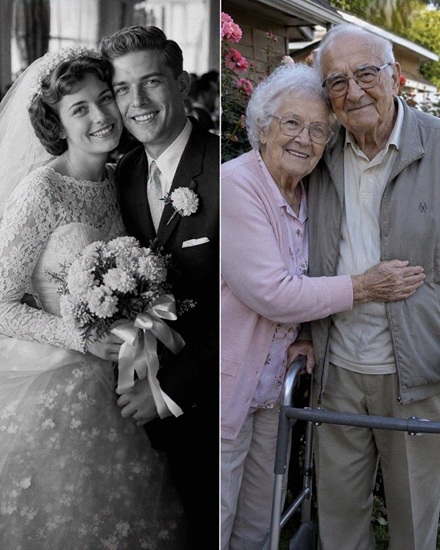
For almost sixty-nine years, Eleanor and Walter had shared a life that seemed to contain very few secrets. They had met as young college students and stayed together through decades of changes that neither could have imagined when they first held hands. Together, they raised three children, watched them build lives of their own, and eventually became grandparents to five grandchildren. Their marriage had endured difficult financial periods, family disagreements, illnesses, celebrations, and countless ordinary days.
After so many years together, Eleanor believed she understood Walter better than anyone else. When Walter’s health began declining in his final months, Eleanor devoted most of her time to caring for him. After he entered hospice care, she remained beside him whenever possible. Some days they talked quietly about their younger years, their children, and the memories they had accumulated during their long marriage. Other days Walter had little energy, so Eleanor simply sat beside him and held his hand. She knew that losing him would change her life completely, but she never imagined that his death would also uncover a complicated family situation.
During this period, Walter’s younger sister, Denise, started visiting much more frequently. Eleanor initially welcomed the attention. Denise brought meals, helped around the house, and occasionally sat with Walter while Eleanor rested. She also enjoyed opening old photo albums and encouraging Walter to tell stories about their childhood. To Eleanor, these visits appeared to be the actions of a sister trying to spend time with her brother while she still had the opportunity.
Over time, however, Denise’s conversations gradually shifted toward practical matters. She occasionally asked where important documents were stored and whether Walter had recently updated his estate arrangements. She also showed curiosity about property records and investment accounts. Eleanor noticed the questions but did not immediately become suspicious. Families often discuss finances during serious illnesses, and Eleanor assumed Denise was simply concerned about what might happen after Walter was gone.
Their son Roman had also become involved in organizing paperwork. Wanting to reduce the burden on his mother, he gathered statements, sorted documents, and helped locate financial records. When Denise offered to assist him, Roman shared some of those papers with her. He believed they were working toward the same goal: making things easier for Eleanor. Nothing about his actions seemed alarming at the time, and Eleanor was too occupied with Walter’s condition to examine every conversation taking place around her.
Walter eventually died at ninety years old. His death left Eleanor facing a silence she had never experienced during her adult life. For almost seven decades, Walter had been part of her everyday routine. Now his chair was empty, his belongings remained exactly where he had left them, and Eleanor was trying to understand how to begin a new chapter without the person who had shared nearly her entire adult life.
Approximately two weeks later, Eleanor joined her children, Denise, and several other relatives at attorney Bennett’s office to discuss Walter’s will. Eleanor expected the meeting to be emotional but relatively straightforward. Instead, the document contained a provision that immediately changed the atmosphere in the room.
The will included a charitable contribution to a hospice organization. Walter’s lakeside cabin was designated for Denise, while several financial gifts and investment accounts were assigned to the children and grandchildren. Eleanor listened quietly as Bennett reviewed the provisions. Then came the unexpected part: according to the will being discussed at the meeting, no assets were being transferred directly to Eleanor through that particular document.
For several moments, nobody seemed to know what to say. Eleanor’s children were confused and upset. They could not understand why their father would apparently leave nothing through his will to the woman who had spent almost sixty-nine years beside him. Questions quickly followed. Had Walter been angry with Eleanor? Had something happened privately between them? Had he changed his mind during his final months?
Eleanor had no explanation.
Denise soon suggested that perhaps Walter had been worried about Eleanor managing everything alone. She offered to have Eleanor stay with her and spoke about helping with financial decisions. Although the words sounded supportive, Eleanor felt increasingly uncomfortable. She had just lost her husband, and now people around her were discussing her future as though she were no longer capable of deciding it herself.
After the meeting ended, Bennett asked Eleanor to stay behind.
Once everyone else had left, the attorney took a sealed envelope from his files and placed it in front of her. Eleanor immediately recognized Walter’s handwriting. Seeing it so soon after his death was emotional enough, but the contents of the letter surprised her even more.
Walter explained that the will discussed in front of the family represented only one part of his estate arrangements. According to the fictional scenario, he had intentionally structured important assets separately. He wanted the public discussion of the will to create the impression that Eleanor had received very little because he had become concerned that someone might attempt to gain control of her finances after his death.
Walter’s message included a specific warning about Denise.
He told Eleanor not to accuse anyone immediately. Instead, he encouraged her to remain observant and avoid signing unfamiliar financial or legal documents without independent professional advice. If someone suddenly attempted to obtain authority over her property or decisions, Walter instructed her to return to Bennett and ask for another envelope.
Eleanor left the attorney’s office with more questions than answers.
The following morning, Denise appeared at her home carrying paperwork. She explained that the documents were intended to make Eleanor’s life easier and included a proposed power of attorney. Signing it would have granted Denise significant authority to act on Eleanor’s behalf.
Remembering Walter’s warning, Eleanor resisted the temptation to confront her immediately. She said she was tired and wanted time to review everything carefully.
As she examined the documents, Eleanor noticed information that did not make sense to her. Certain notary details appeared inconsistent with what she remembered, including information connected to a period when Eleanor did not recall meeting with anyone to authorize such paperwork. She did not immediately assume wrongdoing, but the discrepancy was serious enough that she decided not to sign anything.
While Denise was temporarily occupied, Eleanor photographed the documents so she could show them to an independent professional.
Another detail caught her attention. A financial summary contained a remarkably precise figure associated with one of the family’s investment accounts. Eleanor wondered how Denise could know the amount. She remembered that Roman had recently been collecting financial statements, and she decided to speak with him directly.
Roman admitted that he had shared several documents with his aunt. Denise had told him that she was helping organize Walter’s affairs and preparing information that might eventually be useful to Eleanor. Roman had believed her. He insisted that he had never intended to surrender his mother’s privacy or give anyone control over her finances.
For Eleanor, the conversation changed everything.
She began to understand why Walter might have been concerned. Rather than starting a family argument, Eleanor returned to Bennett and showed him the documents Denise had brought to her.
The attorney then produced the second envelope.
Inside was information about a living trust Walter had established before becoming seriously ill. Within this fictional story, significant assets had already been transferred into the trust, with Eleanor named as its beneficiary and trustee. Walter had also arranged documentation concerning his mental capacity when the trust was created.
The discovery changed the meaning of the earlier will.
The document that had shocked the family did not control everything Walter owned. Important property and financial assets had already been handled through a separate estate-planning structure. Eleanor therefore had not simply been abandoned financially in the way the first family meeting had suggested.
Walter’s letter explained that he had deliberately kept the arrangement private because he wanted Eleanor protected from pressure after his death. If nobody attempted to interfere, there would be no conflict. But if someone tried to exploit the apparent absence of an inheritance, Eleanor would know to seek professional assistance before signing anything.
Soon afterward, another family discussion took place.
Denise arrived prepared to argue that Eleanor needed assistance managing important decisions. Eleanor, however, was no longer confused about her position. She calmly placed the questionable paperwork on the table and explained that she would not sign documents giving another person authority over her affairs without independent legal review.
Roman also spoke.
He acknowledged that he had shared financial information with Denise because he believed he was helping the family. At the same time, he made clear that he had personally witnessed nothing demonstrating that his mother was incapable of managing her own affairs. He realized that concern for a parent should not automatically be treated as evidence that the parent had lost independence.
Bennett then explained the trust arrangements and the documentation connected to them. Eleanor had also taken additional steps to demonstrate that she was capable of making her own decisions. She did not need to shout, threaten anyone, or publicly reveal every private family disagreement. The existence of independent records and professional documentation was enough to establish that important decisions concerning her life remained hers.
Denise eventually left without obtaining the authority she had sought.
For Eleanor, however, the experience was not a victory to celebrate. The conflict had involved people she loved, and Walter’s complicated strategy had initially caused her tremendous emotional pain. Sitting in the attorney’s office and hearing that her husband had apparently left her nothing had been one of the most painful moments following his death.
Only later did she understand the purpose behind the arrangement within this fictional narrative.
Walter had not wanted to determine Eleanor’s future from beyond the grave. Instead, he had attempted to make sure that she retained the ability to determine it herself. His plan was imperfect and emotionally difficult, but its underlying purpose was to keep important assets beyond the reach of anyone who might pressure Eleanor before she had time to understand what was happening.
Roman apologized for sharing documents without first asking his mother. Eleanor accepted his apology because she understood that his mistake had come from trust and concern rather than an intention to harm her. Their relationship slowly began returning to normal, although both learned an important lesson about privacy and boundaries.
Eleanor also began looking differently at the offers of assistance she received.
Help could be valuable, especially after losing a spouse who had shared everyday responsibilities for decades. But receiving assistance did not mean surrendering independence. Being older did not automatically mean being incapable, and family concern did not automatically give relatives the right to control another adult’s finances, property, or personal choices.
She became more careful about financial documents and more willing to ask questions before signing anything important. She understood the value of keeping copies of paperwork, protecting private account information, and obtaining independent professional advice when legal or financial decisions carried serious consequences.
Most importantly, Eleanor refused to allow one painful family conflict to define the remaining years of her life.
She still missed Walter every day. Nothing about the trust, the property, or the financial arrangements could replace nearly sixty-nine years of companionship. Yet the experience reminded her that the life they had built together did not disappear when Walter died. Eleanor still had her family, her memories, her home, and the right to decide what came next.
What initially appeared to be a devastating final rejection eventually became something very different within this fictional story. The surprising will was only one piece of a much larger arrangement. Behind it was a husband who had worried about what might happen to his wife after he was no longer there to stand beside her.
And Eleanor discovered something equally important about herself.
After spending most of her adult life as one half of a marriage, she was still capable of standing on her own. She could listen to advice without surrendering her judgment, accept assistance without giving away control, and protect herself without turning a family disagreement into revenge.
Walter’s final plan may have started with a painful surprise, but Eleanor’s response ultimately became the more meaningful part of the story. She remained patient when she was confused, sought independent advice when something appeared questionable, and refused to sign documents she did not fully understand.
The inheritance that mattered most was therefore not simply a house, an investment account, or property placed inside a trust. It was Eleanor’s continued ability to make choices about her own life.
After nearly sixty-nine years beside Walter, she entered the next chapter carrying the memories of their marriage with her. She could not change the loss she had suffered, but she could decide how she would live afterward.
And that decision remained entirely her own.

