
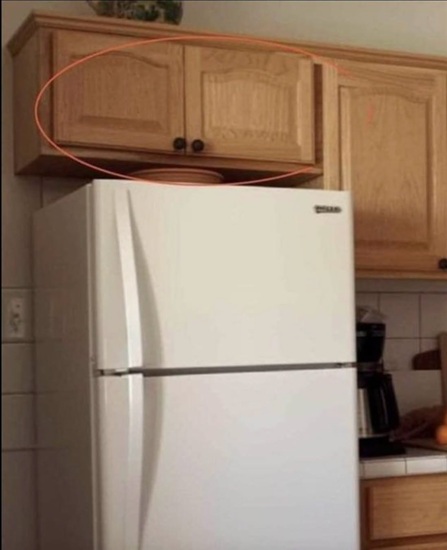
Keeping a kitchen organized can make everyday cooking, cleaning, and meal preparation much easier. When every item has a sensible place, you spend less time searching through crowded drawers or moving things around the countertop. Yet there is one storage area that is frequently overlooked: the small cabinet positioned above the refrigerator. Because it is higher and often harder to reach than ordinary cupboards, many people either leave it empty or fill it with items they eventually forget about.
With a little planning, however, this awkward space can become useful secondary storage. The first thing to remember is that cabinets above refrigerators are generally not ideal for objects you need several times each day. Everyday glasses, dinner plates, coffee mugs, and frequently used ingredients are usually better stored somewhere within comfortable reach. Repeatedly climbing onto a step stool just to retrieve a common kitchen item is inconvenient and can introduce unnecessary safety risks. Instead, think of the upper cabinet as a place for lightweight belongings that are needed occasionally rather than constantly.
Check the Cabinet Before Organizing It
Before moving anything into the space, examine the cabinet carefully. Measure its height, depth, and width so you know exactly how much room is available. Cabinets above refrigerators vary significantly depending on the kitchen design. Some are shallow, while others extend surprisingly far toward the wall. Knowing the measurements can help you select appropriate storage containers and prevent you from trying to squeeze oversized objects into an unsuitable space.
It is also worth checking how easily you can reach the cabinet. Imagine removing each object rather than simply putting it away. Something may be easy to push onto a high shelf but difficult to bring safely back down. If you need both hands to handle an item, make sure you can reach it without stretching or losing your balance. Heavy and awkward objects generally belong in lower storage areas.
Reserve It for Occasionally Used Appliances
Small kitchen appliances that are used infrequently can sometimes be stored above the refrigerator. A compact waffle maker, specialty mixer attachment, small food processor, or similar gadget might otherwise occupy valuable countertop or lower-cabinet space. If you use an appliance only several times per year, giving it a secondary storage location can help keep more convenient areas available for everyday equipment.
However, weight should determine whether an appliance belongs overhead. Large blenders, heavy processors, and bulky equipment can become difficult to control when being lowered from above shoulder height. Even if something fits perfectly inside the cabinet, it may not be safe to store there. If retrieving an appliance feels uncomfortable or requires excessive effort, choose a lower shelf instead.
Organize Baking Accessories
Baking tools are another useful category to consider. Cookie cutters, cake-decorating supplies, silicone molds, piping equipment, specialty measuring tools, and seasonal baking accessories may spend weeks or months unused. Grouping these items in a lightweight container can keep them organized without taking space away from everyday cookware.
Rather than placing dozens of loose objects inside the cabinet, use separate bins for different categories. For example, one container could hold cake-decorating equipment while another stores holiday cookie cutters. Labels can make the contents immediately recognizable. This is especially helpful with deep cabinets where objects at the back can easily disappear from view.
Be Careful When Storing Food
The cabinet may seem like an obvious extension of your pantry, but food storage requires additional consideration. Shelf-stable products should always be kept according to the conditions recommended by their manufacturers. Depending on the refrigerator model and kitchen design, the area around the appliance may become warmer than other cabinets.
Before storing canned or packaged foods above a refrigerator, determine whether the location provides suitable conditions. Check labels for storage instructions and pay attention to temperature, moisture, and direct heat. Products requiring cooler or more stable conditions should be kept elsewhere. Convenience should never override food-storage recommendations.
Keep Track of Shelf-Stable Products
If appropriate shelf-stable foods are kept in the upper cabinet, organization becomes especially important. Because the cabinet is opened less frequently, products can easily remain forgotten at the back. Arranging them by category and keeping older items visible can reduce unnecessary waste.
Periodically review dates and package condition rather than assuming that a long shelf life means an item can remain there indefinitely. A small inventory can be useful if you store several backup products. The goal is to create functional storage rather than a hidden collection of food you eventually forget you purchased.
Think Carefully About Baking Ingredients
Some dry baking products may appear suitable for upper storage, but each ingredient has different requirements. Flour, sugar, chocolate, yeast, baking powder, nuts, and similar ingredients should be stored according to package directions. Heat and moisture can affect the quality of certain products.
For many households, it may therefore be more practical to keep baking equipment above the refrigerator while leaving ingredients in a regular pantry. Tools are generally less sensitive to temperature changes than food. This approach still frees significant cabinet space without creating unnecessary concerns about ingredient quality.
Give Cookbooks Their Own Area
If cookbooks are taking up countertop space, an upper cabinet can sometimes provide an alternative location. Books containing seasonal recipes or specialized dishes may only be opened occasionally, making them reasonable candidates for secondary storage. Keeping a small collection together also prevents them from becoming scattered throughout the kitchen.
Avoid placing an excessive number of books on one shelf because books become surprisingly heavy when stacked together. Heat and humidity can also damage paper over time. If the cabinet becomes noticeably warm, damp, or exposed to cooking steam, consider storing valuable cookbooks somewhere else.
Use Lightweight Bins for Better Organization
Storage bins can dramatically improve the usefulness of a deep upper cabinet. Instead of reaching toward the back for individual objects, you can remove one lightweight container containing an entire category. Clear bins allow you to see their contents, while opaque containers can be labeled.
Try to avoid creating a miscellaneous bin containing unrelated items. These containers often become cluttered quickly. Categories such as “Baking Tools,” “Party Supplies,” “Seasonal Kitchen Items,” or “Extra Linens” make it easier to find exactly what you need. Simple organization is usually more sustainable than an overly complicated system.
Store Extra Kitchen Towels
Kitchen linens are particularly suitable for elevated storage because they are lightweight and easy to handle. Extra dish towels, cloth napkins, table linens, and spare cleaning cloths can take up considerable drawer space when purchased in larger quantities. Keeping only your everyday supply within easy reach allows the remaining pieces to move to secondary storage.
Make sure linens are completely clean and dry before storing them for extended periods. Folding similar items together keeps the cabinet tidy and makes inventory easier. Seasonal tablecloths or holiday napkins can also be stored separately so they are easy to retrieve when the appropriate occasion arrives.
Consider Seasonal Kitchen Supplies
Items used only during holidays or special occasions are another natural fit for a less-accessible cabinet. Holiday cookie cutters, decorative serving accessories, reusable party decorations, specialty napkin rings, and other seasonal objects may remain untouched for most of the year.
Placing them in labeled containers keeps them together until they are needed again. Avoid using oversized boxes that become difficult to remove from a high shelf. Several smaller containers can often provide the same storage capacity while being easier and safer to handle.
Store Occasional Serving Accessories Carefully
Lightweight serving pieces that appear only during celebrations or family gatherings can sometimes be stored above the refrigerator. Serving baskets, decorative trays, lightweight bowls, and similar accessories do not necessarily need valuable space in everyday cabinets.
Fragile or particularly heavy pieces require more caution. Fine china may seem safer high above the reach of young children, but retrieving delicate dishes from an elevated cabinet creates another risk. Valuable glassware, large ceramic dishes, and heavy serving platters are often safer at a comfortable height where they can be handled securely.
Spices May Need Another Location
Spices are sometimes suggested for upper cabinets, but this is not automatically an ideal solution. Herbs and spices generally retain their quality better when protected from excessive heat, moisture, and direct sunlight. The temperature around refrigerators varies according to the appliance and cabinetry.
Frequently used seasonings are also more convenient near your normal food-preparation area. If you are considering keeping backup spices above the refrigerator, first make sure the cabinet offers appropriate conditions. Product packaging and manufacturer recommendations should take priority over general organization advice.
Avoid Using It Automatically for Medicine
A high location may seem attractive for medicines because children cannot easily reach it, but accessibility is only one storage consideration. Many medicines have specific temperature and humidity requirements printed on their packaging. Kitchens can experience changes in temperature and moisture, particularly near cooking areas and appliances.
Medicines should therefore be stored according to their labels rather than simply placed in the highest available cabinet. Families with children should also follow appropriate safety practices for secure medication storage. Height alone should not be considered sufficient protection.
Pay Attention to Heat and Airflow
Refrigerators need ventilation to operate properly, although ventilation requirements vary among models. Some appliances release noticeable heat around their sides or upper sections, while others use different airflow designs. The refrigerator’s manual should specify necessary clearances and installation requirements.
Never block ventilation openings or required clearance areas with storage containers, decorations, or other objects. If you are uncertain about the design of your refrigerator, check the manufacturer’s instructions. The fact that a cabinet exists above the appliance does not mean every nearby space should be filled.
Don’t Turn the Cabinet Into a Clutter Zone
One of the easiest organizational mistakes is treating an inconvenient cabinet as a place for everything that has no obvious home. At first this clears countertops and drawers, but eventually the cabinet becomes impossible to use. Forgotten objects accumulate behind other objects, and finding anything requires removing half the contents.
Instead, limit the cabinet to several clearly defined categories. Leave enough room to move containers without disturbing everything else. If the space becomes completely packed, consider whether some items should be donated, discarded, or relocated.
Keep Frequently Used Items Somewhere Else
Good organization is based partly on frequency of use. Items used every day should generally be easy to reach, while equipment used only occasionally can occupy less convenient areas. This simple principle can make the entire kitchen function more efficiently.
For example, an everyday coffee maker should probably remain on the countertop, whereas a waffle maker used several times per year could move to secondary storage if it is lightweight enough. Daily dishes belong in accessible cupboards, while occasional entertaining supplies may work above the refrigerator.
Make Safety the Priority
Never sacrifice safety simply to gain a little more storage. Avoid climbing onto countertops, chairs, boxes, or other unstable objects to reach the cabinet. A suitable step stool or household step ladder placed on a stable surface is a much safer choice, provided it is used according to its instructions.
Try to keep one hand available for balance whenever possible and avoid carrying excessively heavy items while climbing. If another person is available, assistance may be useful when accessing awkward objects. Most importantly, do not store something overhead if you already know you will struggle to retrieve it safely.
Clean the Cabinet Occasionally
High cabinets still collect dust and kitchen residue even when they remain closed much of the time. Emptying and cleaning the space periodically helps keep stored objects in better condition. It also gives you an opportunity to inspect containers, reorganize categories, and remove anything you no longer use.
A periodic review can prevent the cabinet from becoming forgotten storage. If you discover an appliance that has not been used for several years, consider whether you genuinely need to keep it. Removing unnecessary items often improves organization more effectively than purchasing additional storage products.
Adjust Your Storage as Your Needs Change
Kitchen organization does not have to remain permanent. Household routines change, children grow, new appliances arrive, and cooking habits evolve. Something that once belonged in an upper cabinet might eventually become an everyday tool that deserves a more convenient location.
The reverse can also happen. An appliance you once used every week may become an occasional item and move upward. Reviewing your storage system periodically allows the kitchen to remain practical rather than following rules that no longer fit your routine.
Make the Cabinet Work for Your Household
There is no single correct way to organize the cabinet above a refrigerator. Its usefulness depends on cabinet dimensions, refrigerator design, household needs, and the ability of family members to access the space safely. What works well in one kitchen may be completely impractical in another.
In general, the area works best for relatively lightweight objects that are needed infrequently. Extra linens, seasonal supplies, selected baking equipment, lightweight serving accessories, and carefully chosen kitchen tools are all possibilities. Food should only be stored there when the environment matches the product’s recommended conditions.
The most effective organization does not come from filling every available shelf. It comes from deciding which items deserve the easiest access and moving less frequently used belongings elsewhere. A cabinet that initially appears inconvenient can become valuable when it has a clear purpose.
With sensible planning, the small space above your refrigerator can help reduce clutter in other parts of the kitchen. Measure it first, respect your refrigerator’s ventilation requirements, use lightweight containers, avoid excessive weight, and always consider how an object will be retrieved before putting it away. A few thoughtful changes can turn an overlooked cabinet into practical storage while keeping the kitchen safer, cleaner, and easier to use.

