
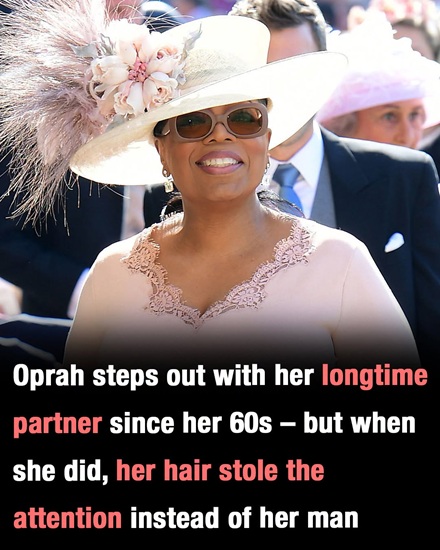
For almost four decades, Oprah Winfrey and Stedman Graham have maintained one of the most enduring relationships connected to American television, even though they never followed the traditional path of marriage. Their story began in 1986, the same year The Oprah Winfrey Show entered national syndication and started the extraordinary rise that would transform Winfrey into one of the most influential figures in media. While her professional life became increasingly public, her relationship with Graham remained comparatively private.
Over the years, the couple became engaged, reconsidered marriage, chose not to have children together, and ultimately built a partnership that they both felt worked better outside conventional expectations. Winfrey and Graham first met at a charity event in 1986. Their connection began as a friendship before developing into a romantic relationship later that year. At the time, Winfrey was already successful in Chicago television, but the international level of fame she would eventually reach was still ahead of her.
Graham entered her life at a moment of enormous transition, just as her talk show was beginning its nationally syndicated run. Their personal relationship and her professional breakthrough therefore unfolded almost side by side. As The Oprah Winfrey Show became more successful, Winfrey’s schedule grew increasingly demanding. The program eventually ran for 25 seasons and became one of the most influential daytime talk shows in television history.
Winfrey interviewed celebrities, families, authors, politicians, survivors, experts, and ordinary people whose personal experiences reached millions of viewers. Her career expanded beyond hosting into acting, producing, publishing, philanthropy, and business. Graham remained beside her through those changes without attempting to make her career revolve around their relationship.
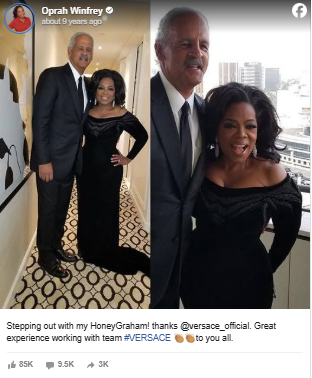
One feature of their partnership that Winfrey has repeatedly emphasized is Graham’s independence. He developed his own work as an author, educator, businessman, and speaker. Rather than being known only through his connection with Winfrey, he maintained professional interests of his own. That independence appears to have helped the couple handle the enormous imbalance in public attention that naturally came with Winfrey’s fame. She has described Graham as someone secure enough to allow her to pursue the life she believed she was meant to build.
After approximately six years together, Graham proposed in 1992. Winfrey accepted, and for a period it appeared that the couple would eventually marry. Their engagement attracted significant attention because Winfrey’s audience was already deeply interested in her personal life. A wedding seemed like the natural next chapter. Instead, the ceremony was postponed and ultimately never happened.
What might normally have been interpreted as the beginning of a breakup became something very different. Winfrey and Graham remained together. Over time, they decided that marriage itself was not necessary for their commitment to survive. Their engagement had forced Winfrey to examine what she actually wanted, and she later admitted that the answer surprised even her.
In a 2020 essay, Winfrey explained that she eventually realized she had wanted Graham to ask her to marry him more than she had actually wanted to become married. Being proposed to gave her emotional reassurance that he viewed her as someone worthy of lifelong commitment. Once she had that reassurance, she began thinking more seriously about the practical responsibilities she personally associated with being a wife. She concluded that she did not want the structure she believed marriage would create in her own life.
Winfrey has said that her television career was her priority during those years, and both she and Graham understood that reality. The enormous demands of The Oprah Winfrey Show left little room for the kind of traditional domestic arrangement she imagined marriage would involve. Rather than enter a marriage and later resent those expectations, Winfrey chose to be honest about what she wanted. Graham apparently accepted that choice.
Years later, Winfrey went even further, saying that both she and Graham believed they probably would not still be together if they had married. She was not arguing that marriage itself damages relationships. Her comments were specifically about how marriage would have affected the two of them. Winfrey believed the change in expectations would have altered their partnership in ways that might eventually have created conflict.
She has praised Graham for allowing her to be who she needed to be professionally. In Winfrey’s description, he never demanded that she reorganize her career around traditional household expectations. She has suggested that if they had married, both of them might have developed different assumptions about what the other person was supposed to provide. Remaining unmarried allowed them to define their relationship according to their actual personalities rather than according to a conventional model.
Winfrey eventually began referring to Graham as her “spiritual partner.” For her, that phrase represented a relationship based on mutual growth and purpose rather than legal status. The description also reflected the importance she placed on maintaining personal identity within a long-term partnership. The couple did not need to merge every part of their lives in order to remain committed.
Their approach should not be interpreted as advice that other couples should reject marriage. Winfrey has spoken only about what she believes worked for her and Graham. Many people prefer marriage and build successful relationships within it. Others choose different arrangements. Their story is notable precisely because they found a structure that suited them rather than following a path simply because it was expected.
Marriage was not the only traditional milestone Winfrey chose not to pursue. She also decided not to have children. Over the years, she has explained that this decision developed gradually and was influenced by the thousands of conversations she conducted while hosting her television program. Interviewing families helped her understand how much responsibility, patience, consistency, and sacrifice parenthood required.
Winfrey has said that she became increasingly aware of how deeply parental decisions could affect children. Some of the adults she interviewed spoke about painful childhood experiences that continued influencing them years later. Those conversations reinforced her belief that parenthood should never be entered casually. She eventually concluded that she did not want to become a mother simply because society expected women to have children.
Her comments on motherhood have generally been respectful rather than dismissive. Winfrey has said she has enormous admiration for women who spend their days caring for children and believes society often fails to recognize how demanding that work is. She has also acknowledged that she personally does not compartmentalize different areas of life particularly well. Because of that, she believed balancing her career with motherhood would have been extremely difficult for her.
Winfrey has never claimed that successful careers and motherhood are incompatible. Many women combine both. Her point was personal: she knew the intensity with which she approached her work and did not believe she would have been comfortable dividing her attention in the way motherhood required. Choosing not to have children therefore became part of the same pattern that influenced her decision not to marry—understanding what she genuinely wanted rather than following convention.
Although Winfrey did not become a biological mother, mentorship and education have played significant roles in her life. Her philanthropic work has included extensive support for young people, including the Oprah Winfrey Leadership Academy for Girls in South Africa. She has spoken warmly about the students connected with the school and the relationships she developed through that work. This role is different from parenthood, but it illustrates how Winfrey found other ways of investing deeply in younger generations.
Through all of these decisions, Graham remained a constant figure in her life. The public did not always see him beside her, however. During the earlier decades of their relationship, he regularly accompanied Winfrey to award ceremonies, premieres, and major events. Over time, their joint public appearances became less frequent. That reduction in visibility occasionally led to curiosity, but it did not indicate that the relationship had ended.
The couple appeared together at important events including the Kennedy Center Honors and major film and television celebrations. Graham also stood beside Winfrey during the 2018 Golden Globe Awards, when she received the Cecil B. DeMille Award. His public role was usually understated. He appeared supportive without attempting to redirect attention toward himself.
That pattern has been consistent throughout their relationship. Winfrey has spent most of her adult life in circumstances where almost everyone around her could potentially be overshadowed by her fame. Graham’s ability to remain comfortable without competing for that spotlight appears to have been one of the strengths of their partnership. Winfrey has repeatedly described him as secure in his own identity.
Their relationship also became visible in smaller and more ordinary moments. During the COVID-19 pandemic, Winfrey occasionally shared glimpses of daily life with Graham. The couple could be seen completing puzzles, spending time at home, and joking together. Those moments were far removed from red carpets and awards ceremonies and showed a domestic side of a partnership normally discussed through celebrity headlines.
Winfrey has also spoken publicly about Graham’s support during her long and highly scrutinized relationship with weight. For decades, her body became a recurring subject in magazines, television programs, and public discussion. Her weight fluctuated significantly at different stages of her career. Winfrey has said that Graham’s attitude toward her did not change depending on her size.
That consistency appears to have mattered deeply to her. She has remembered being significantly heavier when Graham first knew her and has said that he never treated her differently because of it. In a public life where her appearance was constantly evaluated, having a partner who did not make affection conditional on her body provided a different experience from the criticism she often faced elsewhere.
The couple’s privacy should not be confused with secrecy. Winfrey has always acknowledged Graham as her longtime partner. Their relationship has never been hidden. What they have avoided is turning every part of it into public entertainment. They do not need constant social-media posts or red-carpet photographs to demonstrate that they remain together.
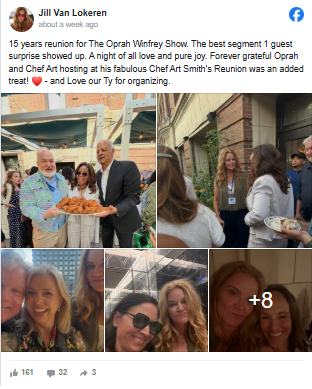
That distinction became especially clear in August 2026, when Winfrey and Graham appeared together at a reunion in Chicago connected with The Oprah Winfrey Show. The gathering marked approximately 15 years since the program ended and came shortly before the 40th anniversary of the nationally syndicated show’s launch. Former employees and colleagues gathered to remember the years they had spent producing one of television’s most influential programs.
The event was held at Reunion by Chef Art Smith on Navy Pier. Former senior supervising producer Jill Van Lokeren shared photographs from the gathering, including an image of Winfrey and Graham standing with Smith. Their appearance together attracted attention because the couple had not made many major public appearances together in recent years.
Some headlines described Graham as having “resurfaced,” but that language can create the wrong impression. There was no evidence that Graham had disappeared from Winfrey’s life or that the couple had separated and reunited. What was unusual was simply that they were photographed together at a significant public gathering after a long period without a comparable appearance.
Their last widely noted major public appearance together had been several years earlier, including the Tyler Perry Studios Grand Opening Gala in 2019. That gap in red-carpet visibility made the Chicago photograph feel new to fans who had not recently seen the couple side by side. The relationship itself, however, had continued.
The reunion had another layer of meaning because 1986 was important to both Winfrey’s professional and personal life. September 8, 1986, marked the national launch of The Oprah Winfrey Show. That same year, Winfrey met Graham. Forty years later, the anniversary of the show and the approximate anniversary of their relationship arrived at almost the same time.
Winfrey reflected on that history during the reunion. She expressed disbelief that four decades had passed since the nationally syndicated program began. She thanked members of the former production team and acknowledged the extraordinary role they had played in creating the show. The gathering was therefore not simply a celebrity party but a reunion of people who had spent years working together.
The Oprah Winfrey Show became an enormous part of American television culture. Beginning as a Chicago-based daytime program, it developed into a nationally syndicated phenomenon watched by millions. Its subject matter ranged from entertainment to literature, personal transformation, health, relationships, family struggles, and major cultural discussions. Winfrey’s interview style helped create a form of television that emphasized emotion and personal storytelling.
The program also gave Winfrey a platform from which she built a much larger media career. She launched production companies, acted in films, produced projects, established a magazine, promoted books, and eventually created the Oprah Winfrey Network. Her business success made her one of the wealthiest self-made women in entertainment. Graham witnessed these transformations from a position relatively removed from the machinery of celebrity publicity.
Maintaining a relationship with someone of Winfrey’s fame inevitably required unusual flexibility. Her professional schedule involved travel, interviews, production responsibilities, public appearances, business decisions, and charitable commitments. Graham’s willingness to pursue his own career rather than expecting constant access to Winfrey appears to have helped them create a sustainable balance.
Winfrey has frequently emphasized that Graham did not view her success as a threat. For someone whose fame and financial power exceeded that of most people around her, that sense of security in a partner was especially valuable. She did not feel she needed to minimize herself in order to preserve the relationship.
That independence appears to work in both directions. Graham also maintained an identity that was not completely absorbed into Winfrey’s fame. He wrote books and developed educational programs focused on identity, leadership, and personal development. Although his relationship with Winfrey inevitably attracted attention, his work did not depend solely on being her partner.
Their partnership therefore developed around two adults with separate identities rather than around a celebrity and a supporting character. Winfrey’s comments suggest that this distinction was essential. The relationship did not require either person to abandon individuality.
Their decision not to marry may also have reduced some of the assumptions commonly attached to celebrity relationships. Famous couples often face endless speculation about weddings, anniversaries, divorces, property, and legal arrangements. Winfrey and Graham stepped outside much of that framework. Once it became clear that they were not planning to marry, their relationship gradually stopped fitting the conventional celebrity timeline.
The absence of a wedding did not mean an absence of commitment. By 2026, they had spent roughly 40 years together. Their partnership has lasted longer than many legal marriages. That fact does not prove that avoiding marriage caused the relationship to succeed, but it does demonstrate that legal marital status was not necessary for them to maintain a long-term bond.
Winfrey herself believes the opposite might have been true in their particular situation. She has said that marrying could have introduced expectations that would have damaged what they already had. Graham apparently shares that view. Their conclusion is based on their own personalities and should not be applied automatically to anyone else.
The same principle applies to their decision not to have children. Their life does not represent a rejection of family. It represents a different definition of family. Winfrey and Graham built a long-term partnership while maintaining close connections with relatives, friends, colleagues, students, and communities.
For Winfrey, one of the recurring themes of her public life has been the importance of choosing intentionally. She has frequently discussed purpose, self-awareness, and learning to identify what a person truly wants. Her decisions about Graham, marriage, and children fit within that broader philosophy.
Accepting Graham’s proposal helped her recognize that she valued being chosen more than she valued becoming a wife. Choosing not to have children helped her acknowledge the limits of the life she wanted to build. Neither decision was made because she lacked affection or respect for traditional family structures. She simply believed they were not right for her.
Graham’s acceptance of those choices was essential. A long-term relationship cannot function if only one person agrees with its basic structure. His willingness to remain committed without marriage allowed the partnership to continue. Winfrey has repeatedly credited his understanding and independence.
Their story also illustrates how little public photographs can reveal about a relationship. A couple can attend every red carpet together and still experience serious private difficulties. Another couple can disappear from cameras for years and remain completely committed. Visibility is not the same thing as intimacy.
That is why the 2026 photograph should be interpreted carefully. It confirms that Winfrey and Graham attended a meaningful event together. It does not represent the beginning of a new relationship chapter or evidence that something dramatic happened privately. The significance comes from seeing a longtime couple together after relatively few recent public appearances.
For many viewers, the image also carries a sense of time passing. Winfrey and Graham met when she was in her early thirties. They are now in their seventies. The television show that was just beginning when they met has been off the air for 15 years and is approaching the 40th anniversary of its national debut.
During those decades, both people naturally changed. Winfrey became one of the most famous women in the world. Graham developed his own career and became known for work involving education, leadership, and identity. Their relationship moved from early dating to engagement and eventually into a partnership they deliberately defined outside marriage.
The fact that they remain together is notable because celebrity relationships often unfold under intense pressure. Fame brings travel, unusual schedules, public scrutiny, rumors, and constant attention from people who do not know the couple personally. No relationship is protected from difficulty simply because the people involved are successful.
Winfrey and Graham have never suggested their partnership is perfect. They have simply described it as something that works for them. Longevity itself does not provide outsiders with access to every challenge or compromise they have experienced. Much of their relationship remains appropriately private.
That privacy has likely contributed to public curiosity. Winfrey has shared enormous amounts about her personal history during decades in television, but she has always maintained boundaries around certain parts of her life. Graham is one of those areas where she has been open enough to explain major decisions without providing constant access to their everyday relationship.
This balance became increasingly unusual as social media transformed celebrity culture. Younger public figures often share major portions of their relationships directly with audiences. Winfrey and Graham began dating long before social media existed, and their habits were formed in a different era.
When they first met, there was no Instagram, Facebook, TikTok, or constant smartphone photography. Public visibility depended largely on television, newspapers, magazines, and scheduled events. Their relationship developed before the expectation that famous people should document every vacation, anniversary, or private celebration.
Perhaps that history made it easier for them to continue protecting their personal space even after technology changed. They never built their relationship around constant public validation. There was no need to prove its existence through repeated online posts.
That makes the rare photographs more interesting when they do appear. Audiences see two people whose relationship exists largely outside their public identities. The picture becomes noteworthy precisely because there are not hundreds of similar images produced every year.
At the Chicago reunion, Graham’s presence also carried symbolic weight because he had been there near the beginning of Winfrey’s defining professional chapter. When she launched the nationally syndicated version of her talk show in 1986, their relationship was also beginning. Four decades later, he stood beside her as she reunited with people who helped create that program.
The connection between those timelines is remarkable. Few relationships survive from the beginning of an enormously transformative career through its peak, conclusion, and the many reinventions that follow. Graham knew Winfrey before her television empire reached its full scale. He remained part of her life after the daily talk show ended as well.
For Winfrey, that continuity appears to matter more than conventional labels. She has repeatedly described Graham not simply as a boyfriend or fiancé but as a partner. The relationship is defined by the decades they have spent together rather than by a legal title they intentionally chose not to adopt.
Their story also challenges the assumption that rejecting marriage necessarily means avoiding commitment. Winfrey and Graham made an unusual decision after becoming engaged, but they did not avoid responsibility to one another. They instead created a form of commitment that left more room for independence.
There is no formula hidden in their experience that guarantees other relationships will last 40 years. Their personalities, circumstances, resources, careers, and personal histories are unique. What worked for them may not work for someone else.
The broader lesson is therefore not that couples should avoid marriage or children. It is that major life decisions are more sustainable when they reflect the needs of the people actually living them. Winfrey has been unusually clear that she did not want to build a life simply according to expectations placed on women.
For decades, she faced questions about when she would marry Graham and whether she wanted children. Those questions reflected cultural assumptions about what a successful adult relationship should eventually become. Winfrey’s answer was ultimately that her life did not need to follow that sequence.
Graham did not require marriage in order to remain beside her. Winfrey did not need motherhood to consider her life complete. Their choices allowed them to focus on the relationship they already had rather than the one outsiders imagined they should create.
That does not mean they rejected responsibility. Long-term commitment itself requires adaptation. Careers change, bodies age, families experience losses, and priorities shift. Winfrey and Graham have lived through decades of those changes.
The 2026 reunion photograph shows the result of that passage of time. They are older than the people who first met in 1986, just as the former producers surrounding them are older than when they worked on the talk show. The image carries emotional weight because it reflects continuity rather than novelty.
There is also something fitting about the setting. Chicago played a central role in Winfrey’s rise. It was there that her daytime television career developed into the program that would become synonymous with her name. Returning there with former coworkers and with Graham linked her present life directly to the period when everything began changing.
Winfrey’s comments at the reunion focused on gratitude for the people who helped create the show. She recognized that even though her name appeared in the title, the program depended on a large team of producers, researchers, camera crews, editors, coordinators, and other professionals. The reunion gave those relationships their own moment of recognition.
Graham’s appearance did not dominate the evening. That itself was consistent with his role throughout Winfrey’s career. He was present without becoming the story’s center. Attention remained primarily on the show, its anniversary, and the people who had worked together.
Media interest naturally focused on the rare image of the couple, but the photograph does not need dramatic language to be meaningful. It shows a partnership that has lasted across an extraordinary period of personal and professional change.
When Winfrey and Graham first met, they could not have known what the following decades would contain. They could not have predicted the scale of her television success, her business empire, the end of the talk show, the rise of streaming media, or the cultural changes that would transform celebrity life.
They also could not know whether their relationship would survive those changes. A proposal did not guarantee permanence, and canceling a wedding did not guarantee failure. Their future depended on countless smaller decisions made over many years.
One of the most important was their willingness to accept a relationship that did not look exactly like other people expected it to look. Winfrey did not become a traditional wife. Graham did not require her to. They did not have children together. Their partnership continued anyway.
Almost 40 years later, their relationship remains an example of how private choices can survive public attention when both people agree on the terms. It is not a perfect model or a universal blueprint. It is simply the arrangement they decided was right for them.
The recent Chicago photograph therefore represents far more than two famous people standing together. It connects the beginning of Winfrey’s national television career with the relationship that started during that same year. It captures two people who have grown older while remaining connected through extraordinary changes.
The younger Winfrey could not have known that The Oprah Winfrey Show would become a cultural institution. The younger Graham could not have known that the woman he was beginning to date would become one of the world’s best-known media figures. Neither could have known they would still be partners four decades later.
Their relationship survived without the wedding people once expected, without children together, and without constant public documentation. It lasted on terms they developed for themselves.
That may be the most significant part of the story. Oprah Winfrey and Stedman Graham did not build their relationship around proving anything to an audience. They built it around an understanding of what each person needed.
Decades later, a rare public photograph offers viewers a brief glimpse of the result. It is not evidence of a sudden return or dramatic reconciliation. It is simply another moment in a relationship that has continued quietly for roughly 40 years.
For a couple surrounded by extraordinary fame, perhaps the most remarkable thing is how ordinary that final truth sounds: they met, chose one another, discovered what worked for them, and continued moving through life together.

