
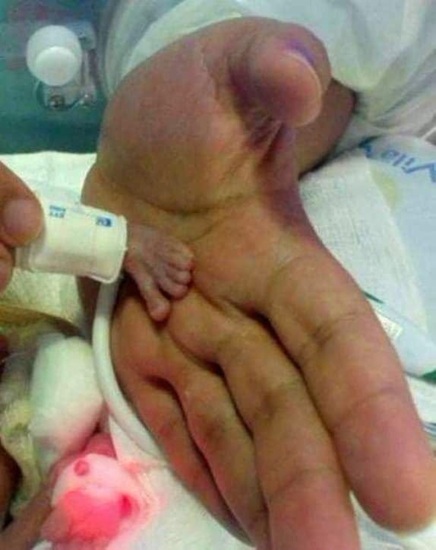
A newborn arriving at only 24 weeks of pregnancy and weighing approximately 720 grams enters the world at an exceptionally vulnerable stage of development. At 24 weeks, about 16 weeks remain before the conventional 40-week point associated with a full-term pregnancy. Medical professionals classify a birth at this stage as extremely preterm. A baby born so early generally requires immediate care in a neonatal intensive care unit, where specialists can provide respiratory, nutritional and other support while development continues outside the uterus.
At approximately 720 grams, or around 1.6 pounds, such a newborn is extraordinarily small compared with most babies delivered near their expected due dates. Size, however, tells only part of the story. At this gestational age, the lungs, brain, digestive system, immune system, eyes and skin are still developing rapidly. Many functions that a full-term newborn can perform independently may therefore require medical assistance.
Breathing is commonly among the first major concerns. The lungs of an extremely premature baby are structurally immature and may not yet produce enough surfactant, a substance that helps keep tiny air sacs from collapsing. Depending on the infant’s condition, doctors may provide different forms of respiratory support. Some babies require mechanical ventilation, while others may eventually manage with less invasive assistance as their lungs mature.
Medical teams closely monitor oxygen because both inadequate and excessive oxygen exposure can create problems for premature infants. The goal is not simply to provide as much oxygen as possible but to maintain levels appropriate for the individual baby’s condition. Specialized monitors allow clinicians and nurses to follow breathing, heart rate and oxygen saturation continuously.
Maintaining body temperature is another challenge. Babies born extremely early have thin skin and very little insulating body fat. As a result, they can lose heat much more easily than full-term newborns. Neonatal intensive care units use incubators and other carefully controlled warming systems to help maintain a stable environment while the baby’s ability to regulate temperature develops.
The skin itself can be remarkably delicate. At this stage, it has not developed all the protective characteristics seen later in pregnancy. Healthcare professionals therefore handle extremely premature babies carefully and closely manage factors such as temperature, humidity and infection exposure.
Nutrition is equally important but can be complicated. A 24-week-old infant is generally not ready to feed in the same way as a full-term baby. Coordinating sucking, swallowing and breathing develops later in pregnancy, so specialized feeding methods may be necessary during the earliest stages.
Some premature babies initially receive nutrition intravenously while very small quantities of milk are gradually introduced according to medical judgment. Human milk can be especially valuable for premature infants, although individual feeding decisions depend on the baby’s condition and available resources. Doctors and neonatal dietitians monitor growth closely and adjust nutritional support as needed.
The digestive system remains immature as well. One condition medical teams monitor for is necrotizing enterocolitis, often abbreviated as NEC, which can affect the intestines of premature infants. Not every premature baby develops it, but the increased risk helps explain why feeding progression and abdominal symptoms are monitored carefully.
Brain development is another major consideration. During the period around 24 weeks, the brain would ordinarily still be undergoing rapid development inside the uterus. Extremely premature infants have an increased risk of complications such as intraventricular hemorrhage, a type of bleeding occurring within or around the brain’s ventricular system.
Neonatal teams can use ultrasound and other assessments to monitor the brain and identify significant complications. An increased risk does not mean that a particular baby will necessarily experience neurological problems. Outcomes vary widely, and each infant needs to be evaluated individually rather than through assumptions based solely on gestational age.
The immune system also remains immature. That makes infection an important concern throughout neonatal intensive care. Hospitals use strict hygiene and infection-control practices, while staff monitor premature infants for changes that might indicate illness.
A tiny baby may not display illness in the same way an older child or adult would. Changes in breathing, temperature, activity, heart rate or feeding tolerance can sometimes provide important clues. This is one reason continuous monitoring and experienced neonatal nursing are so valuable.
Vision also continues developing during the later stages of pregnancy. Extremely premature infants can be at risk of retinopathy of prematurity, known as ROP, which involves abnormal development of blood vessels in the retina. Babies who meet screening criteria are examined according to medical guidelines so significant disease can be detected and treated when necessary.
Hearing and other aspects of development may also be assessed before or after discharge. The medical journey of an extremely premature child does not necessarily end when the baby becomes strong enough to leave the hospital. Follow-up can remain important for months or years depending on the individual child’s needs.
For parents, the first experience of seeing such a small newborn can be emotionally overwhelming. Instead of immediately holding and taking their baby home, they may find themselves surrounded by incubators, monitors, respiratory equipment and medical professionals. The ordinary expectations associated with welcoming a newborn can suddenly be replaced by unfamiliar terminology and uncertainty.
Parents may initially be unable to participate in care exactly as they imagined. As the baby’s condition permits, however, neonatal teams often encourage safe forms of parental involvement. These can include touching, comforting, helping with appropriate care and eventually participating more directly in feeding and other routines.
Skin-to-skin contact, often called kangaroo care, can be used with premature babies when medically appropriate. It involves placing the diapered infant against a parent’s bare chest under suitable clinical supervision. Research has associated appropriate skin-to-skin care with several potential benefits, but whether and when it is suitable depends on the baby’s stability and the recommendations of the clinical team.
Progress in neonatal intensive care can happen in very small steps. For a baby born at 24 weeks, tolerating slightly more milk can be significant. Gaining weight steadily, maintaining temperature more effectively or needing less breathing support may each represent important milestones.
There can also be difficult days. Premature babies sometimes improve and then require additional medical assistance because of infection, breathing difficulties or other complications. Recovery is not necessarily a straight line, and temporary setbacks do not automatically determine the final outcome.
Hospitalization can last for a considerable period. Extremely premature babies often remain in neonatal care for weeks or months because they need time to grow and develop functions that normally mature during the final trimester of pregnancy. Families may begin thinking about the original due date as an important reference point, although discharge can occur before or after it depending on the baby’s progress.
Leaving the hospital is not based on reaching one specific weight. Doctors generally consider whether the baby can maintain body temperature, breathe safely, take adequate nutrition, gain weight and remain medically stable without intensive hospital support. Each discharge decision is individualized.
Advances in neonatal medicine have substantially improved the possibilities for extremely premature infants compared with earlier generations. Modern respiratory technology, surfactant treatment, improved nutrition, temperature control, infection management and specialized neonatal nursing have all contributed to better outcomes.
Nevertheless, extreme prematurity remains medically serious. Survival and long-term outcomes depend on many factors beyond a single number. Gestational age, birth weight, circumstances surrounding delivery, infections, congenital conditions and complications during hospitalization can all influence what happens.
Access to highly specialized neonatal care is another important factor. Hospitals with experienced teams and facilities designed to manage extremely premature infants can provide treatments that would not be available in every healthcare setting. For this reason, population-level outcomes can vary between regions and medical centers.
It is also important to be accurate when describing a 720-gram newborn. Such a baby is unquestionably extremely small, but the description “smallest baby in the world” would not be supported by that weight alone. Documented surviving babies have been born weighing significantly less than 720 grams.
Some widely verified record cases have involved infants weighing below 300 grams at birth. Therefore, without additional evidence, a 720-gram newborn should not be described as holding or approaching a world record merely because photographs make the child appear incredibly tiny.
The same principle applies to claims about survival or complete recovery. If a source provides only gestational age and birth weight, it is not possible to responsibly invent what happened afterward. A photograph does not reveal whether the infant experienced complications, how long hospitalization lasted or what long-term development eventually looked like.
What can be stated accurately is that survival after birth at approximately 24 weeks is possible. Modern neonatal medicine has helped many infants born at this gestational age survive. However, statistics describing groups of babies cannot predict exactly what will happen to one individual child.
Premature birth itself can occur for many reasons. Pregnancy complications, infections, cervical problems, placental conditions, multiple pregnancy and other factors can contribute to early delivery. In some cases, no single cause is identified.
Without reliable information about the specific pregnancy, assigning a cause would therefore be speculation. Responsible reporting should distinguish between general medical information and facts known about an individual baby.
For families living through extreme prematurity, numbers can quickly acquire emotional significance. A few grams of weight gain may feel like an achievement. A reduction in respiratory support can become a milestone worth celebrating. Completing a feeding successfully may represent progress that would seem completely ordinary outside a neonatal intensive care unit.
The medical team becomes an important part of everyday life during this period. Neonatologists, nurses, respiratory therapists, pharmacists, dietitians and other specialists can all contribute to care. Their work involves supporting a baby while allowing the infant’s developing organs time to mature.
Parents also learn an entirely new vocabulary. Terms relating to oxygen, feeding, weight, infection and developmental milestones can quickly become part of conversations that they never expected to have. The experience can involve hope and progress alongside fear and uncertainty.
If the baby eventually becomes ready to leave the hospital, the transition home can represent another major adjustment. Parents who have spent months surrounded by medical equipment may suddenly become responsible for much more of the child’s daily care themselves.
Some premature infants leave the hospital without extensive ongoing medical needs, while others require medication, oxygen, specialized feeding or additional support. The requirements depend entirely on the individual child’s condition.
Follow-up appointments can remain an important part of life after discharge. Healthcare professionals may monitor growth, movement, hearing, vision, language and other areas of development. Early identification of difficulties can allow families to access appropriate therapies or developmental services when necessary.
Doctors also sometimes use corrected age when assessing development in children born prematurely. Corrected age takes into account how many weeks early the baby was born. Particularly during the first years of life, this can provide a more meaningful framework for evaluating certain developmental milestones.
Long-term outcomes among extremely premature babies vary considerably. Some children grow without major disabilities, while others experience respiratory, neurological, developmental, hearing or vision challenges. It is impossible to determine an individual’s future simply by looking at how small the child appeared immediately after birth.
That uncertainty is one of the most important realities behind dramatic photographs of premature babies. A tiny newborn resting inside an incubator can produce an immediate emotional reaction, but the photograph represents only one moment in a potentially long medical journey.
The baby is not simply a smaller version of a full-term newborn. At 24 weeks, essential developmental processes are still underway. Neonatal intensive care attempts to provide a safe environment and medical support while those processes continue outside the uterus.
This is what makes the survival of extremely premature babies medically remarkable. The achievement does not depend on one dramatic intervention. It is usually the result of countless careful decisions involving breathing, nutrition, temperature, infection prevention and continuous monitoring.
Each day provides time for further growth. Each week can bring developmental changes that improve the baby’s ability to perform functions more independently. The process is gradual and can involve both progress and complications.
For this reason, descriptions such as “a baby the size of a palm” can help readers understand the extraordinary scale of prematurity, but they should not replace precise medical information. Gestational age and measured birth weight provide a more reliable description than visual comparisons.
A reported birth at 24 weeks and approximately 720 grams would meet definitions associated with extreme prematurity and extremely low birth weight. Those facts alone communicate how serious the situation is without requiring exaggerated claims.
There is also no need to describe such a child as a record holder unless a recognized record has actually been documented. The genuine medical reality is already extraordinary: modern neonatal teams can provide intensive support to babies born months before their expected delivery dates.
For a family, that medical reality becomes deeply personal. Every monitor reading, feeding attempt and small increase in weight can become connected to hopes for a future that suddenly feels uncertain.
The weeks following birth may be very different from the joyful homecoming parents originally imagined. Yet each stable day can bring the baby closer to greater maturity and potentially toward leaving intensive care.
Ultimately, a baby born at only 24 weeks and weighing 720 grams represents both profound vulnerability and genuine possibility. No responsible account can promise the outcome, and no single statistic can tell the entire story.
What can be recognized is the extraordinary work involved in supporting life at such an early developmental stage. Modern neonatal medicine has transformed what is possible for many premature infants while continuing to acknowledge the significant risks they face.
Behind the dramatic image of an extraordinarily tiny newborn lies a far more meaningful story: a developing human being receiving specialized support while organs that should still be maturing before birth continue their development in a neonatal intensive care unit.
Whether the journey lasts weeks or months, progress is often measured one small step at a time. Breathing more independently, tolerating nutrition, maintaining temperature and gaining weight can each move an extremely premature baby closer to stability.
And that is what makes a birth at 24 weeks and 720 grams remarkable without exaggeration. The story does not need an unsupported world record or invented medical outcome. The verified medical possibilities surrounding extreme prematurity are powerful enough on their own — a reminder of how far neonatal care has advanced and how much careful work can stand behind every additional day of a premature baby’s early life.

