
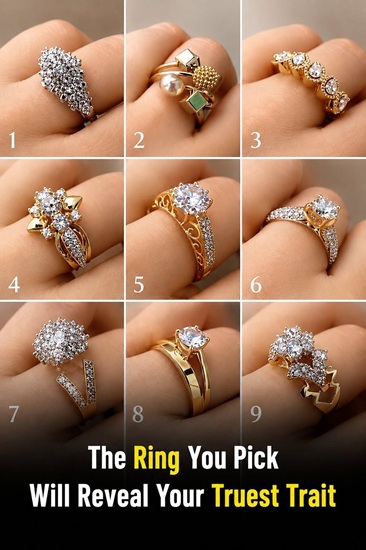
Personality-style quizzes are everywhere online, and one particularly popular version asks people to look at several rings and choose the design they find most appealing. Each choice is then connected with qualities such as confidence, creativity, loyalty, independence, or sensitivity. These quizzes can be enjoyable and may encourage people to think about their preferences. However, choosing a particular ring is not a scientifically validated method of determining personality. The interpretations are best viewed as entertainment and self-reflection rather than psychological conclusions.
Jewelry can still communicate something meaningful about personal taste. Throughout history, people have worn rings for decoration, cultural traditions, relationships, celebrations, status, and personal symbolism. Some people prefer simple bands, while others are immediately attracted to colorful stones or elaborate designs. Those preferences can be influenced by fashion, memories, family traditions, culture, practicality, and individual aesthetics. Therefore, while your favorite ring might say something about what appeals to you visually, it cannot provide a complete description of who you are.
Before reading the interpretations below, look at the available rings and choose one without thinking about it for too long. Which design immediately catches your attention? Perhaps you notice the shape of the gemstone, the color of the metal, the complexity of the setting, or simply the overall appearance. There is no correct or incorrect answer. Once you have made your choice, you can compare it with the descriptions below and decide for yourself whether any part feels familiar.
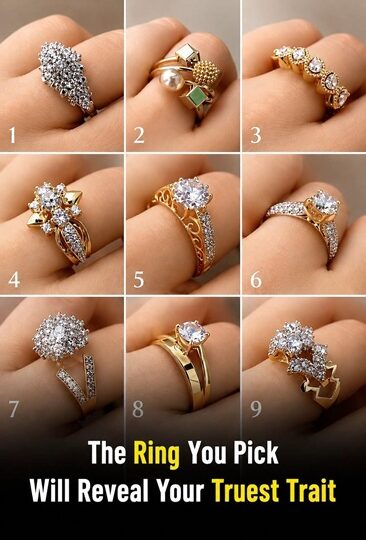
Ring 1 — A Preference for Timeless Style
If Ring 1 caught your attention first, you may simply be someone who appreciates traditional and balanced designs. In the playful language of personality quizzes, this type of selection is often associated with consistency, dependability, and an appreciation for things that remain appealing over time. A classic ring does not necessarily need elaborate decorations to make an impression. Its attraction often comes from proportion, simplicity, and a design that can comfortably fit many different occasions.
There can be many reasons for preferring traditional jewelry. Perhaps similar rings were worn by someone important in your family, or maybe you prefer accessories that can easily complement different clothes. Some people simply find symmetrical, familiar designs visually pleasing. None of these possibilities proves a particular personality trait, but thinking about why you selected the ring can reveal interesting information about your individual style and experiences.
Ring 2 — An Eye for Bold Designs
People who immediately notice Ring 2 may enjoy jewelry designed to attract attention. A larger gemstone, distinctive setting, or unusual shape can transform a ring into a statement piece. Within this lighthearted test, the choice might be associated with confidence, expressiveness, or enthusiasm. You may enjoy accessories that stand out rather than quietly blending into an outfit.
However, bold jewelry does not automatically indicate a bold personality. A reserved person can love dramatic accessories, while an outgoing person might prefer minimalist jewelry. Fashion preferences and social behavior do not always match. Someone might choose an eye-catching ring because they enjoy its craftsmanship or color rather than because they want attention. This is another reminder that these interpretations should remain playful rather than being treated as psychological facts.
Ring 3 — Appreciation for Fine Details
If Ring 3 is your favorite, perhaps its intricate details are what attracted you. Decorative patterns, floral elements, curved shapes, and carefully arranged stones can make jewelry feel delicate and sophisticated. Personality games sometimes connect this preference with sensitivity, thoughtfulness, or an appreciation for small details. You may enjoy objects that appear carefully designed rather than purely functional.
Your attraction could also come from memories or personal associations. Perhaps the design resembles jewelry worn by a relative or something you once saw during an important occasion. Emotional associations can strongly influence what people find attractive. Because those associations differ from person to person, two individuals may select exactly the same ring for completely different reasons.
Ring 4 — Something Different From the Ordinary
Ring 4 may stand apart because of its unconventional shape or distinctive design. If you chose it, the playful interpretation might suggest that you appreciate individuality and enjoy things that are somewhat different from mainstream styles. You might prefer making aesthetic choices based on what genuinely interests you rather than automatically following whatever happens to be fashionable.
Still, selecting an unusual ring does not establish that someone is independent in every area of life. A person can make unconventional fashion choices while preferring familiar routines elsewhere. Human behavior changes depending on circumstances, relationships, responsibilities, and environment. A jewelry preference represents only one very small decision within a much larger and more complicated personality.
Ring 5 — Balance and Elegance
Ring 5 might appeal to people who enjoy visual balance. A symmetrical arrangement of stones and clean proportions can create an elegant appearance without requiring excessive decoration. Within an entertainment-oriented personality interpretation, this selection could be associated with stability, patience, and an appreciation for harmony. Perhaps you prefer designs in which every element appears carefully placed.
Symmetry itself is commonly appealing in many areas of visual design, so there is no need to assume that choosing this ring reveals a hidden psychological quality. Architecture, art, clothing, logos, and jewelry frequently use balanced compositions because people can find them visually satisfying. Your choice may therefore reflect nothing more complicated than an appreciation for well-proportioned design—and that is perfectly valid.
Ring 6 — Creativity and Imagination
If Ring 6 immediately stood out, you may be attracted to artistic or unusual combinations. In the spirit of this quiz, the selection can represent creativity, curiosity, and imagination. Perhaps you enjoy designs that encourage you to look twice or contain details that are not immediately obvious. You may also appreciate objects that feel distinctive or appear to have a story behind them.
Creativity, however, cannot be measured through jewelry preference. People express creativity in countless ways, including writing, cooking, music, problem-solving, gardening, engineering, decorating, photography, and many other activities. Someone who prefers extremely simple jewelry may be just as imaginative as someone who loves elaborate designs. The ring can provide a starting point for reflection, but it cannot measure creative ability.
Ring 7 — Simplicity and Practicality
A cleaner and more understated design may be the natural choice for someone who values comfortable, versatile jewelry. If Ring 7 is your favorite, the playful interpretation might associate your preference with practicality, organization, and simplicity. Perhaps you like accessories that work with many different outfits rather than jewelry reserved for special occasions.
Practical circumstances can also influence this preference. Someone who regularly works with their hands may intentionally avoid large stones or complicated settings. Another person may simply prefer minimalist fashion. Budget, comfort, occupation, lifestyle, and personal taste can all affect jewelry choices, showing again why it would be inaccurate to interpret a single selection as proof of someone’s personality.
Ring 8 — Meaning and Sentiment
Ring 8 may have an heirloom-inspired or vintage appearance that reminds some people of jewelry passed between generations. Within the game, choosing it might be associated with an appreciation for memories, meaningful relationships, or objects that carry personal stories. Jewelry can genuinely become emotionally important when connected with weddings, anniversaries, graduations, family members, or other significant experiences.
Yet someone can love vintage jewelry purely because they enjoy the design. Conversely, a highly sentimental person might prefer modern accessories. The emotional meaning of an object comes primarily from the person and the experiences attached to it, not simply from its appearance. A quiz cannot know those experiences, which is why its descriptions should remain suggestions rather than definitive conclusions.
Ring 9 — An Adventurous Style
If Ring 9 attracted you immediately, perhaps you enjoy distinctive gemstones, unusual arrangements, or accessories that feel different from everyday designs. A playful interpretation could connect this selection with curiosity, enthusiasm, or a willingness to experiment with style. You may simply enjoy having something visually interesting rather than choosing the safest or most familiar option.
If that description sounds accurate, it can be entertaining to consider why. If it sounds completely unlike you, there is no reason to believe the quiz knows your personality better than you do. You may have selected Ring 9 because you liked one particular stone, color, or decorative element. Sometimes aesthetic preferences really are that straightforward.
Why These Personality Tests Can Feel Surprisingly Accurate
An interesting psychological concept can help explain why some personality-test results seem remarkably personal. It is commonly called the Barnum effect, or Forer effect. Broad descriptions can feel uniquely applicable even though they could reasonably describe many people. Statements involving qualities such as caring about loved ones, occasionally doubting yourself, valuing independence, or wanting appreciation are relatable to a large portion of the population.
This does not mean someone is foolish for recognizing themselves in a description. Human beings naturally search for connections between information and their own experiences. When a quiz provides a generally positive or relatable statement immediately after someone makes a personal choice, it can feel particularly relevant. Understanding this effect allows people to enjoy personality quizzes without confusing entertainment with scientifically validated psychological assessment.
Scientific personality assessment is considerably more complicated. Researchers studying personality typically use carefully designed questionnaires, statistical analysis, repeated measurements, and evidence gathered across many participants. Even validated assessments evaluate patterns across numerous responses rather than determining someone’s character from one visual preference. A single jewelry choice cannot reliably measure qualities such as honesty, empathy, intelligence, loyalty, or emotional stability.
That distinction is particularly important when sharing personality content online. A quiz can reasonably say that a particular design may appeal to people who enjoy elegance or that it symbolically represents creativity within the game. It should not claim that choosing a ring scientifically proves someone’s personality, predicts their future, reveals a medical condition, or determines how they will behave. Keeping those boundaries clear allows the activity to remain entertaining without presenting speculation as fact.
Perhaps the most interesting part of this exercise is not the result itself but the reason behind your selection. Ask yourself what caught your attention first. Was it the gemstone, shape, metal, symmetry, simplicity, or complexity? Did the ring remind you of someone or something important? Would you actually wear it, or did you simply find it visually interesting? Those questions can produce more meaningful reflection than accepting a predetermined personality label.
Friends and family members can also compare their choices simply for fun. Two people may choose completely different designs despite sharing many personality characteristics, while people with very different personalities may select the same ring. Discussing why everyone made their choice can reveal interesting differences in taste, memories, and personal associations without requiring anyone to believe the quiz has scientifically analyzed them.
Ultimately, the ring you choose can reflect your current aesthetic preference, but it cannot define your entire personality. People are shaped by years of experiences, relationships, values, habits, culture, circumstances, and decisions. Human personality is far too complex to be reduced to one piece of jewelry. So choose the ring that attracts you most, enjoy the interpretation, and use the result as a lighthearted opportunity for self-reflection rather than a factual psychological diagnosis.

