
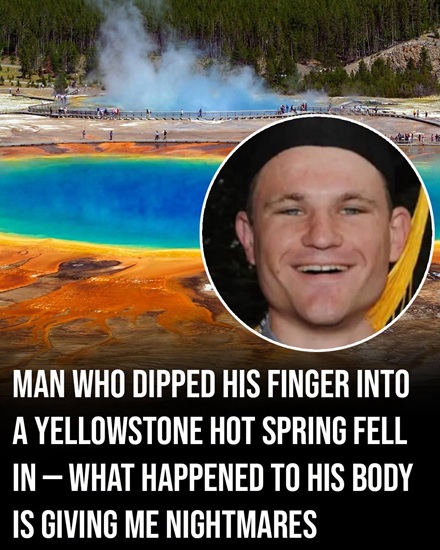
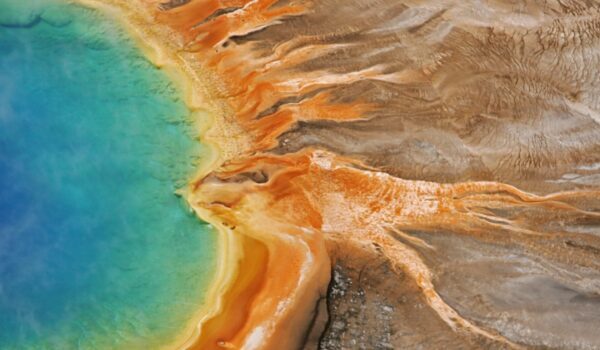
Yellowstone National Park is famous around the world for its extraordinary scenery, wildlife and remarkable geothermal activity. Among its most recognizable attractions are colorful hot springs, erupting geysers, steaming vents and bubbling mudpots. The park contains more than 10,000 hydrothermal features, including over 500 geysers, creating one of the greatest concentrations of geothermal activity on Earth. Although these landscapes can appear peaceful from a distance, the conditions beneath the surface can be extremely dangerous.
Water in some thermal features reaches temperatures close to boiling, while apparently solid ground can conceal dangerously hot water underneath. Because of these hazards, the National Park Service requires visitors to stay on designated boardwalks and trails throughout Yellowstone’s thermal areas. These pathways are not simply intended to organize visitors or protect the scenery. They are an essential safety measure because the mineral crust surrounding a hot spring can sometimes be surprisingly thin. A surface that appears strong enough to walk across may have extremely hot water immediately beneath it, creating the possibility of severe burns if the crust breaks.
One of the most tragic examples of those dangers occurred on June 7, 2016. Colin Nathaniel Scott, a 23-year-old man from Portland, Oregon, was visiting Yellowstone with his sister, Sable Scott. The siblings traveled to Norris Geyser Basin, one of Yellowstone’s best-known geothermal areas. During their visit, they left the designated boardwalk and entered an area where visitors were not permitted to walk.
According to information from the subsequent investigation, Colin and his sister were searching for a thermal feature where he might be able to soak. The activity is sometimes informally referred to as “hot potting,” but entering Yellowstone’s thermal springs is prohibited because of the extreme and unpredictable conditions. Deputy Chief Ranger Lorant Veress later explained that the siblings were moving through the area looking for a possible location where Colin could get into the water.
The decision placed them in an environment where temperatures and ground conditions could not be safely judged by appearance alone. Norris Geyser Basin is particularly active, and its thermal landscape includes boiling water, steam vents and fragile surfaces. Even an area that looks stable can potentially conceal dangerous geothermal activity only a short distance below the surface.
Sable reportedly recorded portions of their excursion using a cellphone. Investigative accounts stated that the recording documented the pair leaving the boardwalk and moving through the restricted thermal area. During the excursion, Colin suddenly slipped and fell into one of the hot springs. His sister attempted to help him before leaving the immediate area to seek emergency assistance.
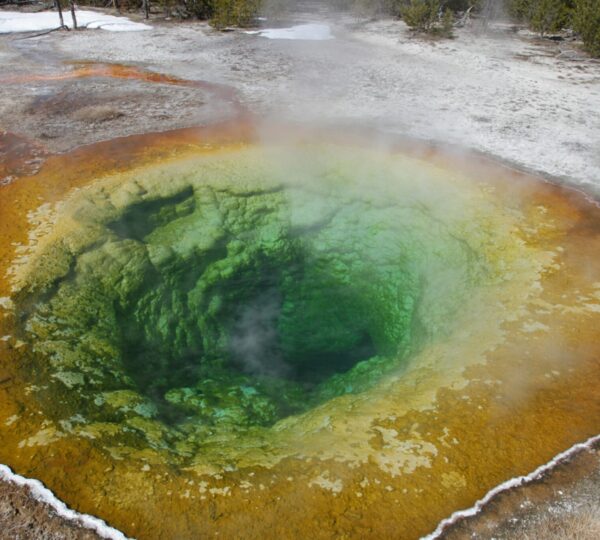
Some later retellings have stated that Colin was attempting to test the temperature of the water shortly before falling. That particular detail has appeared in secondary reporting and should therefore be distinguished from the central facts officially documented by the National Park Service. What is firmly established is that Colin had left the designated boardwalk at Norris Geyser Basin and subsequently slipped into a thermal spring.
Sable went to find assistance, and park personnel responded to the location. Rangers were able to locate Colin in the thermal feature later that day, but recovering him presented additional risks. The environment around geothermal pools can be dangerous even for trained emergency personnel because rescuers must contend with unstable surfaces, extreme temperatures and potentially hazardous water chemistry.
Weather created another complication. A thunderstorm moved through the area, forcing officials to suspend recovery operations for safety reasons. Rangers planned to return when conditions improved. By the following day, however, the extreme environment of the spring had made a conventional recovery impossible.
Reports based on the investigation indicated that the thermal feature was exceptionally hot and highly acidic at the time of the accident. Deputy Chief Ranger Veress explained in an incident report that the conditions resulted in significant changes in a relatively short period. The essential fact is that the combination of intense heat and the spring’s chemical properties prevented officials from recovering Colin in the way they had initially intended.
The circumstances are disturbing enough without unnecessary graphic descriptions. Colin was a young man who died during what should have been a visit to one of America’s most remarkable natural places, and his sister witnessed an extraordinarily traumatic event. The tragedy nevertheless provides an important example of why Yellowstone’s safety restrictions must be followed exactly.

Yellowstone’s hot springs are powered by an enormous geothermal system beneath the landscape. Rain and snowmelt seep underground through cracks in the rock, where the water is heated by the geological processes associated with Yellowstone’s volcanic system. The heated water can then rise toward the surface, producing the hot springs, geysers and other features visible throughout the park.
Temperatures vary considerably between individual thermal features, which is another reason visitors should never attempt to determine whether a spring is safe by looking at it. Some pools can approach the boiling point of water at Yellowstone’s elevation. Others may be somewhat cooler while still being hot enough to cause devastating injuries within seconds.
The frequently repeated figure of approximately 199°F, or 93°C, should therefore not be interpreted as the temperature of every Yellowstone hot spring. Individual features have different temperatures, depths and chemical characteristics. Conditions can also change over time because Yellowstone’s hydrothermal system is dynamic rather than static.
Norris Geyser Basin is especially notable in this respect. It is considered Yellowstone’s hottest and one of its most dynamic thermal areas. The basin contains numerous geothermal features, and changes in underground water flow can affect what visitors see at the surface. These geological characteristics make following the established boardwalk particularly important.
The dangers are not limited to visible pools of water. In some areas, a thin mineral layer may form over extremely hot water or steam. What appears to be ordinary ground may therefore be incapable of supporting a person’s weight. Yellowstone officials repeatedly warn visitors not to leave established pathways because it can be impossible for an untrained person to identify where the ground is safe.
Thermal features can also contain highly acidic or alkaline water. Yellowstone’s geothermal environments support specialized microorganisms capable of surviving conditions that would be hostile to humans and most other forms of life. Those microorganisms contribute to some of the extraordinary colors visible around the park’s hot springs.
Unfortunately, Colin Scott was not the first person to die after entering or falling into a Yellowstone thermal feature. The National Park Service reports that more than 20 people have died from burns associated with the park’s hot springs. Additional visitors have survived thermal incidents but suffered serious injuries.
Those numbers demonstrate why the park’s warnings should never be viewed as excessive. Hot springs have caused more injuries and deaths in Yellowstone than any other natural feature in the park. The combination of extreme temperature, fragile ground and unpredictable geothermal conditions means that a seemingly minor decision to leave a boardwalk can have severe consequences.
Other incidents since 2016 have reinforced that warning. In 2017, a visitor suffered severe burns after falling into thermal water in the Lower Geyser Basin. Another serious incident occurred near Old Faithful in 2019. Each event provided another reminder that Yellowstone’s thermal environments should be observed only from designated locations.
In October 2021, a 20-year-old woman suffered significant thermal burns after entering Maiden’s Grave Spring while attempting to rescue her dog. The National Park Service reported that the spring was approximately 200°F. Her father was able to pull her from the water, but the dog did not survive.
That incident also highlights why pets face strict restrictions around Yellowstone’s thermal areas. Animals do not understand warning signs or boardwalk boundaries and may unexpectedly run toward water. Attempting to rescue a pet from a thermal feature can then place the owner in immediate danger as well.
Another fatal incident was investigated at Abyss Pool in Yellowstone’s West Thumb Geyser Basin in 2022. The National Park Service later identified the individual involved and reported that investigators found no evidence of foul play. The precise circumstances surrounding that person’s death were not established publicly.
Thermal injuries have continued to occur. In July 2025, Yellowstone reported that a 17-year-old visitor suffered significant burns near Lone Star Geyser when his foot broke through a thin thermal crust. He was transported for medical treatment. Once again, officials emphasized that scalding water can exist directly underneath ground that appears safe.
Yellowstone’s current guidance consequently leaves little room for ambiguity. Visitors should remain on boardwalks and designated trails whenever they are in thermal areas. People should never touch a hot spring or its runoff, and swimming or soaking in water that originates entirely from a thermal feature is prohibited.
Parents and guardians are also encouraged to keep children close while walking through geyser basins. Running on boardwalks can be dangerous, and stepping off them can expose someone to unstable ground. Visitors should also avoid throwing objects into thermal features because doing so can damage these sensitive natural systems.
Photography presents another potential temptation. Yellowstone’s scenery can encourage visitors to search for unusual angles or move closer to a geothermal feature for a dramatic photograph. Park officials specifically caution people against leaving boardwalks to capture photographs or videos. A better image is never worth entering an unsafe thermal environment.
The rules also protect the park itself. Yellowstone’s thermal basins contain delicate ecosystems inhabited by microorganisms adapted to extraordinary temperatures and chemical conditions. Walking across these areas can damage formations and biological communities that may have taken many years to develop.
Colin Scott’s 2016 death remains particularly memorable because the tragedy occurred after he entered an area where visitors were not supposed to walk. The hazards were real even though they may not have appeared immediately obvious. His experience subsequently became part of the broader safety discussion surrounding Yellowstone’s geothermal environments.
The purpose of recounting the incident should not be to ridicule or sensationalize the people involved. Colin lost his life at only 23, while his sister experienced the trauma of witnessing the accident and attempting to obtain help. Their experience instead demonstrates how quickly circumstances can become irreversible when established thermal-area restrictions are ignored.
Yellowstone’s geothermal activity is one of the primary reasons millions of people find the park fascinating. The same geological energy that produces colorful springs and spectacular geyser eruptions also creates environments capable of causing fatal injuries. Beauty and danger therefore exist alongside each other throughout many of Yellowstone’s thermal basins.
Fortunately, visitors do not need to approach these features dangerously to appreciate them. Yellowstone’s boardwalks and viewing areas provide remarkable perspectives on geysers, pools and geothermal landscapes while keeping people away from many of the most unstable areas. Following those routes allows visitors to experience the park while also protecting its fragile environment.
The fundamental safety lesson from the 2016 incident remains unchanged today. Never enter a Yellowstone hot spring, never assume that thermal water is safe based on its appearance, and never leave designated boardwalks in thermal areas. Warning signs and barriers exist because hazards that cannot necessarily be seen from the surface may be only inches away.
More than 20 documented deaths from thermal burns demonstrate that these warnings are based on a long history of serious incidents rather than hypothetical concerns. Yellowstone can be explored safely when visitors respect its boundaries and understand that geothermal features are natural phenomena rather than recreational swimming areas.
Colin Scott’s death at Norris Geyser Basin remains a tragic example of what can happen when those boundaries are crossed. His story deserves to be presented accurately and respectfully, without exaggeration or unnecessary graphic detail. Yellowstone’s hot springs are among the most extraordinary natural features in the United States, but they must always be observed from a safe distance.
The best way to experience Yellowstone’s geothermal landscape is therefore also the simplest: stay on marked trails and boardwalks, follow National Park Service instructions and treat every thermal feature as potentially dangerous. Doing so protects visitors, emergency personnel and Yellowstone’s unique ecosystem while allowing people to appreciate one of the world’s most remarkable landscapes safely.

