
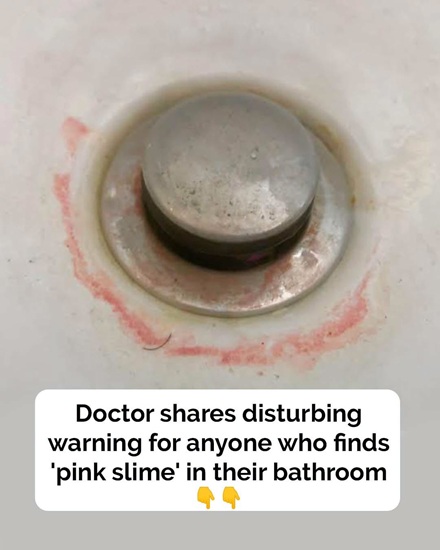
A pink, reddish, or orange film that repeatedly appears in bathrooms is more common than many people realize. It often develops around shower drains, tile grout, sink edges, toilet bowls, silicone seals, and shower curtains. Because it grows in damp places, it is frequently mistaken for mold. In many cases, however, the discoloration is associated with a bacterium called Serratia marcescens, which can survive well in moist environments and may produce a noticeable reddish pigment.
Serratia marcescens exists naturally in the environment and can be found in places such as soil, water, plants, and other damp settings. In a bathroom, it may settle on wet surfaces and become visible when enough bacteria accumulate. Some strains produce a pigment called prodigiosin, which can give the film a pink, salmon, orange, or reddish appearance. That color is one reason people sometimes refer to it casually as “pink mold,” even though the organism itself is a bacterium rather than a fungus.
Bathrooms provide favorable conditions for this type of buildup because moisture is constantly being introduced through showers, baths, sinks, and toilets. Water may stay trapped in grout lines, beneath bottles, along shower seals, or on curtains for long periods. Soap, shampoo, body oils, and other organic residues can also remain on those surfaces. When warmth, moisture, and residue are present together, microorganisms can develop into a visible biofilm.

One reason the film often returns after cleaning is that the underlying conditions have not changed. Removing the visible residue may solve the problem temporarily, but if the bathroom continues to stay damp, bacteria can begin accumulating again. This is why ventilation and moisture control are just as important as cleaning.
Why It Often Appears Near Drains and Shower Corners
Drains and shower corners are especially common locations because they rarely stay completely dry. Water may sit in small grooves or remain beneath bottles and bath products. Silicone caulking and grout can also hold moisture longer than smooth surfaces.
Those areas may also collect soap scum and body oils. Over time, that creates a surface where bacteria and other microorganisms can attach and multiply. The visible pink film is often part of a biofilm, which is a community of microorganisms attached to a surface.
The appearance of the residue does not automatically mean that a home’s tap water is contaminated. Bacteria can enter bathrooms from many environmental sources, including air, dust, people, and everyday contact. Once they reach a wet surface with suitable conditions, they may begin growing.
Persistent discoloration can also have other causes. Minerals, different bacteria, yeasts, and other microorganisms may create similar colors. Because of that, the appearance alone cannot confirm that Serratia marcescens is definitely present.
Is the Pink Residue Dangerous?
For most healthy people, finding a small amount of pink bacterial buildup in a bathroom is usually more of a hygiene issue than an immediate medical emergency. Serratia marcescens is considered an opportunistic bacterium, meaning it is more likely to cause infection in people who are already medically vulnerable.
People at higher risk can include individuals with weakened immune systems, those who are hospitalized, people living in long-term care facilities, and patients with medical devices such as catheters or intravenous lines.
When Serratia marcescens does cause infection, it may be associated with urinary tract infections, respiratory infections, wound infections, or bloodstream infections. These cases are more commonly discussed in healthcare settings than in ordinary household situations.
That distinction is important. Seeing pink residue in a shower does not mean someone in the home has an infection or is likely to develop one.
Still, basic precautions make sense.
Avoid touching the buildup and then touching your eyes, mouth, or an open wound. Wearing gloves while cleaning and washing your hands afterward are reasonable hygiene measures.
Why Hospitals Take Serratia More Seriously
Healthcare environments treat Serratia marcescens more cautiously because many patients already have conditions that make infection easier to develop.
Hospital patients may have surgical wounds, weakened immune systems, breathing equipment, urinary catheters, or intravenous lines. These can provide bacteria with possible routes into the body.
Another reason clinicians pay attention to Serratia is antibiotic resistance. Some strains can resist multiple antibiotics, which means treatment may require laboratory testing to determine which medication is most effective.
This does not mean that every Serratia strain is resistant to every drug. It simply means confirmed infections should be treated under medical supervision rather than with leftover antibiotics or home remedies.
The pink material on a bathroom surface itself does not need medical treatment.
It needs cleaning.
Pink Does Not Always Mean Serratia
Although Serratia marcescens is a well-known explanation for pink bathroom residue, it is important not to assume that every pink stain comes from this one bacterium.
Other bacteria, yeasts, mineral deposits, soap residue, and mixed microbial growth can create similar colors.
That means a statement such as “all pink bathroom residue is Serratia marcescens” would be too absolute.
A more accurate explanation is that Serratia is one common cause of pink or reddish biofilm in wet household areas.
Without laboratory testing, visual appearance alone cannot identify a specific microorganism with certainty.
How to Clean the Pink Film
Regular cleaning is one of the simplest ways to keep the buildup under control.
Begin by removing soap scum and visible residue from the affected surface. A standard bathroom cleaner can help loosen the material before disinfecting.
After cleaning, an appropriate household disinfectant may be used according to its label directions.
Some people use diluted chlorine bleach on compatible surfaces, while others use disinfecting products formulated for bathrooms. The most important point is to follow product instructions carefully.
Never mix bleach with ammonia, vinegar, acids, or other cleaners unless the manufacturer specifically states that the combination is safe.
Mixing certain cleaning chemicals can release dangerous gases.
Also remember that strong disinfectants are not suitable for every surface. Natural stone, colored fabrics, certain metals, and some specialty finishes may be damaged by bleach or harsh chemicals.
Ventilation Can Make a Big Difference
Cleaning alone may not stop the problem from returning if the bathroom remains humid for long periods.
Running an exhaust fan during a shower and for some time afterward can help remove moisture from the air.
Opening a window may also help where it is practical and safe.
Shower curtains should be spread out so they can dry instead of remaining folded while wet. Towels should be hung in a way that allows airflow around them.
Water left on flat surfaces can also be wiped away rather than allowed to remain for hours.
These small changes can make the environment less favorable for both bacteria and mold.
Fix Leaks Instead of Cleaning Around Them
A dripping faucet or leaking pipe can keep an area permanently damp.
If a sink, shower, toilet, or tub is leaking, repeatedly cleaning the surrounding surface may only provide temporary relief.
Repairing the source of moisture is much more effective.
It is also worth watching for signs of hidden water damage.
Peeling paint, swollen drywall, persistent musty odors, soft flooring, or recurring mold in the same area may indicate a deeper moisture problem.
In those cases, addressing the leak or structural issue is more important than simply wiping the visible surface.
Keep Shower Areas Less Cluttered
Bathroom products can create many small damp spaces.
Shampoo bottles, soap containers, razors, bath toys, and storage baskets may trap water underneath them.
Moving and cleaning these items regularly can reduce areas where biofilms form.
Soap dishes, toothbrush holders, rubber mats, and shower caddies also need periodic cleaning because they can stay damp long after the rest of the bathroom appears dry.
The goal is not to eliminate every microorganism.
That would be unrealistic.
The practical goal is to prevent excessive buildup and keep frequently touched surfaces reasonably clean.
What About Mold?
Pink bacterial residue and mold are not the same thing.
However, both benefit from moisture.
A bathroom that stays damp enough for pink biofilm to grow may also provide suitable conditions for mold.
Dark or black-colored growth should not automatically be described as “toxic black mold,” because color alone does not identify a mold species or determine its health effects.
Still, visible mold should be cleaned appropriately, and ongoing moisture problems should be corrected.
People with asthma, allergies, respiratory conditions, or weakened immune systems may be more sensitive to damp or moldy environments.
Large areas of mold or growth involving walls, ceilings, or hidden structural materials may require professional assessment.
When to Consider Medical Advice
The presence of pink residue alone is not a reason to seek medical treatment.
Medical advice becomes relevant if someone develops symptoms of infection, especially if that person is already at increased risk because of immune suppression, recent surgery, hospitalization, or implanted medical devices.
Symptoms depend on the site of infection and can have many possible causes.
Urinary problems, fever, breathing symptoms, or signs of an infected wound should be evaluated based on the person’s overall condition rather than blamed automatically on bathroom bacteria.
A household stain cannot diagnose an infection.
Only appropriate medical evaluation and testing can do that.
The Bottom Line
The pink or reddish film that appears in many bathrooms is often associated with Serratia marcescens, a bacterium that grows well in damp environments.
It is commonly mistaken for mold, but it is not technically a mold when Serratia is the cause.
For most healthy people, small amounts on bathroom surfaces are generally a cleaning and hygiene concern rather than a reason for panic.
The organism becomes more medically important in people with weakened immune systems and in healthcare environments, where serious infections can occur.
The most effective household response is straightforward: clean affected surfaces regularly, reduce soap residue, improve ventilation, repair leaks, and allow wet areas to dry.
If the film repeatedly returns, the moisture conditions are often the main reason.
And because pink discoloration can have more than one cause, it is better to describe Serratia marcescens as a common possibility rather than assume every pink bathroom stain is definitely the same organism.

