
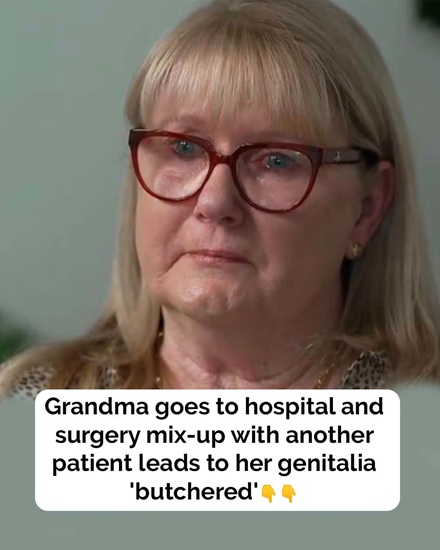
What Debra Buchanan expected to be a straightforward hospital visit became an experience that she says has affected her physically and emotionally for months. The Australian grandmother went to Joan Kirner Women’s and Children’s Hospital in Melbourne’s west on January 23, 2026, expecting doctors to remove a cancerous lesion from her pelvic area. Instead, Buchanan says she woke from anesthesia after a different procedure had been performed, while the lesion she originally went to have removed remained untouched.
The circumstances surrounding the incident have since attracted significant attention in Australia and prompted an official investigation. Buchanan and her lawyer say a patient-identification mix-up appears to have played a role. Western Health, which operates the hospital, has acknowledged that an incorrect procedure occurred, although patient-confidentiality obligations limit what it can publicly disclose about Buchanan’s individual treatment.
According to Buchanan’s account, one of the earliest warning signs occurred in the pre-operative area. Another patient named Deborah was reportedly waiting nearby when a staff member called out the first name. Buchanan responded but also questioned whether the staff member meant her specifically.
Buchanan recalled asking whether they meant “Buchanan.” According to her account, staff reassured her that they had the correct patient. The other woman reportedly identified herself as Deborah as well, but Buchanan says she was again told there was no problem.
That exchange became much more troubling in hindsight.
Buchanan had spent years working as a dental nurse and understood that patient identification should involve more than simply calling someone’s first name. Still, she was in a hospital preparing for surgery and trusted the medical team to have completed the appropriate checks.
She therefore continued toward the operating theatre.
Buchanan has said another moment briefly concerned her before anesthesia. She expected to see the surgeon associated with her planned procedure but did not immediately see that person. Rather than assuming something was wrong, she trusted that the hospital team knew what it was doing.
She was then anesthetized.
When Buchanan regained consciousness, she initially did not realize that anything unexpected had happened.
That changed when she attempted to walk to the bathroom.
According to her account, she suddenly experienced substantial bleeding and called for assistance. She asked a nurse why she was bleeding so heavily and was reportedly told that it was related to her operation.
The answer confused Buchanan.
The location of the bleeding did not correspond with the procedure she believed she had undergone.
She then touched the area where the original cancerous lesion had been located.
It was still there.
At that point, Buchanan realized something was seriously wrong.
If doctors had not removed the lesion she had entered the hospital to have treated, what exactly had happened while she was unconscious?
She began asking staff for answers.
Buchanan later said a junior doctor attempted to explain the procedure that had been performed. According to her account, tissue from her external genital area had been removed and the surgical area had subsequently been sutured.
Buchanan was stunned.
That was not the procedure she believed she had consented to.
Her lawyer, Erin Monsalve Fear, subsequently told Australian media that the operation resulted in significant physical consequences, including permanent scarring. Buchanan has described continuing discomfort and tightness around the surgical area months afterward.
Those details should be understood as statements from Buchanan and her legal representative while official investigations continue.
Buchanan quickly contacted her husband, Alex.
He later recalled receiving the distressing news that his wife believed doctors had performed the wrong operation. According to the couple, Buchanan was experiencing substantial pain during the immediate aftermath.
The discovery was particularly difficult because the original medical problem had not disappeared.
The cancerous lesion Buchanan had gone to the hospital to have removed was still present.
She therefore had to undergo another procedure in February to address the condition she had originally sought treatment for.
Returning to surgery was understandably difficult for her.
Her lawyer has said that Buchanan was frightened about undergoing another operation after what she had experienced only weeks earlier. The consequences of the alleged mix-up therefore extended beyond the incorrect procedure itself.
There was the physical recovery.
There was another operation.
And there was the emotional impact of losing confidence in a medical process Buchanan had previously trusted.
Monsalve Fear has characterized what occurred as a major systemic failure. She has emphasized that hospitals have multiple safeguards designed specifically to prevent the wrong patient from receiving the wrong procedure.
Patient identification is one of the most basic elements of surgical safety.
Hospitals generally rely on multiple identifying details rather than a first name alone. The patient’s identity, planned operation and consent are also expected to be checked at different stages before surgery proceeds.
The central question in Buchanan’s case is therefore how those safeguards apparently failed.
Buchanan believes the presence of two patients with similar first names may have contributed to what happened. She has also said that staffing pressures were mentioned to her as part of the explanation she received afterward.
Those possible factors should not yet be treated as definitive conclusions.
Investigators are responsible for establishing precisely what occurred and determining whether policies were followed.
The Victorian government has confirmed an investigation into the incident, which government minister Vicki Ward publicly described as extraordinary and unacceptable.
Safer Care Victoria has also engaged with Western Health regarding the case.
Western Health has said privacy obligations prevent it from publicly discussing Buchanan’s individual medical details. However, the health service has described the processes it follows when a serious adverse patient event occurs.
Western Health chief operating officer John Ferraro said the organisation is committed to open communication with patients and families following adverse events. He referred to requirements involving apologies, meetings with affected patients, investigations and communication about measures intended to prevent similar incidents.
Buchanan, however, says she has remained dissatisfied with the personal response she received.
More than six months after the January operation, she said she had not received the kind of direct, personal apology she wanted from the surgeon involved.
Her lawyer has similarly criticized the lack of clarity Buchanan says she experienced after the procedure.
For someone who entered the hospital expecting one specific treatment, understanding exactly why something entirely different happened has become an important part of seeking accountability.
Buchanan’s legal representatives are pursuing the matter separately from the government and hospital investigations.
Those processes should not be confused.
A legal claim may consider compensation and responsibility for Buchanan’s alleged injuries, while healthcare investigations can examine procedural failures and determine what changes might improve patient safety.
Neither process should be prejudged.
It is also worth avoiding unnecessarily graphic descriptions of Buchanan’s injuries. The essential fact is already serious: she says tissue was removed during an operation she did not understand herself to have consented to, resulting in lasting physical and emotional consequences.
Informed consent is central to the case.
Consent to one operation does not ordinarily mean a patient has agreed to an unrelated procedure. Patients need to understand what treatment is proposed, while medical professionals are responsible for confirming that the correct procedure is being performed on the correct patient.
This responsibility becomes particularly important once anesthesia begins.
At that point, the patient cannot personally stop an error or correct a misunderstanding.
The healthcare system’s safeguards must do that work.
Buchanan has said that her confidence was deeply affected by what happened. She has described anxiety, fear and ongoing discomfort since the operation.
Those consequences help explain why she decided to discuss the experience publicly.
She says she wants other patients to feel able to ask questions when something does not seem right.
At the same time, Buchanan does not believe responsibility for preventing wrong-patient surgery should be placed primarily on patients themselves.
A patient can confirm a name, date of birth and planned procedure.
But hospitals and healthcare professionals are ultimately responsible for maintaining systems capable of preventing identification and surgical errors.
Her experience may understandably make some people anxious about undergoing surgery.
However, it is important not to interpret this extraordinary incident as evidence that wrong-patient procedures are routine.
They are treated as serious patient-safety events precisely because established safeguards are designed to prevent them.
The investigation into Buchanan’s case should help establish where those protections failed.
Investigators can examine records, consent documentation, staff procedures, patient identification practices and other relevant information.
The findings may also identify whether changes are necessary within the health service.
Until those investigations are completed, assigning personal responsibility to a particular individual would be premature.
What can already be stated is that Buchanan entered the hospital expecting treatment for one medical issue and an incorrect procedure was performed.
She subsequently required another operation to remove the original lesion.
She says she continues dealing with the consequences.
For Buchanan, speaking publicly is therefore not simply about recounting an upsetting hospital experience.
She wants the circumstances examined closely enough that another patient is less likely to experience the same thing.
She has made the point that a medical error affecting a person’s body cannot be treated like accidentally damaging an ordinary object.
Physical injuries can remain.
Trust can be damaged.
And emotional consequences can continue long after the hospital stay ends.
The official investigation will ultimately provide the strongest basis for understanding exactly how this incident occurred.
Until then, Buchanan’s experience should be reported carefully: distinguishing her allegations and recollections from established investigative findings, avoiding speculation and respecting the sensitive nature of her medical information.
Her central concern, however, is straightforward.
She entered a hospital trusting that the people caring for her knew her identity, understood the operation she had agreed to receive and would verify those details before she became unconscious.
Instead, she says she awakened to discover that something entirely different had happened.
Now she wants answers—not only for herself, but in the hope that stronger safeguards can prevent another patient from facing the same frightening realization.

