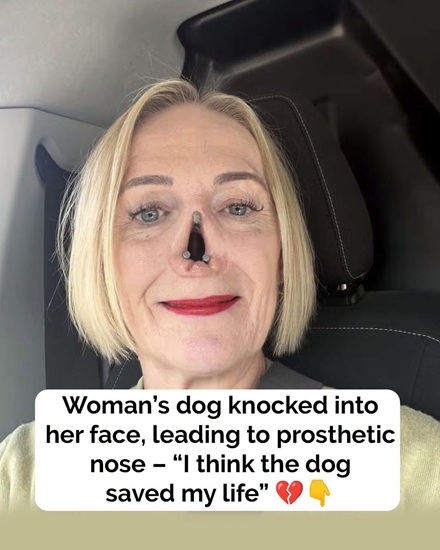
What first appeared to be a harmless accident while playing with a beloved family dog eventually led to a life-changing medical diagnosis for Jayne Hardman, a woman from the United Kingdom. Looking back, Hardman believes her dog may have unknowingly helped save her life by drawing attention to symptoms that otherwise might have gone unnoticed. Her story has since inspired many people because it highlights the importance of listening to unusual changes in the body, seeking medical advice when symptoms persist, and finding hope even after facing significant physical challenges.
The unexpected chain of events began in 2012 while Hardman was spending time with her large Neapolitan Mastiff, CeCe. During a playful moment, the nearly 130-pound dog accidentally jumped up and struck her on the nose. At first, the incident seemed minor, and Hardman assumed the discomfort would quickly disappear. However, as the days passed, she noticed that her nose remained swollen, felt unusual, and was accompanied by frequent nosebleeds. Instead of gradually improving, the symptoms continued, prompting her to wonder whether something more serious might be happening.
Speaking about the experience in later interviews, Hardman explained that her dog’s playful bump was never the real cause of her illness. Instead, she believes it simply drew attention to an underlying medical condition that had not yet been diagnosed. Because the symptoms persisted, she decided to consult her doctor rather than dismissing them as the result of a minor injury. Looking back, she has often said that this decision may ultimately have saved her life, as it led to further medical investigations that uncovered the true cause of her health problems.
After undergoing examinations and additional testing over the following years, doctors eventually diagnosed Hardman with vasculitis, a rare autoimmune disease. In her case, the illness affected blood vessels in her upper airways, sinuses, and eyes. Autoimmune diseases occur when the immune system mistakenly attacks healthy tissues instead of protecting the body from harmful infections. Vasculitis can vary greatly from person to person, depending on which blood vessels and organs are involved, making early diagnosis especially important.
According to information published by the Cleveland Clinic, vasculitis causes inflammation of blood vessels, which can reduce normal blood flow throughout the body. If left untreated, this reduced circulation may damage organs and surrounding tissues. The condition can affect blood vessels connected to many different parts of the body, including the skin, kidneys, lungs, heart, digestive system, brain, and other organs. Because symptoms often resemble those of other illnesses, diagnosing vasculitis can sometimes take considerable time, particularly during its early stages.
Reflecting on her experience, Hardman has said she believes CeCe unintentionally alerted her to the disease before it progressed even further. During a television interview in 2026, she explained that without appropriate treatment, certain forms of vasculitis can become life-threatening. Although the dog did not cause the illness, the playful accident encouraged her to seek medical attention after noticing symptoms that refused to disappear. For that reason, she has often described CeCe as the pet that “saved” her life by helping reveal that something was seriously wrong.
Although doctors eventually identified the disease, the treatments available during the early stages were not enough to completely prevent the damage caused by the inflammatory process. Hardman later explained that the disease became necrotizing, meaning it progressively destroyed affected tissue. Over approximately three years, the bridge of her nose gradually collapsed until it became almost completely flat against her face. The physical changes were not only medically significant but also emotionally challenging as her appearance changed in ways she had never imagined.
Living with those changes proved extremely difficult. Hardman has openly spoken about the emotional impact of walking through public places while strangers stared or asked deeply personal questions about her appearance. She said she lived with the collapsed nose for around eighteen months before surgery became necessary. During that period, leaving home often required tremendous confidence because she frequently encountered curiosity, misunderstanding, and insensitive comments from people she had never met. Her experience highlighted the social challenges that many individuals with visible facial differences continue to face.
By 2017, surgeons determined that the damaged tissue could no longer be preserved, and her nose had to be removed. Several weeks after the operation, specialists fitted Hardman with a custom-made prosthetic nose. She has explained that the prosthesis is secured using magnets attached to implants placed in her skull, allowing it to fit securely while appearing natural. Receiving the prosthetic marked an important turning point in her recovery, helping restore both her appearance and much of the confidence she had lost during the progression of her illness.
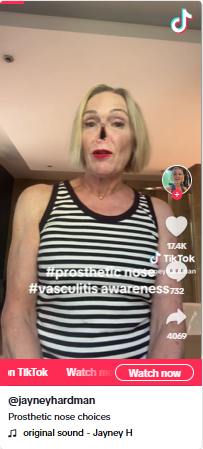
Rather than hiding her experience, Hardman has chosen to speak openly about life with facial prosthetics. She often uses humor to make conversations about her condition more approachable, even joking that she keeps several different prosthetic noses stored in a wooden tea box. One has a slightly redder appearance, which she jokingly refers to as her “drunk nose,” while another is matched to a darker skin tone for summer months when she spends more time outdoors. Although the comments are lighthearted, they also help educate people about facial prosthetics in a relatable way.
Today, Hardman says the prosthetic she wears every day has given her the confidence to enjoy life again. She has described feeling comfortable looking people in the eye after years of struggling with self-confidence during the most difficult stages of her illness. She remains in remission and continues receiving medical treatment, including chemotherapy approximately every six months, to help keep the disease under control. Through social media, she regularly answers questions about living with a prosthetic nose, explaining that she can still breathe, smell, taste, sneeze, and manage most everyday activities much like anyone else.
By sharing her experience publicly, Hardman hopes to increase awareness of vasculitis while encouraging others not to ignore persistent or unusual symptoms. Her story also serves as a reminder that people living with visible facial differences deserve compassion, understanding, and respect rather than judgment. Although her journey began with what seemed like a simple accident involving a beloved dog, it ultimately became a powerful example of resilience, early medical attention, and adapting to life after a serious illness. Today, her openness continues to educate others while demonstrating that confidence and optimism can return even after extraordinary challenges.
