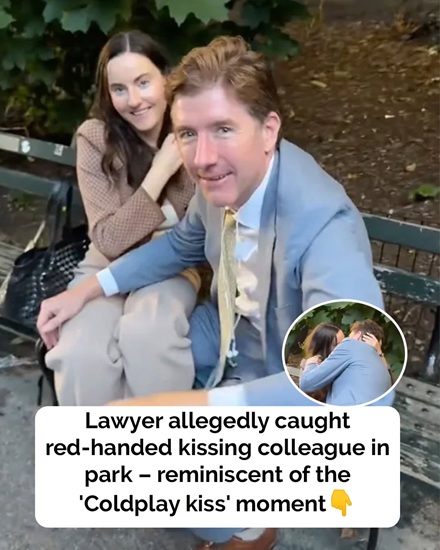
A video recorded in New York City’s Central Park has attracted widespread attention online after social media users identified two lawyers from the same prominent law firm. The footage, which spread rapidly across multiple platforms, prompted extensive discussion because it appeared to show the pair sharing a personal moment in public. As the video accumulated millions of views, public interest quickly shifted from the recording itself to the identities of the individuals involved and the potential professional implications of the incident.
According to publicly reported information, one of the people identified in the video is Nathaniel D. Cullerton, a partner at Wachtell, Lipton, Rosen & Katz, a law firm widely recognized for its work on major corporate transactions and complex litigation. Public records and the firm’s website identify Cullerton as an experienced attorney who has represented clients in significant commercial disputes and high-profile legal matters. Before the recent online attention, he was primarily known within the legal profession for his courtroom and litigation work.
The second individual identified in media reports is Kelsey Borenzweig, an associate attorney at the same law firm. Publicly available professional biographies indicate that she works in the firm’s litigation department, where associates often assist partners on complex legal matters involving corporate clients. Reports note that the two attorneys had previously appeared together in court as members of the same legal team, reflecting a professional working relationship within the firm.
Media coverage has also noted that Cullerton and Borenzweig were photographed together earlier this year while attending court proceedings connected to a high-profile civil case involving OpenAI, Sam Altman, and Elon Musk. Public reporting described both attorneys as members of the legal team involved in that litigation. Those earlier photographs were taken in a professional setting and attracted little public attention at the time. Interest increased only after the recent social media video circulated widely online.

The video itself was recorded by TikTok creator Jay Guapo, whose account has a large following. In the footage, he approaches the pair while they are in Central Park and makes a lighthearted comment before continuing to record their reactions. According to widely circulated versions of the video, both individuals appear surprised by the unexpected filming and ask the person recording to stop. The recording nevertheless continued and was later uploaded to social media, where it accumulated millions of views in a short period.
As often happens with viral online content, internet users quickly began attempting to identify the people appearing in the footage. Within hours, social media discussions expanded beyond the original video, with users sharing publicly available information about the individuals’ professional backgrounds. The speed with which online communities identified the attorneys demonstrated how quickly information connected to public figures or professionals can spread once a video gains significant attention across multiple platforms.
The widespread circulation of the recording also raised broader questions about privacy in public places. Although individuals generally have limited expectations of privacy in public spaces, viral recordings can dramatically increase attention on moments that might otherwise have passed unnoticed. Legal experts have frequently observed that social media platforms allow brief encounters to reach global audiences within hours, creating lasting public visibility for events that were never intended to become international news.
Several news organizations compared the incident to other recent viral social media moments involving professionals whose personal interactions attracted significant online attention. Such comparisons largely focused on the speed with which social media users identified the individuals involved and the intense public interest that followed. However, each situation involves its own facts and circumstances, and direct comparisons should be approached with caution.
Following publication of the video, reporters sought comment from those connected to the story. Public reports state that Nathaniel D. Cullerton did not publicly respond to questions regarding the video when approached by journalists. Likewise, there has been no publicly reported statement from Wachtell, Lipton, Rosen & Katz announcing any findings, disciplinary action, or conclusions regarding the matter. As of the time covered by publicly available reports, the firm had not publicly commented on the situation.
Public records also indicate that Cullerton is married to Moira Penza, who is herself a partner at another prominent New York law firm. Because of that publicly known information, the video generated additional media interest beyond the legal community. Nevertheless, publicly available reporting has not established the nature of the interaction shown in the recording beyond what viewers can observe in the footage itself, and responsible reporting requires distinguishing verified facts from online speculation.
As the video continued circulating online, discussion expanded well beyond the original recording. Millions of viewers commented on social media platforms, with many offering opinions based solely on a brief clip lasting only a short time. While viral videos often encourage immediate conclusions, legal and media ethics experts frequently emphasize that short recordings rarely provide complete context about an event. A few seconds of footage may capture a moment, but they do not necessarily explain the circumstances surrounding it.
Public reporting also noted that the individuals appearing in the video had previously worked together professionally. As colleagues within the same litigation department, they had participated in legal matters on behalf of clients and had been photographed during court appearances connected to publicly reported cases. Such professional collaboration is common within large law firms and, by itself, does not establish anything about a person’s private life beyond what has been publicly confirmed.
News organizations also reported that Kelsey Borenzweig had previously been in a relationship with Adam Littleston-Luria, a judicial law clerk. According to published reports, a source stated that the relationship had ended months before the Central Park video was recorded. Littleston-Luria later acknowledged to the Daily Mail that he was aware of the video but declined to discuss the matter publicly. Beyond those reported comments, no additional verified information about his personal circumstances has been publicly confirmed.
The attention surrounding the video also prompted discussion about workplace policies at major law firms. Many large professional organizations maintain policies addressing workplace relationships, conflicts of interest, and reporting obligations. These policies are generally designed to promote transparency, protect professional integrity, and reduce potential conflicts within supervisory structures. However, individual policies differ from one employer to another, and no public statement has indicated whether any internal review has occurred in this particular situation.
As of the latest publicly available reporting, Wachtell, Lipton, Rosen & Katz has not announced any disciplinary findings or official conclusions regarding the individuals identified in the video. Likewise, there has been no public announcement indicating that either attorney violated firm policies. Until an organization issues an official statement, any online speculation regarding possible employment consequences remains unverified and should not be presented as established fact.
The incident has also highlighted the growing influence of social media on personal privacy. Smartphones and online platforms allow ordinary public moments to become widely viewed within hours. Once content spreads across multiple networks, it often becomes difficult for those involved to control how the footage is interpreted, shared, or discussed. Digital communication experts have increasingly noted that viral attention can continue long after the original event has passed.
The rapid identification of individuals appearing in viral content also demonstrates how quickly publicly available information can be compiled online. Internet users often combine details from professional biographies, public records, previous news coverage, and social media profiles to identify people shown in widely viewed videos. While much of that information may already be public, privacy advocates continue encouraging responsible sharing that avoids harassment, misinformation, or unsupported accusations.
Legal professionals, like individuals working in many other fields, frequently balance demanding careers with private personal lives. Public interest in a viral video does not eliminate the importance of distinguishing verified reporting from speculation. Responsible journalism relies on confirmed facts, clearly attributed sources, and careful language, particularly when events involve personal relationships that have not been fully explained by those directly involved.
Media coverage has largely focused on the unusual combination of factors that contributed to the video’s widespread attention: the prominence of the law firm, the involvement of attorneys connected to high-profile litigation, the popularity of the TikTok creator who recorded the footage, and the speed with which the clip spread online. Together, these elements transformed what might otherwise have remained an isolated public moment into a story discussed far beyond New York’s legal community.
The situation also serves as a reminder of how rapidly information can circulate in today’s digital environment. A single recording captured in a public place can attract millions of viewers, generate international headlines, and prompt extensive discussion across traditional media and social platforms alike. While technology has made sharing information easier than ever, it has also increased the importance of verifying facts before drawing conclusions or repeating unconfirmed claims.
Ultimately, the publicly available facts remain limited. A video recorded in Central Park showed two attorneys together, the recording was widely shared online, and both individuals were subsequently identified through public reporting. Beyond those confirmed facts, many questions remain unanswered. Until additional verified information or official statements become available, conclusions about the personal circumstances of those involved would be speculative. Careful reporting therefore requires separating confirmed information from online assumptions while respecting the importance of accuracy, fairness, and responsible journalism.
