
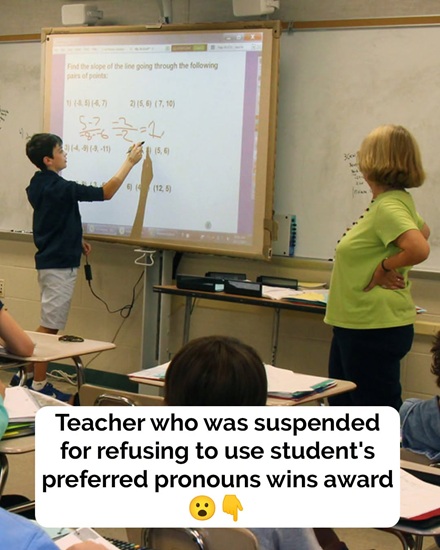
The legal dispute involving former Kansas middle school teacher Pamela Ricard became one of the most widely discussed education and religious freedom cases in the United States. The case centered on the balance between a public school district’s workplace policies and an employee’s constitutional rights under the First Amendment. While the issue generated strong public debate from many perspectives, the legal proceedings focused on specific questions involving free speech, religious exercise, and how public schools implement policies concerning student names and gender identity.
Because these topics involve both constitutional law and educational policy, the case attracted attention from legal experts, educators, civil rights organizations, and media outlets across the country. Pamela Ricard worked as a mathematics teacher at Fort Riley Middle School in Geary County, Kansas, beginning in 2005. During her years in the classroom, she taught hundreds of students and was known for maintaining a structured learning environment.
According to court filings, the dispute began in 2021 after a student who was biologically female requested to be addressed by a different first name. School staff informed Ricard of the student’s preference, but she believed that using the requested name would conflict with her sincerely held Christian beliefs regarding biological sex and gender. Rather than using the student’s preferred first name, Ricard chose to address the student by the student’s legal last name together with the title “Miss,” believing this approach showed respect while remaining consistent with her religious convictions.
At the time the disagreement arose, there was no formal written district policy specifically requiring teachers to use students’ preferred names or pronouns in every circumstance. However, school administrators concluded that Ricard’s actions violated district expectations concerning bullying prevention and diversity and inclusion. As a result, the district suspended her for three days. The disciplinary action became the turning point that eventually led to federal litigation. Ricard maintained that she had attempted to find a respectful compromise rather than refusing to address the student altogether, while district officials determined that her approach did not satisfy the school’s expectations regarding student treatment.

According to the lawsuit filed in federal court in 2022, Ricard argued that the district violated several constitutional protections. Her complaint alleged violations of her rights to free speech, the free exercise of religion, due process, and equal protection under the law. Court documents also stated that she requested a religious accommodation multiple times before receiving discipline, but those requests were not granted. Ricard maintained that her Christian beliefs teach that biological sex is determined at birth and that being required to communicate in a manner she believed contradicted those beliefs would place an unacceptable burden on her religious conscience.
The lawsuit also addressed another issue involving communication between schools and parents. According to the complaint, Ricard objected to guidance she understood to mean that teachers could use a student’s legal name when communicating with parents if the student requested that school staff not disclose the student’s preferred name or gender identity. Her attorneys argued that educators should not be required to provide different information to parents and students in circumstances where doing so would conflict with their own constitutional rights. The school district disputed aspects of those claims during the litigation, and the legal arguments became part of the broader constitutional questions considered during the case.
Ricard was represented by attorneys from Alliance Defending Freedom together with private counsel from the Kriegshauser Ney Law Group. Her legal team argued that public school employees do not lose their constitutional protections simply because they work for a government employer. They maintained that teachers retain First Amendment protections, particularly when requesting reasonable religious accommodations that do not substantially interfere with school operations. The attorneys also emphasized that Ricard consistently treated students respectfully throughout her teaching career and believed she had attempted to reach a compromise that balanced respect for the student with her religious convictions.
The dispute quickly expanded beyond a local employment matter and became part of a larger national discussion involving education policy, religious liberty, parental rights, and the responsibilities of public schools. Advocacy organizations representing different viewpoints closely followed the litigation, while legal scholars noted that courts across the United States have increasingly considered cases involving similar constitutional questions. Because the issues touch on sensitive questions of both civil rights and religious freedom, the case attracted significant public interest while remaining focused on the specific facts presented in federal court.
Several months after filing her lawsuit, Ricard and the Geary County School District reached a settlement agreement. Under the settlement, the district agreed to pay $95,000, remove disciplinary records related to the suspension, and acknowledge that Ricard left employment in good standing. Public statements released following the settlement confirmed that the agreement resolved the litigation without a trial. While neither side admitted legal wrongdoing through the settlement itself, the resolution concluded the dispute and became one of the most widely reported education-related legal settlements involving questions of religious accommodation and school policy in recent years.
Following the settlement, the case continued to receive attention because it highlighted questions that many courts across the United States have increasingly been asked to consider. Legal experts noted that the dispute involved multiple constitutional principles, including freedom of speech, the free exercise of religion, and the authority of public school districts to establish workplace policies. Rather than issuing a final court ruling on every legal issue raised in the lawsuit, the settlement brought the litigation to a close through an agreement between the parties. As a result, the case has frequently been discussed alongside other education-related disputes involving religious accommodations and employee rights.
According to public statements released after the agreement, the Geary County School District paid $95,000 to resolve the lawsuit. The district also agreed to remove records relating to Ricard’s suspension and confirmed that she left her position in good standing without disciplinary findings remaining in her employment file. Settlement agreements are common in civil litigation and often allow both sides to resolve disputes without proceeding through lengthy court proceedings. Because the case concluded through settlement, the agreement itself did not constitute a judicial determination that every legal claim made by either side had been proven.
After the settlement became public, attorneys representing Pamela Ricard described the outcome as an important affirmation of constitutional protections for public employees seeking religious accommodations. They argued that teachers should not be required to communicate in ways they believe conflict with sincerely held religious beliefs when reasonable alternatives may be available. Attorneys for the school district did not characterize the agreement as an admission of liability, and the public statements issued after the settlement reflected the differing legal positions maintained throughout the litigation. As in many civil cases, each side viewed the resolution through the perspective of its own legal arguments.
The lawsuit also generated discussion among legal scholars who study the First Amendment. Some observers viewed the case as another example of courts being asked to balance individual constitutional protections with the operational responsibilities of public institutions. Others emphasized that similar disputes are highly fact-specific, meaning future cases may reach different outcomes depending on the exact policies involved, the actions taken by school officials, and the legal claims presented. For that reason, constitutional law experts generally caution against assuming that one settlement automatically determines how unrelated cases will be resolved.
Public reaction reflected the wide range of opinions that often accompany discussions involving education, religion, and gender identity. Some individuals expressed support for Ricard, believing that public employees should receive accommodations for sincerely held religious beliefs whenever reasonably possible. Others argued that school districts have an important responsibility to establish policies designed to create respectful learning environments for all students. These differing viewpoints were widely shared through news reports, opinion articles, and social media discussions, illustrating how the case became part of a broader national conversation rather than remaining solely a local employment dispute.
Education organizations and legal commentators also observed that school districts across the country continue reviewing policies involving student names, pronouns, employee rights, and communication with families. Because laws and regulations vary by state, individual school systems often develop policies based on local legal requirements and evolving court decisions. As a result, administrators frequently consult legal counsel when updating employee guidance on issues involving constitutional rights, nondiscrimination obligations, and parental communication practices. Cases such as Ricard’s are therefore often examined as part of a larger discussion about how schools navigate complex legal responsibilities.
Pamela Ricard retired during the same year that she filed her federal lawsuit. Although her teaching career concluded, the legal issues raised in the case have continued to be referenced in discussions concerning religious liberty, public education, and constitutional law. The settlement did not resolve broader policy debates taking place nationwide, but it did conclude the dispute between Ricard and the Geary County School District under the specific facts presented in that litigation. News organizations have continued to reference the case when reporting on similar legal developments involving public schools and employee rights.
Ultimately, the case illustrates how constitutional questions involving public education can involve competing legal interests that courts, school districts, employees, and policymakers must carefully consider. Regardless of differing opinions about the underlying issues, the litigation underscored the importance of clearly written policies, open communication, and respect for established legal processes when disputes arise. As schools continue addressing evolving educational and constitutional questions, cases such as this remain part of the ongoing national discussion about balancing individual rights with institutional responsibilities under the law.

