
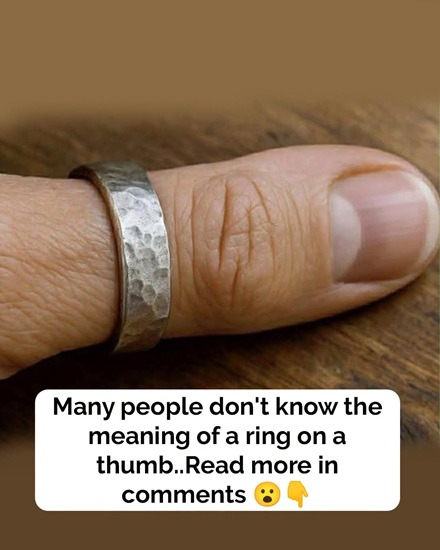
Jewelry has been part of human culture for thousands of years, serving purposes that go far beyond decoration. Throughout history, rings have represented social status, family ties, religious beliefs, military achievement, wealth, and personal identity. While many people are familiar with rings worn on the ring finger to symbolize marriage or commitment, thumb rings have developed their own unique place in history and fashion.
Today, a thumb ring is often viewed as a stylish accessory, but its meaning can vary greatly depending on cultural traditions, historical context, and the personal preferences of the individual wearing it. Rather than carrying one universal message, a thumb ring has represented different ideas in different places and time periods. One of the earliest documented uses of thumb rings can be traced to ancient civilizations across Asia and the Middle East. Historians have found evidence that specialized thumb rings were used by archers to protect the thumb while drawing powerful bows.
These rings, sometimes made from jade, horn, leather, ivory, or metal, were practical pieces of equipment rather than decorative jewelry. In cultures where archery played an important military role, owning a finely crafted thumb ring could also reflect skill, experience, or social status. Many surviving examples are now preserved in museums and demonstrate the high level of craftsmanship achieved by ancient artisans.
Historical records also show that thumb rings occasionally became symbols of wealth and prestige. In several societies, nobles, military leaders, and influential officials wore finely made rings crafted from gold, silver, jade, or other valuable materials. Their purpose extended beyond personal ornamentation, as luxury jewelry often reflected social standing and financial resources. However, historians emphasize that customs differed widely among regions, meaning the significance of a thumb ring in one culture cannot automatically be applied to another. Like many forms of jewelry, its meaning was shaped by local traditions rather than a single universal standard.
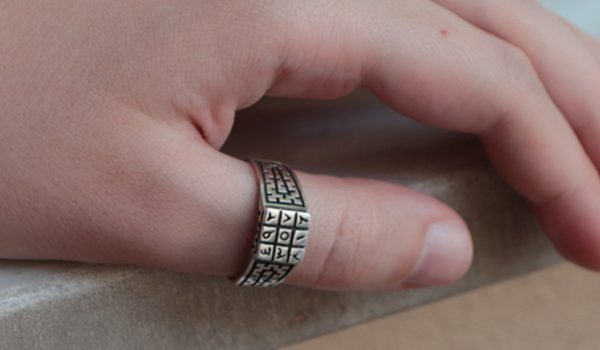
In modern fashion, thumb rings are primarily considered a matter of personal style. Designers frequently include them in jewelry collections because they create a distinctive appearance compared with rings worn on other fingers. Many people simply enjoy the way a thumb ring complements casual, formal, or contemporary outfits. Fashion experts often describe thumb rings as statement accessories because they naturally attract attention without necessarily carrying any specific symbolic message. For countless wearers, the decision is based entirely on aesthetics rather than tradition or hidden meaning.
Over the past several decades, various cultural groups and communities have occasionally attached their own interpretations to thumb rings. Some fashion publications, lifestyle articles, and online discussions suggest they may symbolize confidence, independence, creativity, or individuality. Others have associated thumb rings with nonconformity or personal self-expression. However, these interpretations are not supported by any universal rule or recognized standard. Sociologists and historians generally note that personal symbolism evolves over time, meaning identical pieces of jewelry may communicate entirely different ideas to different people.
Discussions about thumb rings have also appeared within some LGBTQ+ communities. During certain periods, particularly before social media made identity more openly visible in many places, some individuals used clothing, accessories, or jewelry as subtle forms of personal expression or community recognition. Historians who study LGBTQ+ culture note that these practices varied significantly depending on location, generation, and social circumstances. Importantly, there has never been a globally recognized or universally accepted code stating that a thumb ring alone identifies someone’s sexual orientation or gender identity. Modern wearers should therefore avoid assuming anything about another person’s identity based solely on their choice of jewelry.
Similarly, many articles on the internet claim that wearing a thumb ring on the left or right hand reveals relationship status or romantic availability. These claims frequently circulate through blogs, social media posts, and fashion websites. However, there is no widely recognized historical tradition or scientific evidence supporting the idea that the hand on which a thumb ring is worn reliably communicates whether someone is single, dating, or in a relationship. Most jewelry historians consider these interpretations to be modern fashion folklore rather than established cultural practice.
For both men and women, thumb rings are increasingly appreciated because they allow for personal creativity without requiring adherence to traditional jewelry conventions. Some people choose minimalist silver bands, while others prefer elaborate handcrafted designs featuring gemstones or engraved patterns. Fashion trends continue to evolve, and many designers encourage individuals to experiment with different combinations of rings across multiple fingers. As a result, the thumb ring has become one of the most versatile pieces of jewelry available, easily adapting to classic, contemporary, or alternative styles.
Another reason thumb rings remain popular is their ability to reflect individual taste rather than social expectation. Unlike engagement rings or wedding bands, which often carry widely understood meanings, thumb rings usually leave room for personal interpretation. One wearer may choose a thumb ring because it reminds them of a meaningful experience, another because they appreciate historical jewelry, and someone else simply because they enjoy its appearance. This flexibility has contributed to the ring’s continued popularity across many different cultures and age groups.
Ultimately, the most accurate conclusion supported by historical research is that there is no single meaning attached to wearing a thumb ring today. Throughout history, thumb rings have served practical purposes, represented social status, reflected craftsmanship, and become fashionable accessories. In the modern world, their significance depends largely on the individual wearing them rather than any universally accepted code. Understanding that distinction allows us to appreciate both the rich history of thumb rings and the freedom people have to express themselves through personal style.
As jewelry trends continue to evolve, the thumb ring has become one of the most versatile accessories in modern fashion. Designers regularly feature thumb rings in collections ranging from minimalist everyday pieces to handcrafted luxury jewelry. Because the thumb naturally sits apart from the other fingers, a ring worn there often becomes one of the first accessories people notice. This visual prominence has made thumb rings especially popular among individuals who enjoy expressing their personal style in subtle but distinctive ways. Rather than following a strict tradition, many people simply appreciate the balance, symmetry, and unique appearance that a thumb ring can add to an outfit.
Material selection also plays an important role in the popularity of thumb rings. They are available in a wide variety of metals, including sterling silver, stainless steel, titanium, platinum, and several types of gold. Others incorporate gemstones, engraved designs, textured finishes, or handcrafted artistic details. Some wearers choose durable metals for everyday comfort, while others prefer decorative rings reserved for special occasions. These choices usually reflect practical considerations, aesthetic preferences, or sentimental value rather than any universally recognized symbolic meaning.
Cultural traditions surrounding jewelry continue to differ around the world. In some societies, rings have long represented family heritage, religious customs, professional achievements, or ceremonial milestones. In others, they are viewed primarily as fashion accessories. Historians emphasize that meanings attached to jewelry often change over time as cultures evolve and fashion trends develop. For this reason, interpreting someone’s choice of jewelry without understanding their personal or cultural background may lead to inaccurate conclusions. The same thumb ring may represent tradition to one individual, artistic expression to another, and simply a favorite accessory to someone else.
Fashion experts frequently encourage people to view accessories as opportunities for self-expression rather than as fixed symbols with predetermined meanings. Modern style has become increasingly individual, allowing people to mix vintage and contemporary designs, combine different metals, and create looks that reflect their own personalities. Thumb rings fit naturally within this trend because they are highly adaptable and complement a wide variety of clothing styles, from casual everyday outfits to more formal attire. Their growing popularity demonstrates how fashion continues to prioritize creativity and personal preference over rigid conventions.
The influence of social media has also contributed to renewed interest in thumb rings. Fashion influencers, jewelry designers, and lifestyle publications regularly showcase different styling ideas, inspiring people to experiment with layered rings and unique combinations. However, style professionals often remind audiences that trends should be viewed as inspiration rather than rules. Personal comfort, individual taste, and quality craftsmanship remain more important than attempting to follow every changing fashion movement. Jewelry ultimately becomes most meaningful when it reflects the wearer’s own preferences rather than temporary trends.
Because so much information circulates online, it is also useful to distinguish between documented history and popular internet claims. Many websites suggest that thumb rings always communicate a specific personality trait, relationship status, or personal identity. While such interpretations may appear in blogs, opinion articles, or social media discussions, historians and jewelry specialists generally agree that there is no globally accepted system assigning one meaning to a thumb ring. People’s reasons for wearing one are highly individual and often have little connection to the symbolic explanations frequently shared online.
For individuals purchasing a thumb ring, practical considerations are equally important. Since the thumb is typically broader than other fingers and moves differently throughout the day, selecting the correct size helps ensure both comfort and durability. Jewelers often recommend trying on different widths and designs before making a purchase, as wider bands may fit differently from narrower ones. Choosing high-quality materials and proper sizing allows the ring to remain comfortable during daily activities while maintaining its appearance over time.
Another reason thumb rings continue to attract attention is their remarkable adaptability across different generations. Young adults may choose them as fashionable statement pieces, professionals may appreciate their understated elegance, and collectors may value them because of their historical craftsmanship. This broad appeal illustrates that jewelry can remain relevant across changing styles without requiring a single shared interpretation. The ability of the thumb ring to evolve alongside fashion trends has helped maintain its popularity for decades.
Ultimately, the most reliable conclusion supported by historical research is that a thumb ring does not carry one universal meaning applicable to every wearer. Throughout history it has served practical purposes, reflected craftsmanship, symbolized status in certain cultures, and become a widely accepted fashion accessory. Today, whether someone wears a thumb ring because they appreciate its design, admire its historical roots, enjoy experimenting with personal style, or simply find it comfortable, the choice remains a personal one. Rather than making assumptions about another person’s intentions, it is more accurate to recognize that jewelry often tells an individual story shaped by personal experiences, cultural background, and aesthetic preference.
In the end, the thumb ring remains an excellent example of how fashion and history can intersect. It reminds us that a single accessory can carry centuries of craftsmanship while continuing to evolve with contemporary style. Whether viewed as a historical artifact, a conversation piece, or simply a favorite item of jewelry, its enduring popularity reflects the timeless appeal of personal expression through design. That flexibility—not a single hidden message—is what has allowed the thumb ring to remain one of the most distinctive and enduring accessories in modern fashion.

