
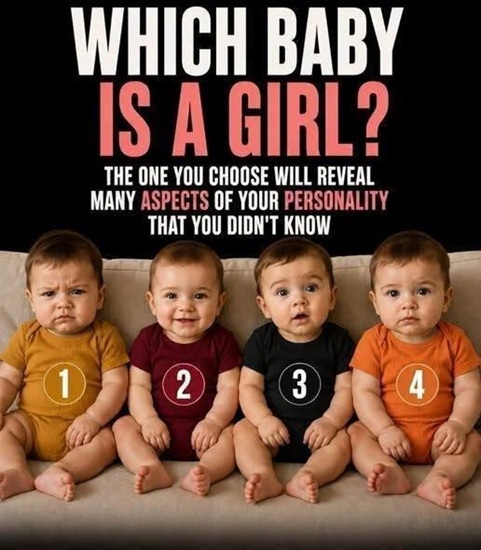
Have you ever looked at a group of faces and noticed that one immediately caught your attention before all the others? It is a surprisingly common experience, and many people wonder whether their first impression says something meaningful about the way they think. This curiosity has helped make visual personality quizzes some of the most widely shared forms of online entertainment. These activities often invite participants to choose the first face, object, or image they notice and then compare that choice with a personality description.
While these quizzes can be enjoyable and encourage self-reflection, psychologists emphasize that they should not be considered scientifically validated personality assessments. The human brain is constantly processing an enormous amount of visual information. Every second, our eyes collect far more details than we can consciously examine, so the brain quickly decides which features deserve immediate attention.
This process is influenced by many factors, including brightness, color contrast, facial expressions, previous experiences, current emotions, expectations, and even where our eyes first land on an image. Because so many variables affect visual attention, two people looking at exactly the same picture may notice completely different faces or objects within moments of each other.
Scientists who study perception explain that first impressions are shaped by a combination of automatic and conscious mental processes. Automatic attention helps people quickly identify information that appears important or emotionally relevant, while conscious thinking allows us to analyze what we have seen more carefully. These systems work together continuously, helping us navigate everyday situations efficiently. However, noticing one face before another does not provide scientific evidence about someone’s personality, intelligence, emotional health, or future behavior.
Despite this, personality image quizzes remain extremely popular because they invite people to pause and think about themselves. Rather than functioning as psychological diagnoses, these activities often serve as conversation starters. Reading a personality description may encourage someone to reflect on their own habits, values, communication style, or emotional responses. The value comes from thoughtful self-reflection rather than from the image itself possessing any predictive power.
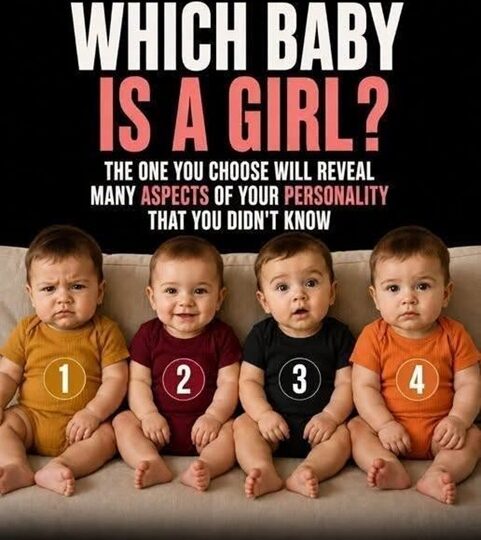
In this particular visual exercise, participants are asked to look at several babies and identify which one immediately attracts their attention. The illustration then connects each choice with a symbolic personality description. It is important to understand that these descriptions are creative interpretations rather than scientific conclusions. Researchers have found no reliable evidence demonstrating that selecting one baby instead of another can accurately reveal hidden personality traits or define someone’s character.
One explanation for why these quizzes sometimes feel surprisingly accurate is a well-known psychological phenomenon called the Barnum effect. This effect describes people’s tendency to recognize themselves in broad, positive, or generally applicable personality statements. Because the descriptions are written to fit many different individuals, readers often naturally connect them with personal experiences that seem meaningful. This does not mean the quiz has accurately measured personality; rather, it reflects how human beings naturally search for patterns that relate to their own lives.
Another reason these activities remain appealing is that they encourage curiosity without requiring specialized knowledge. There are no scores, no passing or failing, and no pressure to provide the “correct” answer. Instead, participants simply observe their own reactions and compare them with a symbolic interpretation. This relaxed format allows people to enjoy the experience while reflecting on aspects of themselves that they may not think about regularly.
For example, someone whose attention is first drawn to Baby 1 might enjoy reading a description emphasizing responsibility, reliability, or careful planning. These qualities are generally viewed positively, but they should not be interpreted as objective psychological findings. Instead, they can serve as prompts for self-reflection. A reader may ask themselves whether they tend to organize tasks carefully, support friends during difficult moments, or prefer thoughtful decision-making before acting. The insight comes from personal reflection rather than from the image proving those characteristics.
Likewise, a person who first notices Baby 2 may find themselves reading about optimism, enthusiasm, or enjoying social interaction. These qualities may resonate with some readers while feeling less relevant to others. Human personalities are highly complex, and individuals often display different characteristics depending on the situation. Someone who appears outgoing in one environment may be reserved in another, demonstrating that personality cannot be accurately summarized by a single visual choice.
Modern psychological research consistently shows that personality develops through a combination of genetics, life experiences, education, relationships, environment, and culture. It evolves over time as people mature, learn new skills, overcome challenges, and gain experience. Because personality is influenced by so many interacting factors, no visual illusion or image-based quiz can accurately diagnose someone’s character or predict future behavior.
When viewed with realistic expectations, these personality activities can still provide enjoyment and encourage meaningful conversations. They remind us that people notice different details, interpret information differently, and bring unique perspectives to the same image. Those differences reflect the diversity of human perception rather than hidden psychological truths. Approaching these quizzes with curiosity, critical thinking, and an understanding of their limitations allows readers to enjoy them responsibly while appreciating the fascinating ways our minds process the world around us.
Continuing the symbolic interpretations often found in entertainment-based personality quizzes, some versions suggest that people who first notice Baby 3 are naturally curious and enjoy exploring new ideas. While this description may resonate with certain readers, it should be viewed as a creative prompt for self-reflection rather than a scientific conclusion.
Curiosity is a complex personality characteristic influenced by many factors, including education, life experiences, interests, and opportunities for learning. Looking at a single image cannot accurately measure how curious someone is, but it may encourage people to think about how they approach new experiences, solve problems, or continue learning throughout life.
Similarly, entertainment quizzes frequently associate Baby 4 with qualities such as empathy, kindness, and emotional awareness. These characteristics are highly valued in personal relationships, workplaces, and communities. However, psychologists emphasize that empathy cannot be determined by visual choices alone. The ability to understand and respond to another person’s emotions develops over many years through relationships, communication, personal experiences, and emotional learning. An image cannot reveal whether someone possesses these qualities, although reflecting on them may encourage readers to consider how they support the people around them.
One reason these personality activities remain so engaging is that they invite readers to participate rather than simply consume information. Instead of passively reading an article, people actively make a choice, compare it with a description, and naturally begin thinking about whether it matches their own experiences. This interactive element helps explain why visual personality quizzes continue to attract widespread interest across many different age groups. The enjoyment comes from personal reflection and discussion rather than from receiving a scientifically verified personality assessment.
Research in cognitive psychology has shown that attention is selective rather than random. Our brains constantly prioritize certain details while filtering out others to avoid becoming overwhelmed by information. Numerous influences—including lighting, color contrast, previous experiences, emotional state, expectations, and even where our eyes first focus—can affect what we notice first. Because these factors vary from person to person and even from moment to moment, different individuals may naturally observe different parts of the same image without those observations revealing stable personality characteristics.
Another important concept frequently discussed by psychologists is confirmation bias. This refers to the natural tendency to remember information that appears to support our existing beliefs while paying less attention to information that contradicts them. When readers encounter a personality description that seems familiar, they often recall personal experiences that fit the description while overlooking situations that do not. This common cognitive tendency helps explain why generalized personality statements can sometimes feel surprisingly accurate even when they are intended to apply broadly to many different people.
Professional personality assessment follows a very different process. Psychologists use standardized questionnaires and evidence-based methods that have been carefully developed, tested, and evaluated through scientific research. These assessments examine multiple aspects of personality across a wide range of situations rather than relying on a single visual choice or first impression. Even these professional tools are interpreted within broader psychological contexts and are not based on optical illusions or symbolic imagery.
Although entertainment-based image quizzes should not be mistaken for scientific evaluations, they can still encourage positive reflection when approached thoughtfully. Reading symbolic descriptions may inspire people to think about their communication style, personal goals, strengths, or areas they would like to develop further. The value lies in the questions people ask themselves afterward, not in the belief that the image has accurately diagnosed their personality. Honest self-reflection often comes from life experience, meaningful conversations, and openness to personal growth.
These visual activities also highlight an interesting truth about human perception: every person observes the world through a unique combination of experiences and expectations. Two individuals may view the same picture and immediately focus on different details, not because one observation is correct and the other is wrong, but because each person’s attention has been shaped by different memories, interests, and circumstances. This diversity of perception is one of the reasons visual illusions remain fascinating subjects for both researchers and the general public.
Perhaps the greatest appeal of these quizzes is that they encourage discussion without requiring competition. There is no correct answer, no winning choice, and no final score. Friends and family members often enjoy comparing what they noticed first and discussing whether any part of the symbolic description feels familiar. These conversations can be entertaining while also reminding participants that personality is far more complex than any single image could ever represent.
Modern psychological research consistently demonstrates that personality develops throughout life. Genetics, family environment, education, culture, relationships, major life experiences, and individual choices all contribute to the unique characteristics that define each person. Because personality is dynamic rather than fixed, it continues to evolve as people learn, adapt, and grow. No single photograph, drawing, or optical illusion can accurately summarize someone’s identity or predict future behavior.
Ultimately, image-based personality quizzes are best appreciated as creative exercises that combine visual perception with storytelling. They encourage curiosity, invite self-reflection, and provide enjoyable opportunities for conversation, but they should never replace evidence-based psychological understanding. When readers recognize the difference between entertainment and scientifically supported information, they can enjoy these activities responsibly while maintaining realistic expectations. The true lesson is not that an image can reveal hidden truths about who we are, but that our willingness to reflect on ourselves, learn from experience, and continue growing remains one of the most meaningful aspects of human personality.

