
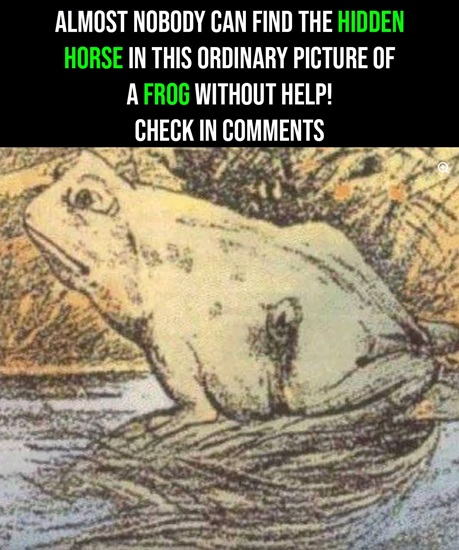
Optical illusions have fascinated people for generations because they reveal something remarkable about the way the human brain processes visual information. Rather than simply recording everything our eyes see like a camera, the brain constantly interprets shapes, colors, shadows, and familiar patterns to create what we perceive as reality. Most of the time this process happens so quickly that we never notice it. However, carefully designed optical illusions temporarily expose that hidden process, reminding us that perception is not always as straightforward as it seems.
The popularity of optical illusions has grown even further in recent years through social media, educational websites, and puzzle communities. Images that appear simple at first glance often become widely shared because different people notice different details almost immediately. Friends and family members frequently compare answers, challenge one another to find hidden objects, and discuss how long it took before the complete picture finally became clear. These visual puzzles are entertaining because they encourage careful observation without requiring any special knowledge or technical skills.
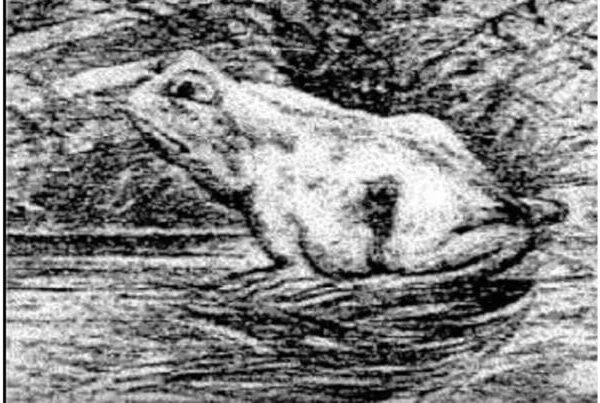
One particularly well-known illusion has attracted attention because it contains two recognizable animals hidden within a single drawing. At first glance, many viewers immediately identify what appears to be a frog resting peacefully on the surface of a pond. The frog is easy to recognize because its outline is clear, its eyes are visible, and the surrounding lily pad naturally reinforces the impression that the scene depicts a quiet wetland environment. For most people, the frog becomes the obvious subject within only a few seconds.
The challenge begins when viewers are told that the illustration contains another animal hidden inside the same image. Suddenly, the picture that seemed perfectly understandable becomes a visual puzzle. People often continue staring at the frog, wondering how another creature could possibly be concealed within an image that already appears complete. This is one reason optical illusions are so engaging. Once our brains settle on one interpretation, it becomes surprisingly difficult to recognize an alternative arrangement using the very same lines and shapes.
Unlike puzzles that depend on missing objects or hidden colors, this illusion relies on what psychologists sometimes describe as ambiguous perception. In ambiguous images, a single collection of lines can support more than one valid interpretation. The visual information does not change, but the brain reorganizes the relationships between those lines until a different object suddenly becomes recognizable. Once that second interpretation appears, many people find it impossible to ignore because the brain can now switch back and forth between both versions of the same picture.
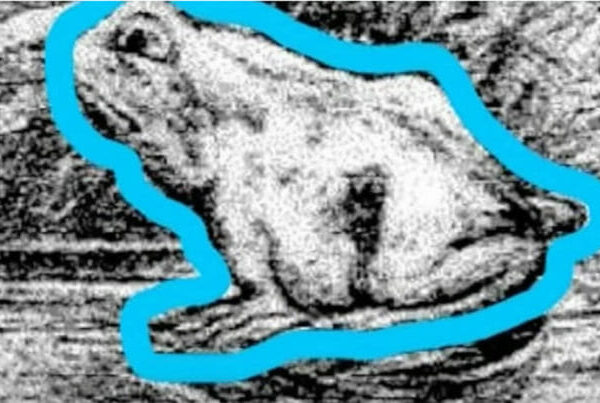
In this particular illustration, the second hidden animal is a horse. However, the artist did not draw the horse as a complete figure standing in the background. Instead, only the horse’s head and neck are incorporated into the design. This makes the illusion considerably more challenging because viewers are searching for an entire horse when only part of one is actually present. As a result, the brain often overlooks the correct answer even after receiving a clue about what to expect.
People who have never encountered the illusion before commonly begin searching around the edges of the image or among the background details. They may examine the lily pad, the water, or the empty spaces surrounding the frog in the hope of discovering another hidden outline. That approach is understandable, yet it often delays the solution because the horse is not hidden separately from the frog. Instead, the same collection of lines contributes to both animals simultaneously.
One of the most interesting aspects of this illusion is that success does not necessarily depend on eyesight. Someone with excellent vision may require several minutes before recognizing the horse, while another person notices it almost immediately. The difference usually comes from how the brain organizes visual information rather than from how clearly the eyes see the image. Previous experience with similar illusions can also make it easier to recognize unusual visual patterns more quickly.
Researchers who study visual perception explain that the human brain naturally looks for familiar objects using past experience. This process, known as pattern recognition, helps people identify faces, animals, letters, and everyday objects almost instantly under normal circumstances. Optical illusions intentionally take advantage of this ability by arranging familiar shapes in unexpected ways. The brain confidently chooses one interpretation before gradually realizing another equally reasonable interpretation is also possible.
This is why two people can look at exactly the same drawing yet describe completely different things during the first few moments. Neither person is imagining details that do not exist. Instead, each brain is organizing identical visual information into a different meaningful pattern. Once viewers become aware that another interpretation exists, they often continue examining the picture until the second image eventually emerges. The experience can feel almost like watching the drawing transform without any part of it actually changing.
If you have only noticed the frog so far, there is no need to worry. Most viewers report that the frog appears first because it dominates the composition of the illustration. The horse is intentionally more subtle and requires the brain to reorganize the relationship between several important lines. Rather than searching for a complete horse standing elsewhere in the picture, it helps to remember that only the head and neck are hidden within the existing drawing.
A helpful clue is to look carefully at the frog’s body instead of focusing only on its face. Once your brain stops interpreting those shapes exclusively as part of the frog, another outline may gradually begin to appear. Some viewers discover the horse after only a few additional seconds, while others need repeated attempts before suddenly recognizing the hidden image. That moment of realization is exactly what has made this illusion so memorable for puzzle enthusiasts around the world.
The enjoyment of optical illusions comes not from proving who has better eyesight, but from appreciating how remarkably flexible human perception can be. A single drawing can support multiple accurate interpretations without changing a single line. That ability reminds us that seeing involves far more than simply opening our eyes. Every moment, our brains are actively interpreting the world around us, filling in missing information, recognizing familiar patterns, and creating the visual experience we call reality.
For people who have not yet discovered the hidden horse, the most effective approach is often to stop looking for an entire animal. One of the reasons this illusion is considered challenging is that the horse is represented only by its head and neck rather than a complete body. When the brain expects to find a full horse standing somewhere in the picture, it naturally overlooks the subtle arrangement of lines that creates the hidden image. Changing that expectation can make the second figure much easier to recognize.
Instead of concentrating on the frog’s eyes or the outline of its body, carefully examine the shapes that form the frog’s back and upper body. Those same lines serve a dual purpose within the illustration. From one perspective they belong to the frog, while from another they outline the profile of a horse’s head. Once your brain reorganizes those lines into the second interpretation, the horse usually becomes much easier to identify. Many people are surprised by how obvious it appears after they finally recognize it.
Another useful technique is to look at the image from a slightly greater distance. Moving farther away reduces attention to small details and allows the brain to process larger shapes more easily. Some viewers also find that briefly looking away from the picture before returning helps reset their visual perception. Although these methods do not guarantee immediate success, they encourage the brain to reconsider the arrangement instead of remaining fixed on the original interpretation.
The lily pad visible in the illustration can also influence how people search for the hidden image. Because the scene naturally resembles a pond, many viewers assume that every nearby shape belongs to the environment surrounding the frog. As a result, they spend time examining the water or vegetation instead of reconsidering the frog itself. The illusion works precisely because the hidden figure is incorporated into the primary subject rather than concealed somewhere else in the picture.
Visual puzzles like this demonstrate an important characteristic of human perception known as figure-ground organization. The brain constantly decides which parts of an image should be treated as the main subject and which belong to the background. Under normal circumstances, this ability helps people recognize objects almost instantly. In an optical illusion, however, artists intentionally create drawings where those relationships can change, allowing the same collection of lines to represent more than one recognizable object.
Scientists who study perception have long used similar illusions to better understand how the brain interprets visual information. Rather than measuring intelligence or eyesight, these images reveal the remarkable flexibility of human pattern recognition. Researchers have found that expectations, previous experience, attention, and even the amount of time spent examining an image can influence how quickly someone notices an alternative interpretation. For that reason, taking longer to solve an illusion does not indicate weaker observation skills.
Optical illusions are frequently used in classrooms as enjoyable educational tools. Teachers introduce them during lessons about psychology, neuroscience, biology, and visual perception because they encourage students to think critically about how information reaches the brain. Rather than memorizing facts, students experience firsthand that perception involves interpretation as well as observation. This practical demonstration often makes scientific concepts easier to understand and remember.
Beyond education, optical illusions remain popular because they encourage friendly discussion and curiosity. Family members, classmates, and coworkers often compare what they noticed first, discovering that each person experienced the same picture differently. Unlike competitive puzzles with only one correct strategy, these illusions invite people to appreciate the diversity of human perception while enjoying the surprise that comes from eventually recognizing the hidden image.
It is also worth remembering that not everyone will identify the second figure at the same speed. Factors such as familiarity with similar illusions, individual viewing habits, screen size, image quality, and lighting conditions can all influence how easily the hidden horse becomes visible. There is no universally “correct” amount of time needed to solve the puzzle, and some people may recognize the horse almost instantly while others require several careful attempts.
Once viewers finally recognize the horse, they often experience another interesting phenomenon. The brain becomes capable of switching back and forth between the two interpretations with little effort. At one moment the frog appears to dominate the picture, while seconds later the horse becomes equally obvious. This mental flexibility illustrates how perception can change even when the visual information itself remains completely unchanged.
Although this particular illustration has circulated online for many years, its popularity has remained remarkably consistent because it combines simplicity with genuine challenge. The drawing contains only a small number of carefully arranged lines, yet those lines produce two distinctly recognizable animals. The illusion continues to be shared because many people enjoy introducing it to friends or family members who have never encountered it before and watching their reactions as they search for the hidden horse.
More broadly, optical illusions remind us that our senses provide only part of the information we use to understand the world. The brain constantly organizes, interprets, and gives meaning to what our eyes detect. Most of the time that process allows us to recognize familiar objects almost instantly, but carefully designed illusions reveal that perception is an active process rather than a passive recording of reality. They encourage curiosity about the remarkable ways the human mind works every day.
If you eventually spotted both the frog and the horse, you experienced exactly what makes this illusion memorable. If you only saw the frog, that is equally common, and revisiting the picture later may produce a different result. Regardless of how quickly the hidden image becomes visible, the illustration succeeds because it transforms an ordinary drawing into an engaging demonstration of visual perception, careful observation, and the fascinating ability of the human brain to discover more than one interpretation within the very same image.

