
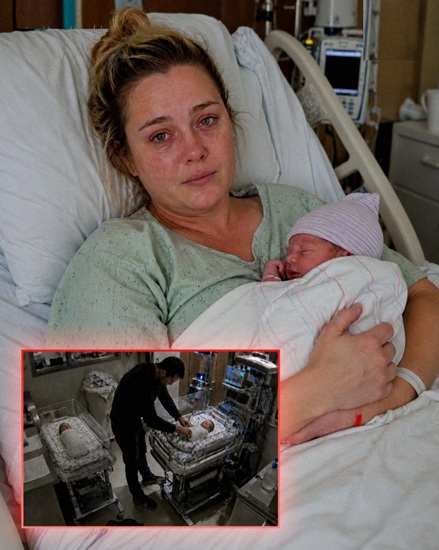
There are moments in life that seem so full of promise that you begin to believe nothing could possibly go wrong. During the final weeks of my pregnancy, I often stood quietly in the nursery, resting one hand on my growing stomach while looking at the two identical white cribs waiting by the window. Morning sunlight poured through the curtains, warming the tiny blankets folded neatly inside each crib. Every detail had been planned with care, from the matching stuffed animals to the framed watercolor prints hanging above the changing table.
After months of excitement, appointments, and careful preparation, I truly believed the hardest part of my journey would simply be giving birth. At thirty-eight weeks pregnant with twin boys, every movement reminded me that the moment I had been waiting for was close. The babies kicked constantly, sometimes at the same time, making my entire stomach ripple beneath my hands.
My doctor had repeatedly assured me that both boys were growing well and that every ultrasound showed healthy development. Their heartbeats were strong, their measurements were exactly where they should be, and every appointment ended with encouraging news. Friends joked that I had become the picture of a perfect pregnancy, and I smiled every time someone said it because I believed them.
My husband, Ryan, appeared just as excited as everyone else. He attended nearly every prenatal appointment, assembled furniture, researched baby monitors, and insisted on carrying every grocery bag before I even had the chance to reach for one. Whenever people asked whether he was nervous about becoming the father of twins, he laughed politely and said he was simply looking forward to meeting his sons. Watching him paint the nursery walls and carefully tighten every screw on the second crib, I believed we were preparing for the happiest chapter of our lives.
Still, there were moments that quietly unsettled me, even if I quickly found reasons to dismiss them. Ryan occasionally disappeared into the garage to answer lengthy phone calls that seemed to happen more often as my due date approached. Whenever I asked whether everything was all right at work, he smiled reassuringly and explained that a few complicated financial projects needed to be completed before he took parental leave. I wanted to believe him, and because pregnancy already filled my mind with enough worries, I convinced myself there was no reason to think otherwise.
One evening we sat together in the nursery folding tiny baby clothes into separate drawers. I picked up two matching onesies and smiled as I imagined dressing the boys for their first photographs together.
“So we’re still settled on Noah and Caleb?” I asked.
Ryan hesitated only briefly before nodding.
“Caleb is a great name.”
“And Noah?”
He looked down at the tiny blue blanket resting in his lap before answering.
“Whatever makes you happy.”
His response surprised me because he had once spoken enthusiastically about both names. For a brief moment I wondered whether something was bothering him, but I quickly dismissed the thought. Everyone reacts differently before major life changes, I reminded myself. Becoming parents to twins would naturally feel overwhelming for both of us.
My older sister Rachel called almost every morning during those final weeks. She had always possessed an uncanny ability to notice things I overlooked, and our conversations often drifted from nursery decorations to childhood memories and parenting advice.
“How are my future nephews today?” she asked one morning.
“They’ve apparently decided my ribs make excellent soccer goals,” I joked.
She laughed before becoming more serious.
“And how are you?”
“I’m good.”
“And Ryan?”
I hesitated for only a second.
“He’s been a little distracted lately.”
Rachel remained quiet.
“If you ever need anything, promise you’ll call.”
“I promise.”
Looking back, I often think about that conversation. At the time it felt ordinary. Now it feels like one of those quiet moments that only becomes important much later.
Two days afterward, everything changed.
I had been standing in the kitchen rinsing a coffee mug while sunlight streamed across the counter. The house was unusually quiet except for the gentle hum of the refrigerator and the distant sound of birds outside. Without warning, an overwhelming pain spread across my abdomen so suddenly that I lost my balance before I could reach the countertop. The mug slipped from my hands, shattering against the floor as I collapsed to my knees.
I remember hearing Ryan rush into the room.
“Eve!”
His voice sounded distant, almost muffled beneath the pounding in my ears.
The pain intensified with astonishing speed. Every attempt to breathe became more difficult than the last, and the room around me seemed to blur. Ryan knelt beside me while speaking urgently to emergency services, carefully giving our address and explaining that I was carrying twins. I tried to answer when someone asked whether I could hear them, but my words never seemed to reach my lips.
The next clear memory I have is opening my eyes beneath bright hospital lights.
Every part of my body ached.
Machines beeped steadily nearby, and the unfamiliar smell of disinfectant filled the room. My throat felt dry, and my arms seemed impossibly heavy. It took several moments before I realized Ryan was sitting beside my bed with tears in his eyes.
When he noticed I was awake, relief washed across his face.
“Eve,” he whispered, squeezing my hand. “You’re awake.”
The first question that entered my mind was immediate.
“The babies…”
Ryan lowered his head.
His silence answered before his words ever could.
The doctor later explained that the delivery had become an emergency requiring immediate intervention. Despite every effort by the medical team, only one of the twins had survived. I listened without fully understanding, hearing individual words but struggling to connect them into complete thoughts. My mind kept returning to the nursery at home with its two cribs, two blankets, and two tiny names carefully embroidered across matching pillows.
Grief arrived slowly rather than all at once. At first it felt impossible that something so carefully anticipated could change so completely within a single afternoon. Ryan remained constantly by my bedside, comforting me, speaking gently with nurses, and reassuring everyone who visited that we would somehow find a way forward together. Friends and relatives described him as devoted, patient, and unwavering during those difficult days, and I wanted desperately to believe that the future, although forever changed, could still hold hope.
Yet beneath the sadness, an uneasy feeling lingered—small enough to ignore, but impossible to erase completely.
I could not explain why.
I only knew that some questions remained unanswered.
And although I had not yet realized it, those unanswered questions would eventually change everything I believed about the life waiting for me beyond the hospital room.
The following morning began quietly. Soft sunlight filtered through the hospital curtains, and the steady rhythm of medical equipment filled the room. My surviving son slept peacefully in the bassinet beside my bed, completely unaware of the grief that surrounded his first days of life. Watching him breathe reminded me that joy and heartbreak can exist side by side, sometimes within the same moment.
The nurses encouraged me to rest whenever I could, explaining that recovery after a difficult delivery required both time and patience. Family members visited throughout the day, bringing flowers, meals, and gentle words of encouragement. Rachel remained at my bedside longer than anyone else, rarely speaking unless I asked her a question. Sometimes the greatest comfort comes simply from having someone quietly present.
As the hours passed, I found myself replaying the final weeks of my pregnancy. Small memories returned one after another: conversations that ended too quickly, moments when Ryan seemed distracted, and expressions that had puzzled me at the time but now felt impossible to forget. None of those memories proved anything on their own, yet together they left me with an uneasy feeling that I could not easily explain.
Rather than allowing suspicion to grow without reason, I decided I needed answers based on facts instead of assumptions. When my physician visited during morning rounds, I asked whether we could schedule a meeting to review everything that had happened during the emergency delivery. The doctor immediately agreed, explaining that every patient has the right to understand their medical care and to ask questions about difficult outcomes.
Later that afternoon, the obstetrician, a neonatal specialist, and a patient advocate met with me in a quiet consultation room. They carefully reviewed the timeline of the emergency, explaining each medical decision in language that was easy to understand. They described the complications that developed during labor, the urgent procedures performed by the surgical team, and the efforts made to protect both babies under rapidly changing circumstances.
The physicians also explained an important reality about emergency medicine. Even with experienced specialists, advanced technology, and immediate intervention, some complications develop so suddenly that not every outcome can be changed. Medicine often involves making complex decisions within minutes while responding to conditions that evolve second by second. Although that explanation could not erase my grief, it helped me understand that every member of the medical team had worked with the same goal: protecting both mother and children.
Ryan joined the meeting quietly and listened without interrupting. When the doctors finished, he reached for my hand.
“I’m sorry that we have to walk through this,” he said softly.
“So am I,” I answered.
Neither of us pretended the conversation had made everything easier, but it replaced uncertainty with understanding.
During the days that followed, our focus gradually shifted toward caring for our newborn son. Learning to feed him, comfort him, and recognize his tiny expressions gave structure to days that otherwise felt overwhelming. Every small milestone—his first peaceful nap in my arms, the way his fingers wrapped around mine, the gentle sounds he made while sleeping—became reminders that hope can quietly return even after profound loss.
Rachel stayed with us after we returned home, helping with meals, laundry, and countless small tasks that seemed impossible during those first weeks. She never tried to solve our grief or offer perfect words. Instead, she simply reminded us that healing rarely follows a straight path. Some mornings felt manageable, while others brought unexpected tears triggered by an empty crib or a folded baby blanket prepared months earlier.
One afternoon, Ryan entered the nursery carrying the second blanket embroidered with Noah’s name. He sat quietly beside the unused crib for several minutes before speaking.
“I wasn’t sure what to do with this.”
I sat beside him.
“We don’t have to decide today.”
He nodded.
For the first time since the hospital, we allowed ourselves to grieve together instead of trying to protect one another from sadness.
As weeks turned into months, we discovered that remembering Noah did not diminish our love for Caleb. Instead, our family learned to make room for both memories and new beginnings. We created a small memory box containing ultrasound photographs, handwritten notes, and the tiny knitted blanket my sister had lovingly prepared before the twins were born. It became a place where remembrance existed alongside gratitude rather than replacing it.
Counseling also became an important part of our healing journey. Speaking with a licensed grief counselor helped us understand that parents often experience loss differently. Some people need to talk openly, while others process emotions more quietly. Learning to respect those differences strengthened our ability to support one another during an incredibly difficult chapter of our lives.
As Caleb grew, the house gradually filled with laughter again. His first smile, first steps, and first words brought moments of genuine happiness that did not erase the past but gently expanded our future. We learned that healing does not require forgetting. Instead, it allows love for those we have lost to exist alongside love for those who remain with us.
On the first anniversary of Noah’s birth, our family visited a peaceful public garden. We planted a young flowering tree in his memory and placed a small wooden plaque nearby bearing only his name and birth date. The simple ceremony reflected everything we had learned over the previous year—that remembrance does not always require grand gestures. Sometimes the quietest moments carry the deepest meaning.
Before leaving, Caleb toddled toward the tree and reached out to touch one of its small green leaves. He smiled with the same bright curiosity he showed every day while exploring the world around him. Watching him, I realized that grief and hope were no longer competing emotions. They had become part of the same story, reminding us that love continues to shape our lives even after unimaginable loss.
Looking back, I no longer measured our family’s story only by the day everything changed. I remembered the months of anticipation, the kindness of nurses, the support of relatives, the compassion of friends, and the resilience we slowly discovered within ourselves. Those experiences became just as important as the tragedy itself because they showed that healing is built through patience, honesty, and the willingness to face difficult moments together.
Life did not return to what it had once been, and perhaps it never could. Instead, it became something new—marked by sorrow, strengthened by compassion, and guided by the quiet determination to cherish every ordinary day. Noah would always remain part of our family’s story, and Caleb would grow up knowing he had entered the world alongside a brother who would always be remembered with love. In time, that truth became not only a source of sadness, but also a lasting reminder of the strength that families can find when they support one another through life’s most difficult moments.

