
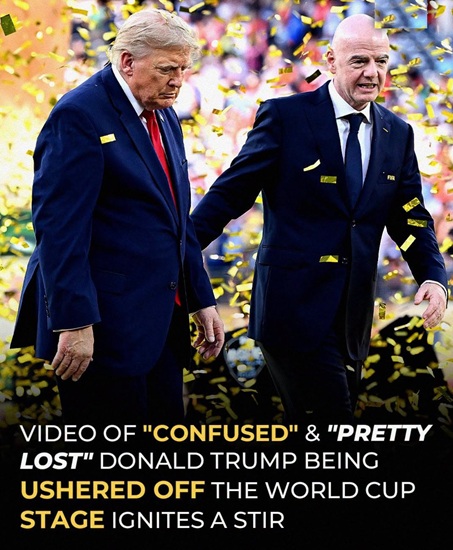
The 2026 FIFA World Cup Final was more than the conclusion of the world’s biggest football tournament. Hosted at New York New Jersey Stadium in East Rutherford, the event combined elite sport with music, entertainment, and international guests, creating one of the most widely watched sporting occasions of the year. As Spain and Argentina competed for football’s most prestigious trophy, millions of viewers followed not only the action on the pitch but also the opening ceremony, musical performances, and appearances by internationally recognized public figures.
The final reflected FIFA’s effort to present the tournament as a celebration of sport, culture, and global unity. Long before kickoff, the stadium atmosphere demonstrated the global reach of the FIFA World Cup. Supporters from many countries filled the stands, while broadcasters prepared coverage for audiences across every continent. The tournament itself had already made history as the first men’s FIFA World Cup featuring 48 participating nations, with matches hosted across the United States, Canada, and Mexico. By the time the final arrived, the competition had produced memorable performances, dramatic knockout matches, and stories that attracted worldwide attention both on and off the field.
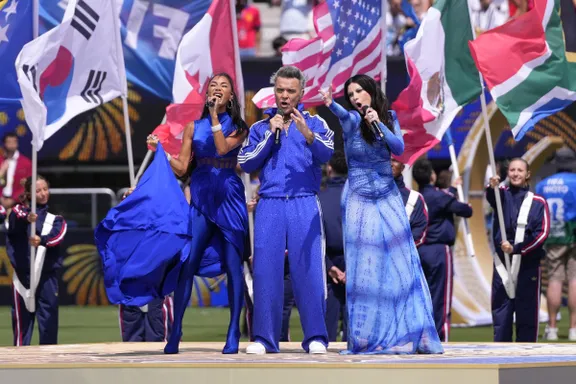
The closing ceremony introduced an impressive lineup of performers before the players entered the field. FIFA organized a program designed to celebrate both football and music, bringing together artists from different genres and backgrounds. Post Malone and Swae Lee performed their internationally recognized hit “Sunflower,” while Jennifer Hudson delivered the United States national anthem. Robbie Williams, Laura Pausini, and Nicole Scherzinger later performed the official FIFA anthem, “Desire,” as part of the pre-match celebration. These performances were intended to create a festive atmosphere before one of the biggest sporting events of the year.

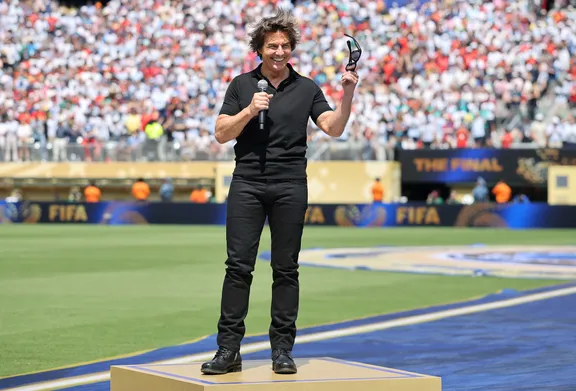
One of the ceremony’s most discussed appearances came from actor Tom Cruise. Invited by FIFA to deliver a message before kickoff, Cruise addressed the crowd from the center of the stadium. His remarks focused on football’s ability to connect people across countries, languages, and cultures. Speaking about the tournament’s journey, he emphasized themes of unity, shared experiences, and the international spirit that has long defined the FIFA World Cup. His appearance formed part of the official ceremony designed to celebrate the conclusion of the month-long tournament.
During his speech, Cruise consistently referred to the sport as “football,” the term used throughout most of the world. That choice quickly became a topic of online conversation, particularly among viewers familiar with the American use of the word “soccer.” Many social media users commented on the terminology, with some expressing surprise that an American actor used the globally recognized name of the sport. Others simply viewed it as a natural choice given that the event was organized by FIFA for an international audience. The discussion demonstrated how even a single word can generate widespread online engagement during a globally watched event.
As often happens with major sporting occasions, reactions across social media varied considerably. Some viewers praised Cruise’s speech for highlighting football’s global appeal and the sense of community created throughout the tournament. Others focused primarily on the presentation style or preferred that the match begin sooner. These differing opinions reflected the diversity of audiences watching the event rather than any official assessment of the ceremony itself. Such conversations have become a common part of modern sporting events, where millions of viewers share immediate reactions online.
The final also attracted an extraordinary number of well-known guests. Celebrities from film, music, sports, fashion, and entertainment attended the championship match, underscoring the World Cup’s global cultural significance. Reported attendees included Tom Cruise, Jay-Z, Beyoncé, Timothée Chalamet, Matt Damon, David and Victoria Beckham, Kevin Hart, Julia Garner, Gabrielle Union, Dwyane Wade, Serena Williams, Pharrell Williams, Richard Gere, and many others. Their presence highlighted how the FIFA World Cup extends beyond sport, bringing together figures from many different industries for one of the world’s most watched events.
Government leaders and international representatives were also present for the championship. Among those attending were U.S. President Donald Trump and First Lady Melania Trump, FIFA President Gianni Infantino, Spain’s King Felipe VI and Queen Letizia, along with other invited dignitaries. Their attendance reflected the diplomatic and international importance often associated with major global sporting competitions, where leaders from multiple countries gather to celebrate athletic achievement and international cooperation.
Another historic feature of the evening was the introduction of the FIFA World Cup Final’s first official halftime show. Inspired by the large-scale entertainment productions commonly associated with other major sporting events, FIFA presented a music program curated by Chris Martin of Coldplay in partnership with Global Citizen. The performance included internationally recognized artists such as Madonna, Shakira, BTS, Justin Bieber, and Burna Boy, creating one of the largest entertainment productions ever associated with a FIFA World Cup Final.
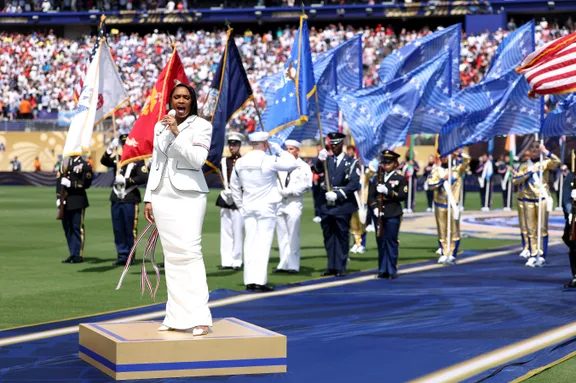
Jennifer Hudson’s performance of the United States national anthem also generated significant public discussion. Her powerful vocal style has long been recognized throughout her music career, and many viewers praised the strength and emotion of her performance. Others expressed personal preferences regarding the musical arrangement, illustrating how artistic performances often receive a wide variety of reactions. Such differences in opinion are common during major live events, where audiences naturally respond according to their own musical tastes.
While conversations about ceremonies, speeches, and performances continued online, the focus eventually returned to the football itself. Spain and Argentina delivered a closely contested final that remained scoreless through regular time before Spain secured victory in extra time to claim the FIFA World Cup title. The championship concluded an historic tournament that combined elite competition with record-breaking global attention, memorable entertainment, and countless moments that will remain part of World Cup history.
As the opening ceremonies concluded, attention shifted fully to the match itself. Spain and Argentina, two nations with proud football traditions and passionate supporters, competed in front of a worldwide audience for one of the most prestigious trophies in international sport. Throughout the tournament, both teams had demonstrated consistency, tactical discipline, and resilience, earning their places in the championship match after overcoming strong opponents during the knockout stages. The final represented the culmination of weeks of competition involving teams from every region of the world.
The atmosphere inside the stadium reflected the significance of the occasion. Fans wearing the colors of both finalists filled the stands, creating a vibrant display of flags, songs, and coordinated chants. Television broadcasts captured the emotion of supporters before kickoff as players completed their warm-ups and national anthems concluded. For many spectators in attendance, simply witnessing a FIFA World Cup Final in person represented a once-in-a-lifetime experience, while millions more followed every moment through broadcasts and digital platforms around the globe.
Throughout the match, both teams produced moments of technical quality and disciplined defending. As often happens in championship finals, every opportunity carried enormous importance because a single goal could determine the outcome of the tournament. Coaches carefully adjusted tactics while players balanced attacking ambition with defensive organization. The intensity of the contest demonstrated why reaching a World Cup Final is considered one of football’s greatest achievements for both players and national teams.
Beyond the action on the field, viewers continued discussing the event’s production and presentation. The combination of sport, live music, international guests, and modern broadcast technology illustrated how the FIFA World Cup has evolved into a global entertainment event that reaches audiences far beyond traditional football supporters. High-definition coverage, multiple camera angles, real-time statistics, and extensive digital content allowed fans around the world to experience the final from numerous perspectives.
When the final whistle confirmed Spain’s victory, celebrations immediately began both inside the stadium and among supporters watching across the world. Players embraced teammates and coaching staff after completing a tournament that required months of preparation and weeks of competition. Winning the FIFA World Cup represents the highest achievement in international football, and the emotional scenes following the match reflected the years of dedication invested by athletes, coaches, medical staff, and support personnel.
The trophy presentation remains one of the defining traditions of every FIFA World Cup. After the championship concluded, FIFA officials invited representatives of the winning team onto the presentation stage. The iconic World Cup Trophy was then presented to Spain’s captain during the official ceremony, marking the culmination of the tournament. As photographers documented the celebration, teammates gathered together to share the historic moment before lifting the trophy in front of supporters and a global television audience.
As with many internationally televised events, viewers also discussed details of the trophy ceremony on social media. Different camera angles, stage positioning, and interactions among guests generated a variety of observations and interpretations from audiences online. While many comments focused on ceremonial details, the official significance of the presentation remained clear: recognizing the newly crowned FIFA World Cup champions and celebrating the achievements of the winning team after an outstanding tournament.
One of the most remarkable aspects of the final was the diversity of people brought together by a single sporting event. Athletes, coaches, volunteers, musicians, broadcasters, public officials, entertainers, journalists, and supporters from many countries all contributed to the occasion. This broad international participation has long been one of the defining characteristics of the FIFA World Cup, demonstrating football’s ability to connect people through a shared appreciation of sport regardless of language or nationality.
The event also highlighted the growing relationship between major sporting competitions and digital communication. Social media platforms enabled supporters to share reactions instantly, discuss memorable moments, celebrate victories, and exchange opinions with fans across different continents. While online conversations naturally included a wide variety of perspectives, they also reflected the unprecedented level of global engagement that accompanies modern international tournaments.
Large sporting events increasingly combine athletic excellence with cultural celebration. Musical performances, opening ceremonies, artistic presentations, and community initiatives complement the competition itself while introducing international audiences to different creative traditions. FIFA has continued expanding these elements in recent tournaments as part of its broader effort to present football as both a sporting competition and a global cultural event that brings together diverse communities through shared experiences.
Media coverage of the World Cup Final also demonstrated the importance of distinguishing between verified facts and personal commentary. Official match results, player statistics, tournament records, and FIFA announcements provide the factual foundation of the event, while public reactions naturally vary according to individual preferences and experiences. Separating these two elements helps readers understand both what occurred during the tournament and how different audiences responded to it without confusing opinion with confirmed information.
For football supporters, the final represented the conclusion of a memorable competition featuring new stars, established champions, dramatic matches, and outstanding individual performances. Every World Cup leaves behind moments that become part of football history, inspiring future generations of players and supporters alike. Beyond the trophy itself, the tournament celebrated teamwork, dedication, preparation, and the universal appeal of a sport followed by billions of people around the world.
Ultimately, the 2026 FIFA World Cup Final illustrated how international football continues to unite athletic competition, cultural exchange, and worldwide entertainment on an extraordinary scale. From the opening ceremony and musical performances to the championship match and trophy presentation, the event attracted global attention while showcasing the passion that football inspires across continents. As the celebrations concluded and the tournament officially came to an end, the final served as another reminder of why the FIFA World Cup remains one of the world’s most significant sporting events—bringing together players, supporters, and communities through a shared appreciation for the game and the memorable moments it creates.

