
Teachers play an essential role in every community. While their primary responsibility is to educate children, their influence often extends far beyond the classroom. They encourage confidence, provide emotional support, teach important life skills, and help students feel safe during some of the most important years of their development. Every school day brings new challenges, and many educators quietly handle situations that require patience, compassion, and understanding.
Although these moments rarely make headlines, they often have a lasting impact on the children involved and remind us why dedicated teachers are so valuable. Throughout the years, countless stories have highlighted the dedication of educators who willingly go beyond their official responsibilities to help students. Some spend extra hours tutoring children after school, while others provide emotional support during difficult family situations or simply offer encouragement when a child needs someone to believe in them.
These acts of kindness rarely receive public recognition because, for many teachers, caring for students is simply part of the job. Their goal is not to seek attention but to create an environment where every child feels respected, included, and supported. One story that touched people across the United States involved Jonathan Oliver, a physical education teacher at W.G.
Nunn Elementary School in Valdosta, Georgia. What made this story so memorable was not a dramatic rescue or a major achievement. Instead, it was an ordinary moment that reflected genuine kindness and the trusting relationship between a teacher and one of his youngest students. The event demonstrated how even the smallest gestures can leave a powerful impression on families, fellow educators, and people around the world.
Jonathan Oliver had already earned the respect of his students through his dedication as both a teacher and a basketball coach. Like many educators working with young children, he understood that success in school depends on much more than academic instruction. Children perform better when they feel comfortable, confident, and cared for. That philosophy guided the way he interacted with students every day, whether during physical education classes, school activities, or youth basketball practices. His calm and approachable personality encouraged children to ask for help whenever they needed it.
The memorable moment occurred during a youth basketball game involving kindergarten students. Young children are naturally energetic and easily distracted, especially during sports activities. As the game continued, one of the players, a little girl named Kristen Paulk, realized that her braided hair had become uncomfortable while she was playing. Instead of becoming frustrated or stopping her participation, she did what many young children do when they trust an adult—they asked for help. Kristen approached Coach Oliver and politely asked if he could tie her hair into a ponytail so she could continue playing comfortably.
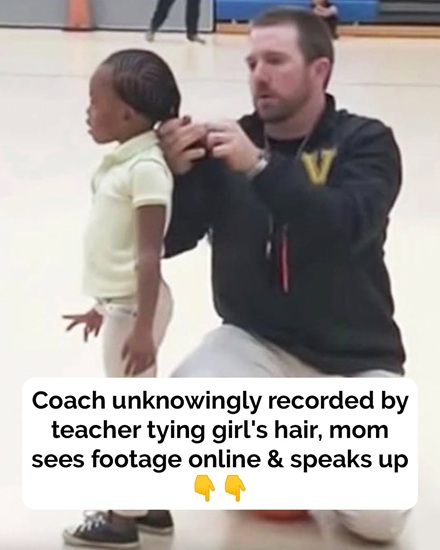
Without hesitation, Oliver agreed to help. Rather than calling someone else or ignoring the request, he simply focused on solving the problem. To reach Kristen’s height more easily, he balanced himself by kneeling on a basketball, allowing him to work carefully without making the child uncomfortable. His attention remained entirely on helping his student, and he appeared completely unaware that another teacher nearby had noticed the touching interaction taking place.
That teacher was Kandice Anderson, who recognized that the simple act represented something much larger than tying a child’s hair. She decided to record the brief moment because it reflected the compassion and everyday dedication that teachers demonstrate so often behind the scenes. The video captured Coach Oliver patiently gathering Kristen’s braids and securing them into a ponytail so the young student could comfortably return to her basketball game. There was nothing staged about the interaction. It unfolded naturally, just as countless similar moments occur in schools every day.
After recording the video, Anderson shared it online with the title, “When your job goes beyond teaching!” The caption reflected a truth that many parents and educators immediately recognized. Teachers are often asked to comfort upset children, help with scraped knees, zip winter jackets, tie shoes, replace lost pencils, calm nervous students before presentations, and solve dozens of unexpected problems throughout the school day. While these responsibilities may not appear in official job descriptions, they are an important part of creating a supportive learning environment for young children.
The video quickly attracted attention on social media because viewers recognized the authenticity of the moment. Rather than focusing on dramatic headlines or extraordinary circumstances, the clip showed an educator responding to a child’s simple request with patience and kindness. Thousands of parents commented that they appreciated seeing a teacher treat a student with such genuine care. Many educators also shared the video, explaining that similar acts happen regularly in schools but rarely receive public attention.
As the video continued to spread, national media outlets began reporting on the story. Good Morning America invited Jonathan Oliver to discuss the unexpected attention he had received. During the interview, he expressed surprise that such a routine moment had become international news. From his perspective, he had simply helped one of his students in the same way many teachers would have done. He explained that making children feel safe, comfortable, and welcome is part of helping them succeed both inside and outside the classroom.
Oliver emphasized that educators work hard to create an atmosphere where students feel as though school is a second home. Especially for younger children, feeling secure can make a tremendous difference in their willingness to learn, ask questions, and participate in activities. He noted that teachers try to show kindness every day because students often spend more waking hours at school than almost anywhere else during the week. Building trust is therefore just as important as teaching academic subjects.
During the interview, Oliver also admitted with humor that his hairstyling abilities were fairly limited. Fortunately, Kristen had only requested a simple ponytail. Laughing about the situation, he joked that if she had asked for a more complicated hairstyle, he probably would have suggested waiting until her mother could help. His lighthearted response made many viewers smile and further demonstrated that he never expected praise for what he considered an ordinary act of kindness.
Although Oliver modestly downplayed the event, parents appreciated what it represented. The story reminded families that many teachers quietly care for students in ways that extend beyond lesson plans and classroom instruction. Children often remember how adults made them feel long after they forget specific assignments or classroom activities. Small moments of compassion can strengthen a child’s confidence and reinforce the belief that trusted adults will be there whenever they need guidance or support.
Kristen’s mother, Miyah Cleckley, later shared her own perspective on the widely viewed video. She explained that watching the interaction filled her with gratitude because she already knew her daughter was in good hands whenever she was with Coach Oliver. Seeing someone treat her child with such natural care confirmed the trust she had placed in the school and its staff. Like many parents, she understood that knowing children are surrounded by compassionate adults provides valuable peace of mind.
Cleckley also revealed that hair care was something Kristen’s father regularly helped with at home. Their family included five daughters and one son, meaning hairstyling had become part of everyday family life. Because of that experience, she found Coach Oliver’s willingness to help especially heartwarming. It reminded many viewers that caring for children is a shared responsibility and that kindness should never be limited by traditional expectations or stereotypes.
The widespread reaction to the story demonstrated that people continue to appreciate authentic examples of compassion in everyday life. At a time when news headlines often focus on conflict and controversy, this brief video offered a refreshing reminder that simple acts of kindness still occur every day inside classrooms across the country. Millions of teachers quietly support their students in similar ways, rarely expecting recognition or praise.
Jonathan Oliver never intended to become an internet sensation. He simply responded to a child’s request with patience, respect, and kindness. Yet his actions encouraged a broader conversation about the important role educators play in children’s lives. His story serves as a reminder that teaching is not limited to textbooks and lesson plans. Sometimes the greatest lessons children learn come from watching caring adults demonstrate empathy, generosity, and genuine concern for others.
The widespread attention surrounding Jonathan Oliver’s act of kindness highlighted something that educators have understood for generations: teaching is about much more than delivering lessons. Every school day presents situations that require patience, flexibility, and compassion. Teachers regularly help children solve problems that have little to do with mathematics, reading, or science. They comfort students who are anxious, encourage those who lack confidence, and provide reassurance when young children face unfamiliar situations. Although these responsibilities often go unnoticed, they contribute significantly to creating an environment where learning can flourish.
One reason Oliver’s story resonated with so many people was its simplicity. There was no elaborate plan, no expectation of recognition, and no attempt to attract public attention. A young student needed assistance with her hair so she could comfortably continue participating in a basketball game, and her teacher responded without hesitation. The moment reflected the trust that children place in the adults responsible for their care. For many viewers, that ordinary interaction became a powerful reminder that kindness often appears in the smallest everyday moments rather than in dramatic events.
Educators frequently serve as role models through their actions rather than their words. Children carefully observe how adults respond to challenges, treat other people, and solve everyday problems. When students see a teacher demonstrate patience, respect, and empathy, those qualities become meaningful examples that can influence their own behavior. Lessons about kindness are often learned through observation, making everyday interactions just as valuable as formal classroom instruction.
For younger children in particular, school represents an important stage in developing confidence and independence. Many kindergarten students are spending extended periods away from their families for the first time. During this transition, trusted teachers help children adapt to new routines while providing reassurance whenever uncertainty arises. Small acts of support—whether tying a shoe, helping with a jacket, locating a missing backpack, or fixing a ponytail—can help young students feel secure enough to focus on learning and participating with their classmates.
Jonathan Oliver’s response also reflected the collaborative relationship that often exists between families and schools. Parents entrust educators with the responsibility of caring for their children throughout the school day. While teachers cannot replace parents, they play an important supporting role by creating safe and welcoming learning environments. Positive communication and mutual trust between schools and families strengthen that partnership and contribute to children’s overall development.
Kristen’s mother publicly expressed her appreciation for Coach Oliver’s kindness, explaining that the video confirmed what she already believed about the school’s caring environment. Her comments illustrated how meaningful it can be for parents to know their children are surrounded by adults who genuinely care about their well-being. For many families, confidence in teachers extends beyond academic instruction to include the knowledge that their children will be treated with patience, dignity, and respect.
The viral video also encouraged many educators to share similar experiences from their own careers. Teachers described helping nervous students before school performances, comforting children after difficult days, assisting with everyday needs, and celebrating personal milestones with their classes. While every situation was different, the common theme remained the same: meaningful education involves building relationships based on trust, encouragement, and compassion.
Importantly, Oliver himself consistently emphasized that he did not view his actions as extraordinary. During interviews, he explained that many teachers regularly perform similar acts of kindness because supporting students is a natural part of their profession. His humility became one of the reasons the story continued to resonate. Rather than presenting himself as exceptional, he highlighted the dedication shown by educators across many schools every day.
The story also challenged common misconceptions about the teaching profession. Public discussions often focus on curriculum, examinations, and classroom performance, but they do not always recognize the countless personal interactions that occur throughout a typical school day. Teachers frequently balance educational responsibilities with emotional support, conflict resolution, classroom management, and encouragement tailored to each child’s individual needs. These responsibilities require patience, communication skills, and genuine concern for students’ well-being.
Acts of kindness such as Oliver’s can have lasting effects that extend well beyond the moment itself. Young children often remember adults who treated them with kindness during their earliest school experiences. Positive interactions help build confidence, strengthen trust, and encourage children to approach future challenges with greater resilience. Although a simple ponytail may seem insignificant to an outside observer, the willingness to help communicates an important message: every child deserves to feel supported and valued.
The positive public response to the video demonstrated that people continue to appreciate authentic stories centered on compassion and everyday humanity. In an online environment where dramatic headlines frequently dominate attention, this brief recording reminded viewers that meaningful moments often happen quietly. The story succeeded because it reflected a genuine interaction rather than an event created for publicity or recognition.
Jonathan Oliver’s experience also serves as a reminder that recognition sometimes arrives unexpectedly. He did not seek media attention, and according to his own statements, he was unaware that another teacher had recorded the interaction. His focus remained entirely on assisting one of his students. That authenticity became one of the defining characteristics of the story and contributed to the overwhelmingly positive reaction it received from parents, educators, and viewers around the world.
Today, years after the original video first appeared online, the story continues to be shared as an example of professional dedication and simple human kindness. While educational methods and technology continue to evolve, the importance of empathy, patience, and respect remains unchanged. These qualities cannot be replaced by textbooks or digital resources because they depend entirely on the character and commitment of the people who choose to teach.
Jonathan Oliver’s story ultimately reminds us that the most memorable moments in education are not always connected to grades, championships, or awards. Sometimes they are found in the quiet decisions teachers make every day—decisions to listen carefully, offer encouragement, solve a small problem, or help a child feel comfortable enough to continue learning. These everyday acts rarely receive widespread attention, yet they often leave the deepest and most lasting impression.
The image of a coach kneeling on a basketball to help a young student tie her hair became more than a viral photograph. It became a symbol of compassion, professionalism, and the everyday commitment demonstrated by educators around the world. While the gesture itself lasted only a few moments, its message continues to resonate: genuine kindness, no matter how small it may appear, has the power to inspire trust, strengthen communities, and remind us of the lasting influence that caring teachers can have on the lives of their students.

