
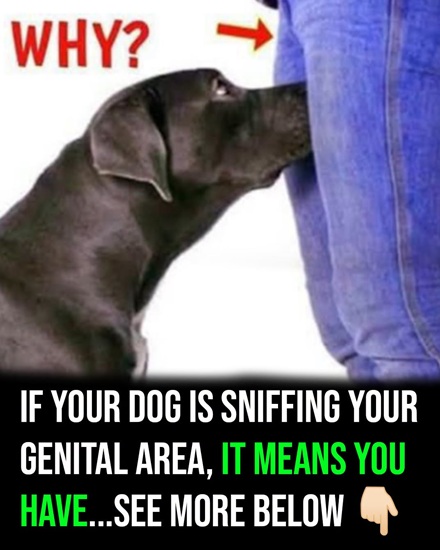
Many dog owners have experienced an awkward moment when their pet enthusiastically greets a visitor by sniffing an area that most people would rather keep private. While the situation can feel embarrassing for the person being greeted, veterinarians and animal behavior experts explain that this behavior is usually a completely natural part of how dogs gather information about the world around them. Rather than acting out of disrespect or poor manners, dogs are relying on one of their most remarkable abilities—their extraordinary sense of smell.
Unlike humans, who depend heavily on vision and spoken language to understand their surroundings, dogs experience much of the world through scent. Their noses provide an enormous amount of information that humans simply cannot detect. Animal behavior specialists often describe a dog’s nose as one of its primary tools for exploring unfamiliar environments, recognizing individuals, and interpreting social situations. For dogs, smelling is not merely a habit—it is an important form of communication and investigation that helps them understand both people and other animals.
Scientists estimate that dogs possess approximately 220 million scent receptors, compared with only a few million in the average human nose. This remarkable difference allows dogs to identify odors at concentrations far beyond human capability. Certain breeds developed for tracking or scent work may possess an even greater ability to distinguish subtle differences between odors. Because of this highly developed sense of smell, dogs naturally investigate unfamiliar scents whenever they meet someone new or encounter changes within their environment.
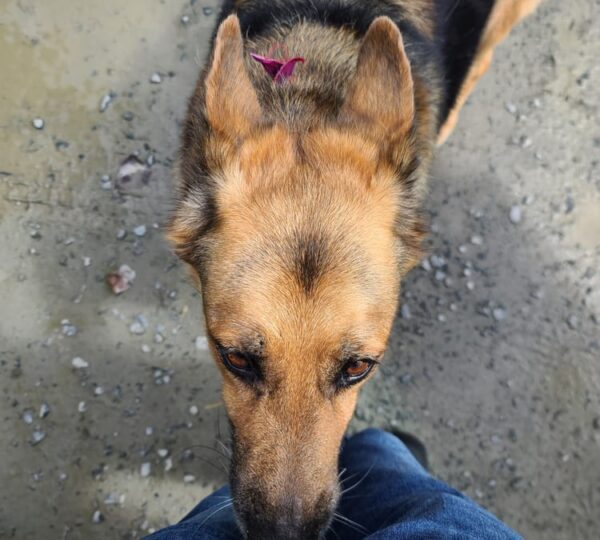
When dogs greet one another, they frequently begin by sniffing areas that contain specialized scent glands. These scents provide information that may help another dog recognize age, sex, reproductive status, emotional condition, and individual identity. This type of greeting is considered normal canine social behavior and has evolved over thousands of years as an efficient method of exchanging information without spoken language. Although human social customs differ significantly, dogs often approach people using similar instincts because scent remains their primary source of information.
Veterinarians explain that people also produce natural body odors that dogs can easily detect. Areas containing apocrine sweat glands, including the underarms and groin, naturally produce stronger scent molecules than many other parts of the body. Since these regions often contain more concentrated individual scent signatures, they naturally attract a curious dog’s attention. For medium-sized and larger dogs, the groin area also happens to be at a convenient height during greetings, making it one of the first places their noses reach.
Dogs are not attempting to embarrass anyone when they investigate these scents. Instead, they are gathering information in much the same way humans might recognize someone by seeing their face or hearing their voice. Animal behavior experts emphasize that this behavior is generally driven by curiosity rather than dominance, aggression, or inappropriate intent. In most healthy, well-socialized dogs, sniffing serves as a normal investigative behavior rather than an indication of a behavioral problem.
A dog’s interest in scent may become even stronger under certain circumstances. For example, people who have recently exercised, spent time outdoors, worn heavily scented products, prepared food, or encountered unfamiliar environments may carry additional odors that attract canine attention. Dogs can often detect subtle changes that humans are completely unaware of, making even ordinary daily activities appear fascinating from a dog’s perspective. Their noses continuously gather information long before people notice anything unusual themselves.
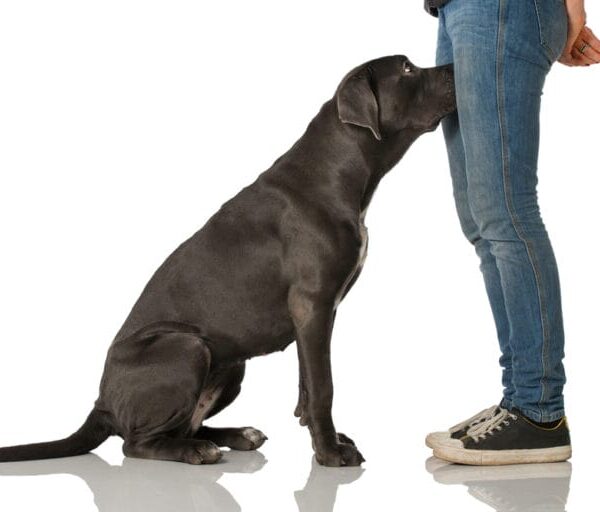
Although this behavior is generally considered normal, many owners understandably prefer that their pets greet visitors in a more comfortable manner. Fortunately, animal behavior specialists explain that natural curiosity does not have to be discouraged through punishment. Instead, dogs can be taught alternative greeting behaviors that satisfy both their instinct to interact and the comfort of guests. Positive reinforcement training encourages dogs to replace unwanted habits with behaviors that are both socially appropriate and rewarding for the animal.
Understanding why dogs behave this way is often the first step toward responding appropriately. Rather than assuming the dog is being disobedient or intentionally rude, recognizing the important role that scent plays in canine communication allows owners to approach training with patience and realistic expectations. Dogs rely on their noses because that is how evolution designed them to understand their surroundings, and learning to work with those instincts often produces better long-term results than attempting to suppress them completely.
As veterinary professionals frequently remind pet owners, curiosity is one of the defining characteristics of healthy canine behavior. A dog’s desire to smell unfamiliar people and environments reflects its natural way of collecting information about the world. By understanding this behavior and responding with calm, positive guidance, owners can help their pets develop polite greeting habits while still respecting the instincts that make dogs such remarkable companions.
Although sniffing is a completely natural part of canine communication, many owners would prefer that their dogs greet visitors in a way that feels more comfortable for everyone involved. Fortunately, animal behavior experts explain that there is no need to punish a dog simply for following its instincts. Instead, the goal is to redirect that curiosity toward more appropriate behaviors while allowing the dog to continue exploring its environment in healthy and enriching ways. Positive, reward-based training is generally considered one of the most effective methods for achieving this balance.
One of the simplest techniques involves teaching an alternative greeting before guests enter the home. Rather than allowing a dog to rush directly toward the front door, many trainers recommend asking the dog to perform a familiar behavior such as “sit,” “stay,” or “touch.” Rewarding the dog immediately after completing the requested behavior helps reinforce calm greetings. Over time, many dogs begin to associate the arrival of visitors with receiving praise, treats, or attention for remaining relaxed instead of jumping or sniffing excessively.
Mental stimulation also plays an important role in managing natural sniffing instincts. Dogs are intelligent animals that benefit from activities encouraging them to use their remarkable sense of smell in appropriate ways. Animal behavior specialists often recommend enrichment activities such as snuffle mats, scent-based puzzle toys, supervised nose-work games, and leisurely walks that allow dogs to investigate interesting smells. These activities satisfy a dog’s natural curiosity while providing valuable mental exercise that can reduce boredom and improve overall well-being.
Daily exercise is another important factor. A dog that receives regular physical activity and opportunities to explore new environments often has healthier outlets for its energy and curiosity. Walks, play sessions, training exercises, and interactive games all contribute to both physical fitness and mental enrichment. While exercise alone does not eliminate greeting behaviors, combining physical activity with consistent training can help many dogs remain calmer when meeting unfamiliar people.
Consistency is especially important during training. If family members respond differently to the same behavior, dogs may become confused about what is expected. Animal behavior professionals generally recommend that everyone in the household follow the same greeting routine whenever possible. Consistent expectations help dogs learn more quickly and reduce mixed signals that may unintentionally reinforce unwanted habits. Calm repetition often produces better long-term results than occasional corrections delivered only after the behavior has already occurred.
Experts also advise owners to pay attention to the comfort level of visitors. Some people enjoy enthusiastic greetings from dogs, while others may feel nervous or uncomfortable around unfamiliar animals. Teaching a dog to greet politely helps create positive experiences for both the pet and guests. Asking visitors to remain calm, avoid sudden movements, and allow the dog a few moments to settle can also contribute to more relaxed introductions, particularly for younger or highly energetic dogs still developing social skills.
It is equally important to remember that sniffing alone is not usually considered a sign of aggression. In most situations, dogs are simply gathering information through one of their strongest senses. However, if a dog suddenly begins displaying unusual behavior, appears fearful, becomes unusually persistent, or shows signs of anxiety alongside excessive sniffing, veterinarians recommend scheduling a health examination. Occasionally, sudden behavioral changes may be associated with underlying medical conditions or increased stress that deserve professional evaluation.
Owners should also avoid using punishment-based techniques for normal investigative behavior whenever possible. Harsh corrections may create confusion because dogs generally do not understand that the owner is reacting to a specific social situation rather than the act of smelling itself. Instead, many trainers encourage redirecting attention, rewarding desirable behaviors, and creating positive learning experiences. Dogs tend to repeat behaviors that consistently produce enjoyable outcomes, making positive reinforcement both humane and highly effective.
Building good manners takes time, especially for puppies and younger dogs that are naturally curious about every new person they meet. Patience is an essential part of successful training. Each calm greeting provides another opportunity to reinforce the behaviors owners would like to see repeated in the future. With regular practice and positive encouragement, many dogs gradually learn that sitting politely or calmly greeting visitors brings greater rewards than rushing forward to investigate immediately.
Ultimately, understanding why dogs rely so heavily on their sense of smell helps owners view this behavior from the animal’s perspective. What may seem awkward to people is often simply a dog’s natural method of collecting information about someone new. By combining patience, consistent training, mental enrichment, and positive reinforcement, owners can encourage polite greetings while still respecting the instincts that have made dogs such skilled companions for thousands of years. Supporting those instincts in appropriate ways helps strengthen the bond between people and their pets while making everyday interactions more enjoyable for everyone.

