
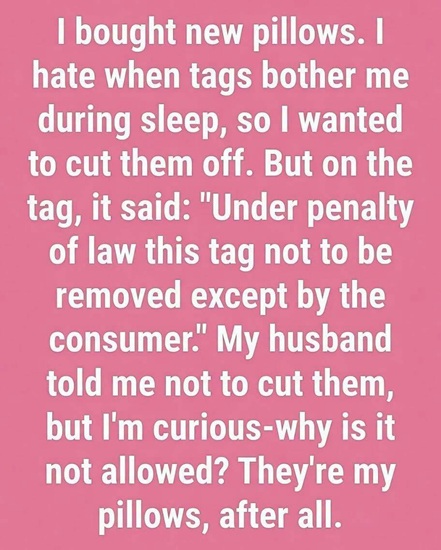
For generations, millions of people have noticed the familiar white label attached to mattresses, pillows, cushions, and upholstered furniture that reads, “Do Not Remove Under Penalty of Law.” For many consumers, those words created a lasting impression that removing the tag from a newly purchased product could somehow result in legal consequences. The warning became so well known that it developed into a popular urban myth, with many people believing the label was directed at homeowners.
In reality, the history behind these tags is very different, and understanding their original purpose provides an interesting look at the development of consumer protection laws. The warning label has existed in various forms for more than a century. During the late nineteenth and early twentieth centuries, the furniture and bedding industries expanded rapidly as manufacturing increased throughout North America.
At that time, regulations governing the materials used inside mattresses and upholstered furniture were far less developed than they are today. Consumers often had no practical way to determine what filling materials had been placed inside products they purchased. Since the stuffing remained hidden beneath fabric coverings, buyers had to rely almost entirely on the honesty of manufacturers and retailers.
Unfortunately, not every company followed ethical manufacturing practices. Historical reports and regulatory records show that some manufacturers used inexpensive or previously used filling materials while marketing their products as containing new, high-quality materials. In some documented cases, fillings included reused cloth fibers, previously used hair, feathers, or other recycled materials that had not always been properly cleaned or processed. While many manufacturers operated responsibly, concerns about deceptive practices eventually attracted the attention of lawmakers and public health officials.
As governments introduced consumer protection regulations during the early twentieth century, several states in the United States established laws requiring manufacturers to disclose the contents of mattresses, pillows, and upholstered furniture. These regulations required labels identifying the filling materials used inside each product. The purpose was straightforward: consumers deserved accurate information about what they were buying, and manufacturers were expected to provide truthful descriptions rather than misleading advertising.
The familiar phrase, “Do Not Remove Under Penalty of Law,” developed as part of those regulatory requirements. However, one important detail is frequently misunderstood. The legal warning was generally directed toward manufacturers, distributors, wholesalers, and retailers responsible for selling products before they reached the final customer. The purpose of the law was to prevent businesses from removing or replacing the original manufacturer labels before sale, which could have concealed the true contents of the product or misrepresented its quality.
Once a mattress or pillow was legally sold to the consumer, the situation changed. In many jurisdictions, the portion of the label addressed to businesses no longer applied to the individual owner. That is why modern labels often include wording such as “Except by the Consumer” or similar language, making it clear that the restriction applies primarily to businesses involved in manufacturing or selling the product rather than to the purchaser using it at home. Although wording varies depending on local regulations and manufacturers, the underlying purpose has remained focused on protecting consumers rather than restricting them.
The widespread misunderstanding surrounding these labels likely developed because many people noticed only the bold warning printed in large letters while overlooking the smaller text explaining who the legal requirement actually applied to. Over time, the simplified version of the warning spread through conversations, family traditions, and popular culture. Eventually, the idea that homeowners could somehow be punished for removing a mattress tag became one of the most persistent household myths, despite lacking legal support in most situations involving personal property.
Although the legal warning itself may not apply to most consumers after purchase, the information printed on these labels continues to serve practical purposes. Many labels identify the materials used inside the product, including natural fibers, foam, polyester, latex, memory foam, feathers, or other filling materials. This information may be useful when comparing products, evaluating quality, or determining whether certain materials are appropriate for individual preferences or health considerations.
Care instructions also frequently appear on product labels. Manufacturers may include recommendations regarding cleaning methods, drying temperatures, stain removal, or whether a particular item should be machine washed or professionally cleaned. Following those recommendations may help extend the useful life of the product while reducing the risk of accidental damage. Removing the label without first reviewing or recording those instructions could make future care decisions more difficult.
The labels may also provide valuable information for individuals who have allergies or sensitivities to specific materials. Some consumers intentionally choose products containing natural fibers, while others prefer synthetic alternatives because of allergies to feathers, wool, or latex. The identification provided on the manufacturer label allows consumers to understand what materials are present inside products they use every day, helping them make informed decisions based on their personal needs.
Warranty information represents another practical reason many people choose to keep these labels intact. Certain manufacturers include product identification numbers, manufacturing dates, batch codes, or warranty references on the attached labels. If warranty service becomes necessary or if questions arise regarding the product, having the original label available may simplify communication with the manufacturer or retailer. For that reason, some consumers prefer leaving the tag attached even if they find it slightly inconvenient.
The story behind the mattress label demonstrates how consumer protection laws evolved alongside modern manufacturing. Rather than attempting to regulate what individuals do inside their own homes, these laws were designed to improve transparency throughout the marketplace. They helped establish expectations that manufacturers should accurately describe their products and provide truthful information to buyers. Although the famous warning has become the subject of jokes and urban legends, its historical purpose reflects an important milestone in the broader development of consumer rights and product labeling standards.
Although many people now understand that the famous mattress label was not intended to threaten homeowners, the information attached to modern mattresses, pillows, and upholstered furniture continues to serve several useful purposes. Rather than viewing the label as an unnecessary piece of fabric, consumer protection experts generally recommend understanding the information it provides before deciding whether to remove it. The tag is no longer simply a regulatory requirement—it is also a convenient source of product information that may prove valuable throughout the life of the item.
One of the most important functions of the label is identifying the materials used inside the product. Modern mattresses are manufactured using a wide variety of components, including memory foam, polyurethane foam, natural latex, cotton, polyester fibers, wool, steel coils, gel-infused foam, and other specialized materials. Knowing exactly what is inside a mattress or pillow allows consumers to compare products more accurately and make purchasing decisions that best suit their comfort preferences and health needs.
Material information can also be particularly helpful for individuals with allergies or sensitivities. Some people experience allergic reactions to natural latex, feathers, wool, or certain synthetic materials. Product labels often identify these materials, allowing consumers to recognize potential allergens before problems develop. While not every reaction can be prevented through labeling alone, accurate product information helps individuals make informed decisions together with guidance from healthcare professionals when necessary.
Another valuable feature of many product labels is the inclusion of care instructions. Mattresses, pillows, mattress protectors, and cushions may all require different cleaning methods depending on the materials used in their construction. Some products should never be machine washed, while others may require spot cleaning only or specific drying conditions. Following the manufacturer’s recommendations may help preserve the product’s structure, appearance, and performance while reducing the likelihood of accidental damage caused by improper cleaning techniques.
Many labels also contain manufacturing information that may become useful years after purchase. Batch numbers, production dates, factory identification codes, and model numbers often appear on the attached tag. If a product recall, warranty claim, or customer service inquiry becomes necessary, these details help manufacturers identify the exact product involved. Keeping this information available can simplify communication with retailers or manufacturers if questions arise later.
Warranty coverage represents another practical consideration. Some manufacturers request product identification information when processing warranty claims related to defects in materials or workmanship. Although warranty requirements differ among companies, retaining identifying information from the original label may make future claims easier to document. Consumers who prefer removing the physical tag sometimes choose to photograph both sides of the label first so the information remains available if needed.
The label may also benefit future owners if a product is donated, resold, or transferred to another household. Many charitable organizations, resale businesses, and secondhand marketplaces encourage accurate descriptions of donated or pre-owned items. Product labels help identify the age, materials, and manufacturer of a mattress or cushion, allowing prospective owners to better understand what they are receiving. Some organizations have specific policies regarding accepted bedding items, making manufacturer information especially useful during the donation process.
It is important to recognize that labeling requirements differ between countries, states, and product categories. Consumer protection laws continue evolving as manufacturing standards change and new materials become available. As a result, wording found on labels today may differ from labels attached to older products manufactured decades ago. Consumers should therefore read the entire label rather than relying solely on the familiar phrase printed in large lettering.
The widespread myth surrounding mattress tags also provides an interesting example of how misunderstandings can spread over generations. Many people first heard the warning from parents or relatives who had heard the same story years earlier. Because few individuals ever researched the original purpose of the regulation, the misconception continued circulating through families, schools, television programs, and popular culture. This illustrates how easily incomplete information can become accepted as common knowledge even when the full explanation is publicly available.
Today, consumer protection extends well beyond mattress labels. Modern regulations often require manufacturers to provide accurate information about ingredients, materials, safety warnings, energy efficiency, environmental performance, and product certifications across many industries. These labeling requirements help consumers compare products more effectively while encouraging transparency throughout manufacturing and retail supply chains. The mattress label therefore represents one small part of a much broader system designed to support informed purchasing decisions.
Understanding the history behind the label also highlights how consumer laws have adapted alongside improvements in manufacturing. Early regulations focused primarily on preventing deceptive filling materials from being hidden inside bedding products. Modern quality control standards, manufacturing oversight, and product testing have significantly improved consistency across much of the industry. Even so, accurate labeling continues to play an essential role because consumers still deserve reliable information about products they purchase for themselves and their families.
For individuals who own older mattresses or furniture, the decision to remove the label is generally a matter of personal preference after purchase, subject to any applicable local laws and the specific wording on the label. Many people leave the tag attached because it contains useful information, while others remove it for comfort or appearance after first recording important product details. Reading the complete label carefully before making that decision is usually the most practical approach.
Ultimately, the famous “Do Not Remove Under Penalty of Law” label is far less mysterious than popular myths suggest. Rather than representing a warning directed at homeowners, its historical purpose was to promote honesty within the manufacturing and retail industries and to provide consumers with accurate information about the products they purchased. That mission remains relevant today. Product transparency, truthful labeling, and informed consumer choice continue to be fundamental principles of modern consumer protection, making the small label on a mattress a lasting reminder of the importance of accurate information in everyday life.

