
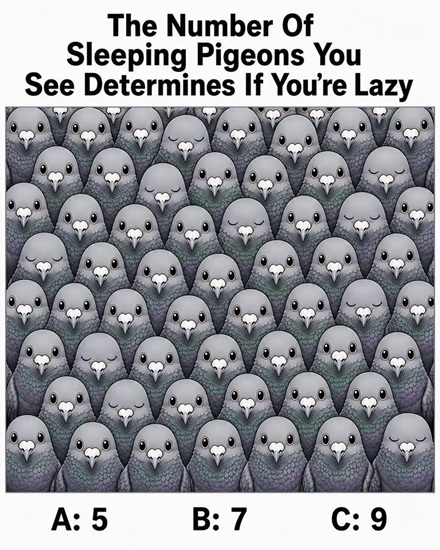
Optical illusions and visual perception puzzles have fascinated people for generations. Images that appear to contain hidden objects, multiple figures, or unusual patterns are frequently shared online because they encourage viewers to slow down, look more carefully, and compare what they notice with what others see. While these visual challenges are entertaining and can spark interesting conversations, psychologists emphasize that they should not be considered scientifically validated personality tests.
Instead, they provide an opportunity to explore how the human brain processes visual information and why different people may notice different details when viewing the same image. Human vision is far more complex than simply recording everything in front of us. Every second, the brain receives enormous amounts of visual information from the eyes and must quickly decide which details deserve immediate attention.
This process allows people to recognize faces, identify movement, read text, and navigate their surroundings efficiently. Because the brain constantly filters information, two individuals may naturally focus on different parts of the same picture without either observation being incorrect. Differences in attention, previous experiences, expectations, and viewing conditions can all influence what someone notices first.
Researchers in psychology and neuroscience have spent decades studying visual perception. Their work shows that perception is influenced by a combination of sensory information and cognitive processes. The brain does not simply capture a perfect photograph of the outside world. Instead, it interprets incoming information using previous knowledge, context, and expectations. This is one reason optical illusions remain so interesting—they demonstrate that perception is an active process rather than a passive one. Although these illusions reveal important principles about human vision, they do not provide reliable evidence about intelligence, personality, or future behavior.
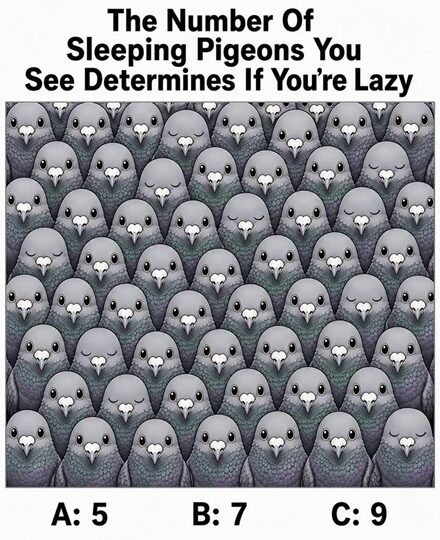
Images containing hidden animals, faces, or objects often become popular on social media because they invite people to compare their observations with friends and family members. Some versions claim that spotting a particular number of objects reveals whether someone is creative, analytical, or optimistic. However, experts generally caution against treating such conclusions as scientific facts. Most viral personality quizzes are created for entertainment rather than psychological assessment, and they have not undergone the careful testing required for validated psychological tools. Enjoying these activities is perfectly reasonable, provided they are viewed as games rather than diagnostic evaluations.
Many factors can influence how quickly someone identifies objects in a visual puzzle. Lighting conditions, screen size, viewing distance, image quality, age, visual acuity, and even temporary distractions may all affect what a person notices. Someone looking at the same image on a mobile phone may have a different experience than someone viewing it on a large computer monitor. Likewise, taking more time to examine an image often reveals details that were not immediately visible during the first glance. These normal variations demonstrate the flexibility of human perception rather than indicating differences in personality.
Selective attention is another well-established concept in psychology that helps explain why people notice different elements of the same scene. Because the brain cannot process every visual detail simultaneously with equal priority, it naturally focuses on information that appears most relevant at a particular moment. This ability allows people to function efficiently in everyday life, but it also explains why certain objects may initially go unnoticed. Famous psychological demonstrations have shown that when attention is directed toward one task, individuals may completely overlook other visible events occurring in the same scene.
Visual puzzles can also encourage careful observation and sustained concentration. Searching for hidden objects requires viewers to scan an image methodically, compare shapes, recognize patterns, and distinguish meaningful details from background information. These activities may provide enjoyable mental stimulation and encourage patience, particularly when completed without rushing. Although there is no evidence that solving such puzzles measures personality traits, many people simply enjoy the challenge of exercising their observation skills and discussing different interpretations with others.
If an image appears to contain several sleeping birds, hidden faces, or overlapping figures, there is no universally “correct” interpretation regarding personality. Some people naturally identify larger shapes first, while others focus on smaller details before recognizing the complete image. Neither approach is inherently better than the other. Instead, these differences highlight the remarkable adaptability of the human visual system and the many ways people process the same information. Psychologists generally recommend interpreting these differences with curiosity rather than assigning fixed personality labels.
Ultimately, optical illusions remind us that seeing and understanding are closely connected but not identical processes. The brain continuously organizes, interprets, and updates visual information to help people understand their surroundings. While viral image challenges can be enjoyable conversation starters, they should not replace scientifically validated assessments when evaluating cognitive abilities or personality characteristics. Appreciating these puzzles for what they truly are—interesting demonstrations of visual perception—allows people to enjoy them while remaining grounded in evidence-based scientific understanding.
Scientists continue to study visual perception because it provides valuable insight into how the human brain interprets the world. Research in psychology, neuroscience, and vision science has shown that perception depends on a combination of sensory input, attention, previous experiences, and the surrounding context. As a result, two people may honestly describe the same image differently without either observation being incorrect. These natural variations are considered a normal part of human perception rather than evidence of specific personality characteristics.
One reason optical illusions remain so popular is that they demonstrate how efficiently the brain processes information. Instead of examining every visual detail individually, the brain quickly organizes shapes, colors, contrast, and patterns into meaningful objects. This ability allows people to recognize familiar scenes within fractions of a second during everyday activities such as driving, reading, or identifying faces. Occasionally, however, the shortcuts that make perception efficient also create visual ambiguities, allowing multiple interpretations of the same picture. Optical illusions highlight these fascinating characteristics of normal visual processing.
Attention also plays an important role in determining what someone notices first. Factors such as fatigue, stress, distractions, lighting conditions, viewing distance, and even the size of the display can influence visual performance. Someone viewing an image after a long day may scan it differently than another person who is well rested. Likewise, a person using a mobile phone may identify different details compared with someone viewing the same image on a larger monitor. These everyday factors demonstrate why first impressions of visual puzzles naturally vary from person to person.
Researchers often use carefully designed visual tasks to investigate topics such as attention, eye movement, pattern recognition, and decision-making. These scientific studies are conducted under controlled conditions and involve standardized methods that allow researchers to compare results across many participants. Viral internet quizzes, by contrast, are generally created for entertainment and are not subjected to the same level of scientific validation. Although they may encourage observation and discussion, they should not be interpreted as reliable tools for evaluating intelligence, personality, emotional characteristics, or future behavior.
Enjoying optical illusions can still provide several positive experiences. Many people find them relaxing because they encourage focused attention and temporarily shift concentration away from everyday distractions. Others appreciate the opportunity to discuss different observations with family members or friends, discovering that everyone may notice different aspects of the same picture. These conversations often highlight the diversity of human perception and remind people that different viewpoints can exist without one necessarily being more accurate than another.
Educators sometimes incorporate visual puzzles into classroom activities to introduce students to concepts involving perception, cognition, and critical thinking. Rather than presenting the puzzles as psychological tests, teachers often use them to demonstrate how the brain organizes information and how expectations can influence interpretation. This educational approach helps students distinguish between evidence-based scientific findings and entertainment-based claims commonly encountered online. Developing this critical thinking skill is valuable when evaluating many different types of information.
Individuals interested in learning more about perception can explore resources published by universities, psychology organizations, neuroscience researchers, and vision scientists. These sources explain topics such as selective attention, visual processing, depth perception, color perception, and pattern recognition using findings supported by scientific research. Understanding these concepts provides a more accurate appreciation of how the human visual system functions than relying solely on simplified conclusions often presented in social media posts or viral quizzes.
It is also helpful to remember that personality is a complex combination of many factors, including genetics, life experiences, environment, learning, relationships, and individual development over time. Qualified psychologists use standardized assessment methods that undergo extensive scientific testing before they are applied in research or clinical settings. A single image, visual illusion, or counting exercise cannot reliably determine a person’s character, strengths, or future potential. For that reason, visual puzzles are best appreciated as enjoyable activities rather than diagnostic evaluations.
The continuing popularity of optical illusions reflects people’s natural curiosity about how the brain works. Every illusion demonstrates that perception is an active process involving interpretation rather than simply recording everything exactly as it appears. By understanding this distinction, viewers can appreciate these images both as entertaining challenges and as examples of the remarkable capabilities of the human mind. The variety of observations reported by different individuals illustrates the flexibility of perception rather than suggesting fixed psychological categories.
Overall, optical illusions offer an engaging way to explore the science of vision while encouraging careful observation and thoughtful discussion. They remind us that human perception is influenced by attention, context, and the brain’s remarkable ability to organize complex visual information. When viewed with an understanding of what scientific research does—and does not—support, these visual challenges can remain enjoyable educational activities that promote curiosity without making unsupported claims about personality or individual abilities.

