
The death of longtime U.S. Senator Lindsey Graham has marked the end of one of the most recognizable political careers in modern American history. For more than three decades, Graham was a central figure in debates over national security, foreign policy, judicial appointments, and government spending. His passing at the age of 71 prompted tributes from political allies and opponents alike, as many reflected on the remarkable journey of a man who rose from modest beginnings in rural South Carolina to become one of the most influential members of the United States Senate.
While his political positions often generated passionate debate, few questioned his dedication to public service or his commitment to representing his state. According to official statements released by his office, Graham passed away on the evening of July 11, 2026, after suffering a sudden medical emergency. Emergency responders were dispatched to his Capitol Hill residence after reports that he was experiencing severe chest pain.
Despite immediate medical intervention and efforts by paramedics, he was later pronounced dead at George Washington University Hospital. Preliminary medical findings indicated that he suffered an acute aortic dissection associated with chronic cardiovascular disease, a life-threatening condition in which the inner layer of the body’s main artery tears unexpectedly. The news came as a profound shock across Washington, particularly because Graham had remained publicly active only hours before his passing.
Only days earlier, the senator had returned from an important diplomatic visit to Ukraine, where he met with President Volodymyr Zelensky and other senior officials. During the trip, Graham continued advocating for strong American support for Ukraine while discussing additional sanctions targeting Russia. Throughout his Senate career, he consistently argued that the United States should remain actively engaged with its allies and maintain a strong national defense. Even during his final days, he remained heavily involved in international affairs and legislative negotiations, demonstrating the work ethic that had defined much of his public life.

President Donald Trump, who had once competed against Graham during the 2016 Republican presidential primary before later becoming one of his closest political allies, praised the senator’s decades of service. Trump ordered American flags to be flown at half-staff in his honor and described Graham as both a trusted adviser and a close personal friend. Leaders from both major political parties also expressed condolences, recognizing that despite their disagreements, Graham had earned respect for his willingness to engage in difficult policy discussions and maintain working relationships across political lines.
Lindsey Graham’s journey began far from the halls of Congress. He was born on July 9, 1955, in Central, South Carolina, a small town where his parents operated a modest business known as the Sanitary Cafe. The establishment served as both a restaurant and pool hall, becoming an important gathering place for members of the local community. Graham often spoke openly about his humble upbringing, explaining that his family lived in a small apartment attached to the business. Rather than growing up surrounded by privilege, he learned the importance of hard work from an early age by helping his parents operate the family business before and after school.
As a child, Graham stocked supplies, cleaned tables, assisted customers, and completed numerous daily chores inside the restaurant. His parents expected every family member to contribute, teaching him responsibility long before he entered public life. Although the family faced financial challenges, Graham later credited those early experiences with shaping his appreciation for discipline, perseverance, and personal accountability. Living in a small Southern town during a period of significant social change also exposed him to the complexities of American society, lessons that would influence many of his political views later in life.
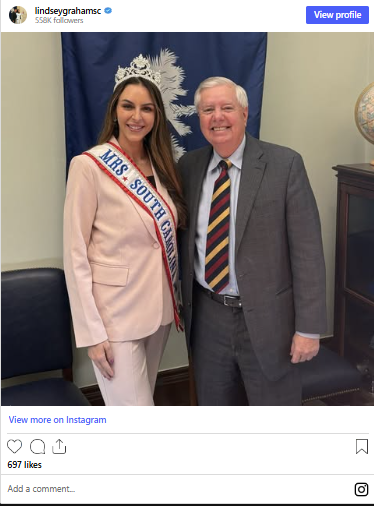
During his teenage years, Graham participated in school sports and community activities while maintaining average academic performance. Friends remembered him as outgoing, competitive, and ambitious, even if few imagined he would eventually become one of South Carolina’s most recognizable political figures. Despite occasionally joking about entering politics, Graham’s ambitions gradually became more serious as he approached adulthood. He became the first member of his extended family to attend college, enrolling at the University of South Carolina, where he earned both his undergraduate degree and later his law degree.
However, Graham’s life changed dramatically while he was still a young college student. Within a relatively short period, both of his parents passed away following serious illnesses. Their deaths left Graham, still in his early twenties, responsible for helping care for his much younger sister, Darline.
Rather than pursuing opportunities elsewhere, he chose to place family responsibilities first. He became her legal guardian, ensuring she could continue her education and receive the support she needed during an incredibly difficult period. Graham later described this chapter as one of the defining experiences of his life, explaining that it taught him the meaning of sacrifice, duty, and unconditional family commitment.
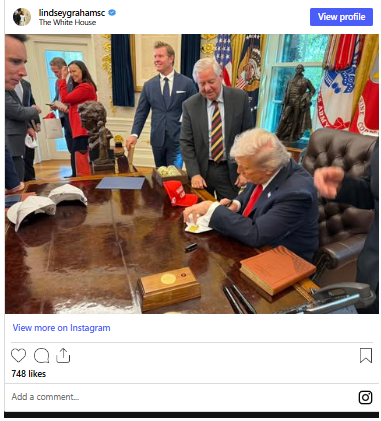
After completing law school, Graham entered military service by joining the United States Air Force as a Judge Advocate General (JAG) officer. His military career ultimately lasted more than three decades through active duty, the Air National Guard, and the Air Force Reserve. During those years, he served both in the United States and overseas, including assignments in Germany.
Later, while serving in Congress, he continued fulfilling military responsibilities and visited deployed American service members during operations in Iraq and Afghanistan. He eventually retired with the rank of Colonel, a distinction he frequently described as one of the greatest honors of his professional life.
Graham’s transition into elected office came during the early 1990s. He first served in the South Carolina House of Representatives before successfully running for the U.S. House of Representatives in 1994. His election marked a significant political milestone, as he became the first Republican elected from his congressional district in more than a century.
Eight years later, in 2002, South Carolina voters elected him to the United States Senate, where he would remain for the rest of his career. Over the following decades, Graham developed a reputation as one of the Senate’s most influential voices on military affairs, judicial nominations, intelligence issues, and foreign policy.
Throughout his years in Washington, Graham served on numerous powerful committees, including the Senate Judiciary Committee, the Appropriations Committee, the Budget Committee, and the Committee on Environment and Public Works.
He frequently worked alongside presidents from both political parties on issues involving national security, military funding, and international diplomacy. Although many of his positions generated strong disagreement, even political opponents often acknowledged his extensive knowledge of foreign affairs and his willingness to engage directly with difficult policy challenges.

Beyond his legislative accomplishments, Lindsey Graham remained one of the most recognizable personalities in American politics because of his direct communication style and willingness to engage with political opponents. Throughout his Senate career, he often emphasized that disagreement should never prevent lawmakers from maintaining professional relationships. Although political divisions in Washington became increasingly intense over the years, Graham frequently worked across party lines on issues involving national security, immigration reform, veterans’ affairs, and judicial matters. His approach earned him both strong supporters and vocal critics, but it also demonstrated his belief that compromise was sometimes necessary to move legislation forward.
Foreign policy remained one of the defining themes of Graham’s public service. He consistently argued that the United States should maintain a strong military presence, support democratic allies, and respond firmly to global security threats. Throughout his career, he traveled extensively to meet military personnel stationed overseas and regularly visited conflict zones to better understand the challenges facing American service members. His military background gave him firsthand insight into defense issues, and he often relied on those experiences when participating in Senate debates concerning national security and international relations.
During the final years of his Senate service, Graham continued to play a significant role in discussions surrounding the war in Ukraine. He publicly supported military and humanitarian assistance while advocating for additional economic sanctions against Russia. Only days before his passing, he traveled to Kyiv as part of a congressional delegation, meeting with Ukrainian officials and discussing ongoing international cooperation. The visit reflected his long-held belief that American leadership remained essential in addressing major global conflicts and protecting international stability.
Despite spending much of his adult life in public office, Graham remained a notably private individual. Throughout the years, many media outlets and political commentators speculated about his personal life because he never married. Graham addressed those questions on several occasions, explaining that his demanding career, extensive travel, and family responsibilities simply never aligned with the right opportunity to start a family of his own. He consistently rejected speculation about his private life while maintaining that his focus had always remained on serving his constituents and fulfilling his professional responsibilities.
In interviews over the years, Graham also reflected on the lasting impact of losing both of his parents while he was still a young adult. Becoming responsible for helping raise his younger sister profoundly shaped his priorities and influenced many of the decisions he made during the early stages of his career. Rather than pursuing personal ambitions without interruption, he chose to remain close to home until his sister’s future was secure. Family members later spoke about his dedication during that difficult period, describing him as someone who willingly accepted enormous responsibility at an age when many young adults were only beginning to establish their own lives.
Friends and colleagues often described Graham as someone who possessed a sharp sense of humor despite the seriousness of his work. Behind the scenes, he was known for building friendships with senators from both parties, sharing meals with colleagues, and maintaining relationships that extended beyond political disagreements. Those who worked alongside him frequently remarked that while Senate debates could become heated, Graham rarely allowed legislative disagreements to become personal conflicts. His ability to separate policy disputes from personal relationships earned him respect throughout Capitol Hill.
Following the announcement of his death, tributes poured in from across the political spectrum. Fellow senators praised his decades of dedication to public service, while governors, military leaders, and international officials expressed appreciation for his commitment to strengthening alliances and supporting members of the armed forces. Many remembered his willingness to travel wherever American interests required attention, often visiting military bases and conflict regions that few elected officials personally experienced. For many service members, Graham’s continued involvement reflected genuine respect for those serving in uniform.
South Carolina residents also reflected on Graham’s long connection to their state. Throughout his political career, he regularly returned home to meet with local communities, attend public events, and discuss issues affecting farmers, veterans, businesses, and families. Although opinions about his political decisions often varied, many constituents acknowledged that he remained accessible and actively engaged with the people he represented. His long tenure made him one of the most influential political figures in modern South Carolina history.
Following his passing, attention quickly turned toward the process of filling the vacant Senate seat. Under South Carolina law, the governor is responsible for appointing a temporary replacement until voters select a new senator in a special election. Political analysts immediately began discussing how Graham’s absence could influence the balance of power in the Senate, particularly given his senior leadership positions and extensive committee assignments. His departure represented not only the loss of an experienced legislator but also the conclusion of more than thirty years of continuous congressional service.
Looking back over Lindsey Graham’s life, his story reflected determination, resilience, and an unwavering commitment to public service. From helping his parents in a small-town restaurant to serving more than three decades in Congress and the military, he experienced challenges that shaped both his personal character and political philosophy. His career included victories, controversies, policy debates, and moments of national significance, but throughout it all, he remained deeply connected to the values that guided him from childhood.
His legacy will ultimately be evaluated through the legislation he supported, the military personnel he advocated for, the judicial nominations he helped shape, and the countless foreign policy decisions in which he participated. Supporters will remember his commitment to national defense, while critics will continue debating many of his political positions. Such discussions are part of the legacy of nearly every influential public servant whose career spans several decades.
Regardless of political perspective, Lindsey Graham’s life illustrates how determination and perseverance can carry someone from humble beginnings to one of the highest levels of public service in the United States. His journey—from a young boy working in his family’s small restaurant in Central, South Carolina, to a senior United States senator involved in some of the nation’s most consequential decisions—remains a remarkable chapter in modern American political history. His passing closes a significant era, but the impact of his work will continue to be studied and debated for years to come.
