The glossy cruise brochure stayed on the kitchen counter for nearly a week before Helen finally accepted that it was real. Every morning her husband, Daniel, picked it up while drinking his coffee, smiling as he flipped through the photographs of sparkling blue water, elegant dining rooms, and tropical islands. According to him, the vacation had been won through a nationwide sales competition at work, a reward reserved for only the company’s highest performers.
He proudly explained that everything had already been paid for, including accommodations, meals, entertainment, and excursions. It sounded like the opportunity of a lifetime for an ordinary family that had spent years carefully budgeting every dollar. Helen wanted to believe him because they had struggled financially for a long time, and the idea that something good had finally happened seemed almost impossible to ignore. Only days later, however, everything changed inside the quiet examination room at Dr. Evans’ medical office
What had started as a routine prenatal appointment quickly became something much more serious. After carefully studying the ultrasound monitor, Dr. Evans turned toward the couple with a calm but concerned expression. She explained that Helen was not carrying one baby but three. The unexpected news filled the room with silence before Daniel finally laughed in disbelief. The excitement lasted only a few moments because the doctor immediately explained that Helen’s blood pressure had risen dangerously high. Combined with a multiple pregnancy, those medical findings created a high-risk situation that required immediate intervention if the babies were to remain healthy.
Dr. Evans carefully outlined the next steps, emphasizing that strict bed rest offered the best chance of prolonging the pregnancy. Every additional week inside the womb could dramatically improve the babies’ chances of survival after birth. She explained that Helen needed to remain off her feet except for essential medical appointments and basic personal needs.
Household chores, shopping, cooking, and virtually every physical responsibility would now fall on Daniel. The physician spoke clearly about the risks of premature labor, complications related to high blood pressure, and the importance of minimizing stress. Helen listened carefully, understanding the seriousness of every word. Daniel nodded politely throughout the conversation, but Helen noticed his eyes repeatedly drifting toward the brochure sticking out of his briefcase.
The moment they returned home, Helen believed the decision was obvious. She calmly told Daniel they needed to cancel the cruise immediately because their priorities had changed. She expected disappointment, perhaps even frustration, but never imagined resistance. Daniel stood quietly in the living room holding the brochure while staring at the colorful photographs.
After several uncomfortable minutes, he explained that he had already arranged several months away from work and hated the thought of losing what he considered a once-in-a-lifetime opportunity. Helen could hardly believe what she was hearing. Their unborn daughters depended on stability, constant monitoring, and support at home, yet Daniel seemed unable to let go of a vacation that suddenly meant very little compared with the health of his family.
Instead of unpacking the brochure and calling the travel company, Daniel began packing a suitcase. Helen watched from the couch in disbelief as shirts, shoes, and travel accessories disappeared into neatly folded compartments. When she finally asked what he thought he was doing, he answered with complete seriousness that he still intended to leave in three days.
He insisted that the trip would help him clear his mind before the challenges of raising triplets began. According to him, returning relaxed would somehow make him a better husband and father. Helen struggled to understand how someone could justify leaving a pregnant wife under strict medical supervision while preparing for months of luxury travel.
Their conversation quickly became one of the most painful arguments of Helen’s life. She begged him to reconsider, reminding him that she could go into labor at any moment. She asked who would buy groceries, drive her to the hospital if complications developed, or simply sit beside her during frightening nights when anxiety became overwhelming.
Daniel offered vague promises about phone calls and regular check-ins, insisting that she had always managed difficult situations before and would continue doing so now. Rather than acknowledging her fear, he focused on his own disappointment. Every explanation seemed centered on what he needed instead of what his wife and unborn daughters required. Helen realized that she was speaking to someone who had already made his decision.
Three days later Daniel left for the cruise despite Helen’s repeated pleas. Standing in the doorway with his suitcase, he promised they would talk constantly and that everything would somehow work out. Helen watched him drive away feeling more abandoned than angry. She still believed that once he reached the ship and had time to think, he would realize his mistake and return home early.
Instead, only hours after his departure, severe abdominal pain woke her shortly after midnight. Her water had broken unexpectedly, and emergency medical services rushed her to the hospital. Within hours, doctors determined that an emergency delivery was necessary to protect both Helen and the babies.
The premature birth required an immediate cesarean section. When Helen regained consciousness after surgery, exhaustion mixed with fear as nurses explained that all three baby girls had been transferred directly to the neonatal intensive care unit. Each infant required specialized equipment, constant monitoring, and expert medical care because they had arrived far earlier than expected.
Despite her own pain and emotional shock, Helen reached for her phone and called Daniel several times. Every call went unanswered. She finally left a voicemail explaining that the babies had been born and begging him to contact her. Hours passed without a reply, leaving Helen alone in one of the most important moments of her life.
Later that afternoon, a nurse wheeled Helen into the NICU for her first opportunity to see her daughters. Tiny incubators surrounded the premature infants while machines quietly monitored every heartbeat and breath. Helen carefully took a photograph showing all three girls sleeping peacefully beneath warm hospital lights. She sent the image to Daniel hoping it would finally convince him to return home immediately.
Eventually her phone vibrated with a response. Expecting concern or excitement, Helen instead found a single word on her screen: “Cute.” Nothing more. No questions about their health. No promise to come home. Just one detached word describing the daughters he had chosen not to meet. That brief message became the painful moment Helen realized her husband had abandoned far more than a pregnancy.
The weeks that followed became the most difficult period Helen had ever experienced. Every day revolved around hospital visits, medical updates, insurance paperwork, and endless hours beside the incubators. Nurses carefully monitored each baby around the clock while doctors explained the challenges that premature infants often face, including breathing difficulties, feeding problems, and the constant risk of infection.
Helen tried to remain optimistic for her daughters, even though she often felt physically exhausted and emotionally overwhelmed. Every small improvement became a reason to celebrate, whether it was a few extra grams of weight, stronger breathing, or the ability to spend a little more time outside the incubator. Throughout it all, Daniel remained thousands of miles away.
Although Daniel occasionally replied to messages, his responses became shorter and more distant as the weeks passed. Instead of asking detailed questions about the babies’ condition, he usually answered with brief comments such as “Hope everything is okay” or “Busy today.” When Helen asked whether he had told anyone on the cruise that his daughters had been born prematurely, he avoided the question completely.
She began noticing photographs on his social media accounts showing expensive dinners, beaches, excursions, and smiling vacation companions. In one image, part of another woman’s shoulder was visible beside him after being poorly cropped from the picture. Those posts made it increasingly difficult for Helen to believe that his absence was simply poor judgment. It appeared that he had chosen an entirely different life while she fought to keep their family together.
The emotional burden quickly became matched by financial pressure. Hospital bills arrived almost daily, each envelope reminding Helen of the enormous medical costs associated with caring for three premature infants. Between insurance forms, pharmacy expenses, transportation, and basic household needs, every decision required careful planning.
While searching through Daniel’s home office for financial records, Helen made a discovery that completely changed her understanding of everything that had happened. Hidden beneath old sales reports were bank statements, mortgage documents, and loan agreements she had never seen before. At first she assumed they were ordinary paperwork, but one signature immediately caught her attention. Her own name appeared on several legal documents, yet she had never signed them.
Reading further, Helen realized there had never been any company prize at all. Daniel had secretly taken out a second mortgage on their home months earlier. According to the paperwork, the borrowed money had been used to finance the luxury cruise and other personal expenses. Even more disturbing was the discovery that her signature had apparently been forged to complete the transaction. The expensive vacation Daniel claimed to have won had actually been purchased using debt secured against the family home without her knowledge or consent. Sitting alone at the kitchen table while one baby slept nearby, Helen finally understood that the deception had begun long before the cruise ever departed.
Instead of allowing fear to control her, Helen decided it was time to protect herself and her daughters. The following morning she contacted an attorney specializing in family law and financial fraud. Together they reviewed the documents, discussed the forged signatures, and explored her legal options. She also informed the bank that she disputed the mortgage paperwork and believed fraudulent documents had been submitted in her name. Although the process would undoubtedly be difficult, Helen finally felt as though she was taking control of a situation that had spiraled beyond her control. Every decision she made centered on providing stability for her daughters rather than preserving a marriage built on dishonesty.
Nearly four months after leaving, Daniel finally informed Helen that he was returning home. He sent a brief message saying they needed to discuss the future, including finances and their relationship. By then, Helen had already prepared for that conversation.
Two days before his arrival, doctors discharged the three girls from the hospital after months of careful medical supervision. Bringing them home together was an emotional milestone filled with gratitude, relief, and hope. Although the babies remained small and required frequent care, they were finally healthy enough to begin life outside the hospital surrounded by family.
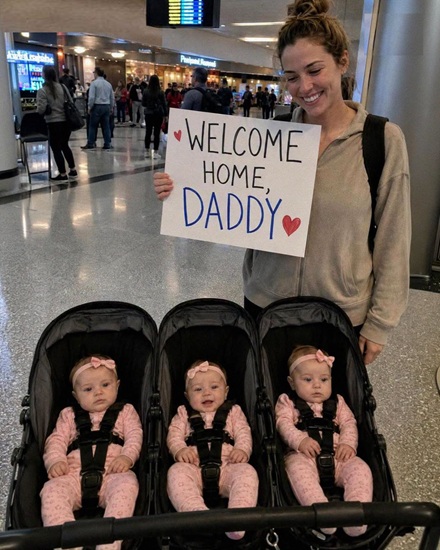
On the morning Daniel’s flight landed, Helen dressed all three daughters in matching pink outfits and carefully placed them inside a triple stroller. She also carried a simple handmade sign reading, “Welcome Home, Daddy.” The message was not intended as sarcasm but as a reminder of what he had missed.
As passengers began leaving the airport terminal, Daniel finally appeared. Walking beside him was another woman who seemed completely unaware of the life waiting outside the arrivals gate. Daniel froze when he saw the stroller. The woman looked from the babies to Helen before quietly introducing herself. During their brief conversation she revealed that Daniel had told her his marriage was essentially over before the cruise had even begun.
Helen calmly explained the truth. She described the high-risk pregnancy, the emergency delivery, the months spent in the neonatal intensive care unit, and the three daughters Daniel had barely acknowledged. The other woman listened in stunned silence before turning toward Daniel with obvious disbelief.
Before he could invent another explanation, a process server approached and formally handed him legal documents prepared by Helen’s attorney. The paperwork included divorce filings, emergency financial requests, and notices regarding the alleged forged mortgage documents. Daniel’s confident expression disappeared almost instantly as he realized the consequences of his decisions had finally caught up with him.
While Daniel searched desperately for excuses, Helen remained focused on what mattered most. She adjusted the blankets covering her daughters, thanked the process server, and quietly turned toward the airport exit. Daniel attempted one final conversation, insisting they needed to settle everything privately, but Helen had already heard enough promises. Months earlier he had walked away from his family believing they would simply wait for his return.
Instead, Helen had rebuilt her life without depending on him. As she pushed the stroller into the sunlight, she realized that although the future would still contain challenges, it would also contain honesty, stability, and three little girls who deserved a parent willing to put them first. Sometimes the hardest chapter of a person’s life also becomes the beginning of their strongest one, and for Helen, that new beginning had finally arrived.
