
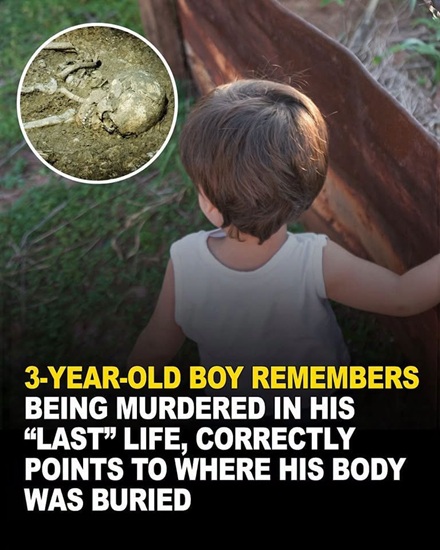
Across various parts of the world, there have been repeated reports of young children who say they remember living a different life before their current one. These statements usually appear spontaneously during early childhood, often between the ages of two and six, when imagination and language skills are still developing. In many cases, the details gradually fade as the child grows older and becomes more focused on their present life. Such accounts have been recorded in both culturally supportive and skeptical environments, making them a topic of long-term academic interest.
One of the most well-known researchers in this area was psychiatrist Dr. Ian Stevenson from the University of Virginia. Over several decades, he investigated more than 2,500 cases of children who claimed to recall past lives. His research involved field investigations in countries such as India, Sri Lanka, Lebanon, Burma, and Thailand, where beliefs in reincarnation are more culturally accepted. These regions allowed Stevenson to document cases more quickly after the initial claims were made, reducing the risk of memory distortion over time.
Stevenson used a careful field-based methodology. He interviewed the child directly when possible, as well as parents, relatives, and sometimes witnesses from both families involved. His goal was to determine whether specific details provided by the child could correspond to a deceased individual’s life. In some cases, he found striking similarities between the child’s statements and real historical individuals, including names, family relationships, and circumstances surrounding death. However, he also noted that many cases were incomplete or could not be fully verified.
A frequently discussed element in this body of research is the presence of birthmarks or physical abnormalities. In several cases documented by Stevenson, children with past-life claims had birthmarks that seemed to align with injuries described in their statements. For example, some children described fatal wounds and had corresponding marks on their bodies. Despite these observations, modern medical science does not recognize any confirmed connection between memory and physical markings at birth. Critics argue that such associations may be coincidental or influenced by subjective interpretation.
Another prominent figure in this field is Dr. Jim Tucker, also affiliated with the University of Virginia, who continued Stevenson’s research in later years. Tucker focused more on cases in Western societies, particularly in the United States, where reincarnation is not widely accepted culturally. Some of the children he studied reported detailed memories of individuals they had never met, including specific personal or historical information. Tucker’s work aimed to apply more structured analysis, though it remains controversial within mainstream scientific communities.
Despite public interest, the majority of psychologists and neuroscientists remain cautious about interpreting these reports as evidence of reincarnation. Common explanations include cognitive development processes, imagination, and memory distortion. Young children naturally have highly flexible mental frameworks, and they often mix real experiences with fantasy or stories they have heard. Over time, these blended memories can become structured narratives that feel real to the child.
Another explanation offered by researchers is cryptomnesia, a psychological phenomenon in which a person unconsciously recalls information they were previously exposed to and later believes it is a new or personal memory. In addition, subtle environmental influences, such as conversations with adults or exposure to media, may unintentionally shape a child’s statements. Even without intentional deception, these factors can contribute to the formation of complex and seemingly meaningful stories.
Cultural context also plays a significant role in how these cases emerge. In societies where reincarnation is an accepted belief, children may grow up hearing discussions about previous lives, spiritual continuity, or ancestral memories. This environment can influence how they interpret dreams, thoughts, or imagination. In contrast, in societies where such beliefs are less common, these types of reports are less frequently documented, although they still occasionally appear.
Skeptical researchers point out several methodological challenges in studying these cases. One major issue is the lack of controlled conditions, as most reports are collected after the child has already spoken about past-life memories. This makes it difficult to rule out information leakage, suggestion, or confirmation bias. In some cases, investigators may become aware of possible matches before fully documenting the child’s original statements, which can unintentionally affect interpretation.
On the other hand, supporters of the research argue that a small number of cases include details that are difficult to explain using ordinary psychological mechanisms. These may include accurate identification of deceased individuals, recognition of specific locations the child has never visited, or descriptions of personal events that appear to align with historical records. While intriguing, these cases remain rare and are subject to ongoing debate regarding their reliability.
Modern neuroscience offers additional insight into how early memory works. Research shows that young children do not store memories in a stable or structured way like adults. Instead, their memories are fragmented, emotional, and highly influenced by imagination and external input. As brain development progresses, many early memories are altered or completely lost, a process commonly referred to as childhood amnesia.
Another important factor is identity development during early childhood. Children often experiment with storytelling, role-playing, and imaginative scenarios as part of normal cognitive growth. In some cases, these narratives can become highly detailed and emotionally convincing. When such expressions receive attention from adults, they may become reinforced and repeated over time, strengthening the child’s belief in the story.
Although reincarnation remains outside the scope of established scientific proof, these reports continue to generate interest among researchers in psychology, anthropology, and consciousness studies. Investigators like Stevenson and Tucker do not claim definitive proof but suggest that the patterns observed deserve further careful examination. Their work sits at the intersection of cultural belief systems and scientific inquiry.
In conclusion, the topic remains open but unresolved. While some cases present unusual and thought-provoking details, mainstream science explains most of them through known psychological and developmental mechanisms. As a result, these reports are generally viewed as interesting case studies rather than confirmed evidence of life after death. The discussion continues to reflect broader questions about memory, identity, and the complexity of human consciousness.

