

In today’s digital media environment, public figures are constantly exposed to fast-moving commentary and widespread online analysis. A single appearance on television, a podcast episode, or a family-oriented broadcast can quickly circulate across social platforms, where audiences react within seconds. This rapid sharing culture has changed how people consume and interpret public moments.
Even casual or informal interactions can become widely discussed when they involve well-known political or public personalities. Short video clips, screenshots, and selectively shared moments often travel faster than full-length content, which can sometimes lead to fragmented interpretations. As a result, audiences may form opinions based on incomplete context rather than the full original setting.
This dynamic has become a defining feature of modern digital communication, where visibility and interpretation often overlap. Public figures, whether intentionally or not, frequently become part of broader online conversations that extend far beyond the original purpose of the appearance.
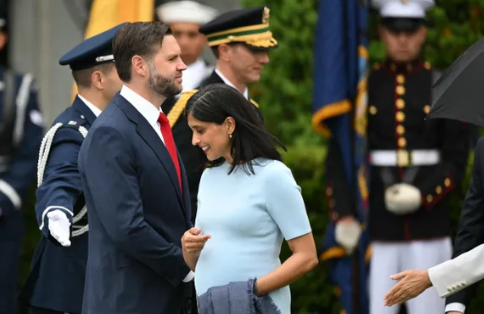
Social Media and the Amplification of Small Moments
Social media platforms play a major role in shaping how public moments are perceived. Content that gains attention is often not the most detailed or complete, but rather the most visually engaging or easily shareable. Once a clip begins circulating, it can quickly attract commentary from a wide range of users.
Different viewers may interpret the same moment in different ways depending on their personal perspective. Some focus on tone or expression, while others consider body language or context clues. These interpretations can vary widely, and discussions often develop rapidly in comment sections and reposts.
In many cases, the original context of a moment may be reduced as it spreads online. This can lead to conversations that are more based on perception than on verified information. Media analysts often note that this is a common feature of viral content in the digital age.
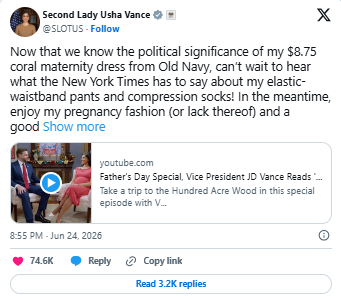
Media Coverage and Lifestyle-Oriented Public Content
In recent years, many public figures have participated in lifestyle-focused or family-oriented media formats. These may include podcasts, reading sessions, interviews, or educational initiatives designed to reach broader audiences in a more personal way.
Such content is often intended to highlight cultural, educational, or community-based interests. Programs focused on reading, literacy, or family engagement are examples of how public figures may use media platforms to support social initiatives beyond traditional political communication.
However, once this type of content enters the public sphere, it can still become part of wider online discussion. Even non-political or personal appearances may be analyzed through a political or symbolic lens, depending on audience interpretation and media framing.
Fashion, Presentation, and Public Discussion
Another common aspect of public attention involves fashion and personal presentation. Clothing choices worn during public appearances are frequently discussed in media coverage, sometimes from a stylistic perspective and other times from a symbolic or interpretive angle.
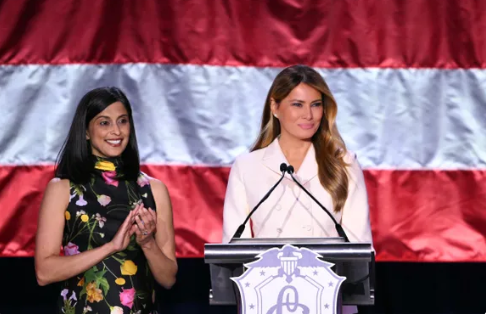
Fashion commentary can range from straightforward descriptions of style to broader cultural or political interpretations. In many cases, however, such analysis is subjective and varies depending on the source. What one commentator views as meaningful, another may see as purely practical or coincidental.
This reflects a broader trend in modern media, where visual presentation is often analyzed alongside public communication, especially when it involves well-known individuals.
The Role of Virality in Modern Public Discourse
The rise of digital platforms has significantly accelerated the spread of information and opinion. Viral moments often emerge quickly and can dominate online discussion for short periods of time before fading or being replaced by new content.
These viral cycles are driven by engagement, sharing behavior, and emotional response. As content spreads, it is often reshaped by captions, edits, and commentary, which can influence how audiences interpret the original moment.
Because of this, viral content should often be understood as part of a broader conversation rather than a complete or fully contextualized representation of events. Media literacy plays an important role in distinguishing between observation, interpretation, and verified fact.
Understanding Modern Media Perception. In the current media landscape, public figures exist within a constantly active environment of observation and interpretation. Informal appearances, digital content, and short video clips can all become part of larger online discussions that evolve rapidly across platforms.
This environment highlights how modern communication is shaped not only by what is said or shown, but also by how it is received, shared, and interpreted. As a result, public perception is often influenced by a combination of media framing and audience engagement.
Ultimately, understanding the difference between factual reporting and online interpretation is essential in navigating today’s fast-moving digital information space.

