
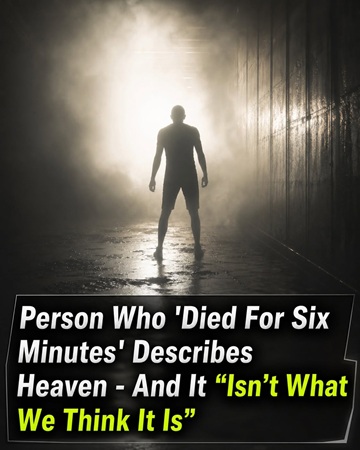
When we imagine what comes after death, most people picture peace, silence, and a comforting sense of light or warmth. Across different cultures and beliefs, the idea of an afterlife is often associated with calmness and relief from suffering. However, not every narrative shared online fits into this peaceful image, especially those found in storytelling communities such as Reddit, where users often post fictional horror and psychological experiences.
One particular post, originally shared on the r/nosleep forum, has continued to circulate due to its unsettling and emotional nature. The story, titled “Six Minutes Without a Heartbeat,” describes a near-death experience allegedly experienced by a teenage boy. While written in a highly realistic style, the post is generally understood to be fictional, as the subreddit is dedicated to horror storytelling rather than verified real-world events.
According to the narrative, the author claims that at the age of 15, in 2003, he suddenly collapsed while walking home. Emergency responders are said to have arrived quickly and found no detectable pulse. In the story, this moment marks the beginning of what the narrator describes as six minutes of conscious awareness during clinical death, an experience that he recalls in disturbing detail.
Instead of describing peace or light, the account presents a far more disturbing interpretation of those moments. The narrator claims to have been fully aware during this time, experiencing what he describes as a strange and oppressive presence. This presence is portrayed in symbolic and psychological terms, rather than physical ones, reflecting fear, confusion, and emotional intensity.
Within the story, the entity is described as something that manipulates emotion and perception. The narrator suggests that it does not bring comfort or guidance, but instead amplifies feelings of fear, grief, and emotional pain. These descriptions are presented in a highly dramatic tone, consistent with fictional horror writing commonly found in online storytelling communities.
The story continues by stating that paramedics eventually revived the teenager during transport to the hospital. After resuscitation, the narrator claims to have survived but with lasting physical and emotional consequences, including ongoing medical treatment. However, these details are part of the fictional narrative and should not be interpreted as verified medical facts.
One of the most striking elements of the post is how it contrasts with traditional near-death experience reports. Many documented accounts of near-death experiences describe feelings of calmness, detachment from the body, or visions of light. In contrast, this story intentionally challenges that pattern by presenting a darker and more unsettling version of events.
Readers of the r/nosleep community often engage with these stories as immersive fiction, even when they are written in a realistic tone. The subreddit itself operates on the assumption that all submissions are creative horror stories, designed to feel authentic while still being fictional. This approach enhances storytelling impact but can sometimes lead to confusion for readers who encounter the content outside its original context.
As the story gained attention, online discussions began to form around its meaning and interpretation. Some readers view it as a psychological metaphor for fear of death or the unknown. Others interpret it as a creative exploration of trauma, consciousness, and the boundaries of human perception. Meanwhile, skeptics emphasize that there is no scientific evidence supporting the specific claims described in the narrative.
From a scientific standpoint, near-death experiences are still being studied by neurologists and researchers. Current theories suggest that extreme stress, lack of oxygen, and changes in brain activity can produce vivid sensations or dream-like experiences. However, these explanations do not support the idea of fully conscious awareness lasting several minutes after complete cardiac arrest, as portrayed in fictional accounts.
Despite scientific interpretations, stories like this continue to attract attention because they touch on one of humanity’s most profound questions: what happens after we die? Whether viewed as fiction, metaphor, or speculation, such narratives often reflect deep curiosity and fear about mortality and the unknown.
In the end, this Reddit story remains a powerful example of modern internet storytelling. While not a verified real-life case, it demonstrates how online platforms can blend realism and fiction in a way that deeply engages readers. It also serves as a reminder that discussions about life after death often reveal more about human imagination and emotion than about confirmed scientific reality.

