

A young mother spent long hours holding onto hope as fragmented reports of a military aircraft crash began circulating online. At first, the information was unclear—just headlines, speculation, and rapidly changing updates. Like many families connected to those involved, she waited desperately for confirmation, refusing to accept what her instincts were beginning to fear. Her husband, Jeromy Smith, had left home that morning after what appeared to be a completely normal start to the day.
He had shared quiet moments with his wife and their baby, helping with small household routines before heading to work. Nothing in those final interactions suggested that it would be the last morning they would spend together. Later that day, everything changed. A B-52 Stratofortress involved in a test mission crashed shortly after takeoff at Edwards Air Force Base in California. The incident quickly became a major military tragedy, with multiple lives lost and an investigation launched immediately to determine what went wrong.
Reports indicated that the aircraft took off around 11:20 a.m. during what was described as a routine flight test. Within minutes, something went critically wrong. Witnesses and early accounts described smoke rising and flames erupting as the aircraft went down near the base, creating a scene of shock and urgency among personnel and nearby observers.
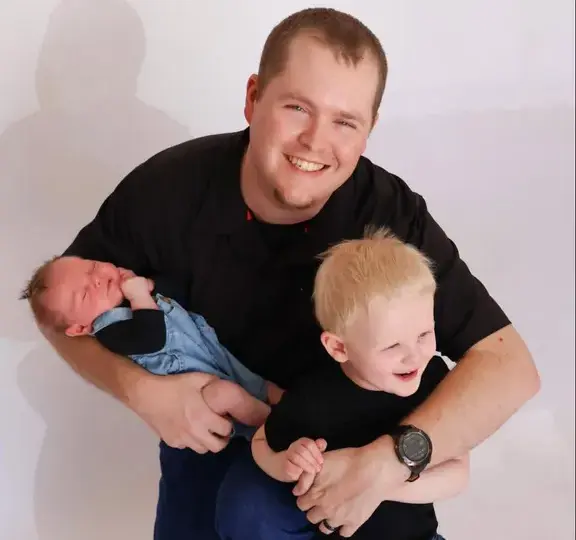
For Lauren Smith, Jeromy’s wife, the crash marked the beginning of an unimaginable personal tragedy. In the days that followed, she spoke publicly about her husband, describing him as a devoted father, loving partner, and respected professional who had dedicated his life to aviation and service.
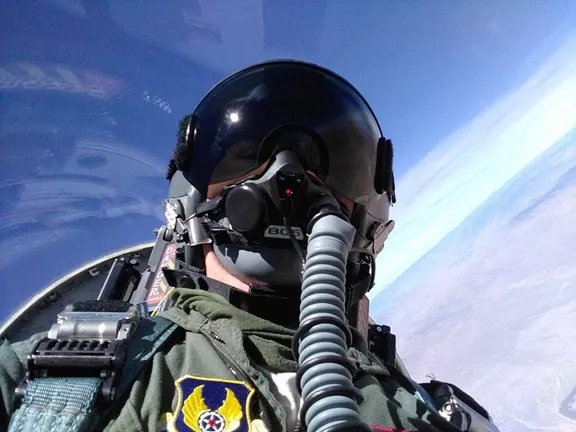
Jeromy worked for around ten years at Edwards Air Force Base as a flight test engineer with the 419th unit. His career in aviation was built on a lifelong passion for aircraft and engineering systems. He studied aeronautics at Embry-Riddle Aeronautical University, where he developed the technical foundation that later shaped his professional path.
Those who knew him often described him as someone who fully committed himself to his work. Aviation was not just a job for Jeromy—it was something he genuinely loved and understood on a deep level. According to his wife, he had always known what direction he wanted his life to take, and he followed that path with dedication and pride.
Outside of his career, Jeromy’s life was centered around his family. He and Lauren had recently celebrated another wedding anniversary, marking years of building a shared life together. They were raising two young children, including a baby who was only a few months old at the time of the crash.
Their relationship had developed quickly in its early stages. After meeting, they formed a strong connection and soon began building a life together. Over time, their relationship grew into a family life filled with everyday routines, responsibilities, and the joy of raising their children.
The morning of the crash remains one of the most painful memories for Lauren. She recalled how normal everything felt—feeding their baby, sharing a brief conversation, and watching her husband prepare for work. Before leaving, Jeromy said goodbye, told her he loved her, and gave her a final kiss at the door.
At the time, it was an ordinary moment. Only later did it become clear that it was their final goodbye.
As the day progressed, news of a military aircraft incident began to surface. Like many families, Lauren turned to news updates and social media, trying to understand what had happened. Even before official confirmation, she began to suspect the worst as details slowly emerged.
Hours later, military officials arrived at her home to confirm that Jeromy had been killed in the crash. The moment marked the end of uncertainty and the beginning of profound grief for her and their children.

The aircraft involved, the B-52 Stratofortress, has a long history of military service. It has been used for decades in various operations and remains part of the U.S. Air Force’s strategic capabilities. Despite modernization and upgrades over time, it is still a complex aircraft used in demanding missions, including test flights.
According to early reports, the plane was airborne for only a few minutes before it crashed. Preliminary flight data suggested unusual movement shortly after takeoff, including a rapid descent. Aviation experts reviewing the incident have noted that both mechanical issues and system failures are possibilities, though no official cause has been confirmed.
Investigators have emphasized that test flights can involve higher levels of risk due to experimental systems and ongoing evaluations. These missions often require precision and carry additional complexity compared to standard operations. However, the exact circumstances of this crash remain under formal investigation.
Lauren also shared that Jeromy had mentioned earlier delays related to technical issues with the aircraft. The mission had reportedly been postponed multiple times due to maintenance concerns before finally being cleared to proceed.
She further recalled a statement her husband made shortly before the flight, in which he expressed concern that something did not feel right with the plane. Those words have since taken on a deeply emotional significance in the aftermath of the tragedy.
Despite those concerns, the mission went ahead as scheduled. What occurred in the final minutes after takeoff remains the focus of an ongoing investigation, as officials work to reconstruct the sequence of events that led to the crash.
For Lauren, however, the loss is not only about unanswered technical questions. It is also about a husband who left home one morning and never returned, and about the sudden shift from everyday normalcy to permanent absence.
In the aftermath, a fundraising effort was created to support Lauren and her two children as they begin to rebuild their lives. The response from friends, colleagues, and members of the community reflects the impact Jeromy had on those around him, both personally and professionally.
Many who knew him have described him as a dedicated engineer, a caring father, and a supportive partner. Their memories highlight a life defined not by the tragedy of its end, but by years of commitment, family love, and professional passion.
Lauren has emphasized that she wants her husband to be remembered for who he was in life, not only for the circumstances of his passing. To her, he was a man who loved his family deeply, worked with purpose, and took pride in both his career and his role as a father.
As investigations continue, there is still no final answer as to what caused the crash in those critical moments after takeoff. But for those left behind, the focus remains on healing, remembering, and honoring a life that ended far too soon.
His final goodbye that morning—simple, loving, and completely ordinary—now carries a lasting emotional weight. It serves as a reminder of how quickly life can change, and how ordinary moments can become the most meaningful memories of all.

