
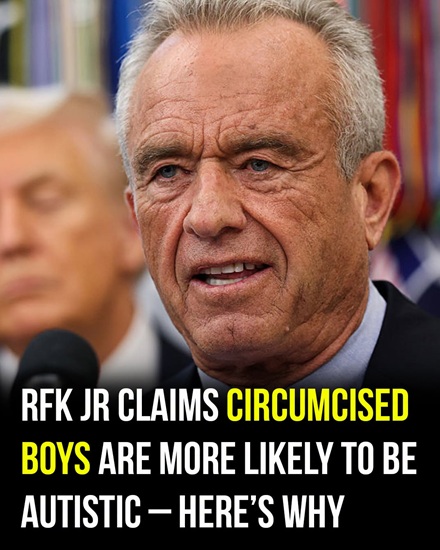
Health Secretary Robert F. Kennedy Jr. has once again drawn widespread attention after making controversial remarks during a recent Cabinet discussion with former President Donald Trump and other senior officials. The meeting, which was expected to focus on public health priorities, instead reignited debate over Kennedy’s long-standing claims regarding a possible connection between the painkiller acetaminophen—commonly known as Tylenol—and autism spectrum disorder.
Although he acknowledged that no conclusive scientific evidence currently supports this theory, he reiterated his belief that further investigation is necessary, which immediately sparked renewed criticism. These comments are part of a broader pattern of statements Kennedy has made over time suggesting potential environmental or pharmaceutical links to autism. However, the global medical and scientific community has consistently rejected the idea that Tylenol use during pregnancy causes autism.
Leading health organizations and pediatric experts emphasize that extensive research has found no reliable causal relationship between the medication and autism diagnoses. While scientists continue to study the complex origins of autism spectrum disorder, the consensus remains that its causes involve a combination of genetic and developmental factors, not a single widely used over-the-counter drug.
In response to the renewed claims, pharmaceutical representatives and medical authorities quickly pushed back. The manufacturer of Tylenol publicly stated that it strongly disagrees with any suggestion of a causal link and reaffirmed that the medication is safe when used according to medical guidance. Autism advocacy organizations also expressed concern, warning that spreading unverified associations could create unnecessary fear among pregnant individuals.
Many of these groups stressed that misinformation in public health discussions can have real-world consequences, particularly when it influences medical decisions without scientific backing. During the Cabinet meeting, Kennedy reportedly reiterated his position that more comprehensive studies are needed, stating that existing research does not fully rule out all possible environmental influences.
He also advised caution regarding the use of medication during pregnancy unless absolutely necessary. Medical experts, however, responded by emphasizing that acetaminophen remains one of the most widely studied and commonly recommended pain relievers for pregnant women when used appropriately. They warned that discouraging its use without strong evidence could lead to unintended health risks if individuals avoid necessary treatment.
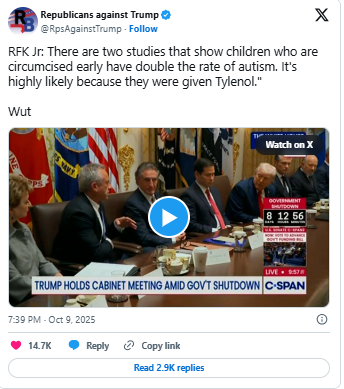
The discussion became more controversial when Kennedy made a medically inaccurate reference involving pregnancy anatomy, suggesting that a developing baby could be affected “in the placenta” in a way that raised immediate concern among healthcare professionals. Experts quickly clarified that fetal development occurs in the uterus, not the placenta itself, and described the statement as a fundamental misunderstanding of basic reproductive biology. This moment was widely cited by critics as an example of how misinformation can spread when complex medical topics are discussed without precise scientific language.
Kennedy also referenced older observational research that had explored a statistical association between infant circumcision and autism diagnoses. However, researchers involved in those studies have repeatedly clarified that such findings show correlation, not causation. They also noted that many variables, including pain management methods and other medical factors, were not accounted for in the data. As a result, scientists caution against interpreting these observations as evidence of a direct biological link.
The renewed attention to these claims has intensified debate within the public health community. Many experts argue that statements made by high-ranking officials carry significant influence and must therefore be grounded in well-established scientific evidence. They warn that when speculative claims are presented without clear context, they risk undermining public trust in vaccines, medications, and medical guidance more broadly. This is especially important in areas involving pregnancy and child development, where individuals rely heavily on accurate information.
At the same time, supporters of Kennedy’s approach argue that questioning existing research is a necessary part of scientific inquiry and that continued study of environmental factors is justified. However, mainstream medical organizations maintain that any such investigations must follow rigorous scientific standards and be interpreted cautiously, particularly when communicating findings to the public.
The controversy highlights a broader challenge in modern public discourse: the tension between political statements and established scientific consensus. In an era where health information spreads rapidly through media and social platforms, experts stress the importance of careful communication to prevent misunderstandings. Misinterpretation of preliminary or weak evidence can easily lead to widespread confusion, especially when amplified by influential figures.
Ultimately, the debate surrounding Kennedy’s remarks underscores the responsibility of public officials when discussing complex medical issues. While open discussion and continued research are essential components of scientific progress, health authorities emphasize that claims must be clearly supported by evidence before being presented as potential risks. Without this standard, they warn, misinformation can erode public confidence and complicate efforts to provide safe, effective healthcare guidance.

