
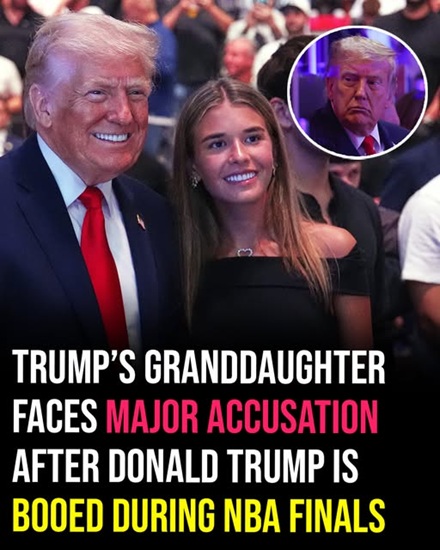
Donald Trump’s granddaughter, Kai Trump, recently found herself at the center of online debate after posting a short video from the NBA Finals, where she attended the game alongside her grandfather. The footage, shared on her social media account, showed the two of them standing during the national anthem at one of the most high-profile sporting events of the year.
In the caption of her post, Kai thanked the production team that recorded the moment, describing it as a special memory shared with her grandfather. The video quickly spread across social media platforms, where it attracted a wide range of reactions from viewers who compared her upload with the official television broadcast of the same game.
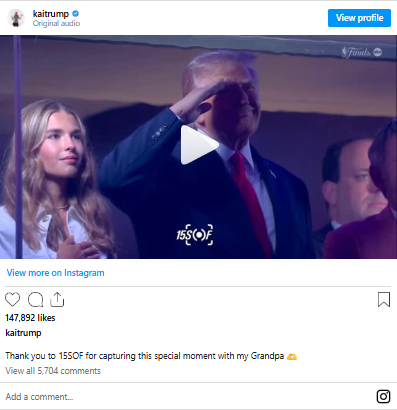
Some users began pointing out what they believed were differences between the live broadcast and the version she posted online. Their attention mainly focused on the audio, especially during the moment Donald Trump appeared on the arena’s big screen. In the televised coverage, viewers reported hearing strong crowd reactions, while in Kai’s clip, the sound appeared noticeably different, which led to speculation about possible editing or alternate audio sources.
As the discussion grew, many social media users joined the conversation, questioning the authenticity of the clip. Some argued that removing or changing crowd noise can significantly alter how an event feels, while others claimed the differences might simply be due to filming conditions, platform compression, or the way the footage was recorded and uploaded.
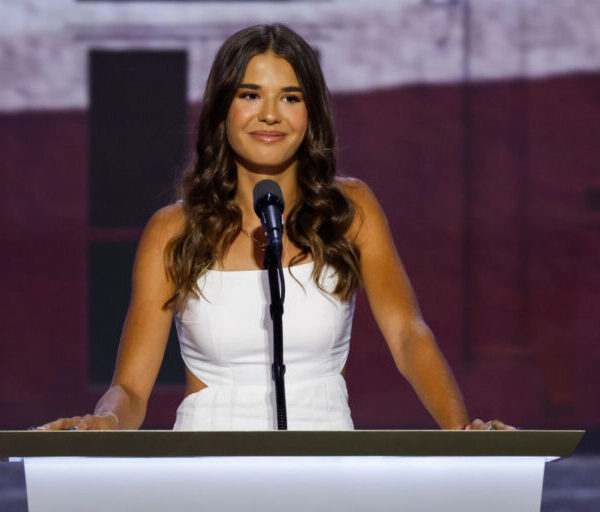
At the same time, there were also people defending Kai Trump, suggesting that social media videos often do not match live broadcast audio and video exactly. They pointed out that different recordings, background noise filtering, or copyright-related audio adjustments can all affect how a clip ultimately sounds when shared online. Despite these explanations, the debate continued to spread widely across social media.
Neither Kai Trump nor any official representatives publicly responded to the claims or criticism surrounding the video. The moment also gained additional attention because Donald Trump’s appearance at the NBA Finals marked a rare high-profile attendance at the event, which naturally drew strong reactions from fans inside the arena and viewers online.
Meanwhile, the game itself became one of the most memorable contests of the NBA Finals. The New York Knicks delivered a stunning comeback performance against the San Antonio Spurs, overcoming a massive deficit to secure a narrow and dramatic victory.
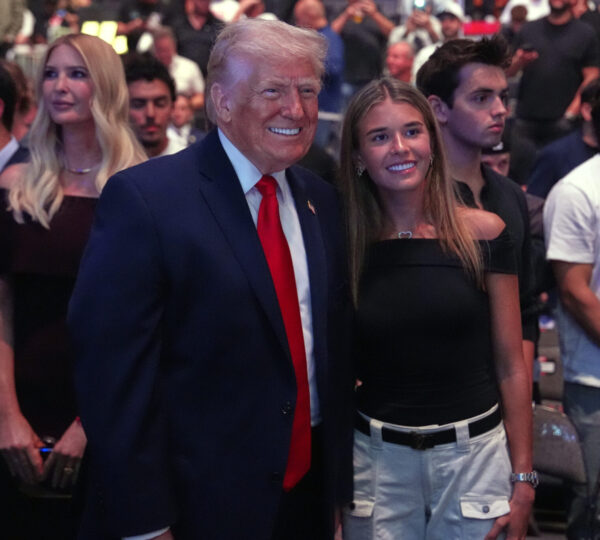
The Knicks’ turnaround was considered one of the most impressive in recent Finals history, as they managed to erase a double-digit halftime gap and shift the momentum completely in the second half. The game ultimately came down to the final seconds, where a decisive play secured the win after a missed attempt was tipped in just before the buzzer.
With that victory, the Knicks moved one step closer to winning the championship, taking a commanding position in the series as they headed into the next matchup. Fans and analysts praised both the intensity of the game and the resilience shown by the team under pressure.
Overall, the incident surrounding Kai Trump’s video, combined with the dramatic NBA Finals matchup, highlighted how quickly sports moments can evolve into larger online conversations. In today’s digital environment, a single post can spark widespread debate, blending sports, public figures, and social media interpretation into one fast-moving narrative.

