
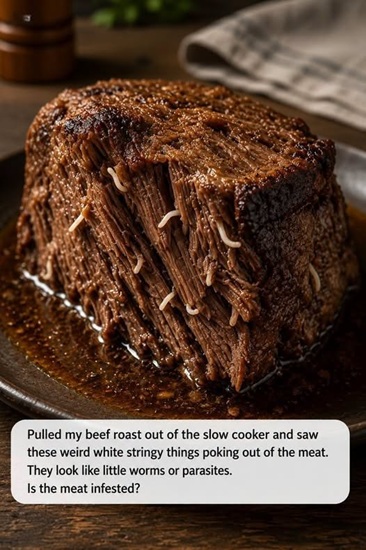
When you lift the lid of your slow cooker after hours of waiting, you expect a warm, savory aroma and a perfectly tender beef roast ready to fall apart. Instead, you might notice something unusual that immediately catches your attention: pale, string-like formations running through the meat. For many home cooks, this sight can feel alarming at first, as it may resemble worms or parasites. However, in almost all cases, what you are seeing is a completely natural and scientifically explainable part of the cooking process.
Beef is made up of several different components, including muscle fibers, fat, water, and connective tissue. One of the most important parts of this connective structure is collagen, a tough, fibrous protein that holds muscle together in living animals. In its raw state, collagen is firm and resistant, which is why certain cuts of beef feel chewy or hard unless they are cooked properly.
Slow cooking is specifically designed to transform these tougher cuts into soft and flavorful meals. When beef is cooked at low temperatures over an extended period of time, the collagen begins to break down through a process called hydrolysis. During this process, collagen gradually turns into gelatin, a soft and rich substance that improves both the texture and moisture of the meat.
As this transformation happens, the internal structure of the meat begins to change. The connective tissue that once held everything tightly together starts to loosen and separate. In some cases, these softened collagen strands become visible, appearing as thin, light-colored threads within or on the surface of the meat. Because of their appearance, they can sometimes be mistaken for something harmful or foreign.
It is important to understand that in properly inspected and commercially sold beef, the presence of parasites is extremely rare. Modern food production systems include strict safety standards, inspections, and regulations designed to ensure that meat reaching consumers is safe and suitable for cooking. This significantly reduces any realistic risk of contamination in everyday cooking.
The reason these collagen strands look unusual is due to how they behave during heat exposure. Once cooked, collagen becomes soft, semi-transparent, and slightly gelatinous. When it separates from muscle fibers, it can form thread-like shapes that look unfamiliar, especially when surrounded by darker cooked juices. This visual effect often leads to confusion, even though it is completely harmless.
Texture is one of the easiest ways to understand what you are seeing. Cooked collagen strands are soft, fragile, and gelatin-like in consistency. They break apart easily when touched or pressed and tend to dissolve back into the surrounding meat. This behavior is very different from any foreign organism, which would not typically melt or dissolve in the same way during cooking.
Temperature also plays a key role in food safety. Slow cookers are designed to maintain consistent heat levels that are sufficient to cook meat thoroughly and eliminate harmful bacteria or potential contaminants. When beef is cooked properly to safe internal temperatures, it becomes both safe to eat and significantly more tender.
Another helpful indicator is smell and overall appearance. Properly cooked beef should have a rich, savory aroma and should not produce any unusual or unpleasant odors. If the meat has been stored correctly before cooking and handled under normal kitchen hygiene practices, there is generally no reason for concern.
What makes slow-cooked beef so appealing is precisely this transformation of connective tissue. The breakdown of collagen is what gives the meat its signature tenderness, juiciness, and deep flavor. Without this process, tougher cuts of beef would remain dense and far less enjoyable to eat.
Although the appearance of these string-like structures can be surprising at first, understanding the science behind cooking helps remove unnecessary fear. Cooking is a chemical and physical transformation, and many natural processes can look unusual even when they are completely safe and expected.
In the end, these pale strands are not a sign of contamination but rather evidence that the slow cooking process is working correctly. They represent the natural breakdown of connective tissue into gelatin, which ultimately enhances the quality of the dish. Instead of being a cause for concern, they are actually a sign of a well-cooked, tender roast.
With proper handling, safe cooking temperatures, and quality ingredients, slow-cooked beef remains one of the most reliable and satisfying meals you can prepare at home. Understanding what happens inside the pot helps build confidence in the kitchen and ensures you can enjoy your meal without unnecessary worry.

