
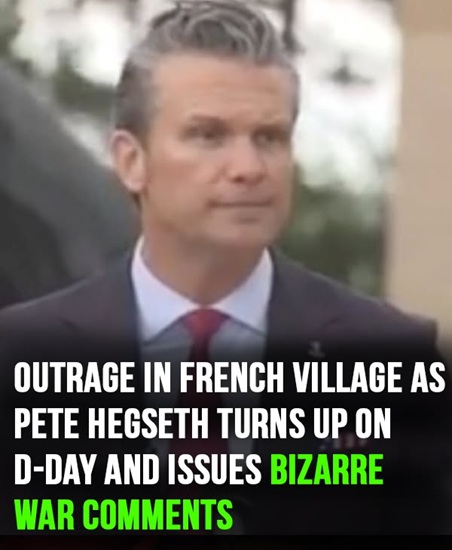
U.S. Defense Secretary Pete Hegseth traveled to Normandy, France, to take part in ceremonies marking the anniversary of the D-Day landings, one of the most important military operations of World War II. The commemoration honored the Allied invasion of Nazi-occupied France on June 6, 1944, a turning point that helped shift the course of the war in Europe. Hegseth attended a remembrance event in the coastal village of Langrune-sur-Mer during the 82nd anniversary observances.
The visit was meant to be a respectful tribute to the soldiers from the United States, the United Kingdom, Canada, and other Allied nations who lost their lives during the Normandy landings. However, the trip quickly became a topic of public discussion in French media, as some local residents expressed disagreement over his presence at the ceremony.
Mixed Reactions From Locals in Normandy
Reports from French broadcaster BFM TV indicated that reactions among some residents of Langrune-sur-Mer were divided. While many D-Day commemorations in Normandy are typically marked by unity and remembrance, a small number of locals voiced criticism regarding Hegseth’s attendance and public remarks.
Members of a local civic organization, Langrune en Commun, were among those who expressed concern. Some described him as a controversial figure, pointing to disagreements with certain political views he has supported. One member, Sylvie Lamy Thepaut, said in an interview that his rhetoric did not reflect what they consider values of democracy and peace.
Another resident, Chantal Richard, also raised broader political concerns, referring to tensions involving the U.S. administration and international organizations. Her comments reflected a wider debate about how political figures are perceived when attending historically sensitive remembrance events.
Statement From Local Civic Association
Prior to Hegseth’s arrival in Normandy, the Langrune en Commun group issued a public statement opposing the visit. The organization argued that ceremonies dedicated to the memory of fallen Allied soldiers should remain focused on honoring historical sacrifice rather than political debate.
Their statement highlighted respect for the memory of those who died during the D-Day landings, describing the occasion as a shared moment of historical importance for both France and its Allied partners. The group also raised concerns about some of Hegseth’s past public statements, which they viewed as politically divisive.
Despite these objections, no official decision was made to cancel or restrict his participation, and the commemorative events continued as planned with international attendance.
Hegseth’s Speech at the Commemoration
During the ceremony, Pete Hegseth delivered remarks focused on the unity of Allied forces during World War II. He spoke about cooperation, sacrifice, and the military coordination that defined the effort to liberate Europe from Nazi control.
His speech emphasized the shared commitment of Allied nations and the importance of strong international defense partnerships today. He referenced the historical alliance formed during World War II and the cooperation that made the Normandy landings successful.
However, part of his remarks also turned toward present-day global issues, including European security concerns. These comments attracted attention and, in some cases, criticism from observers who felt that a remembrance event should remain centered on historical reflection.
Debate Over Modern Political References
Some of Hegseth’s statements, especially those touching on migration and security in Europe, sparked discussion in media coverage. He compared historical wartime challenges with what he described as modern ideological and security threats.
Critics argued that bringing current political issues into a memorial ceremony risked overshadowing the solemn purpose of the event. Supporters, however, viewed his comments as part of a broader conversation about national security and international cooperation.
These differing interpretations contributed to ongoing public debate in both France and the United States about how political leaders should address modern issues during historical commemorations.
Security Measures During the Visit
According to reports from outlets such as The Washington Post, additional security precautions were put in place during Hegseth’s visit to Normandy. These reportedly included increased protection for him and his family throughout the trip.
While such measures are common for high-ranking officials at international events, they highlighted the attention surrounding his participation in the commemoration.
No official disruptions were reported during the ceremonies, which included participation from multiple international representatives and local attendees.
Ongoing Public Discussion
The visit has since sparked debate across media platforms, with opinions divided between those who supported Hegseth’s participation in honoring D-Day veterans and those who believed his presence brought unnecessary controversy to a solemn event.
Supporters emphasized the importance of remembering the shared sacrifices of Allied forces during World War II. Critics, meanwhile, focused on his political remarks and argued that commemorative events should remain free from political messaging.
Overall, the discussion reflects a broader question about the role of modern political figures in historical remembrance events and how such appearances are perceived in different cultural and political contexts.

