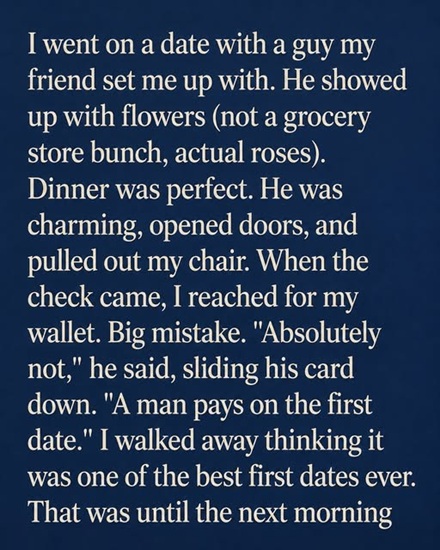
I’ve been on enough first dates to know that a polished beginning doesn’t always guarantee a positive or respectful ending, no matter how impressive someone may initially appear in the first meeting. So when my friend Mia suggested I meet a colleague of her boyfriend, I agreed. She described him as polite, reliable, and intelligent, someone who seemed to represent stability in modern dating culture. His name was Eric, and according to Mia, he was thoughtful, well-mannered, and consistent.
She believed he was the kind of person who could restore confidence in dating after many disappointing experiences. From the very beginning, Eric appeared to match that description. His messages were well-written, his tone was respectful, and he asked thoughtful questions that made the conversation feel balanced and engaging. He planned our date at a respected Italian restaurant in the city, which immediately suggested effort and intention. It felt like a refreshing change from rushed or low-effort modern dating experiences.
There were no immediate red flags during our early interactions. He communicated clearly, listened attentively, and maintained a level of politeness that made the entire experience feel comfortable and easy. When we met in person, Eric arrived on time and presented himself neatly. He brought a small bouquet of flowers, opened doors, and maintained courteous behavior throughout the entire evening.
The restaurant atmosphere was calm, and our conversation flowed naturally. We talked about travel, work experiences, daily life, and even shared frustrations about dating apps and modern relationship challenges. At the end of dinner, I reached for my wallet out of habit, but Eric politely insisted on paying. His gesture felt generous and traditional, and I accepted without hesitation at the time. After dinner, he walked me to my car and maintained respectful boundaries.
There was no pressure or awkward behavior, and the evening ended in what felt like a normal and pleasant goodbye. Driving home, I felt cautiously optimistic. I even sent a message to Mia saying the date had gone well and that her recommendation seemed accurate based on how polite and attentive he had been. The next morning, however, the tone of the experience changed completely. Instead of a casual follow-up message, I received an email with an unusual subject line that immediately caught my attention.
The subject line framed the message like a formal invoice for the previous night. At first, I assumed it might be a joke, but the structured format quickly suggested something more serious. The email was written like a business document, listing dinner, flowers, and the small gift he had given. Each item was presented as if it carried an expectation of repayment or future obligation.
One section described the flowers as a symbolic “in-kind exchange,” implying that emotional gestures were being assigned value. Another suggested that the gift required some form of reciprocal interaction. As I continued reading, the tone became increasingly uncomfortable. The message hinted that declining further contact might affect mutual connections, introducing social pressure into what should have been a simple interaction.
What had felt like genuine kindness the night before now seemed conditional. The gestures were reframed as transactions, where normal dating behavior was presented as something requiring repayment or obligation. I forwarded the email to Mia, unsure how to interpret it. Her response was immediate and firm, stating that the message was not normal and that I should not engage further. Mia also shared the situation with her boyfriend, Chris, who reacted with concern.
He agreed that the message crossed a boundary and should be addressed carefully to avoid further issues. Shortly afterward, Eric received a response styled in a similarly formal but clearly ironic format, pointing out the inappropriateness of treating social interactions like financial transactions. Following that response, Eric became defensive. He insisted the email was meant as humor and claimed that people had misunderstood his intentions, describing the reaction as an overreaction.
He also suggested that I lacked a sense of humor and implied that I had missed out on a good opportunity, shifting responsibility away from the tone and content of his original message. I chose not to respond further. At that point, the situation had already revealed enough about communication style, expectations, and personal boundaries to make further discussion unnecessary.
Looking back, I realized how quickly perceptions can change after a single message. What initially appeared as respectful behavior turned into something far more complicated after the follow-up communication. The experience highlighted how important consistency is in human behavior. Genuine respect should remain steady, not shift into something transactional or conditional after initial impressions. Healthy communication is based on mutual understanding, not implied debt or expectation. When kindness is genuine, it does not come with hidden conditions or pressure attached to it afterward.
This situation also showed how easily humor can be used to blur boundaries. When jokes create discomfort or obligation, they often reveal more about intent than intended entertainment value. What stood out most was how structured and deliberate the message felt, suggesting that it was not a spontaneous joke but something carefully constructed with a specific purpose in mind.
It reinforced the importance of noticing early discomfort signals. Even subtle changes in tone or expectation can reveal deeper patterns about how someone views relationships and boundaries. Friends played an important role in providing clarity. Mia and Chris helped evaluate the situation objectively, ensuring that the response was based on perspective rather than confusion or pressure. Eventually, communication ended naturally, and the situation closed without further interaction. What remained was reflection, understanding, and a clearer awareness of personal boundaries moving forward.
In hindsight, I don’t feel anger, only clarity. The experience served as an early lesson in recognizing patterns and valuing consistency over polished first impressions. Dating experiences often reveal character more clearly over time. First impressions matter, but follow-up behavior is what truly defines someone’s intentions and emotional maturity.
A healthy connection should never feel transactional. Genuine generosity exists without expectation, and respectful communication never turns kindness into a form of obligation or repayment. The most important takeaway was simple: kindness should feel free, not calculated. If an interaction begins to feel like a contract, it is worth re-evaluating its direction.
Today, I view the experience as a lesson in awareness rather than a negative memory. It strengthened my understanding of boundaries and reinforced what respectful communication should feel like. Ultimately, real relationships are built on mutual respect and emotional equality. When someone values you, they do not send emotional invoices—they build genuine connection without conditions.
