
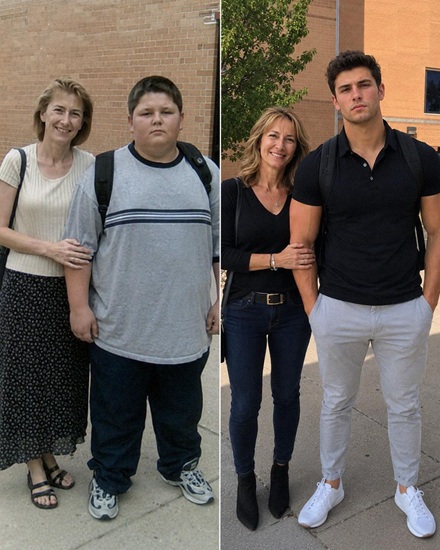
For a long time, my son was the student people tended to ignore. He wasn’t part of the popular groups, rarely got invited anywhere, and often spent school days quietly on his own. Even during important school events, he blended into the background. While other students formed friendships and made plans, he remained on the outside, watching everything unfold from a distance. Years later, after graduating, something unexpected happened.
His former graduating class organized a ten-year reunion, and once again, somehow, he was left off the invitation list. When he found out, he didn’t react with anger or frustration. Instead, he simply laughed, though I could tell the situation carried deeper meaning for him than he showed. Later that evening, he told me something surprising. He said he planned to attend the reunion anyway, even though he had not been invited to the event.
In the days that followed, I noticed him quietly preparing. He was making calls, sending messages, and organizing things without fully explaining what he was planning to do. As the reunion date approached, he remained calm and focused. There was no nervousness in his behavior, only a quiet sense of purpose I had never seen before. On the night of the event, he dressed neatly in a simple suit. He looked composed, confident, and very different from the shy boy I remembered from his school years.
Before leaving, he told me not to worry and that everything would make sense later. Then he left the house and drove toward the reunion venue alone. While he was gone, I found myself thinking about his childhood—the years of quiet lunches, missed invitations, and moments where he was simply overlooked by others. He had always been kind-hearted. He helped classmates, shared what he had, and treated people with respect, even when that kindness was not always returned.
But despite his efforts, he often remained excluded. Group activities formed without him, conversations passed him by, and he slowly learned what it felt like to be left out. Still, he never became bitter. Each new school year brought hope that things might change, and he kept trying to connect with others in his own way. By the time he graduated, I think we both understood that his experience in school had been difficult, even if he tried not to show it openly.
After high school, he moved away for college and gradually began building a new life, one far removed from the environment where he once felt invisible. Over time, he grew more confident. He studied, worked part-time, and slowly created a circle of friends who appreciated him for who he truly was. After finishing college, he started a small consulting business with a couple of friends. It began modestly, but slowly expanded as their work gained attention.
Years later, the company continued to grow steadily, becoming something far more successful than anyone initially expected, including himself. What mattered most to him, however, was not the success alone, but finally being surrounded by people who respected and valued him. Then, nearly a decade after graduation, he came across online posts about the upcoming reunion and realized he had not been included once again.
He showed me the posts with a calm expression, almost amused at first, as if history had repeated itself in a way he no longer found surprising. But beneath that calm reaction, I could sense old memories returning—the years of being overlooked and the quiet pain that came with it. Still, he remained composed. After thinking for a moment, he said he intended to go to the reunion anyway, regardless of the missing invitation.
That decision surprised me, but something in his tone suggested it wasn’t about confrontation. It was something more personal and meaningful to him. In the days before the event, he prepared quietly. He handled calls and arrangements carefully, but never shared the full details of what he was planning. When the evening finally arrived, I watched him get ready in silence. He looked steady and focused, as if he had already accepted whatever was going to happen.
Before leaving, he reassured me again that there was nothing to worry about. Then he left, heading toward the reunion venue without hesitation. A couple of hours later, my phone rang. I could hear noise in the background—music, voices, and movement inside a crowded room. He told me he had arrived and walked inside without any issues, even though several people clearly noticed he wasn’t on the expected guest list.
At first, he stayed quiet, observing the room and watching familiar groups reconnect after many years apart. Eventually, someone approached him. The interaction was awkward at first, shaped by old memories and unspoken history between them. But slowly, more people began to recognize him. Conversations started, and the initial tension in the room began to fade.
Then the organizers called everyone’s attention to the stage, announcing a series of recognitions for former students who had achieved success. As names were read aloud, applause filled the room repeatedly, while my son remained seated, listening quietly. Eventually, his name was called, and the atmosphere in the room changed noticeably as people turned to look at him in surprise.
He was invited to speak. He stood up calmly and walked to the stage without hesitation, facing an audience of former classmates. He began by acknowledging that he had not been invited and that, years earlier, he never would have imagined returning in this way. Then he shared that his company had recently acquired a major business, something that immediately captured everyone’s attention.
A quiet silence spread through the room as people began to realize how far his life had come since the days they once knew him. He spoke calmly about his school years, explaining that he had often felt overlooked and excluded during that time in his life. He emphasized that while some people had shown kindness, many others had simply treated him as if he did not exist.
However, he made it clear that he was not there to seek apologies or approval from anyone in the room. Instead, he spoke about a teacher who had once taken the time to notice him when others had not, and how that support had changed his perspective. That single act of encouragement, he explained, had helped him believe in his own potential and move forward with confidence.
He then announced the creation of a foundation through his company, designed to support students who feel excluded or overlooked in school. The foundation’s purpose, he said, was to ensure that future students would not have to experience the same sense of invisibility he once felt. When he finished speaking, the room responded with a long standing ovation, as people processed both his success and his message.
Later that night, he called me again and told me everything that had happened, including the reactions and the speech he gave. But what stayed with me most was his calmness. It felt as though he had finally let go of something he had carried for many years. He said he hadn’t gone to prove anything to anyone, but simply to show up as himself without needing acceptance from the past.
And in that moment, I understood something important—that the reunion had not been about the people who ignored him. It had been about freedom. The freedom to move forward without needing validation from those who never truly saw him.
Because sometimes, the people who are overlooked early in life end up writing the most unexpected and powerful stories later on. And when others finally notice them, they often realize that approval is no longer something that person needs.

