
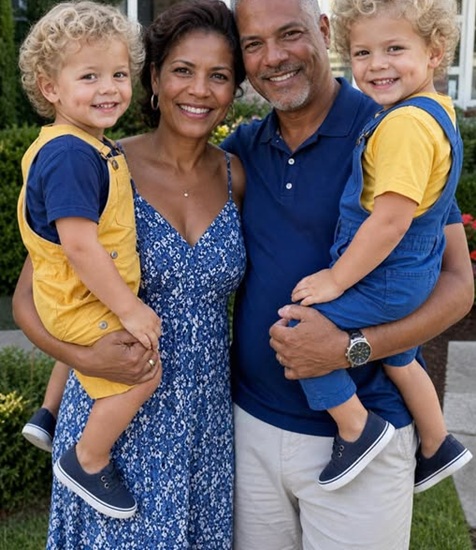
For years, I believed my husband Joshua had finally come to terms with the life we had accepted together—one without children. We had learned how to exist in the quiet of it. There were no bedtime stories, no toys scattered across the floor, no laughter echoing through hallways. Just two adults navigating a marriage that had adapted to absence. I threw myself into my career, and he filled his time with routines that kept him away from the silence of our home. We rarely spoke about what we had lost. Instead, we learned how to coexist with it.
Then everything changed. It began subtly, almost innocently. A moment in passing, a pause too long outside a playground, a comment about children that lingered longer than it should have. Joshua, who had once accepted our childless life with quiet resignation, suddenly began to look at the idea of family as something unfinished rather than impossible. I didn’t understand the shift at first. It felt as though I was being pulled into a version of our marriage I hadn’t agreed to revisit.
When he first mentioned adoption, I resisted. We had already grieved that path years earlier. But Joshua was persistent in a way I had never seen before. He didn’t argue—he pleaded. He didn’t demand—he insisted gently, emotionally, constantly. Eventually, worn down by his conviction and my own confusion, I stepped away from my job. It felt like surrendering one part of my identity for the possibility of another.
Soon after, we were deep in the adoption process.
We filled out forms, attended meetings, and prepared our home for a future we had stopped believing in. Joshua was focused in a way that bordered on obsession. He researched profiles late into the night, studying every detail as if he were preparing for something far more important than paperwork. That was when he found them—two young twins, Matthew and William.
From the moment we saw their profile, something shifted again. Joshua looked at the photo as if he already belonged to them. I remember telling him they looked scared, fragile in a way that made me hesitant. But he insisted we could be what they needed. Over time, I began to believe him.
When we met the boys for the first time, everything felt both surreal and inevitable. Matthew was quiet, observant, holding tightly to his brother. William was more withdrawn, cautious in every movement. Joshua connected with them instantly, breaking through their hesitation with patience I hadn’t known he possessed. Slowly, they began to trust us.
When they moved in, our home changed overnight.
It became louder, messier, fuller. The silence we had lived with for years disappeared almost instantly. Toys filled corners, footsteps echoed through hallways, and conversations replaced emptiness. For the first time in a long while, I felt something close to happiness return to our lives.
But it didn’t last the way I thought it would.
Joshua began to change again.
At first, it was subtle—late nights at work, quiet conversations behind closed doors, moments where he seemed distant even when physically present. Then it became more obvious. He started withdrawing from daily life, leaving me to manage the children alone. The warmth I had seen in him during the early days of adoption slowly faded into something heavier, more distant.
One afternoon, everything shifted when I accidentally overheard a conversation I was never meant to hear.
Joshua was speaking to his doctor.
At first, I didn’t understand what I was listening to. Medical terms, references to tests, mentions of treatment plans. Then I heard it clearly: a diagnosis. Lymphoma. A prognosis that suggested time was no longer something he could count on in years, but in months or possibly less.
The realization hit me with physical force.
Everything we had been building—the adoption, the family, the future—had been constructed on a truth I had never been told. Joshua hadn’t just pushed for a family out of hope. He had done it knowing he might not be here to see it continue.
He wasn’t planning a life with me. He was preparing a life without himself in it.
The emotional weight of that discovery shattered everything I thought I understood about our marriage. I left the house with the children that night, unable to process the contradiction between love and secrecy, between protection and betrayal. At my sister’s home, I tried to make sense of what I had heard, searching through documents and medical records until the truth became undeniable.
He was sick. And he had chosen silence.
When I confronted him, the conversation was not what I expected. There was no denial. Only exhaustion, guilt, and a quiet admission that he had believed he was protecting me from pain he thought I couldn’t carry. He had convinced himself that building a family first would soften the impact of losing him later.
But what he didn’t understand was that truth cannot be replaced by intention.
We fought. Not loudly, but deeply. The kind of fight that fractures trust rather than raises voices. I told him he had taken away my right to choose my own future. He had made me a mother without allowing me to understand what that truly meant.
And yet, beneath the anger, there was something else—fear. Not just of losing him, but of losing the life we had just begun to build with the boys.
Eventually, we made a decision together. Not to erase the truth, but to face it.
We told our families. The reactions were painful, complicated, and raw. There was anger, disappointment, and disbelief. But there was also support, even if it came slowly. For the first time, Joshua stopped trying to carry everything alone.
Treatment began.
Life became a cycle of hospital visits, medication schedules, emotional exhaustion, and fragile hope. The children adjusted in ways we could not predict. Some days were light, filled with laughter and normalcy. Others were heavy, shaped by fatigue and uncertainty.
Through it all, we stayed together—not perfectly, but intentionally.
Joshua began to weaken physically, but something else grew stronger: honesty. He recorded messages for the boys. He spoke openly about fear, love, and regret. He stopped pretending he was invincible.
And I stayed.
Not because it was easy, but because leaving no longer made sense.
Then, months later, the call came.
Remission.
The word felt unreal at first, as if it belonged to someone else’s story. But slowly, it became real. Treatment had worked. The disease had retreated. Life, in some form, was returning.
Recovery was not immediate or complete. It came in layers—physical healing, emotional rebuilding, and the slow repair of trust. But we began again, not as the people we were before, but as people reshaped by truth.
The children grew, filling the house with noise, movement, and life we once thought impossible. And Joshua and I learned something neither of us fully understood before: love is not only built in honesty, but sustained by it.
Looking back, I realize the truth was never what destroyed us.
It was what saved us.

