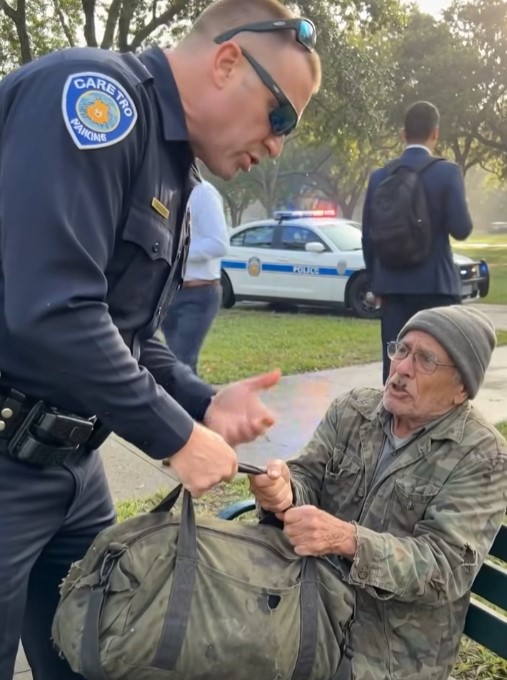
In the quiet aftermath of that morning, the most lasting impact of the entire experience was not measured in logistics, paperwork, or immediate outcomes. Those elements mattered, of course, as they represented the practical steps toward stability and shelter. However, beneath all of the coordination and communication, something far more fundamental had shifted. It was the sense of human presence that had entered a life that had long been defined by isolation. For Sam, the change was not only physical but deeply emotional.
Years of being surrounded by people without truly being seen had created a quiet but persistent sense of separation from the world around him. Living in public spaces often means existing within constant visibility, yet experiencing very little genuine connection. That morning disrupted that pattern in a way that could not be undone, because it replaced distance with engagement.
The act of simply sitting down, sharing a meal, and being acknowledged carried a weight that extended beyond the immediate situation. It was not about solving every problem in a single moment, but about restoring a sense of dignity that had been gradually worn down over time. For someone who had become accustomed to being passed by, that shift represented something significant and deeply human.
As the day progressed, the support that had been initiated during breakfast continued to develop into structured assistance. Conversations about housing, resources, and practical next steps were no longer abstract ideas but active processes. People who had previously been strangers to Sam’s situation began coordinating efforts aimed at providing him with a safe and stable environment. Each contribution added another layer of support to what had begun as a simple interaction.
Yet even as plans moved forward, the emotional center of the experience remained unchanged. Sam’s perspective reflected something many individuals in similar situations quietly carry with them—the difference between being assisted and being seen. Assistance can address immediate needs, but recognition addresses something more personal: the feeling of existence within a community.
For Silas, the moment also carried meaning beyond the initial decision to intervene. What began as a brief interruption in his morning routine became a reminder of how easily human lives can exist parallel to one another without meaningful connection. In choosing to stop, engage, and remain present, he became part of a chain reaction that extended far beyond a single act of kindness.
The broader response from those who became involved demonstrated how communities can function when awareness leads to action. Each person who contributed brought a different form of support, whether through resources, organization, or practical assistance. Together, those efforts created momentum that transformed an isolated situation into a coordinated response rooted in shared responsibility.
As evening approached, the significance of the day was not defined by the completion of tasks but by the continuation of something more lasting. The process of transition from instability to support was still ongoing, but the foundation had been established. What mattered most was not just the outcome being pursued, but the fact that it was being pursued collectively.
In reflecting on the events of that morning, one central idea remained clear: human connection often begins with presence. It does not always require complex solutions or immediate resolutions. Sometimes, it begins with the simple decision to acknowledge another person’s existence in a meaningful way and to remain with them in that moment rather than walking past.
For Sam, that shift meant moving from isolation toward inclusion. For those involved, it meant recognizing the impact that attention and compassion can have when translated into action. And for the wider community, it served as a reminder that many lives unfold quietly in the background of daily routines, waiting for moments of recognition that can alter their direction.
By the end of the experience, what remained was not only a plan for housing or support, but a changed understanding of what it means to be present for another person. In a world often shaped by speed and distraction, the act of slowing down long enough to see someone fully can become a powerful force for change.
Ultimately, the most important transformation was not external but deeply personal. It was the realization that no one should have to face their circumstances entirely alone, especially when a moment of connection has the power to change the direction of a life. And in that realization, the quiet conclusion of the day carried its lasting meaning: that he was finally no longer facing the day alone.
